by Chuck Price | Feb 8, 2026 | Boondocking-Guide
Updated for 2026
Why Free RV Parking Is Disappearing in 2026
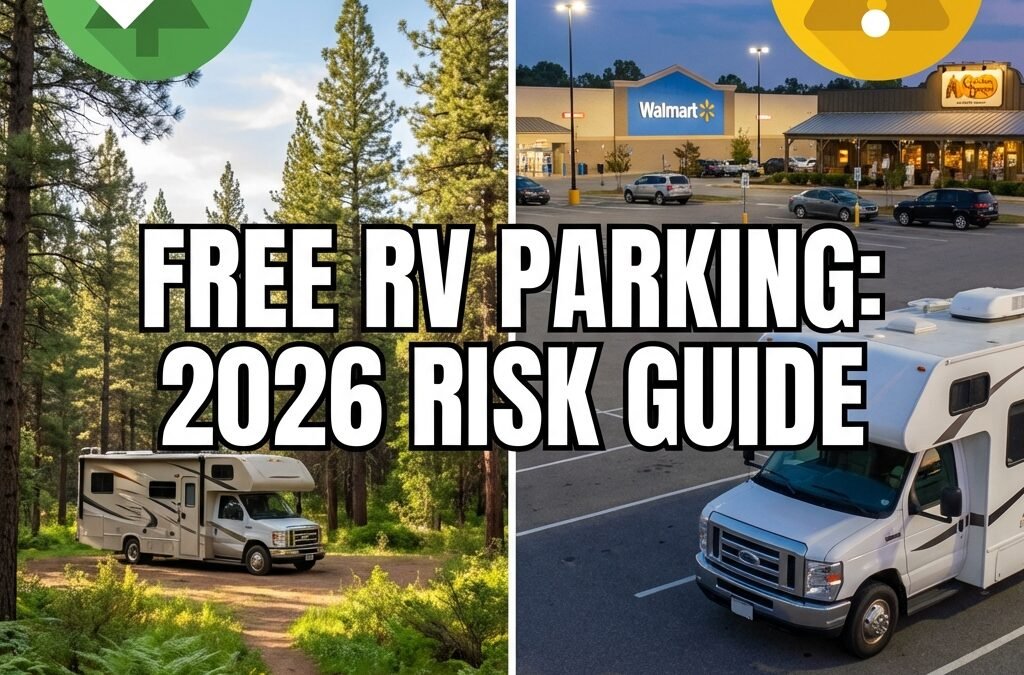
Free overnight RV parking has not vanished, but it has changed. What used to feel like a loose courtesy at many businesses now works more like a shifting patchwork of store-level permission, local ordinance, posted restrictions, and risk management. This page is not a directory of places to stop. It is a rules-and-policy guide to what changed, why it changed, and how RV travelers need to think differently in 2026. The Walmart overnight parking policy depends on the store manager and local ordinances.
If you are looking for actual stop categories instead of the policy backstory, find our directory of free RV parking locations here.
The biggest mistake RVers still make is treating overnight parking like a chain-wide promise. In reality, the answer usually comes down to a three-layer stack: what the property owner wants, what the local rules allow, and whether the site can handle overnight use without creating operational or liability headaches.

What this page covers
- How free RV parking shifted from assumption to verification
- Why chain reputation is weaker than local policy
- How public-land rules differ from private-lot permission
- What 2026 trip planning now requires if you want to avoid bad surprises
Why Are Stores Changing Their Overnight RV Parking Policies?
Most stores are not tightening overnight parking because they suddenly decided RV travelers are unwelcome. They are tightening because overnight parking is harder to manage than it used to be. Lots are busier. More properties are part of shared retail centers. More communities now scrutinize overnight vehicle stays. More managers are dealing with a mix of security concerns, customer complaints, insurance pressure, and operational limits that make casual tolerance harder to justify.
There is also a scale problem. The average overnight rig is not always a compact van. Larger motorhomes, trailers, and fifth wheels take more room, turn less easily, and create more friction in lots built for shoppers, restaurant traffic, deliveries, snow removal, and maintenance crews. A property can be friendly in spirit and still decide that overnight RV use no longer fits the way the lot actually functions.
The last piece is behavioral. When a courtesy parking option starts to look like camping, business tolerance drops fast. Chairs outside, awnings open, multiple spaces blocked, generators running late, trash left behind, and waste dumped where it should never be dumped all push a manager toward a harder rule. One bad pattern at the lot level can outweigh a chain’s broader reputation.
That is why 2026 feels different. Overnight parking did not disappear all at once. It became more local, more conditional, and more easily revoked.
The New Rule Hierarchy RV Travelers Need to Understand
One reason the old advice breaks down is that many RVers still rank the rules in the wrong order. They start with chain reputation, then look for a manager answer, and only think about local law if something goes wrong. The real order is the opposite.
| Level |
What Controls It |
Why It Matters |
| 1. Local law |
City, county, transportation authority, land agency rules |
This can override both store preference and traveler expectation |
| 2. Property policy |
Manager approval, posted signage, property-owner instructions |
This decides whether you are actually welcome on that specific site |
| 3. Brand reputation |
What RVers say online, chain history, old forum advice |
Useful for context, but too weak to rely on by itself |
The practical takeaway is simple. A chain name can still point you in the right direction, but it is no longer a decision. It is only a clue. The decision comes from the exact property and the rules around it.
Private-Lot Courtesy Parking and Public-Land Camping Are Not the Same Thing
A lot of confusion on this topic comes from treating all free overnight parking like one category. It is not. Free parking on private property is permission-based courtesy parking. Free camping on public land is rule-based authorization under a land agency’s posted system. Those are fundamentally different frameworks.
On private property, you are there because the owner or manager is willing to tolerate or allow your presence. That permission can change with a shift change, a complaint, a sign, a towing contract, a local enforcement push, or a new store manager. On public land, the starting point is different. The question is not whether the manager likes RVs. The question is whether the agency allows dispersed camping there under current rules, stay limits, closures, and local field-office restrictions.
If you blur those two systems together, you end up with bad decisions. Courtesy parking feels easier than it really is, and public-land camping feels less regulated than it really is.
What Walmart’s Policy Actually Says, and Why That Still Creates Confusion
Walmart remains the clearest example of how reputation and policy diverge. Walmart’s own FAQ says the company permits RV parking on store lots “as we are able,” and that permission is extended by individual store managers based on parking availability and local laws. That is not a blanket yes. It is a store-level decision framework. It also explains why one Walmart may still allow a one-night stay while another says no without apology.
This matters because many RVers still summarize Walmart policy as if it were universal. It is not. Even a friendly manager cannot override local rules. Even an RV-friendly market can change when the lot gets busier or enforcement tightens. The safest way to read Walmart’s position is this: the company leaves the door open, but the actual answer lives at the store level.
Once you understand that, the confusion makes more sense. Travelers are not necessarily getting contradictory information. They are often describing genuinely different local realities under the same national brand.
Why Cracker Barrel and Similar Chains Get Misread
Cracker Barrel creates a different kind of confusion. Many locations visibly accommodate larger vehicles, and official location pages often show “Bus/RV Accessible” as an amenity. That is useful, but it does not mean the same thing as overnight permission. It means the property is set up to accommodate larger vehicles in some form. It does not guarantee that management welcomes overnight stays in every case.
This is where travelers often overread the signals. A lot can be designed for buses or RVs and still operate under local rules, shared-lot constraints, or store-level limits that make overnight parking conditional or unavailable. The presence of larger-vehicle access tells you the site may be a candidate. It does not settle the policy question for you.
The same pattern shows up across multiple chain categories. RV-friendly design elements and RV-friendly overnight rules are related, but they are not the same thing.
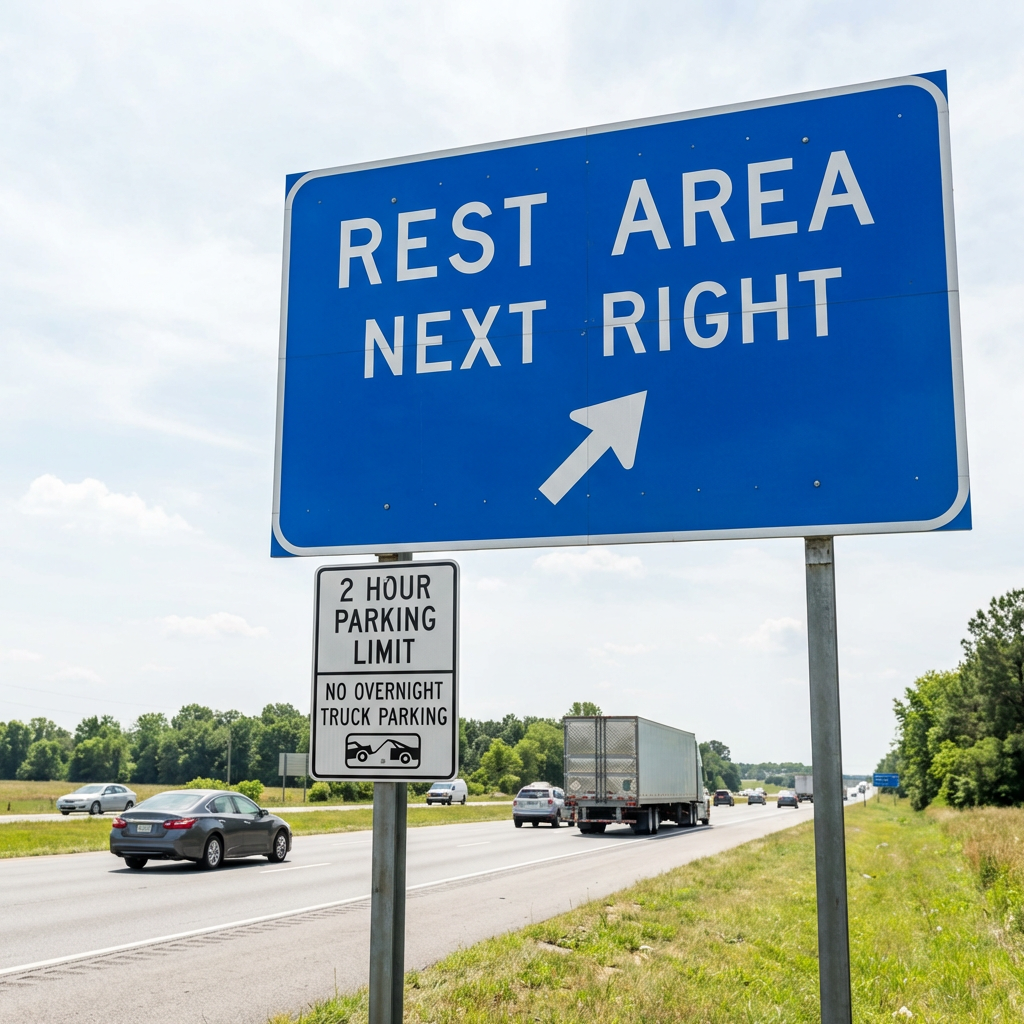
Rest Areas Are Safety Facilities, Not Open-Ended Free Camping
Rest areas are another place where traveler assumptions often outrun the actual rule structure. Under federal transportation definitions, safety rest areas exist to provide a place for motorists to stop for rest, relaxation, comfort, and information. That purpose matters. These facilities are designed around highway safety, not around open-ended overnight habitation.
In practice, that means rules are usually set by state transportation agencies or toll-road authorities, not by a national overnight-parking standard. Some states or facilities tolerate longer stops than others. Some post time limits. Some warn against leaving vehicles unattended. Some actively tow vehicles that appear abandoned or out of compliance. That is why broad state-by-state folklore about rest-area sleeping often breaks down when it meets an actual sign at an actual facility.
The New York State Thruway is a useful example of the mindset. Its parking and welcome center page says the areas are open 24 hours but tells travelers not to leave a vehicle unattended and warns that unattended vehicles will be towed. That is a clear reminder that access and overnight camping are not the same thing.
Public Land Is Still Free, but the Rules Are More Local Than Many RVers Realize
If private-lot courtesy parking feels more fragile in 2026, public land still looks like the stable answer. In some ways it is. But it is not a free-for-all, and the stability comes from following agency rules, not from assuming a wilderness free pass.
The Bureau of Land Management says dispersed camping is generally limited to 14 days within a 28-day period, with local state and field-office variation. The Forest Service says dispersed camping is usually limited to 14 days as well, but that limit can be further tightened in some National Forest areas. That “usually” matters. It means the broad rule is useful, but local office guidance still controls the real answer.
This is one of the biggest changes in traveler mindset. Years ago, many RVers could get by with a rough understanding of “14 days on public land” and not think much beyond that. That shortcut is weaker now. Fire restrictions, area closures, road damage, crowding, habitat protection, and field-office orders all matter more than they once did to ordinary trip planning.
The stronger rule for 2026 is this: public land still offers real free-camping value, but you have to think in terms of local office rules, not just national folklore.
The Landscape Is Also Shifting Toward Formal Parking Systems
One of the quieter changes in the overnight parking world is the move from informal tolerance toward designated or reservable parking systems. You can see that most clearly in the travel-center world. Pilot now surfaces “Prime Parking” on location pages, and some Pilot locations show separate public parking, truck parking, and paid or reservable parking products. Love’s markets RV Stops and emphasizes RV parking and amenities as a formal part of its network.
That does not mean free overnight parking disappears everywhere. It does mean the market is drifting toward clearer segmentation. Instead of one fuzzy bucket called “park here if nobody complains,” more sites are moving toward labeled spaces, paid reservations, designated RV products, or explicit restrictions. From an operator’s perspective, that makes sense. It reduces ambiguity, helps manage traffic, and puts control back in the hands of the property.
From a traveler’s perspective, it changes the game. The future looks less like informal courtesy and more like managed parking categories with clearer rules.
The Traveler Behaviors That Accelerate Policy Crackdowns
The legal and operational pressures are real, but traveler behavior still matters. Businesses and agencies usually tighten policy after patterns, not after one isolated incident. The fastest way to convert informal tolerance into a written restriction is to make overnight parking look like occupancy instead of rest.
- Treating a business lot like a campsite instead of a brief overnight stop
- Blocking spaces, traffic flow, loading areas, or customer access
- Staying longer than the property expects or longer than posted rules allow
- Creating noise, running generators late, or attracting complaints
- Leaving trash or any sign that the lot became a de facto campground
None of that is new. What changed is the tolerance threshold. With more scrutiny on lots and more pressure on public spaces, the margin for sloppy behavior is thinner than it was.
How to Verify Overnight RV Parking Policy in 2026
Reputation used to do more of the work. Now verification does.
- Check the property type first. Are you dealing with public land, a rest area, or private commercial property? The answer changes the rule system immediately.
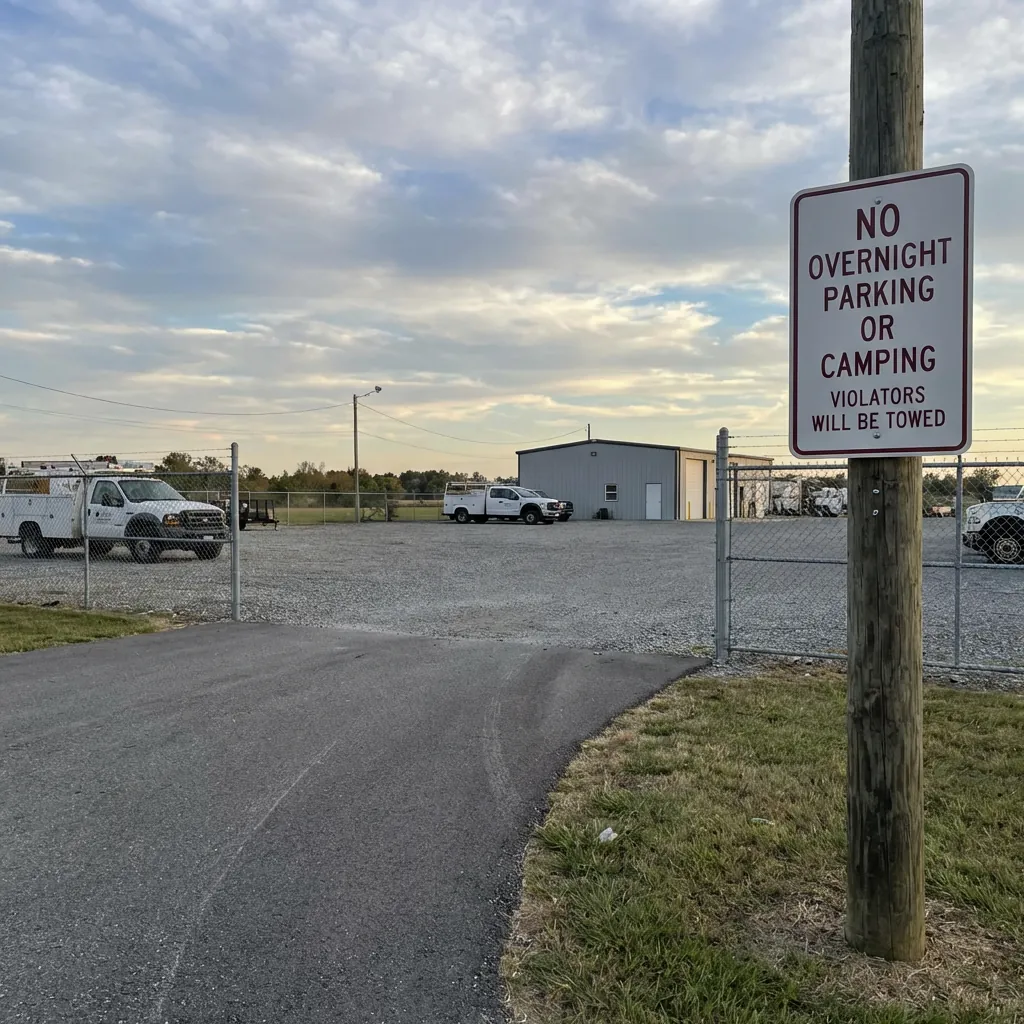
- Look for posted restrictions. Signs beat assumptions. A sign at the entrance is more valuable than ten old forum comments.
- Call the exact property the same day. Ask the decision-maker, not just whoever answers the phone casually.
- Ask where to park, not only whether you can park. A yes without location guidance is incomplete.
- Treat every private-lot stay as one-night, low-profile, and revocable. That mindset matches the actual policy environment better than old-school certainty.
This sounds simple because it is simple. But it is the cleanest adaptation to the new landscape. The traveler who verifies the property almost always beats the traveler who trusts the brand.
Frequently Asked Questions
Does Walmart corporate policy guarantee overnight RV parking?
No. Walmart says RV parking is permitted only as stores are able, and that permission is extended by individual store managers based on parking availability and local laws. That means the chain’s reputation can point you toward a possibility, but the exact store still decides the real answer.
Does “Bus/RV Accessible” mean a business allows overnight stays?
No. It usually means the site can physically accommodate larger vehicles. That is useful information, but it is not the same as overnight permission. Accessibility tells you something about lot design. Overnight policy is a separate decision that still depends on local conditions and management.
Are rest areas meant for overnight RV camping?
Not in the open-ended camping sense. Rest areas are transportation-safety facilities designed to give motorists a place to stop and rest. Overnight use, time limits, unattended-vehicle rules, and enforcement all depend on the state agency or facility operator. The sign on-site matters more than internet folklore.
Is public land still the most stable free option?
In many cases, yes, but only if you follow the actual agency rules. BLM and Forest Service land still support dispersed camping in many areas, yet stay limits, closures, local restrictions, and field-office rules matter more than broad traveler assumptions. Stable does not mean unrestricted.
Why does one property in a chain say yes while another says no?
Because the real policy environment is local. Property layout, neighboring tenants, city rules, past complaints, towing contracts, and management style can all differ from one site to the next. The chain name may be the same, but the risk environment is not.
What is the biggest mindset shift for 2026?
Stop treating free overnight parking as a category guarantee and start treating it as a policy question you answer before arrival. That one change will save more frustration than any app, old list, or travel rumor.
The 2026 Takeaway
Free RV parking still exists. What changed is the level of certainty around it. Courtesy parking at businesses is narrower than it used to be. Rest-area use is more clearly tied to safety and agency control. Public land remains valuable, but local office rules matter more than broad assumptions. And more commercial operators are moving toward designated, managed, or formal parking systems.
That does not mean the road is closed to budget-conscious RV travel. It means the strategy has changed. Trip planning now rewards flexibility, verification, and a better understanding of who actually controls the answer at each stop.
The RVers who adapt to that reality will still do fine. The ones who keep relying on old reputations and broad chain myths will be the ones saying free parking disappeared overnight.
Policy Sources and Official References
by Chuck Price | Feb 6, 2026 | Boondocking-Guide
Dispersed camping on BLM land is generally limited to 14 days within any 28-day period, per the Bureau of Land Management (BLM). Then you must move, often at least 25 to 30 miles away. Colorado allows 14 days in any 30-day period under its statewide BLM rules.
Last updated: September 27, 2026
Chuck Price has 35+ years of RV camping experience and owns a 2018 Hymer Aktiv Class B.
Land access, permits, road conditions, and site availability change. Verify all information with the relevant land management agency before your trip. Conditions on remote public land can be hazardous, so assess your skills and equipment before you go.
- Must-know: BLM generally limits dispersed camping to 14 days within any 28-day period, then you move, often 25 to 30 miles (BLM).
- Trip killers: Colorado allows 14 days in any 30, then a 30-air-mile move (BLM Colorado). Entering an area closed by a fire prevention order is prohibited under 43 CFR 9212.1.
- Best for: RVers and tent campers planning dispersed stays outside developed campgrounds.
- Confirm before you go: Rules vary by state and local area, so check posted signs and your local BLM office (BLM).
BLM land camping rules at a glance
BLM manages 245 million acres, one-tenth of America’s land base, according to BLM. If your state is not listed, check with its BLM state office.
BLM dispersed camping rules and where they differ, as of September 27, 2026 (BLM pages and the eCFR).
| Rule |
National default |
Where it differs |
Source |
| Stay limit |
Generally 14 days within any 28-day period |
Colorado: 14 days in any 30-day period at one location |
BLM camping page, BLM Colorado |
| Permit |
Not required in most areas |
California: free campfire permit for all campfires and gas stove fires |
BLM camping page, BLM California |
| Unattended property |
10 days (12 months in Alaska) |
Colorado: 48 hours. Idaho: BLM says the limit differs |
43 CFR 8365.1-2, BLM Colorado, BLM camping page |
| Fire |
Never leave a fire without extinguishing it. Fire prevention orders can close or restrict areas |
New Mexico: campfires must be attended at all times |
43 CFR 9212, BLM New Mexico |
| Penalty |
Fine up to $1,000 and/or up to 12 months of imprisonment |
Some supplementary rules also cite fines under 18 U.S.C. 3571 |
43 CFR 8360.0-7, 89 FR, Nov. 14, 2024 |
How long can you camp on BLM land?
BLM’s national camping page says: “Dispersed camping is generally limited to 14 days within any 28-day period, though specific stay limits vary by state and field office.” BLM calls camping away from developed recreation facilities dispersed camping. BLM also says dispersed camping is for short-term recreation, not long-term living.
Federal regulation 43 CFR 8365.1-2 sets no fixed number of days and bars camping longer than the period the authorized officer permits (eCFR, current as of September 24, 2026). An authorized officer is a BLM employee delegated that authority, per 43 CFR 8360.0-5. For the basics of camping without hookups, see our guide to boondocking for beginners.
How the 28-day clock works
- California: the 28-day period “begins when a camper initially occupies a specific location”, per BLM California. Separate visits count toward the 14 days.
- Nevada: the period starts when you first occupy a specific site, per BLM Nevada. Staying longer requires written permission from an authorized officer.
- New Mexico: you reach the limit through a number of separate visits or through 14 days of continuous overnight occupation, per BLM New Mexico.
Colorado uses 14 days in any 30
BLM Colorado’s statewide supplementary rules say you must not camp longer than 14 days in any 30-day period at any one location (BLM Colorado fact sheet, January 28, 2025). The rules took effect July 12, 2010, under 75 FR 32968.
How far do you have to move after 14 days?
After reaching the stay limit, you must move to a new location, often at least 25 to 30 miles away, per the BLM camping page. The distance differs by state, as the table shows.
BLM stay limits and move distances by jurisdiction, from BLM pages and Federal Register rules opened September 27, 2026.
| Jurisdiction |
Stay limit |
Move after the limit |
Source |
| BLM national guidance |
Generally 14 days within any 28-day period, varies by state and field office |
Often at least 25 to 30 miles |
BLM camping page |
| California |
14 days within any 28 consecutive days, unless otherwise identified |
Outside a 25-mile radius of the previous location until the 29th day |
BLM California |
| Nevada |
Up to 14 days in a 28-day period, unless otherwise noted |
At least 25 miles away |
BLM Nevada |
| New Mexico |
14 days within any 28 consecutive days |
At least 25 miles away |
BLM New Mexico |
| Colorado (statewide, effective July 12, 2010) |
14 days in any 30-day period at one location |
At least 30 air miles away |
75 FR 32968 |
| Mittry Lake Wildlife Area, Arizona (effective Nov. 1, 2025) |
14 days within a 28-day period |
At least 25 miles away |
BLM announcement, Sept. 25, 2025 |
Do you need a permit to camp on BLM land?
Most dispersed camping on BLM land needs no permit. BLM’s camping page says: “Most areas don’t require permits or reservations.” Some regions may require permits for large groups or campfires, per the same page. In California, all campfires and gas stove fires on public lands require a California Campfire Permit, which is free and available online (BLM California).
Special Recreation Permits cover commercial use, competitive events, group activities, recreation events and vending services, per BLM permits and fees. BLM’s camping page says that some BLM campgrounds charge a fee, and that fees and stay limits differ by campground (BLM).
For national park land, see our guide to boondocking in national parks. For the costs that come with free camping, read about the hidden costs of free RV parking.
Leaving your RV or gear unattended
Under 43 CFR 8365.1-2(b), current as of September 24, 2026, no person shall “Leave personal property unattended longer than 10 days (12 months in Alaska)”. Unauthorized property may be disposed of under the same regulation. In developed BLM campgrounds, BLM’s camping page says not to leave personal property unattended for more than 72 hours, or as posted at the site. Colorado sets a 48-hour limit (BLM Colorado).
BLM’s national camping page says Idaho differs. Ask the Idaho BLM office for its limit before you leave property unattended there.
Campfires and fire restrictions
Fire restrictions on BLM land can vary throughout the year, so check current regulations and posted guidance before you go (BLM). BLM initiates restrictions or temporary public land closures to reduce the risk of wildfires, per its fire restrictions page. BLM says its preventive measures focus on human-related activities such as campfires, off-road driving, equipment use and recreational target shooting.
Under 43 CFR 9212.2, BLM officers may issue fire prevention orders that close entry to, or restrict uses of, designated public lands (eCFR, current as of September 24, 2026). Each order names the area, the time period and any exemptions, and is posted. Unless authorized in writing, 43 CFR 9212.1 prohibits these acts:
- Leaving a fire without extinguishing it.
- Building a campfire without removing all flammable material from around it.
- Entering an area closed by a fire prevention order.
- Doing anything a fire prevention order restricts.
New Mexico says campfires must be attended at all times (BLM New Mexico). At Canyons of the Ancients National Monument in Colorado, a 2024 rule requires a fire pan for campfires when no metal fire ring is provided (89 FR, Nov. 14, 2024).
Human waste, gray water and trash
Under 43 CFR 8365.1-1 (eCFR, current as of September 24, 2026), visitors shall pack their trash for disposal at home whenever practicable. The same section bars draining sewage or petroleum products, or dumping refuse or waste other than wash water, from any trailer or other vehicle except in places or receptacles provided for that purpose. It also bars disposing of household refuse brought from home and polluting water supplies.
BLM’s camping page recommends a portable toilet or packing out your waste if possible. In some locations, it recommends burying waste 6 to 8 inches deep, at least 200 feet from water and trails.
In New Mexico, camping is prohibited within 900 feet of any developed water source such as a guzzler or watering trough (BLM New Mexico).
Where you can camp and drive
Most BLM lands allow dispersed camping unless an area is posted “Closed to Camping” or has specific restrictions (BLM). Vehicles must stay on designated roads and trails unless the area is specifically designated for off-road vehicle use. BLM lists the following as best-practice recommendations, not rules:
- Camp in spots that are already disturbed.
- Stay within 150 feet of designated routes.
- Camp at least 200 feet from lakes, rivers and streams.
- Do not camp within 1 mile of campgrounds, trailheads or picnic areas.
- Use existing fire rings or a fire pan.
Local rules can close more ground. At Canyons of the Ancients, a rule effective December 16, 2024, bars camping in named special recreation management areas and within 300 feet of a developed recreation site or riparian area (89 FR, Nov. 14, 2024).
To locate sites, see how to find dispersed camping sites with Google Maps. For picking a spot once you arrive, see choosing a campsite for a Class B RV.
Bringing a UTV or side-by-side to camp
BLM treats a UTV as an off-road vehicle, so federal off-road rules apply before you unload it. You may ride only in areas and on routes the local office designates as open or limited. Closed areas bar off-road vehicles entirely. You also need a valid state operator’s license or learner’s permit where state or federal law requires one, and state rules on registration, equipment and operation still apply on BLM land (43 CFR 8341.1, eCFR, current as of September 29, 2026).
The machine has to meet the federal minimums in 43 CFR 8343.1:
- Brakes in good working condition.
- No muffler cutout, bypass or similar device.
- A spark arrester where the local office requires one.
- Headlights and a red taillight to ride from a half-hour after sunset to a half-hour before sunrise.
Those rules cover BLM routes only. Riding from camp to a trailhead on a county road or highway is a state question. Check our street legal UTV laws by state before you drive off the trailer and onto pavement.
Local rules can override the general limit
A BLM State Director may set supplementary rules “for the protection of persons, property, and public lands and resources”, under 43 CFR 8365.1-6 (eCFR, current as of September 24, 2026). These rules must be available at the local office, posted on site, and published in the Federal Register and locally.
State and local laws also apply on BLM land, except as otherwise provided by federal law, under 43 CFR 8365.1-7.
Mittry Lake since November 2025
BLM announced on September 25, 2025, that Mittry Lake Wildlife Area in Arizona would move from 10 days per calendar year to 14 days within a 28-day period on November 1, 2025 (BLM announcement). BLM made the change with the Arizona Game and Fish Department and the Bureau of Reclamation. BLM said the change “aligns Mittry Lake with surrounding BLM-managed public lands”.
Long Term Visitor Areas: the winter exception
BLM calls Long Term Visitor Areas (LTVAs) a rare exception to short-term dispersed camping. At seven LTVAs in Arizona and California, winter visitors may camp up to seven consecutive months with a permit (BLM). The season runs September 15 to April 15, and one permit is valid at all seven, per Recreation.gov. For permit types, fees and site rules, see our guide to LTVA permits, fees and rules.
Penalties for breaking BLM camping rules
Under 43 CFR 8360.0-7 (eCFR, current as of September 24, 2026), violations of the regulations in 43 CFR Part 8360 by a member of the public are “punishable by a fine not to exceed $1,000 and/or imprisonment not to exceed 12 months.” The same section says violations of supplementary rules are punishable in the same manner. Knowingly and willfully violating the fire rules in 43 CFR 9212.1 carries a fine of not more than $1,000, imprisonment of not more than 12 months, or both, under 43 CFR 9212.4.
Colorado’s 2010 rules refer to “enhanced fines provided for by 18 U.S.C. 3571” (75 FR 32968). The 2024 Canyons of the Ancients rule says violators may be “fined in accordance with 18 U.S.C. 3571” (89 FR, Nov. 14, 2024).
BLM fee-free days in 2026
As of September 27, 2026, BLM’s two remaining 2026 fee-free days are October 27 and November 11, per its fee-free days page. BLM says: “Beginning in 2026, free access on these days will be for U.S. citizens and residents only.”
Fee-free days waive standard amenity and day-use fees. They do not waive expanded amenity fees, developed camping, group day-use, cabin rentals or individual special recreation permits. For a full look at trip spending, see our boondocking cost breakdown.
Before you go
Before you camp, check posted signs and the BLM fire restrictions page for your state. In California, get the free campfire permit before you light a campfire or gas stove. Then call the field office that manages the area and confirm the stay limit and move distance for your trip dates.
Frequently asked questions
How long can you camp on BLM land?
BLM generally limits dispersed camping to 14 days within any 28-day period, and limits vary by state and field office. Colorado allows 14 days in any 30-day period, then requires a move of at least 30 air miles. These limits are current as of September 27, 2026, so check the local BLM office before you go.
Do you need a permit to camp on BLM land?
Most dispersed camping areas on BLM land do not require permits or reservations. BLM says some regions may require permits for large groups or campfires. California requires a free California Campfire Permit for all campfires and gas stove fires on public lands. This is current as of September 27, 2026, so check the local BLM office before you go.
How far do you have to move after 14 days on BLM land?
BLM’s national page says often at least 25 to 30 miles. California, Nevada and New Mexico say 25 miles, and California applies it as a radius from your previous location until the 29th day. Colorado requires at least 30 air miles. This is current as of September 27, 2026, so check the local BLM office before you go.
Can you leave your RV unattended on BLM land?
Federal rules bar leaving personal property unattended longer than 10 days, or 12 months in Alaska, under 43 CFR 8365.1-2. Colorado’s limit is 48 hours. BLM says Idaho differs. These limits are current as of September 27, 2026, so check the local BLM office before you go.
What is the penalty for breaking BLM camping rules?
Under 43 CFR 8360.0-7, a violation of the BLM visitor rules in 43 CFR Part 8360 is punishable by a fine of up to $1,000 and/or up to 12 months of imprisonment. The same penalty applies to violations of supplementary rules. Some supplementary rules, including Colorado’s 2010 rules, also cite fines under 18 U.S.C. 3571. This is current as of September 27, 2026.
Can you have a campfire on BLM land?
Campfires may be allowed unless a fire prevention order closes the area or restricts fire use under 43 CFR 9212. Check the BLM fire restrictions page for your state before you go. Never leave a fire without extinguishing it. California requires a free campfire permit, as of September 27, 2026.
Are LTVAs different from regular BLM dispersed camping?
Yes. At BLM’s seven Long Term Visitor Areas in Arizona and California, a permit lets winter visitors camp up to seven consecutive months, from September 15 to April 15, as of September 27, 2026. Our LTVA guide covers permits and site rules.
by Chuck Price | Jan 25, 2026 | Resources
2026 “Double-Play” Guide
TL;DR: Your Moab Plan in 90 Seconds
Arches does not require an advance timed-entry reservation in 2026. This “Moab Double-Play” still gives you the smart rhythm: hit Arches early for iconic hikes, then spend afternoons on the big, crowd-absorbing overlooks in Canyonlands.
Early starts remain the best move for cooler trails and lighter traffic. NPS may divert vehicles at the entrance when the park is too congested, so arrive early and keep a flexible backup plan.
You’ll get:
- A step-by-step daily itinerary
- A practical plan for cooler trails and less parking stress
- Links to the official NPS Arches map and current trip-planning information
Read-time: 8 minutes.
What Is the Moab “Double-Play” Itinerary?
It’s a practical way to visit Moab’s two national parks without wasting half your trip in lines or cooking on exposed trails.
Here’s the logic:
Arches is the crowd magnet and it’s best when it’s cool and quiet. Canyonlands (Island in the Sky) is built for midday. It’s huge, it spreads people out, and the overlooks don’t punish you the way a long Arches hike can.
From personal experience, splitting the day like this keeps you moving with the desert’s rhythm instead of fighting it.
Answer Capsule: The Moab “Double-Play” is a 3-day itinerary that pairs early-morning Arches hikes with afternoon Canyonlands overlooks. In 2026, Arches has no advance timed-entry requirement, but arriving early improves comfort, parking, and flexibility.
Why You Should Still Plan Ahead in Moab
Arches does not require advance timed-entry reservations in 2026, but a flexible plan still matters. NPS can divert vehicles from the entrance when the park is too congested, and trailhead parking fills early.
The no-drama move is simple: hike early, carry ample water, and check current conditions before leaving Moab. Devils Garden Campground and Fiery Furnace hikes have separate reservation requirements.
Answer Capsule: Arches has no advance timed-entry requirement in 2026. Visitors may enter during operating hours, but congestion can affect access and some activities still require reservations.
The Moab Double-Play Itinerary — A Step-by-Step Guide
This plan assumes you’re staying in or near Moab and have your passes sorted in advance. Pack headlamps, lots of water, and snacks each day. Desert “short hikes” can still wreck you if you treat them casually.
Day 1: Arches AM, Canyonlands PM
- Morning (6:00 AM): Get up early. Aim to be at the Arches entrance gate by 6:30 AM for cooler hiking and better parking. There is no advance timed-entry requirement in 2026, but congestion can still affect entrance access.
- Hike (7:00 AM to 9:30 AM): Go straight to the Windows Section. Hit North Window, South Window, Turret Arch, and Double Arch. Short trails. Big payoff. Great morning light.
- Late Morning (10:00 AM): Exit Arches and drive about 45 minutes to Canyonlands National Park, Island in the Sky.
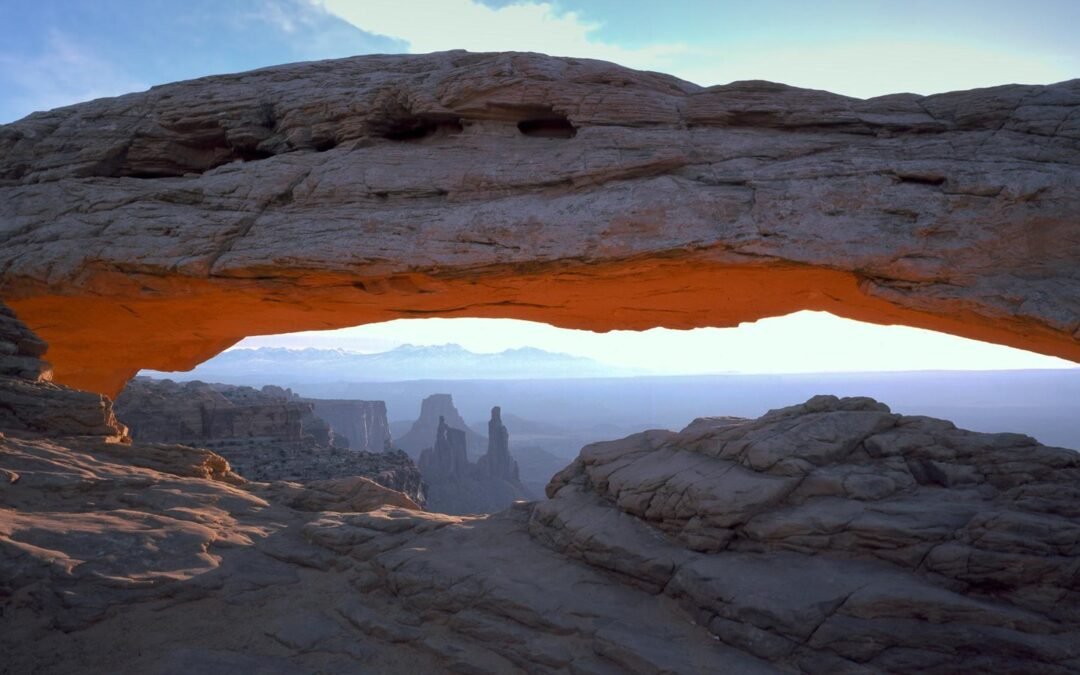
- Afternoon (11:00 AM to 4:00 PM): Drive the scenic road and stop at the overlooks. Hike the easy trail to Mesa Arch. Picnic at Grand View Point Overlook.
Day 2: Delicate Arch, Then Devils Garden
- Morning (6:00 AM): Another early start for the cool hours and a less crowded trailhead.
- Hike (7:00 AM to 10:00 AM): Do the 3-mile roundtrip Delicate Arch hike early. The final climb is exposed and brutal later in the day.
- Late Morning (10:30 AM to 1:00 PM): Drive to Devils Garden and take the flatter trail to Landscape Arch.
- Afternoon: Rest. Go back into Moab, refuel on water, and get out of the peak heat.
Day 3: Canyonlands Sunrise, Then a State Park Sunset
- Morning (5:30 AM): Sunrise at Mesa Arch in Canyonlands. Expect photographers. The view earns it.
- Late Morning: Hit anything you skipped: Upheaval Dome or Aztec Butte, depending on your group and heat tolerance.
- Afternoon/Evening: Drive 15 minutes to Dead Horse Point State Park. Separate entrance fee. One of the best sunset overlooks in Utah.
A Note on 2026 Entry
NPS states that no advance timed-entry reservations are required at Arches in 2026; visitors may enter during operating hours. The park can divert vehicles when areas are too congested. Check current conditions before you drive over, and reserve Devils Garden camping or Fiery Furnace hikes separately if those are in your plan.
Pro Tip: Cell service is weak to nonexistent in big chunks of both parks. Download your maps and key pages from the official NPS site to your phone before you leave Moab.
3 Common Mistakes to Avoid in the Desert
- Not Enough Water: The sun and dry air dehydrate you fast. The Fix: For a full day out, a solid baseline is about 1 gallon (4 liters) per person, then adjust up for heat and effort. Don’t just leave it in the car. Carry it.
- Ignoring Trail Warnings: If a sign says “strenuous” or “primitive,” believe it. The Fix: Be honest about fitness, heat tolerance, and kids’ stamina. Devils Garden loops and Upheaval Dome are not casual strolls.
- Busting the Crust: That lumpy black soil is alive. It’s cryptobiotic soil, and it holds the desert together. The Fix: Stay on marked trails. One footprint can undo decades of growth.
Local Tip: The Moab “Triple Crown” Day
Here’s the cleanest “big day” combo if you want sunrise to sunset without trying to do everything at once:
Arches at dawn, Canyonlands mid-day, Dead Horse Point at dusk.
It works because it matches what the environment is doing. Morning is for hiking. Midday is for overlooks. Evening is for big-sky views.
FAQ: Your Top Moab Questions Answered
Do I need a timed-entry reservation for Arches in 2026?
No. NPS says advance timed-entry reservations are not required in 2026, and visitors may enter during operating hours. Vehicles can be diverted from the entrance when the park is too congested, so check current conditions before you go.
What still needs a reservation?
Devils Garden Campground and both self-guided and ranger-led Fiery Furnace hikes have separate reservation requirements.
Which park is better for kids?
Arches is usually better for younger kids. The Windows Section trails are short and rewarding. Canyonlands is stunning, but the scale can be harder for kids to “get,” and many overlooks have sheer drop-offs.
What should I reserve before an Arches trip?
If your plans include Devils Garden Campground or a Fiery Furnace hike, make those reservations separately. Otherwise, focus on current conditions, water, and an early start.
What if I want to hike the Fiery Furnace?
Fiery Furnace requires a separate permit. This itinerary skips it because it can take a half-day by itself.
Ready to Explore Moab? Grab the Official NPS Guides
Use the official pages and keep your trip from getting wrecked by policy changes.
Next step: Share this guide with your travel partners, pack your headlamp and water, and build your days around the desert instead of fighting it.
Featured Image Credit: National Park Service