The Great Smoky Mountains National Park has implemented a mandatory parking tag system requiring all vehicles parked longer than 15 minutes to display a valid permit. The park recorded 11,527,939 recreation visits in 2025, according to NPS visitation figures. NPS counts visits, not unique people, so one person can be counted more than once. This guide provides detailed solutions, including kiosk locations for purchasing tags, scenic routes exempt from requirements, and optimized RV itineraries avoiding Gatlinburg congestion. Drawing from National Park Service documentation and visitor data analysis, this resource addresses critical information gaps while offering practical strategies for navigating America’s most visited national park efficiently.
Updated November 27, 2026. Tag prices and rules below were checked against the NPS fees and passes page on that date. Road status changes with the seasons, so check the NPS seasonal roads page before you go. Land access, permits, road conditions, and site availability change. Verify all information with the National Park Service before your trip.
Understanding the Parking Tag System
The “Park it Forward” parking tag program began on March 1, 2023, according to the NPS. It represents a fundamental shift in how visitors access Great Smoky Mountains National Park. Unlike most national parks that charge entrance fees, the Smokies remain free to enter but now require parking tags for any vehicle parked longer than 15 minutes within park boundaries. The system responds to a funding gap. Park visits grew 57% from 2011 to 2021, and staffing and operating funds did not keep pace, according to the NPS.
Parking Tag Options and Requirements
Three permit tiers accommodate different visitor needs:
Daily Tag: $5, valid for a single calendar day
Weekly Pass: $15, valid for seven consecutive days
Annual Pass: $40, valid for 12 months from the month of purchase. Check the punched month on the decal.
All vehicle types, including motorcycles, passenger cars, RVs, and commercial tour buses pay identical rates. Each parked vehicle generally needs its own tag. Tags must include the specific license plate number of the vehicle where displayed and cannot be transferred between vehicles. Daily and weekly tags must be placed face‑up on the front lower passenger‑side dashboard. Annual decals go on the lower passenger‑side windshield.
Enforcement and Compliance
Park rangers conduct regular patrols, checking compliance and issuing potential consequences, including warnings, citations, or vehicle towing at the owner’s expense. The fifteen‑minute threshold creates practical challenges for photographers and wildlife watchers whose activities often extend beyond this limit unpredictably. Several exemptions exist. Vehicles displaying a valid state‑issued disability placard or disability license plate qualify. A veteran plate designation alone does not. Registered campers parked at their designated campsite within a park campground do not need a tag, but other parking areas follow the normal rule. Approved education groups and some other listed activities have separate exemption procedures.
Fee‑free days also waive the tag, but the current federal fee‑free schedule limits free admission to US citizens and residents. Check the dates and eligibility on the NPS fees page before you count on a free day.
Purchasing Options
Automated fee machines accept credit cards only. They are available 24 hours a day, year-round, per the NPS fees page. Tap‑to‑pay is not available.
Deep Creek parking area
Oconaluftee Visitor Center
Sugarlands Visitor Center
Newfound Gap overlook
Cades Cove entrance parking area
Metcalf Bottoms Picnic Area
Online purchases through Recreation.gov require visitors to print their tags, as park staff don’t provide printing services. Annual tags can be ordered online for shipment through Smokies Life. Order well before your trip.
Traffic Management Strategies
The Smoky Mountains region faces severe traffic congestion due to its position within a day’s drive of over half the U.S. population, combined with its status as America’s most visited national park. Primary traffic arteries funnel visitors through limited access points, creating inevitable bottlenecks during peak periods between 10 AM and 6 PM, with the worst congestion occurring on Saturdays and holiday weekends.
Fall Foliage Season (October to November): Highest visitation due to spectacular autumn colors causing delays on Newfound Gap Road, Cades Cove Loop, and Roaring Fork Motor Nature Trail
Summer Months: Consistently heavy traffic throughout the traditional vacation season
Spring Break: Concentrated surges of visitor activity
The Parkway (US‑441) connecting Sevierville, Pigeon Forge, and Gatlinburg suffers from frequent stoplights approximately every few blocks, combined with pedestrian crossings that transform a normally 15‑minute drive into 45‑60‑minute delays during peak periods. Parking scarcity compounds problems as downtown Gatlinburg lots fill rapidly at premium rates, forcing vehicles to circulate repeatedly through congested areas.
Commercial Traffic Complications
An unexpected complication emerged from commercial truckers seeking alternative routes during Interstate 40 closures at the Tennessee‑North Carolina border despite regulations prohibiting commercial vehicles on Newfound Gap Road. On October 17, 2024, the NPS reported that it had turned away more than 800 commercial vehicles from US 441/Newfound Gap Road since October 2. The same release lists crashes involving commercial trucks in early October 2024. It describes the road as having steep continuous grades and tight curves, with no truck lanes or runaway truck ramps.
Geographic Constraints
Mountainous terrain restricts road expansion options while environmental protection concerns create additional constraints on infrastructure development. This combination results in a transportation system operating at capacity with limited physical expansion possibilities. Weather conditions introduce unpredictable variables as sudden summer thunderstorms force outdoor tourists indoors, simultaneously creating surge demands on roadways.
Scenic Routes Exempt from Parking Requirements
Several scenic routes provide breathtaking views without requiring parking tags due to their “through‑driver” status, where stops don’t exceed 15 minutes. These routes offer excellent alternatives for visitors seeking park experiences without purchasing permits.
Foothills Parkway Experience
The Foothills Parkway has three drivable sections that total about 37 miles. The two western sections connect at Walland. The eastern section is separate and does not connect to them. All three offer panoramic vistas without parking requirements:
Western Section, Chilhowee to Walland (16.6 miles): Runs from US‑129 at Chilhowee to Walland near US‑321, with multiple overlooks, including Look Rock Tower, providing elevation views above 2,000 feet. Source: NPS.
Central Section, Walland to Wears Valley (about 14.75 miles): US‑321 provides access at both ends, with elevated views of Cove Mountain and English Mountain. Source: NPS.
Eastern Section, Cosby to I‑40 (5.6 miles): Connects I‑40 exit 443 with Cosby Highway near US‑321, including elevated views above the Cosby community. It does not connect directly to US‑441. Source: NPS.
The Foothills Parkway features engineering marvels, including multiple bridges spanning deep valleys and tunnels through mountain ridges. Through‑drivers can complete each segment in approximately 30 minutes while enjoying continuous mountain vistas without exceeding the 15‑minute stop limit at any single location.
Newfound Gap Road Corridor
Stretching 31 miles from Gatlinburg, TN, to Cherokee, NC, this route crosses the park at Newfound Gap (elevation 5,046 feet), offering numerous scenic overlooks where brief stops under 15 minutes don’t require permits. Key viewpoints include:
Campbell Overlook: Panoramic views of Mount LeConte
Newfound Gap: The Highest point on the road with the Rockefeller Memorial
Oconaluftee Valley Overlook: Sweeping valley vistas
This route features elevation changes exceeding 3,000 feet with diverse ecosystems visible throughout the drive. Through‑drivers can complete the route in approximately one hour while enjoying continuous mountain scenery without parking tag requirements when keeping stops brief.
Roaring Fork Motor Nature Trail
This 5.5‑mile one‑way loop near Gatlinburg winds through old‑growth forest past historic structures, including Ephraim Bales Cabin and Alfred Reagan Tub Mill. The route features numerous pullouts where drivers can pause briefly (under 15 minutes) to enjoy:
Rainbow Falls views
Place of a Thousand Drips waterfall
Historic homesteads
Buses, trailers and motorhomes are not permitted on the Roaring Fork Motor Nature Trail, per the NPS Roaring Fork page. Leave the RV parked and drive a smaller vehicle. Access is from Gatlinburg at traffic light 8. The road provides intimate forest experiences without parking requirements when stops remain brief. The complete loop takes approximately 45 minutes to drive without extended stops.
Kiosk Locations for Parking Tag Purchase
Automated fee machines are available 24 hours a day, year-round, at these park locations, providing convenient access to daily and weekly parking tags using credit cards exclusively. These kiosks reduce visitor center congestion while accommodating early‑morning or late‑evening arrivals.
Secondary Purchase Locations
Staffed locations that also sell tags include:
Gatlinburg Welcome Center: 1011 Banner Road, on the Spur between Pigeon Forge and Gatlinburg
Great Smokies Welcome Center in Townsend: 7929 E. Lamar Alexander Parkway
Tremont Store: 9275 Tremont Road. This is a separate seller from the Townsend welcome center, per the NPS fees page.
Both welcome centers are open daily from 9 a.m. to 5 p.m. March through November and from 9 a.m. to 4:30 p.m. December through February. Both close on December 25, per Smokies Life. On the Cherokee side, buy tags at Oconaluftee Visitor Center.
These locations provide human assistance for visitors needing help with machine operation or those preferring printed tags without self‑service requirements.
This three‑day itinerary maximizes Smoky Mountain experiences while minimizing traffic exposure through strategic routing and timing:
Day 1: Western Wonders
Morning (7‑11 AM)
Enter through the Townsend entrance via TN‑73 (“Peaceful Side of Smokies”)
Explore the one‑way, 11‑mile Cades Cove Loop before crowds arrive (stop at Methodist Church & Cable Mill). Motor vehicle access normally begins at sunrise and ends at sunset. Check the vehicle‑free schedule on the NPS Cades Cove page.
Purchase weekly parking tag at Cades Cove kiosk
Afternoon (1‑5 PM)
Hike Abrams Falls Trail from the Cades Cove Loop (moderate 5‑mile round trip)
Rich Mountain Road is a one‑way gravel exit from Cades Cove toward Townsend. Vehicle restrictions apply, and its 2026 season ended November 9. Check the NPS seasonal roads page for next year’s dates. Otherwise, leave Cades Cove the way you came in.
Day 2: High Country Exploration
Morning (6:30‑10 AM)
Early departure east on Little River Road to Sugarlands, then south on US‑441 toward Newfound Gap. Little River Road does not reach the gap itself.
Stop at Chimneys Picnic Area for breakfast with river views
Midday (10 AM‑2 PM)
Drive Kuwohi Road (formerly Clingmans Dome Road) before the noon crowds. It is a spur off Newfound Gap Road that ends at Kuwohi and closes seasonally.
Hike the paved trail to the Kuwohi observation tower (steep but paved 1‑mile round trip)
Afternoon (2‑6 PM)
Return to US‑441 and continue south toward Oconaluftee
Visit Mountain Farm Museum before closing
Evening
Overnight at Smokemont Campground, site B032. The Recreation.gov listing allows a camper van up to 24 feet, plus tents and a pop-up. Rigs longer than 24 feet need a different site. The site’s driveway is 27 feet long.
Bradley Fork runs beside Loop B, per the NPS campground map. Site B032 is on the inside of the loop, not on the creek.
Stop at Soco Falls, a separate stop off US‑19 near Soco Gap. It is outside the national park, so the park parking tag system does not apply there.
Midday (11 AM‑2 PM)
Visit Mingo Falls on Cherokee land via Big Cove Road. You do not need to enter the national park to reach it.
Hike Mingo Falls Trail (moderate staircase climb)
Afternoon (2‑5 PM)
Look Rock is on the western Foothills Parkway section (Chilhowee to Walland), not the eastern section. Reaching it from Cherokee takes a separate drive on roads outside the park, so check that route for RV restrictions.
Stop at Look Rock Tower for panoramic photos
Evening
To leave by I‑40, use the separate eastern Foothills Parkway section from Cosby Highway to I‑40 exit 443. The western and eastern sections are not a continuous drive.
This itinerary strategically utilizes less congested entrances/exits while timing activities to avoid peak visitation hours. The route limits time in Gatlinburg and Pigeon Forge by using the Townsend entrance and the Cherokee side. The Foothills Parkway sections are separate drives, so plan the connecting roads in advance.
Advanced Traffic Avoidance Strategies
These strategies can help you spend less time in peak traffic:
Temporal Strategies
Early Arrivals: Reach popular areas like Cades Cove near sunrise, when motor vehicle access normally begins, reducing afternoon exit congestion. Cades Cove closes to vehicles at sunset.
Reverse Itinerary Planning: Begin days at the points furthest from entrances, working backward toward exits
Wednesday‑Friday Focus: Plan your busiest stops for weekdays when you can. Traffic still depends on the road, the season and the time of day.
Route Optimization Techniques
Perimeter Routing: Use the Foothills Parkway sections to skirt the park edge. The western and eastern sections do not connect, so plan surface roads between them.
Secondary Entrances: Townsend (“Peaceful Side”) and Cherokee entrances let you avoid driving through Gatlinburg
Roaring Fork Is a Loop: The Roaring Fork Motor Nature Trail is a one‑way loop near Gatlinburg. It does not lead to Newfound Gap, and motorhomes and trailers are not permitted. Use US‑441 to reach the gap.
Technology Integration
NPS App: Download park maps for offline use before you lose signal. See the NPS app page.
Do I need a parking tag if I’m just driving through without stopping?
No. Vehicles that drive through, or park for 15 minutes or less, don’t require tags according to the National Park Service. This applies at scenic overlooks too.
Can I use my America the Beautiful Pass instead of purchasing a parking tag?
No. An America the Beautiful pass does not replace a parking tag, and pass holders receive no parking tag discount, according to the National Park Service fees page.
What happens if I exceed my purchased time?
Parking without a valid tag can lead to a warning, a citation, or towing at the owner’s expense, according to the National Park Service fees page.
Are there group discounts for parking tags?
No. Each parked vehicle generally needs its own tag, whatever the passenger count. Approved education groups and some other listed activities can use separate exemption procedures, per the National Park Service fees page.
Can I purchase multiple days at once?
Yes. Weekly tags cover seven consecutive days. Annual tags run 12 months from the month of purchase.
Essential Resources
Parking Tag Kiosk Map:
The National Park Service provides an official map of all parking tag sale locations. This interactive map shows where you can buy parking tags at visitor centers and automated machines throughout the park. Parking Tag Sale Locations Map (NPS.gov)
Real-Time Traffic Dashboard:
For current traffic conditions and the best live road closure information, use the official NPS Twitter/X feed or the TDOT SmartWay Dashboard. The Twitter/X account “Smokies Road Info” is regularly updated by park staff. Smokies Road Info on X/Twitter
RV-Specific Route Planner:
The park does not officially endorse a single RV route planner, but a widely recommended option in the RV community is RV Trip Wizard, which helps find RV-safe routes, campgrounds, and points of interest tailored for large vehicles. RV LIFE Trip Wizard
These resources come from official park sources and RV travel sites.
Implementing these strategies transforms what could be a frustrating experience into an efficient exploration of America’s most biodiverse national park while supporting critical conservation efforts through responsible visitation practices.
Before you go, confirm current tag prices and exemptions on the NPS Great Smoky Mountains fees page and check road status on the NPS seasonal roads page. Land access, permits, road conditions, and site availability change. Verify all information with the National Park Service before your trip.
On November 16, 2026, Google added four features to Ask Maps, the Gemini chat tool inside Google Maps: day-by-day trip itineraries, “Know before you go” route tips, appointment booking, and live availability checks on your saved lists. The itinerary builder and route tips are the two that matter for boondockers. Neither one knows your RV’s height, length or weight, and neither one tells you whether land is open to dispersed camping. Use them for trip planning and town stops, then confirm land status and road clearance with official maps and an RV or truck routing tool.
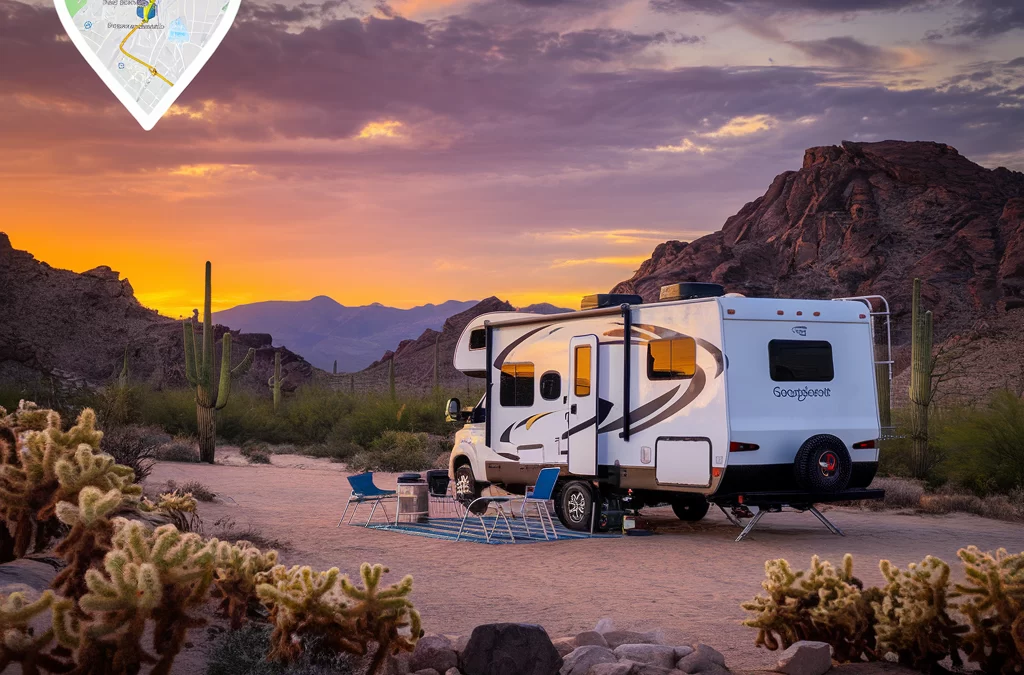
AI-generated travel illustration. Not an app screenshot.
What Google announced on November 16, 2026
Google’s Maps product team announced the update in a holiday travel post. The features start rolling out on Android and iOS the same day (Google, 2026).
Feature
What it does
Where it’s available
Boondocker value
Trip itineraries
Builds a one-day or multi-day plan with numbered map pins and tips. You can add stops mid-trip, share the plan, or export it to Google Docs on desktop.
Everywhere Ask Maps is offered
High for route and town-stop planning. Low for finding campsites.
“Know before you go” route tips
Shows parking, car charging, weather, likely delays and tolls when you pull up directions.
U.S. first, more regions later
Medium. Weather, delays and tolls help. Parking tips are not RV-specific.
Appointment booking
Finds open slots for beauty, pet care, auto repair and home repair, and can call businesses for you.
U.S. first, more regions later
Possible use for auto repair on the road. Not RV-service specific.
Saved-list availability
Checks live availability across places in your saved lists.
Everywhere Ask Maps is offered
Low. Google’s example is a table for five, not a campsite.
Google also said Ask Maps is expanding to 30 European countries, including Spain, Germany and the U.K. (Google, 2026). Ask Maps first launched in March 2026 in the U.S. and India on Android and iOS (Search Engine Journal, 2026).
What the new features do not do for RVers
No RV-safe routing. Google’s announcement does not mention vehicle height, length, weight or propane. Google Maps still routes your rig like a car. See why Google Maps is not enough for bigger RVs and the free truck routing tools that fill the gap.
No land-status layer. An itinerary pin is not permission to camp. Google Maps does not show BLM or National Forest boundaries. Check the BLM camping page and the Forest Service Interactive Visitor Map before you commit to a site.
No mention of offline use. Google’s post does not say the itinerary or route tips work without a signal. Download offline areas before you lose service (Google Maps Help, n.d.).
No camping, rest stop or dump station features. The announcement does not mention any of them.
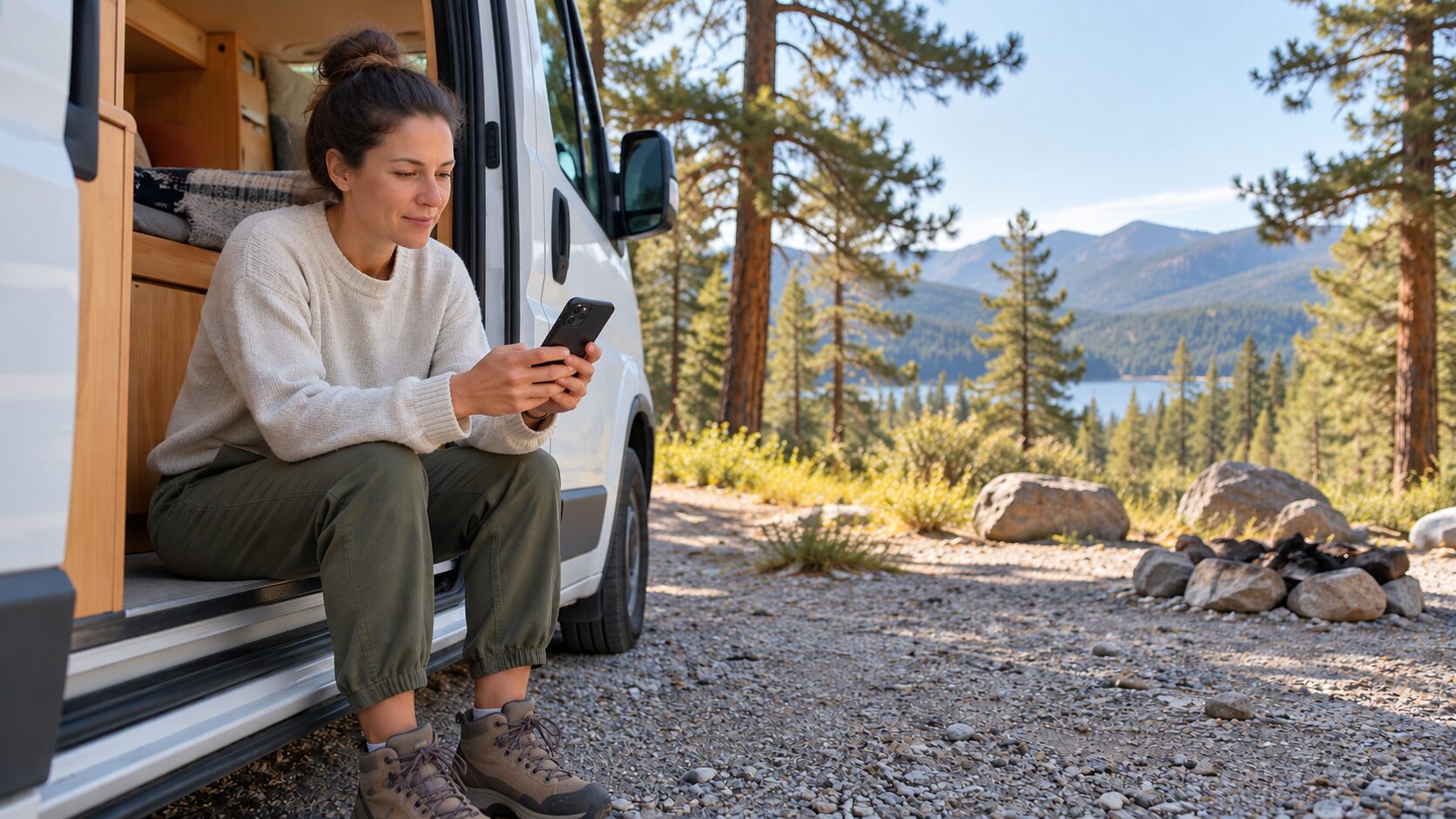
AI-generated travel illustration. Not an app screenshot.
How to use Ask Maps itineraries on a boondocking trip
Boondock or Bust has not tested the itinerary feature yet. It began rolling out on November 16, 2026. Treat the steps below as a planning workflow, not test results.
Pick your camp first, outside Google Maps. Confirm land status and stay limits with the BLM or Forest Service, or use our guide to finding dispersed camping with Google Maps.
Ask Maps to plan around that camp. Try a prompt like: “Plan a three-day trip from Flagstaff with stops for groceries, propane, a laundromat and an RV dump station near [your camp].”
Run the route through a truck or RV router. Compare it with the Google route before you drive.
Export the plan. On desktop, export the itinerary to Google Docs so you have a copy you can print or read without a signal.
Download offline areas for each day’s route and camp.
How to use “Know before you go” route tips
Pull up directions and read the tips before you start. Weather, likely delays and tolls are the useful parts for a long RV drive. Treat parking tips as car-sized advice. Posted signs and campground arrival instructions outrank any app.
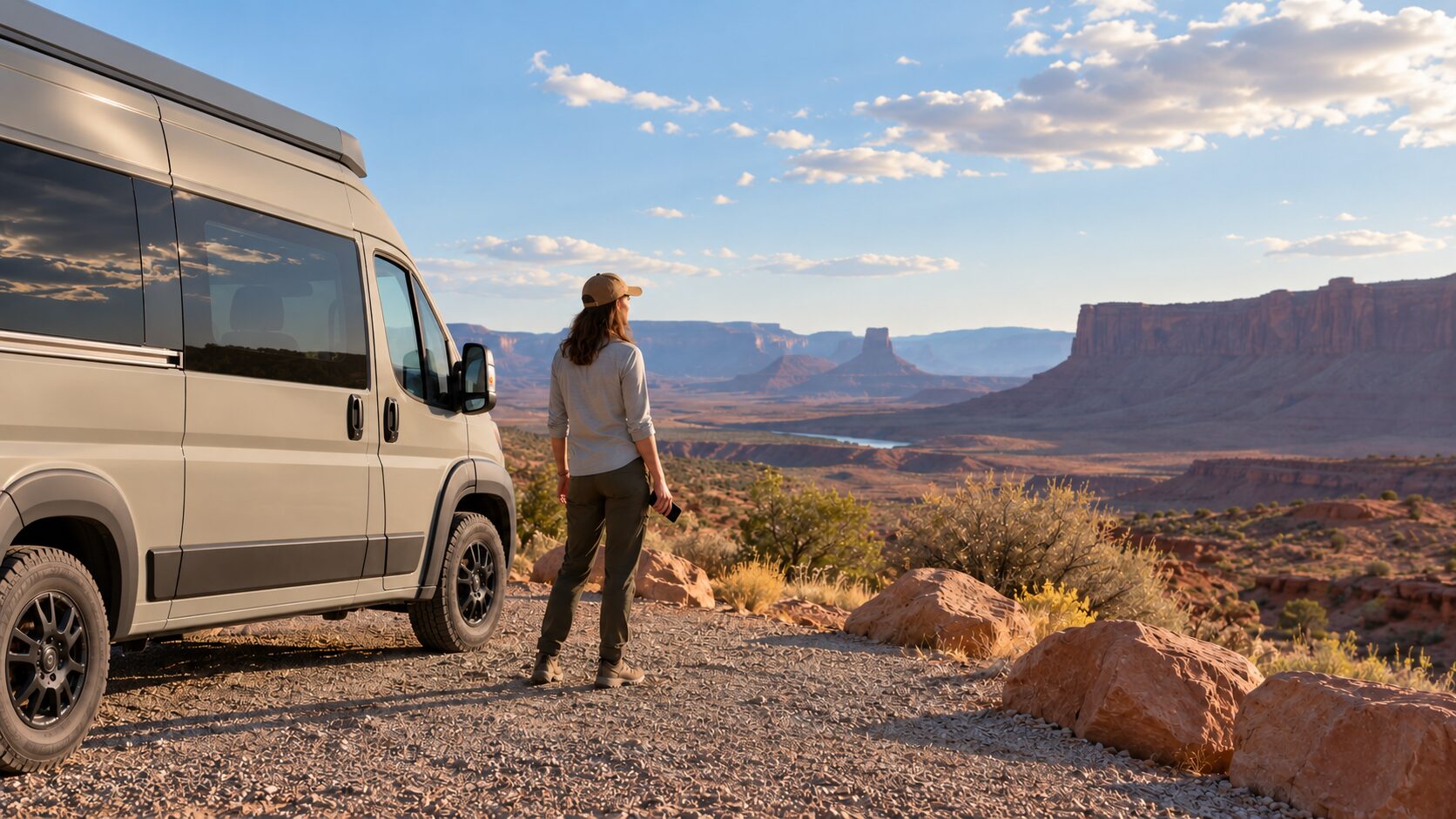
AI-generated travel illustration. Not an app screenshot.
Frequently asked questions
Can Ask Maps find boondocking or dispersed campsites?
You can ask, but Google’s announcement makes no camping claim. Ask Maps draws on Google Maps places, and most dispersed sites are not listed places. Confirm any result against BLM or Forest Service maps.
Does Google Maps have RV routing now?
No. The November 16, 2026 update does not add vehicle dimensions. Use a truck or RV routing tool for clearance and weight checks.
Is Ask Maps available outside the U.S.?
Ask Maps launched in the U.S. and India. Google says it is expanding to 30 European countries. The route tips and appointment booking launch in the U.S. first.
Do the new features work offline?
Google’s announcement does not say. Download offline maps and export your itinerary before you head into areas without service.
Discover Your Perfect Work Camping Gig: Thousands of Jobs Await
Are you looking for an adventure of a lifetime while earning a living? Work camping jobs might be your perfect solution. Whether you’re interested in RV parks, mobile home parks, campgrounds, farms, ranches, bed & breakfasts, animal sanctuaries, motels, safaris, carnivals, ghost towns, or more, there are thousands of opportunities waiting for you. This guide will provide you with all the resources you need to find these amazing work camping jobs and inspire you to consider this unique lifestyle.
The Allure of Work Camping
Work camping offers a unique blend of work and adventure, allowing you to explore new places while earning a living. Here are some of the benefits:
Travel and Explore: Work camping allows you to travel to new places and explore different regions while earning a living. Imagine waking up to a new landscape every few months! With jobs for RVers available across the country, the possibilities are endless.
Flexible Lifestyle: Many work camping jobs offer flexible schedules, allowing you to balance work with leisure activities. This flexibility is perfect for those who enjoy an active lifestyle or have other commitments. Flexible work opportunities make it easier to enjoy life on the road.
Community and Social Interaction: Work campers often become part of a close-knit community. This social aspect can be incredibly rewarding, providing opportunities to make new friends and build lasting relationships. Joining the work camping community can enhance your travel experience.
Cost Savings: Many work camping positions offer free or discounted lodging, which can significantly reduce your living expenses. This can be a major financial benefit, especially for those living the RV lifestyle. Jobs with RV hookups often include utilities, making it even more affordable.
Skill Development: Work camping can help you develop new skills and gain valuable experience in different fields. Whether it’s learning about agriculture on a farm or customer service in a campground, these skills can be beneficial for future job opportunities. Consider seasonal jobs that allow you to gain experience in multiple areas.
Diverse Work Camping Opportunities
Work camping encompasses a wide range of job opportunities, each offering unique experiences and benefits. Here are some of the different types of work camping jobs available:
RV Parks and Campgrounds: Many RV parks and campgrounds hire work campers for positions such as maintenance, housekeeping, office work, and activity coordination. These jobs often come with perks like free RV site hookups and access to park amenities. Check out RV park jobs on platforms like Indeed and Workamper.
Farms and Ranches: Work on farms and ranches can include tasks like animal care, gardening, and general maintenance. These positions may offer a combination of room, board, and a stipend. Farmhand jobs and ranch jobs provide an excellent opportunity to connect with nature.
Bed & Breakfasts and Motels: These roles can involve guest services, housekeeping, and property maintenance. Work campers in these settings often enjoy comfortable accommodations and the chance to meet travelers from all over. Jobs for RVers in hospitality can be both rewarding and enjoyable.
Animal Sanctuaries: If you have a passion for animals, working at a sanctuary can be incredibly rewarding. Duties may include feeding, cleaning, and providing care for various animals. Explore animal sanctuary jobs for a fulfilling work camping experience.
Carnivals and Fairs: These seasonal jobs can range from ticket sales and ride operation to food service and game management. They offer the chance to travel and experience different locations. Carnival jobs are perfect for those who love a dynamic and exciting work environment.
Ghost Towns and Historical Sites: These unique work camping opportunities allow you to immerse yourself in history while performing tasks such as tour guiding, maintenance, and visitor services. Historical site jobs can provide a rich cultural experience.
Finding Your Ideal Work Camping Job
Finding the right work camping job can be a straightforward process if you know where to look. Here are some resources and job boards to help you get started:
General Job Boards:
Indeed: Explore work camping jobs on Indeed at the following links:
Work-camping compensation varies widely by employer, location, season, duties, hours, and whether a campsite or utilities are included. Treat older hourly ranges as stale. Before accepting a position, review the current written listing and calculate the cash wage, required hours, campsite value, utility charges, taxes, and any end-of-season bonus separately.
Preparing for the Work Camping Lifestyle
Preparing for a work camping lifestyle involves several steps to ensure a smooth transition:
Research: Thoroughly research potential jobs and locations. Understand what each job entails and what the living conditions will be like. Use the resources provided in this guide to find reputable job listings. Consider joining work camper communities for firsthand insights and advice.
Budgeting: Plan your finances carefully. While many work camping jobs offer free lodging, you will still need to budget for other expenses such as food, travel, and maintenance of your RV or other living arrangements. Providing financial context, some positions may offer hourly rates ranging from $10 to $20, while others might offer a stipend or salary.
Skill Development: Consider developing skills that are in high demand for work camping jobs. This could include basic maintenance skills, customer service experience, or specialized skills relevant to the type of job you are seeking. Seasonal employment can provide diverse experiences to build your resume.
Networking: Connect with other work campers and join online communities to share experiences and advice. Networking can provide valuable insights and help you find the best job opportunities. Highlight work camper communities like forums and social media groups for support and networking.
Legal Preparations: Ensure you have all necessary documents and understand the legal requirements for the jobs you are applying for. This might include work permits, contracts, and understanding employment laws in different regions.
Work Camper Communities
Joining online forums and communities can provide valuable networking and support for work campers. Some recommended communities include:
Escapees RV Club: Offers a platform for work campers to connect and share experiences.
Workamper News: Provides job listings and a community for work campers.
Challenges and Rewards
While work camping can be a rewarding lifestyle, it’s important to be aware of the potential challenges:
Job Security: Work camping jobs are often seasonal, which means they may not provide year-round employment. It’s important to plan for periods when work might not be available. Adapting to different jobs and being flexible can help you navigate these gaps.
Living Conditions: Depending on the job, living conditions can vary. Some positions may offer more comfortable accommodations than others. Be sure to inquire about the specifics of lodging and amenities before accepting a job.
Physical Demands: Many work camping jobs can be physically demanding, requiring long hours and hard work. It’s important to consider your physical capabilities and be prepared for the rigors of the job.
Legal Considerations: Make sure you understand the legal aspects of work camping, such as employment laws, work permits, and any contractual obligations. It’s crucial to have clear agreements in place to avoid any misunderstandings.
Despite these challenges, the rewards of work camping—such as travel, community, and personal growth—often outweigh the difficulties.
Testimonials
Here are a few real-life testimonials:
“We met a wonderful couple who worked for Delaware North in Yellowstone. They told us they were working 4-5 days a week, from 32-40 hours each week, and enjoyed the flexibility of their schedule.” (Source: whynotwander.com)
“We are very grateful that you have this site and it costs us nothing! I put my ad on your site and immediately started receiving calls from work campers.” – K&J (Source: workampingjobs.com)
Conclusion
Work camping offers a unique and adventurous lifestyle, allowing you to travel, explore, and earn a living all at once. By considering the benefits and challenges, and using the resources provided, you can find the perfect work camping job that suits your interests and skills. Embrace the journey, connect with the community, and enjoy the rewarding experiences that work camping has to offer. Remember, thousands of work camping jobs await—start your adventure today!
The world of recreational vehicles (RVs) is experiencing a renaissance, with 2024 marking a pivotal year in this exciting evolution. Fueled by a yearning for adventure and freedom, the RV industry has skyrocketed, becoming deeply intertwined with the lifestyles of modern explorers. Among the diverse RV classes, Class B RVs, renowned for their compact size and efficiency, have emerged as the darlings of the boondocking community. For those seeking an unfiltered connection with nature, boondocking, also known as dry camping, offers the thrill of parking your RV in remote locations, free from the constraints of hookups.
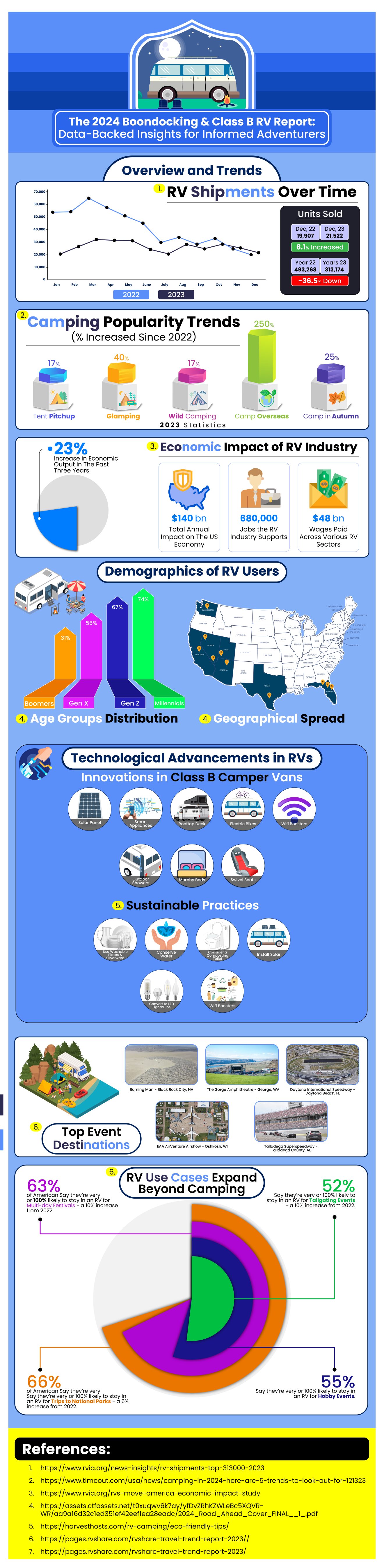
To illustrate the points discussed, let’s take a closer look at the trends, demographics, and innovations shaping the RV landscape in 2024, as detailed in the infographic below.
RV Shipments and Trends: A Steady Ascent Fueled by Mobility
Despite economic fluctuations, RV shipments have exhibited remarkable resilience in recent years, charting a clear upward trajectory. Notably, Class B motorhomes have captured a significant and growing share of the market, fueled by the rising demand for flexible and mobile lifestyles. This trend reflects a broader societal shift towards experiences and adventure, with individuals increasingly seeking living arrangements that empower them to explore and roam freely.
Camping Trends: Beyond the Tent – Embracing Diverse Adventures
Camping has shed its traditional skin, morphing into a vibrant tapestry of experiences that cater to various preferences. From the classic thrill of pitching a tent under the stars to the luxurious indulgence of glamping, every style has witnessed growth. However, the spotlight shines brightly on the surging popularity of glamping and wild camping. These trends embody a fascinating juxtaposition, where individuals seek the thrill of adventure seamlessly intertwined with the comforts of home. This desire reflects a broader cultural shift, where people yearn for unique experiences that balance exploration with a touch of pampering.
Beyond Campfires: The Booming Economic Impact of the RV Industry
The RV industry ignites much more than campfires—it is a major contributor to the U.S. economy. The RV Industry Association’s 2026 economic-impact study reports $159 billion in annual output, 643,238 supported jobs, and $46.4 billion in wages across manufacturing, sales and service, campgrounds, and RV travel.
Breaking the Mold: RVing Demographics Embrace Adventure Across Generations and Landscapes
Forget stereotypes – the RV community shatters them all. A peek into the demographics reveals a vibrant mix, defying limitations of age or location. Millennials and Gen Xers are leading the charge, reflecting a cultural shift towards prioritizing experiences over possessions. This wanderlust isn’t confined to specific regions; RV usage crisscrosses the nation, with certain states like Arizona, Utah, Florida, and South Dakota becoming hotspots for their welcoming locales and breathtaking attractions.
Tech Revolution on Wheels: Class B RVs Embrace Smarter, Greener Adventures
Class B campers have undergone a tech metamorphosis, leaving the days of basic amenities behind. Imagine harnessing the sun’s power with efficient solar panels or controlling your RV’s temperature with a voice-activated IoT device. These advancements aren’t just fancy gadgets; they’re making RVs smarter, safer, and more sustainable. By optimizing energy use and streamlining operations, technology empowers boondockers to explore deeper, further, and with a lighter footprint on the environment. It’s a win-win: enhanced travel experiences coupled with responsible practices for a healthier planet.
Embracing the Planet: Sustainable Practices Take Root in the RV Community
The RV community isn’t just hitting the road, they’re doing it with a newfound respect for the environment. A commendable shift towards eco-friendly practices is blossoming, with RVers embracing measures like:
Beyond Camping: RVs Morph into Mobile Offices and Homes
The open road beckons, but not just for leisure! The definition of “RVing” is evolving, with these versatile vehicles transforming into mobile offices and even homes. This shift is fueled by the rise of remote work, empowering individuals to embrace the nomadic lifestyle without sacrificing their professional pursuits. Imagine turning your RV into a rolling workspace, complete with high-speed internet and ergonomic setups, allowing you to work from stunning natural backdrops. Or, envision it as your tiny home on wheels, offering freedom and flexibility while providing all the comforts of home. Whether it’s chasing adventure or seeking a change of scenery, RVs are no longer just for weekend getaways; they’re becoming the ultimate tools for work-life integration and alternative living.
Beyond Destinations: Vibrant RV Communities Gather and Share
This report goes beyond simply listing scenic overlooks and national parks. It delves into the soul of the RVing experience, highlighting top destinations that have transformed into vibrant communities for RVers. These aren’t just stopovers on a map; they’re bustling hubs where ideas spark, experiences are exchanged, and stories weave together under the shared love of the open road. Imagine immersing yourself in:
Rallying Rendezvous: Picture epic gatherings like Burning Man, where thousands of RVs converge for shared passions, workshops, and camaraderie.
Regional Celebrations: Experience the unique flavors of local RV communities at regional festivals like the Quartzsite Sports, Vacation & RV Show and the Albuquerque International Balloon Fiesta, celebrating everything from craft beers to bluegrass music.
Nature-Themed Adventures: Join fellow nature enthusiasts at events like public star parties, birding festivals, and ranger-led programs at state and national parks, exploring breathtaking landscapes and forging lasting connections with like-minded individuals.
These gatherings are more than just entertainment; they’re the lifeblood of the RV community, fostering friendships, knowledge exchange, and a deep sense of belonging. So, pack your bags, fuel your wanderlust, and prepare to be welcomed into a world where every destination is an opportunity to connect, share, and create memories that will last a lifetime.
The Road Ahead: A Thriving RV Industry Redefining Travel and Connection
The 2024 Boondocking and Class B RV Report isn’t just a snapshot; it’s a roadmap to a dynamic future. It paints a vibrant picture of an industry resonating with the dual forces of adventure and sustainability. This thriving ecosystem fuels economic growth, fosters vibrant communities, and inspires a harmonious relationship with nature. As we journey into the future, one thing is clear: the RV industry, particularly the segment of boondocking and Class B RVs, is not merely surviving; it’s thriving, innovating, and redefining the very contours of travel and living.
Whether you’re a seasoned RVer or a curious first-timer, having the right gear can make all the difference in transforming your journey from a good time to a truly exceptional experience. This article will explore six must-have RV gadgets, from reliable navigation tools to convenient kitchen appliances, to elevate your comfort and efficiency on the open road. We’ll also provide insights into the pros and cons of each product to help you make informed decisions for your RV travels. So, buckle up, get ready to explore the best RV gadgets, and turn your next road trip into an adventure you’ll never forget!
Navigation and GPS Devices
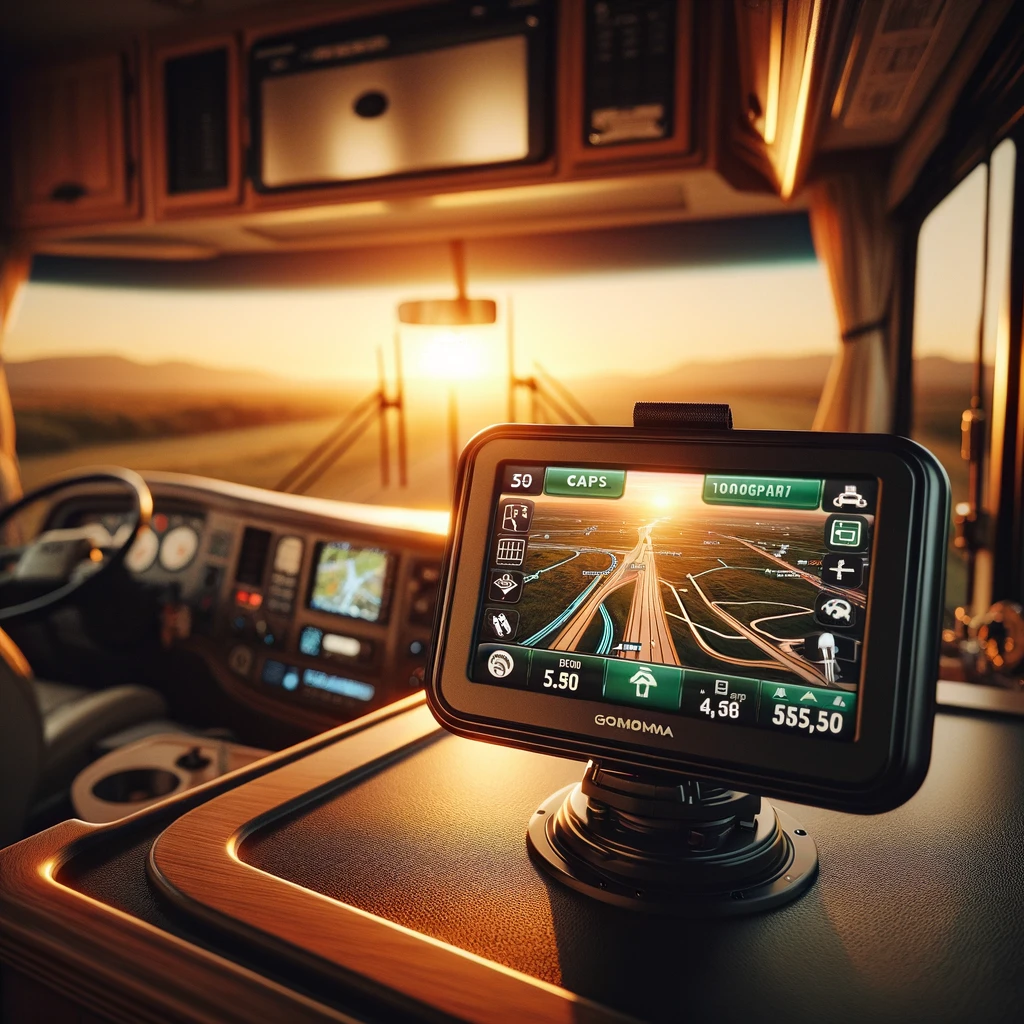
Navigating unfamiliar roads in a large RV can be a daunting task. Fortunately, reliable navigation and GPS devices can be your trusty travel companions, guiding you safely and efficiently to your destination.
RV-specific GPS
An RV-specific GPS goes beyond basic car navigation, offering features specifically tailored to the needs of RV travelers. These devices take into account the size and weight of your RV, preventing you from encountering low bridges, narrow roads, and other obstacles that could damage your vehicle or cause a frustrating detour. Additionally, they come pre-loaded with points of interest (POI) specifically relevant to RVers, such as campgrounds, RV parks, truck stops with high clearances, and even propane refill stations, making trip planning a breeze.
Trip planning features: Some models allow you to plan routes with multiple stops and factor in campground availability.
Large, easy-to-read display: Clearly see important navigation information even on smaller screen models.
Cons:
Higher cost: RV-specific GPS devices tend to be pricier than standard car GPS units.
Limited functionality: May not offer all the bells and whistles of a high-end tablet (games, internet browsing).
Map updates: May require periodic paid updates to ensure accurate information.
Overall, RV-specific GPS devices are a worthwhile investment for RV travelers who prioritize safe and efficient navigation with features that cater to the unique needs of their large vehicles.
Mobile Apps
While dedicated RV GPS devices offer a robust navigation experience, don’t underestimate the power of mobile apps specifically designed for RV travel. These handy tools can transform your smartphone or tablet into a comprehensive RV travel assistant, offering a wealth of features at your fingertips.
Popular options include RV LIFE, CoPilot RV, and AllStays Camp & RV. These apps excel at route planning, campsite location, and providing vital information on road conditions and restrictions. Whether you’re searching for the perfect campground with full hookups or need real-time updates on detours due to construction, these apps can keep you informed and on track.
Here are some additional benefits of using RV travel apps:
Cost-effective: Many apps offer free basic features, with premium subscriptions unlocking advanced functionalities.
Up-to-date information: Regular app updates ensure you have access to the latest road conditions, campground availability, and points of interest.
Offline functionality: Some apps allow you to download maps and essential information for areas with limited internet connectivity.
User reviews and ratings: Gain valuable insights from other RVers on campgrounds, restaurants, and points of interest along your route.
Things to Consider:
Data usage: Extensive app use can consume significant mobile data. Consider downloading maps and information beforehand for offline access in remote areas.
Battery consumption: Running GPS and other features can drain your battery quickly. Invest in a portable power bank to keep your devices charged on the go.
App overload: With so many options available, choose a few apps that cater to your specific needs and preferences to avoid information overload.
Mobile apps are a fantastic way to supplement your RV navigation strategy, offering flexibility, affordability, and a user-friendly interface. By carefully considering the available options and their functionalities, you can choose the perfect apps to enhance your RV travels.
Solar Power Systems: Harnessing the Sun for Your RV Adventures
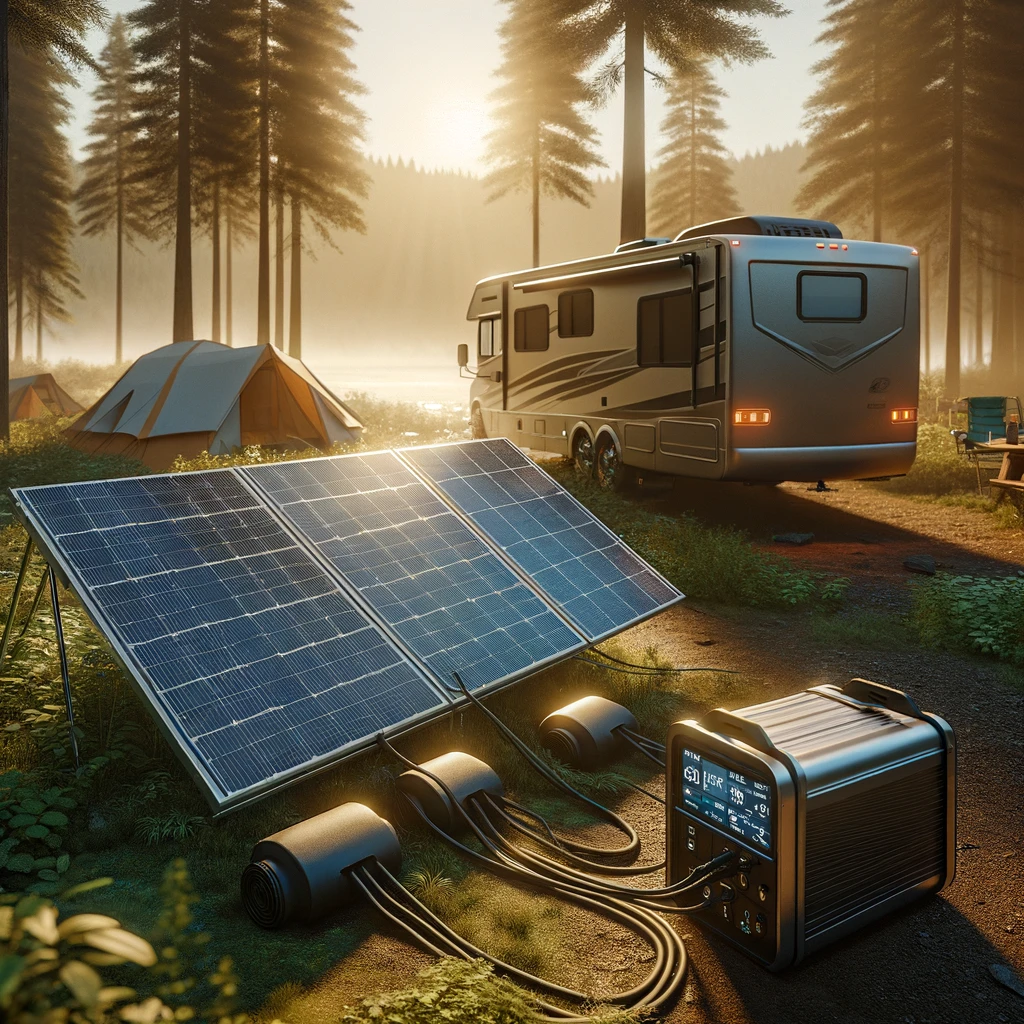
Venturing off the grid and into the great unknown is a thrilling aspect of RV travel. However, extended journeys necessitate reliable power sources to keep your essential appliances and devices functioning smoothly. Solar power systems offer an eco-friendly and sustainable solution, harnessing the sun’s rays to generate electricity for your RV.
Pros:
Environmentally friendly: Generates clean, renewable energy with minimal noise pollution.
Cost-effective in the long run: Once installed, the sun’s energy is your free fuel source.
Quiet operation: No noisy engine hum to disrupt the serenity of your surroundings.
Cons:
Reliant on sunlight: Efficiency can be reduced on cloudy or rainy days.
Initial investment: Purchasing and installing a solar panel system can be expensive upfront.
May require additional equipment: A solar charge controller is often necessary to regulate battery charging.
Limited power for high-demand appliances: Solar panels might not be sufficient to power all your RV’s appliances, particularly high-energy ones like air conditioners.
Solar Generators: Backup Power and Increased Capacity
For extended off-grid stays or increased power needs, consider incorporating a solar generator into your system. These devices store energy from solar panels, allowing you to utilize it even during low sunlight periods.
Additional Considerations:
Portable Solar Panels: For weekend getaways or supplementing your main solar power source, portable solar panels offer a convenient and eco-friendly way to generate additional electricity for your RV.
Choosing the Right System:
Ultimately, the best solar power solution for your RV depends on your travel style, energy needs, and budget. Solar panels are ideal for eco-conscious travelers who prioritize sustainability and are comfortable with managing their power consumption. A solar generator can further enhance your system’s capabilities by providing backup power and increased capacity.
Essential Safety Equipment: Be Prepared for Anything
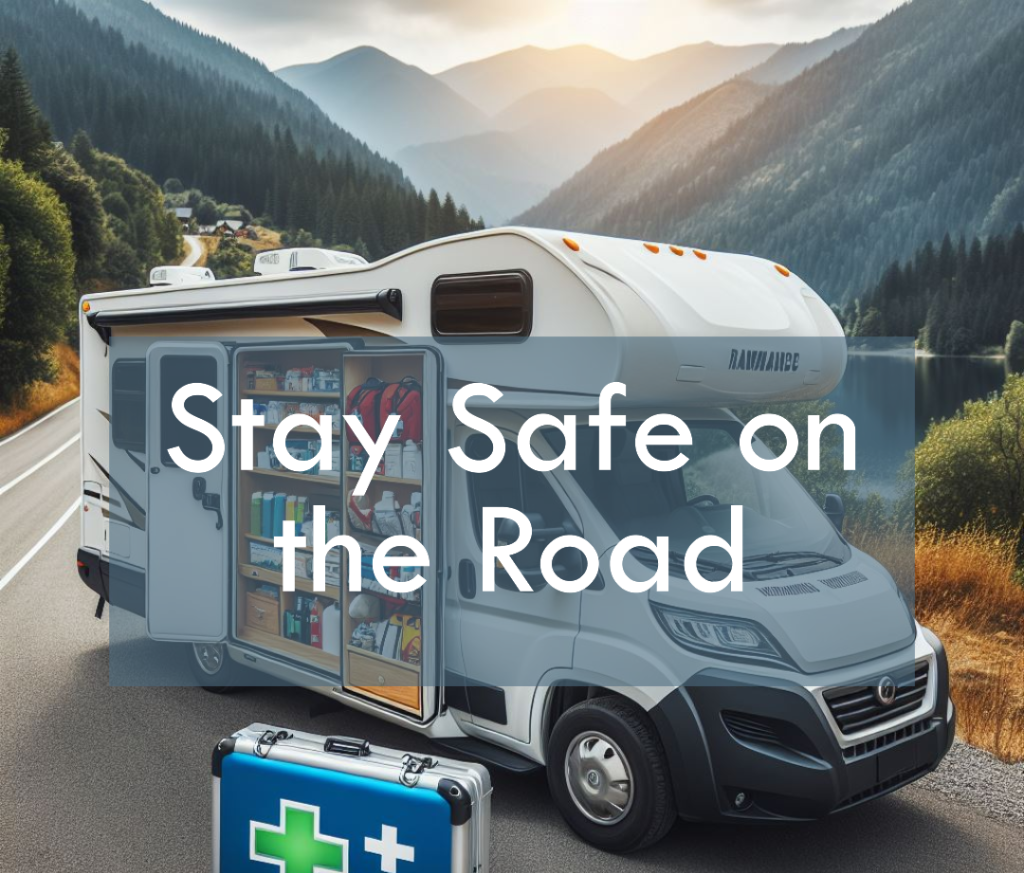
When you’re out on the road, it’s essential to be prepared for emergencies. Investing in some essential safety equipment can make all the difference in the event of an accident or unexpected situation.
Fire Extinguishers
Having a fire extinguisher on board is a must for any RV owner. Ensure you have one that’s rated for Class A, B, and C fires, as these are the most common types of fires that can occur in an RV. Knowing how to use a fire extinguisher properly is crucial in case of an emergency. Regularly check the expiry date and replace it when necessary. See a demonstration here: How to Use a Fire Extinguisher.
Carbon Monoxide Detectors
Carbon monoxide is a colorless, odorless gas that can be lethal if inhaled in large quantities. Since it’s a byproduct of burning fuel from generators or stoves, it’s crucial to have a carbon monoxide detector installed in your RV. This device will alert you if carbon monoxide levels become dangerous, allowing you to take immediate action to ensure your safety. For optimal protection, consider installing carbon monoxide detectors in multiple locations throughout your RV, especially near sleeping areas.
First Aid Kits
A well-stocked first aid kit is an essential item for any RV traveler. Accidents can happen at any time, and having the necessary supplies on hand can make all the difference. Ensure your first aid kit includes items such as bandages, gauze, adhesive tape, antiseptic wipes, pain relievers, and any personal medications you may need. Consider creating a customized first-aid kit based on the specific needs of those traveling in the RV. For instance, including medications for allergies or any pre-existing conditions will ensure you are prepared for a wider range of situations.
Kitchen and Cooking Appliances
One of the joys of RV travel is the freedom to explore new destinations and cultures, but it also means preparing your meals on the go. Equipping your RV with the right kitchen and cooking appliances can transform meal prep into a fun and efficient experience, allowing you to whip up delicious dishes wherever your travels take you.
Compact Refrigerator
A compact refrigerator is a cornerstone appliance in any RV kitchen. It allows you to store a variety of perishable food items, from fresh fruits and vegetables to dairy products and proteins, ensuring you have healthy and delicious ingredients on hand for your meals. When choosing a compact RV refrigerator, consider factors like size, energy efficiency, and features.
Size: Select a refrigerator with a capacity that meets your needs. Do you plan on short weekend getaways or extended adventures? How many people will you be traveling with? Matching the size to your RV’s layout and travel style will optimize both storage space and energy consumption.
Energy Efficiency: Look for an RV refrigerator with a high Energy Star rating to minimize your impact on the environment and conserve battery power, especially if you plan on boondocking (camping without hookups).
Features: Some compact RV refrigerators come with additional features like freezers, ice makers, and vegetable crispers. While these features can be convenient, they tend to consume more energy. Decide which features are most important to you and choose accordingly.
Portable Induction Cooktop
A portable induction cooktop is a fantastic space-saving and versatile option for your RV kitchen. Here’s why induction cooktops are a great choice for RVers:
Energy-efficient: Induction cooktops transfer heat directly to your cookware, resulting in minimal wasted energy. This translates to quicker cooking times and reduced strain on your RV’s electrical system.
Precise temperature control: Induction cooktops offer exceptional temperature control, allowing you to simmer sauces or sear steaks with precision, just like on a conventional stovetop.
Easy to clean: The smooth, glass surface of an induction cooktop wipes clean effortlessly, making post-meal cleanup a breeze.
Collapsible Cookware
Space is always at a premium in an RV, and that’s where collapsible cookware comes in. These ingenious space-saving tools are designed to fold or condense, transforming from full-size pots and pans into compact units for easy storage and transportation. Look for collapsible options for essential items like pots, pans, colanders, and even measuring cups to free up precious cabinet space in your RV kitchen.
By carefully selecting these essential kitchen and cooking appliances, you can create a functional and efficient cooking space in your RV, empowering you to prepare delicious meals and savor the culinary adventures that await on the open road.
Conclusion
Equipping your RV with the right gadgets and appliances doesn’t just ensure a smooth journey, it elevates your entire RV experience. From navigating unfamiliar roads to preparing delicious meals on the go, having the tools you need allows you to explore new destinations with confidence and comfort. So, stock up on these essentials, chart your course, and get ready to create unforgettable memories on the open road!
If you’re a vintage trailer enthusiast living in California, you’re in luck! California has a thriving vintage trailer community with numerous clubs and events throughout the state. In this guide, we’ll cover everything you need to know about vintage trailer clubs in California, including their history, membership benefits, and upcoming events.
Vintage trailer clubs have been around for several decades, and California has been at the forefront of the movement. The first vintage trailer club in California was founded in the early 1980s, and since then, numerous clubs have sprung up all over the state. These clubs are dedicated to preserving and restoring vintage trailers, as well as providing a community for enthusiasts to connect and share their love for these unique and historical vehicles.
Benefits of Joining a Vintage Trailer Club
There are numerous benefits to joining a vintage trailer club in California. First and foremost, you’ll become part of a community of like-minded enthusiasts who share your passion for vintage trailers. You’ll have the opportunity to attend events and rallies where you can show off your trailer, meet other owners, and participate in fun activities. Additionally, many clubs offer resources and support for trailer restoration and maintenance, as well as discounts on parts and accessories.
Popular Vintage Trailer Clubs in California
There are several vintage trailer clubs in California, each with its own unique history and culture. Here are a few of the most popular clubs:
Tin Can Tourists of Southern California The Tin Can Tourists is one of the oldest vintage trailer clubs in the country, founded in 1919. The Southern California chapter is particularly active, with regular events and rallies throughout the year. Membership is open to anyone who shares the club’s mission of promoting vintage trailers and RVs.
Vintage Trailer Club of Northern California The Vintage Trailer Club of Northern California is another popular club with a long history. Founded in 1982, the club has over 200 members and hosts several rallies and events each year. Members enjoy access to a wide range of resources and benefits, including discounts on parts and accessories.
California Route 66 Museum Vintage Trailer Club The California Route 66 Museum Vintage Trailer Club is a newer club, founded in 2012. The club is based in Victorville, California and has a focus on preserving vintage trailers and RVs associated with Route 66. Members enjoy access to exclusive events and resources, as well as discounts on museum admission.
Upcoming Vintage Trailer Events in California
If you’re looking to attend a vintage trailer event in California, there are plenty of options to choose from. Here are a few upcoming events to put on your calendar:
Palm Springs Vintage Trailer Show The Palm Springs Vintage Trailer Show is one of the largest vintage trailer events in the country, attracting enthusiasts from all over California and beyond. The event features a wide range of vintage trailers and RVs, as well as vendors, live music, and food. This year’s event will take place in February.
Trail Along to Pismo Rally 2026 is scheduled for November 12–15, 2026, at Pismo Coast Village RV Resort. The organizer, VCT Trailerfest Rallies, lists vintage-trailer gatherings, social activities, and a Saturday public open house. Check the organizer’s event page for registration and schedule updates.
Tin Can Tourists Western Regional Rally The Tin Can Tourists Western Regional Rally is a multi-day event that takes place in May. The rally features vintage trailers and RVs, as well as activities such as a potluck dinner, open house tours, and a vintage fashion show.
Tips for Restoring and Maintaining Your Vintage Trailer
If you’re new to vintage trailer ownership, it’s important to understand that these vehicles require special care and maintenance. Here are a few tips for restoring and maintaining your vintage trailer:
Do your research before you buy. Make sure you understand the specific make and model you’re interested in, as well as any common issues or maintenance requirements. This will help you make an informed purchase and avoid costly surprises down the road.
Create a maintenance schedule. Once you’ve purchased your vintage trailer, create a maintenance schedule to keep it in top condition. This should include regular checks for leaks, tire pressure, and propane levels, as well as routine cleaning and upkeep.
Use the right products. When it comes to restoring and maintaining your vintage trailer, it’s important to use the right products. This includes using appropriate cleaning products for different surfaces, as well as using sealants and coatings specifically designed for vintage trailers.
Join a vintage trailer club. Finally, joining a vintage trailer club can be an invaluable resource for restoration and maintenance tips. Members can share their knowledge and experience, as well as provide recommendations for trusted mechanics and parts suppliers.
Conclusion
California has a rich history of vintage trailer culture, and there are numerous clubs and events throughout the state dedicated to preserving and celebrating these unique vehicles. Whether you’re a seasoned enthusiast or a new owner, joining a vintage trailer club can provide a sense of community and support, as well as resources for restoration and maintenance. We hope this guide, with its links to clubs, rallies, shows, and other resources, has been helpful in introducing you to the world of vintage trailer clubs in California. Happy trails!
To provide the best experiences, we use technologies like cookies to store and/or access device information. Consenting to these technologies will allow us to process data such as browsing behavior or unique IDs on this site. Not consenting or withdrawing consent, may adversely affect certain features and functions.
Functional
Always active
The technical storage or access is strictly necessary for the legitimate purpose of enabling the use of a specific service explicitly requested by the subscriber or user, or for the sole purpose of carrying out the transmission of a communication over an electronic communications network.
Preferences
The technical storage or access is necessary for the legitimate purpose of storing preferences that are not requested by the subscriber or user.
Statistics
The technical storage or access that is used exclusively for statistical purposes.The technical storage or access that is used exclusively for anonymous statistical purposes. Without a subpoena, voluntary compliance on the part of your Internet Service Provider, or additional records from a third party, information stored or retrieved for this purpose alone cannot usually be used to identify you.
Marketing
The technical storage or access is required to create user profiles to send advertising, or to track the user on a website or across several websites for similar marketing purposes.