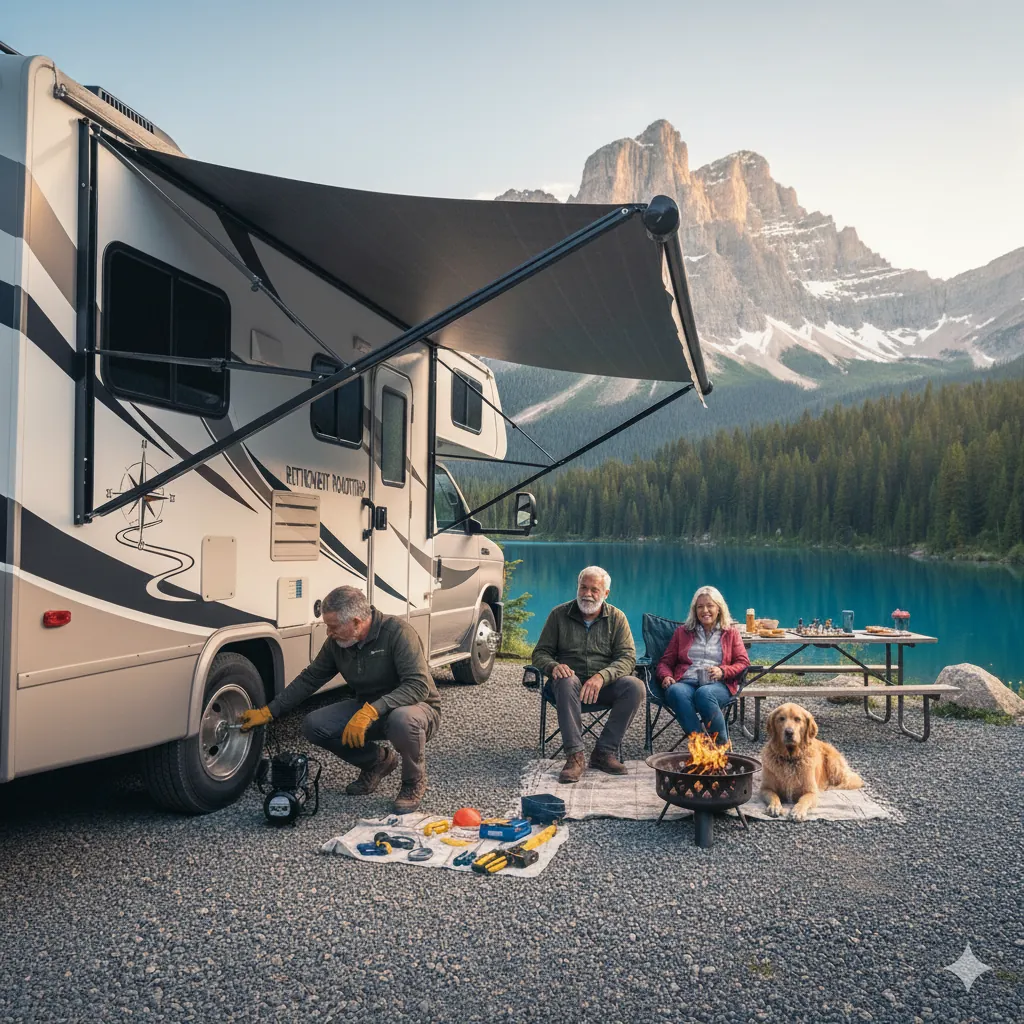
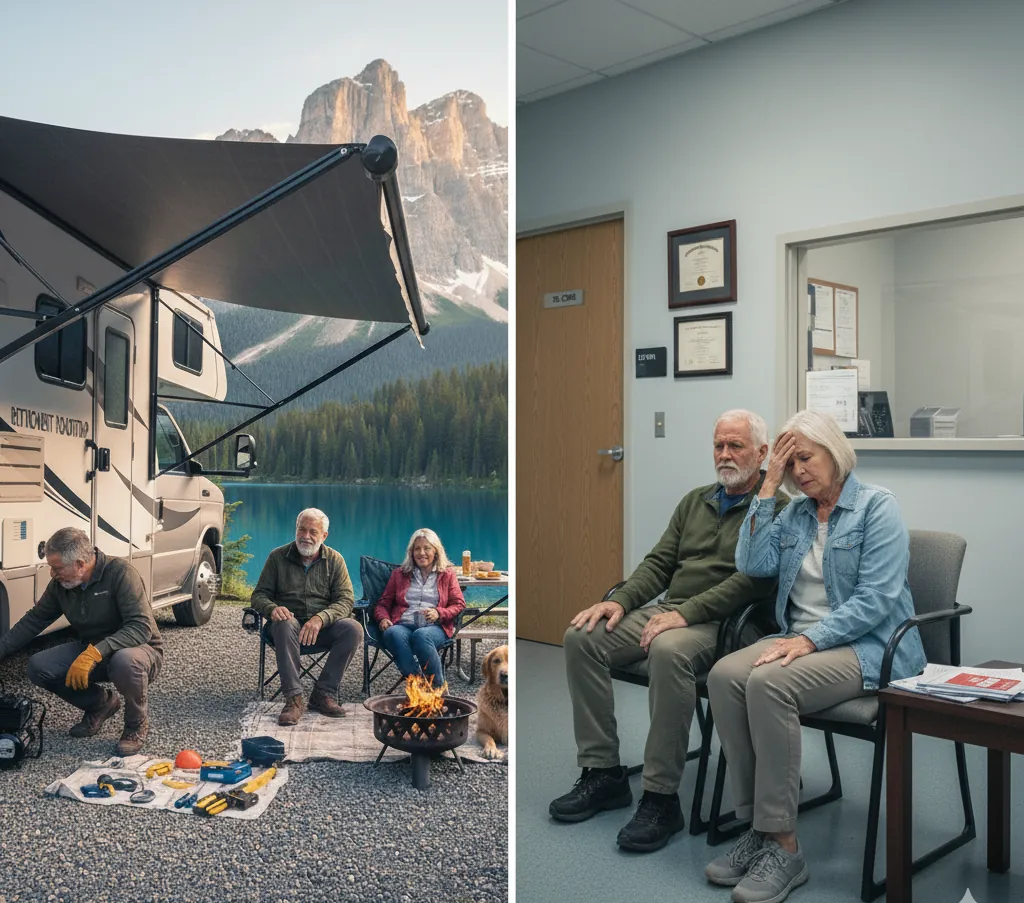
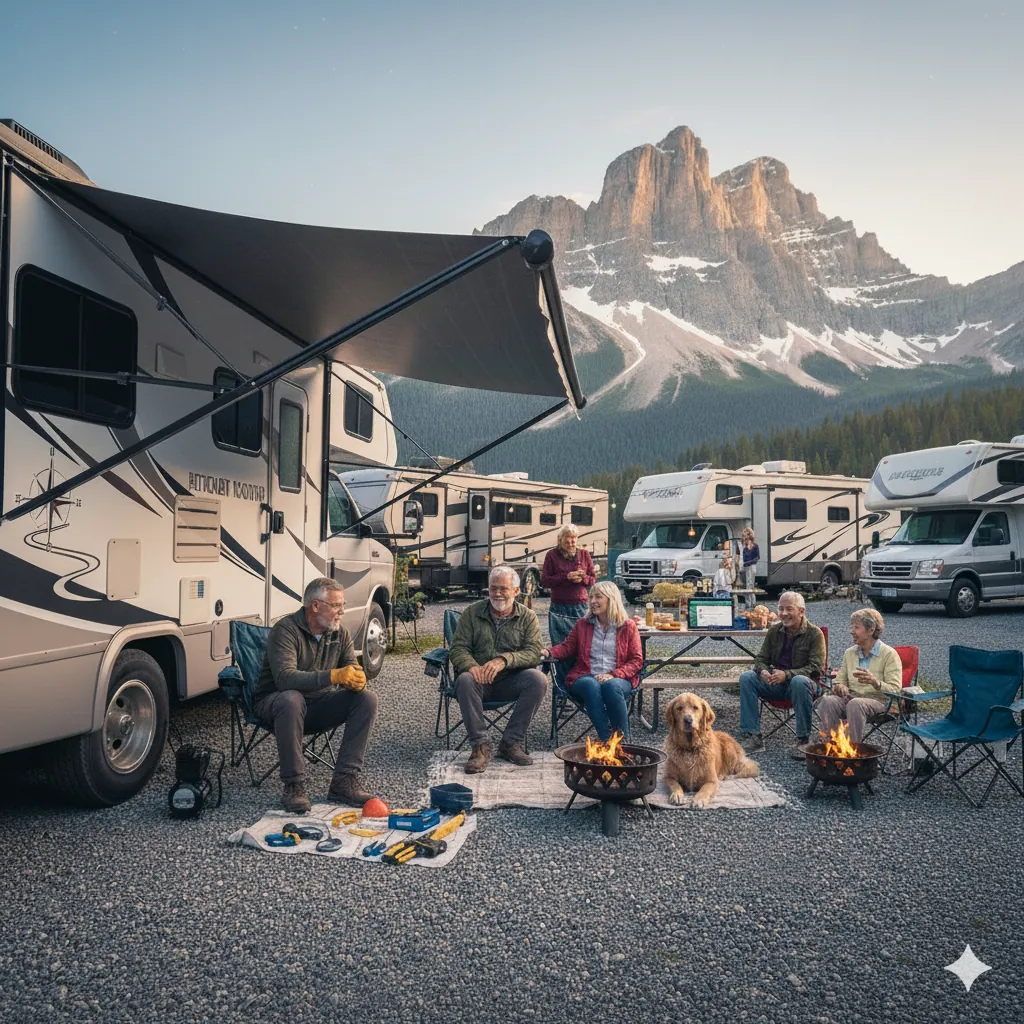
Cindy and I were scrolling through a Facebook RV group one night when a post exploded: “Is $800 a fair price for a pre-purchase inspection?” Half the comments said it was highway robbery; the rest swore it was cheap insurance against buying a lemon.After decades of crawling across roofs, checking seals, sniffing for propane leaks, and refining a DIY process we trust, I’ve never hired a certified inspector—because I haven’t needed to. Most buyers don’t have that background, and that’s where professional inspectors come in.
Why RV Inspection Prices Vary So Much
RV inspections aren’t cookie-cutter. A 20-foot travel trailer might take a few hours; a 43-foot diesel pusher can swallow a full day. Price is driven by:
Rig type & complexity: More slides, appliances, & systems = more hours.
Location & travel: Mobile inspectors often charge mileage/time.
Inspection scope: “Basic” (life-safety & major systems) vs “premium” (roof-to-chassis, deeper testing).
Reporting time: Many certified inspectors spend ~8 hours on-site and up to ~10 hours on a photo-rich report.
Reality check: Those dense PDF reports (often dozens of pages) become your negotiating tool if problems appear.
What You’re Actually Paying For
A solid inspection is a structured evaluation—not just “flip some switches.” Value scales with scope, time, tools, and credentials.
Used Class A/B/C, complex rigs, or first-time buyers
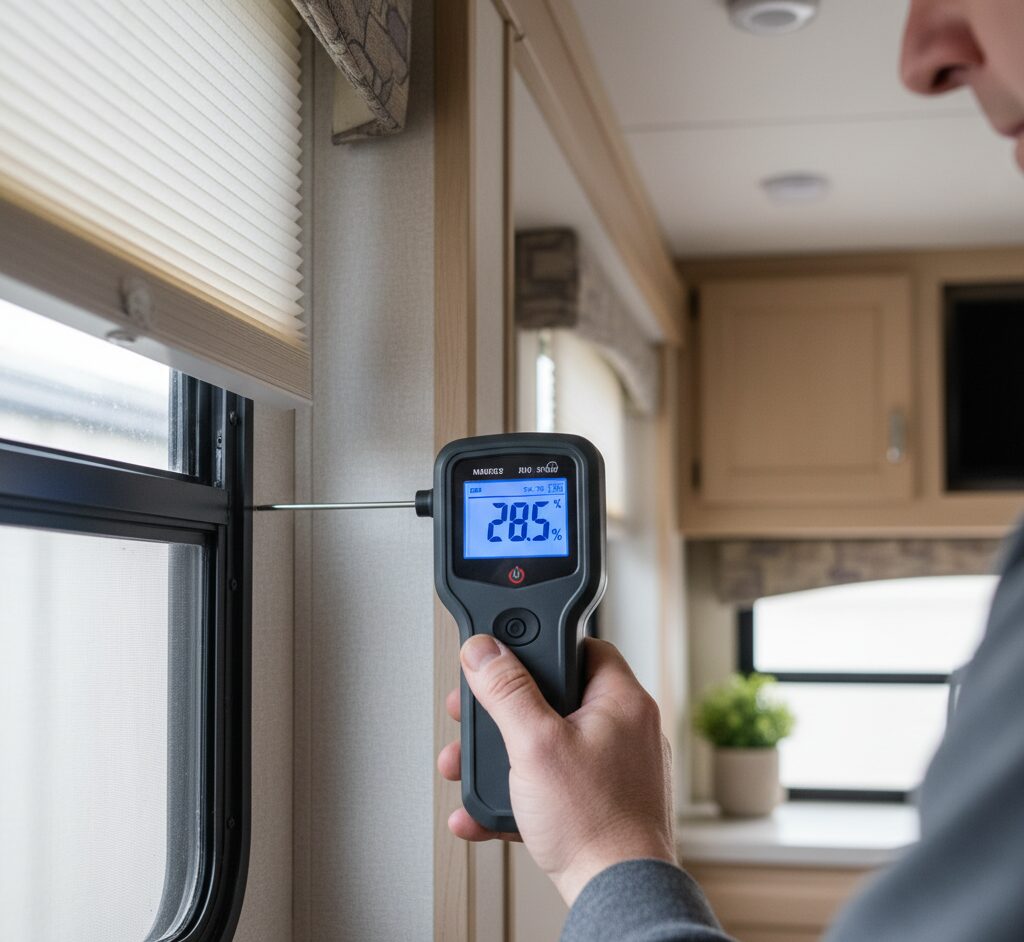
Tools matter: moisture meters, borescopes, propane pressure gauges, IR thermometers, and more. You’re also paying for trained eyes that spot soft floors, early delamination, and electrical heat signatures. For a feel of real-world upkeep (and why inspections catch money pits early), read The Real Costs of Class B RV Maintenance.
DIY vs Certified Inspection: When Experience Saves Money (and When It Doesn’t)
Our DIY process catches a lot—because we’ve done it for decades. If you’re handy and comfortable on a ladder, a structured DIY can spot 70–80% of issues and teach you your rig.
My 25-Year “Expert DIY” Checklist (What I Look For)
The Roof (The Deal-Breaker): Hands-and-knees check of every inch of sealant around vents, AC, cap seams; watch for chalking and soft spots.
Water Intrusion (The Killer): Open cabinets, look for stains, smell for mildew; push on floors at slide corners and along walls.
Systems (The Gut Check): Run everything—fridge on gas and electric, water heater, furnace, AC. Does it just turn on, or does it perform to spec?
Electrical & LP: GFCIs trip/recover; test detectors (LP, CO, smoke); look for scorched wires at the converter.
Tires & Chassis: Date codes (not just tread), sidewall cracks, uneven wear; suspension bushings and visible frame rust.
Where the Pro Finds What I Might Miss
Moisture mapping: My hands feel soft spots; a pro’s meter proves it and shows how far damage spreads.
Electrical forensics: I can see if an outlet works; a circuit analyzer flags reverse polarity or bad grounds.
Thermal imaging: No, they don’t have X-ray eyes—but a thermal camera can reveal hot converters, overloaded circuits, or hidden leaks.
LP manometer tests: A proper pressure/leak-down test beats “smell check” guesses every time.
Why a Premium Inspection Takes 18 Hours (and Why the Report Is the Most Valuable Part)
The 8-Hour On-Site Inspection: Beyond “Kicking the Tires”
Premium inspections follow rigorous standards—think hundreds of checkpoints. It’s not a switch-flip tour: it’s structured testing with tools. Moisture meters (the #1 RV killer is water), thermal imagers (to spot hot electrical runs), borescopes (inside hard-to-see cavities), and manometers (to pressure-test propane) all take time—and produce evidence.
De-Bunking the “10-Hour Report”: It’s Not a Write-Up—It’s Your Battle Plan
“Ten hours to write a report?” The report isn’t typing—it’s data compilation. Expect:
Dozens to hundreds of photos: Roof, seals, undercarriage, appliance serials, issue close-ups.
Color-coded prioritization: Life-safety (Red), Major repairs (Orange), Maintenance (Yellow).
Performance notes & verification: Not just that something turned on—how it performed.
Negotiation power: A 60–100 page PDF turns “firm price” into “let’s talk” when it documents soft roof sections, a failing AC, and an overheating converter—precisely the leverage buyers in our FB thread wanted.
And when you do buy, that same report becomes your maintenance roadmap for the next few years—far more usable than a generic owner’s manual.
An Inspection Isn’t a Pass/Fail Test—It’s a Reality Check
One skeptic said, “If someone spends 8 hours looking at a camper, you’re never going to buy one. They all have problems.” He’s right about one thing: they all have problems. Even brand-new, six-figure motorhomes roll off the lot with issues.
The point of an inspection isn’t to earn a “Pass.” The point is to get a list—and make a smart decision:
Ask the seller to fix the red/orange items, or
Negotiate the repair amount off the price, or
Walk away—saving yourself from a budget-breaking lemon.
How to Decide What’s a Fair Price for Your RV
A fair inspection price depends on your situation:
RV value & age: Older/costlier rigs increase inspection ROI.
Scope: Roof-to-chassis? Fluid analysis on motorized units?
Credentials: Training and liability coverage add real value.
Location: Urban markets and travel distance affect fees.
Risk tolerance: If uncertainty ruins your sleep, buy peace of mind.
Quick math—Is it “fair” for you? Repair-risk ratio = Estimated hidden repair ($) ÷ Inspection fee ($)
If > 4 → Strong value. If < 2 → Consider DIY first, then reassess.
A fair inspection price isn’t a number—it’s a ratio between knowledge and risk. If you lack the experience to judge a roof patch from a cosmetic scratch, hire it out. If you’ve got the know-how (and tolerance for risk), DIY can work—and you’ll learn your rig.
Just don’t let a few hundred bucks decide the fate of a $50,000 dream rig.
The allure is undeniable: freedom of the open road, exploring new places at your own pace, and the chance to simplify your life. However, the romanticized vision often clashes with reality. Many aspiring retirees underestimate the financial impact of RV depreciation, the relentless maintenance demands, and the challenge of building community while constantly moving.
This guide covers financial, maintenance, healthcare, and lifestyle questions to consider before full-time RV retirement. Use it as a planning checklist and obtain current costs for your own circumstances.
By the end of this article, you’ll have access to three comprehensive comparison tables showing RV living costs versus traditional retirement, a breakdown of different RV types for retirees, and a downloadable budget worksheet to help you make an informed decision. Whether you’re ready to sell your home or just exploring the possibility, this reality check will prepare you for what full-time RV retirement truly entails.
Regret #1: The Financial Burden of RV Depreciation
RV resale values depend on the model, age, condition, and market. Before committing, compare current prices for similar used RVs and build a budget that includes depreciation and ownership costs. Home values also vary by location and period; neither asset has a guaranteed future value.
Do not assume that an RV will retain value like a home. Before buying, compare recent prices for similar used models and allow for a lower resale value in your long-term budget.
This doesn’t mean RV retirement is financially irresponsible, but it requires a fundamentally different cost-benefit analysis than traditional homeownership. You’re paying for mobility, freedom, and experiences rather than building equity. The key is entering this lifestyle with your eyes wide open to the depreciation reality, not expecting your RV to serve as a financial asset the way a home might. Budget for the RV as an expense that enables your retirement adventure, not as an investment that will protect your wealth.
Regret #2: Underestimating the Ongoing Costs and Maintenance
Maintenance costs vary by vehicle, equipment, use, and condition. Budget for both scheduled servicing and unexpected repairs, and follow the maintenance intervals specified by the manufacturers.
Set aside a repair reserve for unexpected problems with appliances, roof seals, batteries, and other systems. Ask a qualified inspector about the vehicle’s condition and obtain local repair estimates rather than relying on another owner’s costs.
Build a Vehicle-Specific Maintenance Budget
Use the service schedules for your chassis, RV, and installed equipment. Request current local quotes and include the following categories where applicable:
Oil, filters, and chassis servicing
Tire inspection, rotation where specified, and replacement
Generator servicing
Roof and seal inspection
Plumbing and water-system maintenance
Appliance servicing or replacement
Brake inspection and servicing
Awning and slide-out servicing
Keep a separate reserve for unexpected repairs. The amount should reflect your vehicle’s condition, warranty coverage, inspection findings, and access to repair services.
Beyond the financial costs, there are the time and logistical challenges. Finding qualified RV technicians can be difficult, especially in remote areas. According to industry forum discussions, service availability varies by location and season; contact repair providers directly. When major repairs are needed, you may have to find temporary housing for weeks or even months while your home is in the shop.
The good news is that many routine tasks can be handled yourself with basic tools and knowledge, where permitted by the manufacturer and within your skills. The RV Repair Club offers excellent video tutorials for DIY maintenance, from changing air filters to troubleshooting electrical systems (RV Repair Club, 2024). We’ve learned to handle most routine checks ourselves, reserving professional service for major engine work and specialized repairs.
Review your maintenance budget as you collect actual invoices and learn more about your vehicle. Include a contingency rather than assuming scheduled service will be your only expense.
Regret #3: Health and Accessibility Challenges on the Road
Accessing specialized healthcare while RVing full-time requires careful planning that many retirees overlook until they face a medical crisis far from home. Original Medicare covers care in any state, but Medicare Advantage plans often restrict out-of-network coverage to emergencies only, leaving you with limited options when you need routine care or specialist appointments hundreds of miles from your plan’s network (Medicare.gov, 2024).
Before traveling, ask your health plan which routine and specialist services are covered along your route, and identify suitable providers in advance.
Here’s how different Medicare options stack up for full-time RV travelers:
Plan Type
Coverage Area
Out-of-Network Care
Avg. Monthly Cost
Best For
Original Medicare (Parts A & B)
Nationwide
Covered anywhere
$202.90 (2026 standard Part B premium)
Full-time travelers
Medicare Advantage (Part C)
Regional network
Emergency only
Check the specific plan premium
Home-base RVers
Medigap + Original Medicare
Nationwide
Covered anywhere
Obtain a Medigap quote
Frequent travelers
Pre-65 Private Insurance
Often state-specific
Very limited
Obtain a quote for your location and coverage
Not ideal for RVers
Sources: CMS 2026 Medicare Parts A & B premiums and deductibles; Medicare.gov coverage guidance; plan costs vary by ZIP code and enrollment choices.
For retirees under 65, the healthcare challenge becomes even more complex. Most private insurance plans are state-specific, creating significant coverage gaps when you cross state lines (Medicare.gov, 2024). Your options include expensive nationwide plans, ACA marketplace coverage with limited networks, or health-sharing ministries that may not cover pre-existing conditions.
Mobility and accessibility present another layer of challenges. Navigating the smaller living quarters and potentially uneven terrain around campsites can be difficult for those with mobility limitations. Check out this comprehensive guide created by two camping experts who use wheelchairs, offering practical tips for accessible RV travel (REI, 2024).
Our advice: Before committing to RV retirement, verify your current healthcare coverage’s travel provisions, identify accessible RV parks along your planned routes, and establish relationships with telehealth providers who can manage routine care remotely. The freedom of the road shouldn’t come at the cost of your health and well-being. See our roundup of RV camping discounts for seniors in 2026.
Regret #4: Lack of Community and Social Isolation
The transient nature of RV life can lead to profound social isolation that catches many retirees by surprise. While the scenery changes constantly, building lasting friendships becomes challenging when you’re never in one place long enough to develop deep connections. Unlike a traditional home where you see the same neighbors and attend the same community events week after week, RV living requires intentional effort to combat loneliness.
Consider how you will maintain relationships while traveling. Longer stays, regular calls, and planned visits can help you keep in touch with friends and family.
Being near other campers does not automatically create lasting friendships. If community matters to you, consider longer stays, shared activities, or returning to familiar destinations.
Here are proven strategies for fostering meaningful connections while living the RV lifestyle:
RV clubs and rallies: check membership fees, event costs, and dates.
Longer campground or resort stays: ask about site rates, activities, and minimum stays.
Workamping or volunteering: review duties, compensation, site arrangements, and commitment length.
Online communities and boondocking groups: review participation rules and opportunities to meet.
Community options to explore; confirm current membership terms, activities, and volunteer requirements directly with each organization.
Strategies RVers use to reduce isolation include joining brand-specific RV clubs, where the same faces show up at multiple rallies through the year, volunteering at state parks through programs like VolunteerMatch, which can provide both community and purpose, and returning to the same winter base each year (VolunteerMatch, 2024).
Organized campground activities—potlucks, game nights, and group hikes—create natural opportunities for connection (Reddit Camping Community, 2024). Many RV resorts specifically cater to retirees with planned social events, pickleball courts, and community centers designed to facilitate friendships.
Online communities serve as a valuable supplement, though they shouldn’t replace in-person connections. Facebook groups dedicated to specific RV brands, full-timing lifestyles, or regional travel provide ongoing support and advice. These channels also help RVers stay in touch and coordinate meetups when their travel paths cross.
The reality is that RV life doesn’t have to be lonely, but it won’t naturally provide the community you had in a traditional neighborhood. You must be proactive, open to new friendships that may be temporary, and willing to put yourself in situations where connections can develop. The freedom of the road comes with the responsibility of actively building your social world rather than passively receiving it.
Regret #5: Not Everyone Is Cut Out for Full-Time RVing
Full-time RV living requires significant lifestyle adjustments that don’t suit everyone, regardless of how appealing the concept seems. Downsizing to the specific RV’s living space, managing constant travel logistics, and handling unpredictable challenges demand flexibility and resilience that many retirees underestimate until they’re living the reality. The romanticized vision of endless adventure often collides with the day-to-day stress of finding campgrounds, dealing with mechanical issues, and missing familiar comforts.
Before committing to full-time RVing, consider how driving time, maintenance, internet access, and distance from friends and family would affect your daily life.
Take extended trips before making a permanent housing decision. Assess your tolerance for small spaces, record actual maintenance and travel expenses, and make sure everyone in your household wants the lifestyle.
Consider exploring part-time RV travel as a middle ground. This approach allows you to experience the joys of RVing without the full-time commitment. Keeping a home base can make it easier to try RV travel before making a full-time commitment. You can take shorter trips closer to home, return to familiar surroundings when needed, and test your appetite for the lifestyle without burning your bridges to traditional retirement.
Here’s a comprehensive comparison to help you assess which retirement path aligns with your needs:
Factor
Full-Time RVing
Part-Time RVing
Traditional Retirement
Freedom/Flexibility
Maximum (go anywhere)
High (seasonal travel)
Low (location fixed)
Community Stability
Low (constantly changing)
High (home base + travel)
Very High (established)
Maintenance Burden
High (RV only)
Very High (RV + home)
Moderate (home only)
Healthcare Complexity
High (multi-state)
Low (home network)
Very Low (local providers)
Family Proximity
Variable (must plan)
Good (seasonal visits)
Excellent (always nearby)
Space/Storage
Limited; varies by vehicle
Full home + RV
Full home space
Best For
Adventurous, minimalist, healthy, flexible
Best of both worlds seekers
Community-focused, health concerns, homebodies
If full-time RVing doesn’t resonate after honest self-assessment, consider alternative retirement adventures. The Peace Corps welcomes volunteers over 50 and provides free housing and health care during service. House sitting through platforms like TrustedHousesitters allows extended travel without RV ownership costs. Extended cruises designed for retirees provide adventure with less logistical burden than RV life.
Before making any irreversible decisions, ask yourself these five critical questions: Can I comfortably share the chosen RV’s living space for extended trips? Am I willing to handle unexpected mechanical and plumbing issues myself or pay premium rates for emergency repairs? Does my health condition allow for limited access to specialized medical care? Can I build new friendships quickly and accept their temporary nature? Do I genuinely enjoy driving and navigating large vehicles, or does it stress me out?
The perfect retirement is the one you’ve planned for and that aligns with your authentic values and needs—not the one that looks appealing in glossy RV magazines or social media feeds. There’s no shame in choosing traditional retirement after exploring RV living. The shame would be committing to a lifestyle that makes you miserable simply because you felt you “should” want the adventure.
The Real Cost: RV Living vs. Traditional Retirement
One of the most critical decisions you’ll make is understanding the true financial picture of RV retirement versus staying in a traditional home. Many retirees assume RV living is automatically cheaper, but the reality depends heavily on your specific situation, travel frequency, and the type of home you’re comparing against. Build a comparison using these expense categories:
Housing or campsite fees, including any retained home costs
Utilities, internet, and phone service
Insurance, registration, and applicable taxes
Maintenance, repairs, and replacement reserves
Fuel, other transport, and storage
Loan payments and interest, if applicable
Compare the same expense categories for each option using current quotes and your household’s bills. Convert annual expenses to monthly amounts by dividing by 12, and keep one-time purchase costs and expected resale value visible separately.
The comparison reveals that RV living can be more expensive than staying in a paid-off home but potentially comparable to or slightly cheaper than renting. However, these numbers don’t tell the complete story. Conversely, if you’re downsizing from a high-cost area or eliminating a mortgage payment, RV living could provide substantial savings.
The wildcard in RV budgets is fuel costs. Estimate fuel costs by dividing planned miles by expected miles per gallon, then multiplying by fuel price. Staying in one location for extended periods (snowbirding) dramatically reduces this expense. Traveling less frequently can reduce driving costs; choose a pace that fits your budget and preferences.
Choosing the Right RV for Retirement
The type of RV you choose dramatically impacts your retirement experience, from initial investment to daily livability. Here’s what you need to know about the three most popular options for retirees:
Class A motorhomes: assess actual driving dimensions, entry steps, interior access, storage, and service needs.
Class C motorhomes: compare specific floorplans, cab access, sleeping arrangements, and payload.
Compare current purchase quotes, insurance, maintenance, fuel estimates, and accessibility for the exact vehicles. Class labels alone do not establish price, ease of driving, or suitability.
Our recommendation for most retirees is to start with a Class C motorhome if you’re new to RVing. The lower entry price, easier driving characteristics, and moderate maintenance costs provide a gentler introduction to the lifestyle. If you discover you love full-time RV living after a year or two, you can upgrade to a Class A or fifth wheel. If you find it’s not for you, you’ll have less capital tied up in depreciation.
For couples with mobility concerns or those planning to age in place in their RV, Class A motorhomes offer the best accessibility with flat entries, wider doorways, and more maneuvering space for walkers or wheelchairs. The higher cost is worthwhile if physical limitations are a primary concern.
Frequently Asked Questions About RV Retirement
Can you live in an RV full-time after retirement?
Yes, retirees can live in an RV full-time. However, success requires careful financial planning, healthcare logistics coordination, and honest assessment of lifestyle compatibility. Many retirees thrive in RV life, but it’s not suitable for everyone.
Is RV living cheaper than traditional retirement?
It depends on your vehicle, travel frequency, housing situation, and household expenses. Compare current campsite or housing costs, insurance, maintenance, transport, utilities, financing, and applicable taxes. Include purchase costs and expected resale value separately.
How do I get healthcare while RVing across state lines?
Original Medicare provides nationwide coverage, making it ideal for full-time RVers. Medicare Advantage plans often restrict out-of-network care to emergency situations only, severely limiting options when traveling. According to Medicare.gov, you should verify your plan’s coverage area before committing to RV retirement (Medicare.gov, 2024). Consider Medigap supplemental insurance for additional nationwide coverage.
Should I try part-time RV living before going full-time?
Absolutely. Renting an RV for extended periods (3-6 months) or taking multiple long trips in your own RV helps assess lifestyle fit without the commitment of selling your home. Keeping a home base can make it easier to try RV travel before making a full-time commitment. Many retirees find part-time RVing offers the ideal balance of freedom and stability.
Making the Right Decision for Your Retirement
RV retirement offers unparalleled adventure and freedom, but it demands careful planning across financial, healthcare, social, and lifestyle dimensions. The five regrets we’ve explored—depreciation blindness, maintenance shock, healthcare hurdles, social isolation, and lifestyle mismatch—are entirely avoidable with proper preparation and honest self-assessment before you sell your home and hit the road.
Before making your decision, consider these critical factors: Can you afford the ongoing expenses and potential depreciation shown in your own vehicle-specific budget? Have you verified your healthcare coverage works nationwide, or are you willing to switch to Original Medicare? Are you prepared to actively build community rather than passively receiving it? Does the chosen RV’s living space suit your daily needs?
Remember that part-time RV travel offers a middle ground that many retirees find ideal. You can explore 3-6 months annually while maintaining a home base for community, healthcare continuity, and family proximity. This approach eliminates the pressure of full-time commitment while still providing substantial adventure and freedom.
📊 Ready to Plan Your RV Retirement?
Review the monthly budget comparison in this guide, then adjust the estimates for your RV, travel plans, and household expenses.
The perfect retirement is the one that brings you genuine fulfillment and aligns with your authentic needs—not the one that looks appealing in marketing materials. Whether you choose full-time RVing, part-time adventure, or traditional retirement, make the decision based on thorough research, honest self-assessment, and realistic financial planning. Your retirement should enhance your life, not complicate it.
Comprehensive Support, Discounts, and Resources for Over 40 Years
Ever dream of hitting the open road in your RV, the sun kissing your face, the wind whispering tales of freedom? But then the practicalities rear their head – mail, maintenance, the gnawing loneliness of a solitary journey. Or perhaps you’re a seasoned RVer, a veteran of countless campgrounds, but feel a yearning for something more, an edge, a deeper connection?
Enter Escapees RV Club, a name synonymous with worry-free, affordable, and – dare I say – fun RV adventures. More than just a club, it’s a meticulously crafted ecosystem designed to smooth out the bumps and amplify the joys of the nomadic life.
What’s truly in it for you, the intrepid traveler? Imagine a community forged in shared experiences, savings that stretch your travel budget further, and a treasure trove of resources that transform you from a wanderer into a confident explorer. Let’s unpack this intriguing organization and see if it holds the key to unlocking your ultimate RV dreams.
A Trip Down Memory Lane: How Escapees Paved the Way
The story of Escapees is, at its heart, a deeply human one. In 1978, Joe and Kay Peterson, kindred spirits united by their love for the open road, recognized a void in the RV community. Their “Sharing and Caring” vision was born from necessity – solving real-world problems like reliable mail services and fostering a sense of belonging amidst the transient lifestyle. They sought to build a supportive network, a family on wheels, for those who chose to embrace the unconventional.
From this humble beginning, a vibrant network blossomed. The first Escapade rally in 1979 marked the beginning of in-person connections, solidifying the community. The SKP Co-Op parks, established in 1982, offered affordable and welcoming havens for members. Birds of a Feather groups, emerging in 1984, allowed RVers to connect based on shared interests, hobbies, and life stages. And in 1985, the legendary mail forwarding service was launched, providing a stable lifeline for full-time travelers.
The narrative took an exciting turn in 2015 with the birth of Xscapers. This signaled a crucial evolution, shattering the misconception that Escapees was solely for retirees. Xscapers embraced the burgeoning community of working nomads, proving that the RV lifestyle could be a viable option for those still climbing the career ladder, thus injecting fresh energy and perspectives into the established framework.
Today’s Roadmap: What Escapees Offers Now
Escapees proudly boasts a “Total Support Network,” a holistic approach to addressing the multifaceted needs of RVers. Let’s delve into some key components:
Mail Call, Anywhere: The mail forwarding service remains a cornerstone, a reliable home base address that transcends geographical limitations. It’s more than just convenience; it’s a vital link to the stationary world, often accepted by banks and other institutions, allowing full-timers to maintain essential services.
Roadside Heroes: We all know that things break. That’s where 24/7 roadside assistance comes in, offering peace of mind knowing that help is just a phone call away when those inevitable hiccups occur on the road.
Brains & RVs: Education is empowerment. Escapees provides a plethora of educational programs, ranging from immersive Boot Camps to the accessible Online University. SmartWeigh ensures your rig is safe and compliant, while the classic Escapees Magazine keeps you informed and entertained.
Your Tribe Awaits: Community is the lifeblood of Escapees. Dive into a rich tapestry of gatherings – Escapades (the large rallies), Xscapers Convergences (aimed at the working nomad), Hangouts, HOPs (Hosted Overnight Parking), and the ever-popular Birds of a Feather groups. These connections foster friendships, mentorship, and a sense of belonging that combats the isolation often associated with long-term travel.
Beyond these core offerings, Escapees sweetens the deal with a treasure trove of discounts. Imagine saving 15-50% on campground fees, plus deals on RV products, insurance, tires, and even memberships to other valuable services like Harvest Hosts!
But Escapees goes beyond personal benefit. They actively engage in RVer advocacy, protecting the rights of RVers and fighting for access to public lands.
Bumps in the Road? Unpacking the Controversies
No organization is without its critics. It’s crucial to acknowledge and examine the occasional controversies that arise within the Escapees community.
Park Potholes & Perfection: Some members voice concerns about the maintenance levels in certain SKP Co-Op parks, a stark contrast to the rising costs of private campgrounds. Balancing affordability with upkeep is a perennial challenge.
The “Mistreatment” Myth? Reports of negative experiences at parks do surface from time to time, highlighting the importance of managing expectations and fostering respectful interactions within the community.
Speaking Your Mind (or Not): The Code of Conduct, designed to promote harmony, prohibits discussions about religion and politics at Escapees events. While intended to create a safe space for all, this policy has drawn criticism from those who believe it stifles free expression.
The Mail Forwarding Conundrum: While widely praised, the mail forwarding service isn’t without its complexities. The Patriot Act implications raise concerns about privacy, and the ongoing debate regarding financial institutions accepting forwarding addresses as physical residences continues to simmer.
The Future’s Horizon: What’s Next for Your RV Journey
The landscape shifted dramatically in July 2024 with the acquisition of Escapees RV Club by Harvest Hosts. This is not merely a merger, but a strategic alignment of forces, promising to reshape the future of RVing. Harvest Hosts is now at the helm of membership, events, and education, while the Carr family maintains control over mail forwarding and SKP parks.
So, what does this mean for the average RVer?
What Stays the Same: The beloved events, the distinct focus of Xscapers, and the pledge of no immediate fee hikes should reassure existing members. The two entities retain their separate identities, at least for now.
What Might Change: The acquisition opens doors to potentially enhanced educational offerings and expanded event experiences, leveraging the strengths of both organizations.
Furthermore, several broader industry trends are driving the RV wave and influencing the future of Escapees:
Community is King: The intrinsic human desire for connection is amplified on the road, making Escapees’ community-building efforts more vital than ever.
Digital Nomads Roam: Remote work fuels longer stays and a demand for specific amenities, prompting Escapees to adapt to the needs of this growing demographic.
Younger Wheels on the Road: Gen Z and Millennials are embracing the RV lifestyle in droves, bringing fresh perspectives and technological savvy to the community.
Green Machines: The shift towards sustainable and electric RVs necessitates education and infrastructure development, areas where Escapees can play a crucial role.
Tech-Enabled Travels: Smart RVs and advanced safety systems are transforming the RV experience, requiring RVers to stay abreast of the latest technological advancements.
Looking ahead, exciting adventures await! Keep an eye out for future events like the DND Odyssey and the Xscapers Annual Bash, offering opportunities to connect, learn, and explore.
FAQs
Q1: What is the Escapees RV Club, and how long has it been in operation?
A1: The Escapees RV Club is one of the oldest, largest, and most popular RV membership organizations in the world, and it has been serving RVers for over 40 years.
Q2: What benefits does the Escapees RV Club offer to its members?
A2: The Escapees RV Club offers a variety of benefits to its members, including a mail forwarding service, 24/7 roadside assistance, educational resources, and a tight-knit community of like-minded RVers.
Q3: What is the mail forwarding service offered by the Escapees RV Club?
A3: The mail forwarding service offered by the Escapees RV Club allows members to have their mail and packages securely delivered to a permanent address, even while they’re on the move.
Q4: What kind of educational resources does the Escapees RV Club offer?
A4: The Escapees RV Club offers a range of educational resources, including RVers Boot Camp, RVers Online University, SmartWeigh, and Escapees magazine, to help members enhance their RVing knowledge and skills.
Q5: Why should I join the Escapees RV Club?
A5: Joining the Escapees RV Club offers a comprehensive support network for all RVers, making your travels worry-free, affordable, safe, and enjoyable. With over 40 years of experience and a mission to provide valuable resources and services, it’s a valuable resource for anyone looking to make the most of their RVing journey.
Overall, whether you’re a seasoned RVer or just starting, the Escapees RV Club can help you make the most of your RVing adventures. With a range of benefits, including support services, educational resources, and a tight-knit community, you can ensure that your RV travels are worry-free, affordable, safe, and enjoyable.
Conclusion:
Escapees RV Club, now interwoven with the expansive network of Harvest Hosts, stands as a testament to the enduring power of community, education, and support in the world of RVing. It’s not just about finding a place to park your rig; it’s about finding your place within a vibrant and welcoming community.
The mission that began with Joe and Kay Peterson’s simple act of “Sharing and Caring” continues to resonate today. As the RV lifestyle evolves, Escapees remains a constant, adapting to the changing needs of its members while staying true to its core values.
So, I ask you, are you ready to embark on an extraordinary RV adventure? Explore how Escapees can transform your RV dreams from mere possibilities into breathtaking realities. The open road awaits, and with Escapees as your guide, the journey promises to be richer, more rewarding, and undeniably unforgettable.
Resources
Escapees RV Club Official Website (https://www.escapees.com/): The official website of the Escapees RV Club, where you can find comprehensive information about the club, its benefits, resources, and events, as well as instructions on how to become a member.
RVers Online University (https://www.rversonlineuniversity.com/): An online educational platform provided by the Escapees RV Club, offering various courses and resources designed to enhance your RVing knowledge and skills, ranging from RV maintenance to trip planning.
Escapees Magazine (https://www.escapees.com/escapees-magazine/): The official magazine of the Escapees RV Club, featuring articles on RV lifestyle, travel destinations, technical advice, and personal stories from fellow RVers. Access to the digital edition of the magazine is included in the club membership.
RVers Boot Camp (https://www.escapees.com/education/rvers-boot-camp): An in-person training event offered by the Escapees RV Club, focusing on essential RV knowledge and safety practices, with experienced instructors sharing their expertise in a classroom setting.
SmartWeigh Program (https://www.escapees.com/education/smartweigh/): A service provided by the Escapees RV Club that offers an accurate and thorough weighing of your RV, helping to ensure safe and optimal tire inflation, weight distribution, and overall vehicle handling while on the road.
Traveling during a federal shutdown?
Use our updated Shutdown Camping Guide (2025) for what’s open and legal alternatives.
Last updated: October 2, 2025 • Maintainer: Chuck Price (chuck@chuckprice.org) • Non-partisan resource
Quickly explains what’s open/closed and legal alternatives (BLM/USFS dispersed, state parks).
What stays open, what closes, and how to prepare
TL;DR – Key takeaways
Many National Parks will remain accessible with basic services – Parks collecting recreation fees will use those funds to maintain restrooms, trash collection, and campground operations while funds last
BLM dispersed areas and most National Forest backcountry stay open – But zero services at non-fee areas (no trash, water, or restrooms)
Army Corps of Engineers (COE) is the wild card – Funded through Defense, not Interior. May stay open in partial shutdowns; closes like NPS in full shutdowns. Check local district websites or call district offices for the current status.
You must be 100% self-sufficient – 14+ days of supplies, backup camping locations, and emergency communication
A government shutdown looming means federal agencies are scrambling to finalize contingency plans, but many details remain unclear just days before potential funding lapses. For campers already on the road or planning trips to federal lands, this uncertainty creates real problems. Will your reserved campsite be accessible? Can you renew your Long-Term Visitor Area permit? What happens if you need emergency services in remote areas?
The reality is that “shutdown” doesn’t mean the same thing across different land management agencies. While some National Parks may close completely, many will remain accessible and maintain basic services using recreation fee funds. Most Bureau of Land Management dispersed camping areas remain physically accessible. National Forests fall somewhere in between. Understanding these differences and preparing for reduced services can mean the difference between a minor inconvenience and a trip-ending crisis.
This guide breaks down exactly what each agency does during shutdowns, addresses the specific challenges facing long-term campers, and provides a complete preparation checklist. By the end, you’ll know which backup plans to activate and how to maintain self-sufficiency when government services disappear.
Agency-by-agency breakdown: What closes and what stays accessible
The confusion around shutdown impacts stems from the fact that each federal land management agency operates under different funding structures and priorities. Here’s what actually happens to your camping options when Congress fails to pass spending bills.
National Parks: Varied access depending on fee collection and park design
The National Park Service approach during shutdowns varies significantly based on whether parks collect recreation fees and whether they have physically accessible areas. According to the official NPS contingency plan, the situation is more nuanced than simple closures.
Parks with accessible areas that collect recreation fees:
Parks collecting fees under the Federal Lands Recreation Enhancement Act (FLREA) will utilize available retained recreation fee balances to provide basic visitor services. This includes:
Restrooms and sanitation maintenance
Trash collection
Road maintenance
Campground operations
Law enforcement and emergency operations
Staffing entrance gates as necessary to provide critical safety information
Park roads, lookouts, trails, and open-air memorials will generally remain accessible to visitors at these locations. Each park must develop daily cost estimates for all employees and services to be supported by recreation fees for review and approval by the Assistant Secretary for Fish and Wildlife and Parks.
Parks without sufficient recreation fee funds:
Parks with accessible areas that do not collect recreation fees or have insufficient balances must develop daily cost estimates for all employees and services to be supported by regional or national recreation fees. At parks without accessible areas, the NPS will not operate during the lapse. Excepted staffing will be held to the minimum amount needed for law enforcement and emergency response. No visitor services will be provided.
What closes everywhere:
Even at parks maintaining basic operations, the following services will not be available:
Permits for new activities (no new permits issued)
Interpretive or educational programs
Visitor information services beyond critical safety information
Road and walkway maintenance including plowing and ice melting (except at fee-funded parks)
Park websites and social media (except for emergency communications)
Regular road or trail condition updates
As a general rule, if a facility or area is locked or secured during non-business hours (buildings, gated parking lots, etc.) it will be locked or secured for the duration of the shutdown.
Resource protection closures:
At the Assistant Secretary for Fish and Wildlife and Parks’ discretion, parks may close grounds/areas with sensitive natural, cultural, historic, or archaeological resources vulnerable to destruction, looting, or other damage that cannot be adequately protected by the limited law enforcement staff that remain on duty. If visitor access becomes a safety, health, or resource protection issue (weather, road conditions, resource damage, garbage build-up to the extent that it endangers human health or wildlife, etc.), the area must be closed.
If you have existing reservations through Recreation.gov, the NPS recommends contacting the local facility to determine if the facility is open or closed. Reservations may not be honored if locations are not fully staffed. Refunds will be considered and processed after the lapse in funding resolves.
BLM lands: Dispersed areas open, developed sites closed
Bureau of Land Management areas present the most camper-friendly shutdown scenario. The vast majority of BLM’s 245 million acres consists of undeveloped public land that remains accessible during shutdowns (Bureau of Land Management, 2023). This includes popular boondocking destinations across Arizona, California, Nevada, and Utah.
However, all developed recreation sites close, including campgrounds with amenities, visitor centers, and vault toilet facilities. More critically for long-term campers, services like trash collection and dump stations become unavailable. BLM ranger patrols continue at reduced levels for emergency response, but routine enforcement of camping limits and permit checks essentially stops.
According to the official BLM contingency plan, visitor services including trash collection and toilet cleaning will generally continue at recreation fee sites authorized under the Federal Land Recreation Enhancement Act while funds are available, but may not be available at all locations. BLM land will remain accessible to the public and efforts will be made to post signs, as appropriate, to indicate where services are or are not available.
The agency’s dispersed camping rules remain in effect, but verification and education typically handled by camp hosts disappears. This creates a gray area for permit renewals and compliance monitoring that campers must navigate carefully.
Campgrounds, boat ramps, and other recreation sites will be open, however, at some facilities the full range of services may not be available including restrooms and water systems. In cases where funds are not available to maintain such services, signs will be posted but visitors may remain at these sites at their own risk.
National Forests: Mixed approach based on local conditions
The U.S. Forest Service typically adopts a middle-ground approach. Backcountry areas and most forest roads remain open for dispersed camping, but developed campgrounds, day-use areas, and visitor centers close (U.S. Forest Service, 2019).
Unlike BLM lands, some National Forests may restrict access to specific areas due to fire danger or resource protection concerns when firefighting and maintenance crews are reduced. Local forest supervisors have discretion to implement broader closures if they determine public safety risks are too high with minimal staffing.
Developed sites that charge fees always close, while free dispersed areas generally stay accessible. However, services like restroom maintenance and trash pickup cease entirely.
U.S. Army Corps of Engineers (COE): The shutdown wild card
The U.S. Army Corps of Engineers operates differently during federal government shutdowns because it is funded through the Department of Defense (DoD), unlike National Parks or Forest Service sites funded by the Departments of the Interior and Agriculture. This unique funding structure means COE recreation areas may remain open if Defense funding continues while other agencies shut down.
Partial shutdown scenario (most common): If Congress approves Defense spending but not Interior or Agriculture funding, COE campgrounds, boat ramps, and day-use areas generally remain fully open with normal services, making them valuable alternatives when other federal sites close.
Full shutdown scenario: If Defense funding also lapses, COE facilities close fully similar to National Parks. This includes gate-locking all federal-operated campgrounds, canceling reservations through Recreation.gov with refunds, and ceasing all services, including visitor centers, restrooms, water, dump stations, trash collection, and most boat ramps (though some ungated ramps may remain physically accessible without services).
Partner facility exception: Not all COE recreation areas are federally operated. Some campgrounds, marinas, and day-use areas are managed by county governments, municipalities, or private concessionaires under leases. These partner-operated sites may stay open during federal shutdowns if they do not rely on federal staff and access roads remain open, but this varies by location and should be verified locally.
Operations continuing during shutdown: Dam operations, flood control, and emergency response for life and property protection continue regardless of shutdown status.
Uniform closure policy: During the 2025 government shutdown, all USACE-operated campgrounds and day-use parks closed nationwide on October 1, 2025. Unlike earlier assumptions about district-level discretion, the actual shutdown policy was uniform—all federally-operated COE recreation facilities closed, with no exceptions based on location or the number of campgrounds on a waterway (U.S. Army Corps of Engineers, 2025).
The partner facility exception remains: The only sites that may stay open are those operated by counties, municipalities, or private concessionaires on leased land, and only if they don’t rely on federal staff. These exceptions are rare. Campers scheduled to arrive during a shutdown should contact the local park or district office directly, as reservations through Recreation.gov will be automatically canceled with refunds processed.
Real-time status website update: The COE launched a Recreation Operational Status website in May 2025 to provide real-time, district-by-district updates. However, as of late 2025, this website is no longer available. Visitors now need to check local district websites or contact district offices directly for current operational information before planning visits.
None at non-fee areas; basic services at fee sites while funds last
Emergency response only
BLM Developed
Varies – fee sites may remain open
Basic services at fee sites while funds last
Reduced patrols
National Forests
Dispersed open, developed closed
Emergency only
Reduced patrols
U.S. Army Corps of Engineers (COE)
All federal sites close in full shutdown; rare partner/concessionaire sites may stay open
Normal (partial shutdown) or None (full shutdown)
Normal patrols (partial) or reduced to dam security (full)
Long-term camper considerations: LTVAs and extended stays
Long-term campers face unique challenges during government shutdowns that go beyond simple access issues. The infrastructure and services that support extended stays on federal lands operate differently when agencies reduce to skeleton crews.
LTVA permit renewals and host services
Long-Term Visitor Areas like those around Quartzsite, Arizona, present complex scenarios during shutdowns. While the BLM lands themselves remain accessible, the permit system that legitimizes extended stays becomes problematic. Current LTVA permits remain valid through their expiration dates, but renewals become impossible when fee collection and administrative services stop (Bureau of Land Management, 2018).
This creates a legal gray area for campers whose permits expire during a shutdown. The BLM’s official guidance states that campers should not be penalized for administrative delays beyond their control, but enforcement becomes inconsistent with reduced staffing. Camp hosts, who typically assist with permit renewals and provide local information, are either furloughed or work without official support.
Water and dump station access, critical services for long-term stays, disappear when maintenance crews are furloughed. Private vendors in areas like Quartzsite typically continue operating, but government facilities close indefinitely.
Duration planning: First week versus extended closures
The impact of shutdowns on camping escalates significantly after the first week. Initially, most campers can maintain their routines using stored supplies and existing infrastructure. However, extended shutdowns create compounding problems that require different strategies.
Trash accumulation becomes the most visible issue. Without regular collection services, popular camping areas quickly develop sanitation problems. During the 2018-2019 shutdown, several BLM areas near major cities experienced illegal dumping and overflowing waste containers that took months to fully address (Government Accountability Office, 2019).
Emergency response capabilities also degrade over time. While initial emergency services continue with essential personnel, response times increase and specialized rescue capabilities may become unavailable. This particularly affects remote camping areas where cell coverage is limited and self-rescue becomes the primary option.
Ethical camping: Protecting lands when no one is watching
Reduced government presence during shutdowns places extra responsibility on the camping community to protect the resources we all depend on. This goes beyond basic Leave No Trace principles to active stewardship when official oversight disappears.
Pack out all trash, even when dumpsters are available but not being emptied. Overflowing containers attract wildlife and create long-term environmental problems. Store waste securely and plan for extended periods without disposal options.
Respect all closure signs and physical barriers, even when circumvention appears easy. Agencies post restrictions for resource protection and safety reasons that remain valid regardless of enforcement presence. Being caught in closed areas during a shutdown can result in enhanced penalties when normal operations resume.
Report serious violations or emergencies through official channels when possible. While response may be delayed, documentation helps agencies prioritize limited resources and address problems systematically.
Self-sufficiency preparation: Essential supplies and strategies
When government services disappear, successful camping depends entirely on your ability to handle problems independently. The key difference between inconvenience and crisis lies in preparation that goes beyond normal boondocking supplies.
Extended waste management without services
Trash storage becomes your biggest logistical challenge during extended shutdowns. Plan for double your normal waste generation when you can’t access dumpsters or recycling facilities. Compact everything aggressively and separate food waste that attracts animals.
Invest in bear-proof containers or metal storage boxes if you don’t already have them. Plastic bags and soft containers won’t protect against wildlife that becomes bolder around campsites when ranger presence decreases. During the 2018-2019 shutdown, several popular camping areas reported increased wildlife conflicts due to improper food and waste storage (National Park Service, 2019).
Grey water disposal requires more careful planning without dump stations. Identify multiple backup locations for legal grey water disposal, including private RV parks and truck stops along your planned routes. Reduce grey water production by using paper plates and minimizing dishwashing when disposal options are limited.
Black water management becomes critical after 5-7 days for most RV systems. Map private dump stations within reasonable driving distance of your camping area before you need them. Some truck stops and gas stations offer dump services for a fee, but availability varies significantly by region.
Water security and conservation strategies
Water access becomes unreliable when government facilities close. Fill all tanks and containers before entering areas that depend on federal water sources. This includes many BLM areas where the only reliable water comes from visitor centers or developed campgrounds that close during shutdowns.
Identify private water sources along your route, including grocery stores, truck stops, and RV supply stores that sell potable water. Some areas popular with long-term campers have private water delivery services, but expect higher demand and prices during shutdowns.
Implement strict water conservation immediately when services become uncertain. Reduce shower frequency, use disposable plates to minimize dishwashing, and collect rainwater where legal and practical. A 20% reduction in water usage can extend your independence by several days.
Communication and emergency preparedness
Emergency response times increase significantly during shutdowns as agencies operate with minimal staffing. Your ability to handle medical emergencies, vehicle breakdowns, and equipment failures becomes more critical when help is hours away instead of minutes.
Upgrade your communication capabilities if you regularly camp in remote areas. Satellite communicators like Garmin inReach devices provide two-way messaging and emergency beacon functions that work regardless of cell coverage. These devices proved essential for several campers during previous shutdowns when normal emergency services were delayed (Garmin, 2023).
Carry comprehensive first aid supplies and know how to use them. Include prescription medications with extra supplies, since pharmacy access may be limited if you need to relocate quickly. Document medical conditions and emergency contacts in writing, since electronic devices can fail when you need them most.
Legal compliance without oversight
Staying within camping regulations becomes more complex when enforcement and education services are reduced. The 14-day dispersed camping limit remains in effect, but verification systems that rely on host check-ins or ranger visits essentially stop functioning.
Document your camping locations and dates meticulously. Take GPS coordinates and photos that prove compliance with regulations if questions arise later. Some campers have faced retroactive penalties when agencies resume normal operations and discover extended stays during shutdown periods.
Move between camping areas proactively rather than waiting for enforcement contact that may never come. The spirit of dispersed camping regulations is to prevent long-term settlement and resource damage, which becomes more important when monitoring disappears.
Alternative strategies: Backup plans and exit routes
Smart shutdown preparation includes realistic backup plans that don’t depend on federal land access. When your primary camping strategy fails, these alternatives can save your trip without breaking your budget.
State park systems as reliable alternatives
State parks operate independently of federal funding and maintain normal services during federal shutdowns. Many western states offer excellent camping options that rival federal alternatives, often with better amenities and more predictable availability.
California state parks provide particularly good alternatives to federal desert camping, with locations like Anza-Borrego Desert State Park offering dispersed-style camping with basic services maintained. Arizona state parks near popular BLM areas include Lost Dutchman and McFarland, both within driving distance of traditional Quartzsite-area camping.
Reservation systems for state parks continue operating normally during federal shutdowns, but expect increased demand from displaced federal land campers. Book alternative sites before shutdowns begin rather than waiting for displacement to occur. This is particularly critical for campers displaced from U.S. Army Corps of Engineers lakeside campgrounds, as many states operate parks on or near the same reservoirs, providing similar waterfront experiences with uninterrupted services during federal shutdowns.
Private campground cost-benefit analysis
Private campgrounds become more attractive during shutdowns when their reliability outweighs cost concerns. For long-term campers, monthly rates at private parks may cost less than constantly relocating and dealing with service interruptions.
Thousand Trails and other membership programs offer emergency alternatives for members, though availability varies by region and season. Some private campgrounds near popular federal areas offer special rates during government shutdowns, recognizing the displaced camper market.
Budget for higher costs but factor in savings from reduced fuel consumption when you’re not constantly seeking services and supplies. A stable base camp with reliable utilities may cost more per day but reduce overall trip expenses when federal services are unavailable.
Urban boondocking and city resources
Cities near popular camping areas often allow overnight parking in specific zones, providing access to urban services when federal facilities close. Many western cities accommodate RVers with designated overnight areas, especially during peak season when campgrounds fill up.
Walmart, Cracker Barrel, and truck stops provide legal overnight parking with varying amenities. While not suitable for extended stays, these options work well for resupply runs and service access when federal land camping becomes impractical.
Research local ordinances before relying on urban options. Some cities restrict RV parking during peak tourist seasons, while others welcome the economic impact of visiting campers. Apps like Campendium and iOverlander provide real-time information about urban camping legality and camper experiences.
Community resources and mutual aid
The camping community typically becomes more cooperative during challenging situations like government shutdowns. Online forums, Facebook groups, and apps like Campendium provide real-time information about conditions, alternatives, and resource sharing opportunities.
Consider joining or organizing informal camping groups that can share costs and responsibilities. Group camping reduces individual resource consumption and provides backup assistance for emergencies or equipment failures when official services are unavailable.
Local businesses in popular camping areas often step up with services during federal shutdowns. Private dump stations, water sales, and supply deliveries may become available in areas that normally depend on government facilities. Support these businesses that help the camping community during difficult periods.
Your shutdown survival checklist: Be ready before it happens
Government shutdowns often develop quickly, leaving little time for preparation once funding lapses become imminent. The difference between a manageable situation and a trip-ending crisis comes down to preparation that happens before uncertainty strikes.
Pre-shutdown preparation timeline
Start monitoring shutdown risks two weeks before potential deadlines. Congressional funding battles typically provide advance warning, but agencies release specific closure information only days before actual shutdowns occur. Follow the Federal News Network and Government Executive for reliable updates on appropriations status and agency planning.
Check agency websites three days before potential shutdowns for updated contingency plans. While the Trump administration hasn’t restored public access to detailed shutdown plans, individual agencies often post basic closure information on their homepages when shutdowns become likely.
Complete all supply runs and tank fills 48 hours before potential closure dates. Popular camping areas near cities experience increased demand as campers stock up, making last-minute shopping more difficult and expensive.
Essential monitoring and communication
Bookmark the emergency contact numbers for local sheriff’s departments and emergency services in areas where you plan to camp. Federal emergency response continues during shutdowns, but local agencies may provide faster assistance for non-life-threatening situations.
Download offline maps for your camping areas and alternative routes to services. Cell coverage often remains limited in remote camping areas, and GPS apps may not work when you need them most. Paper maps provide backup navigation when electronic systems fail.
Join local camping Facebook groups and forums for real-time condition reports from other campers. The community network often provides more current information than official sources, especially regarding road conditions, water availability, and service alternatives.
Final verification questions
Before heading to federal lands during shutdown uncertainty, confirm you can answer “yes” to these critical questions:
Do you have at least 10 days of water and 14 days of food?
Can you store two weeks of trash securely?
Do you have reliable communication for emergencies?
Have you identified at least two alternative camping locations with confirmed access?
If your trip includes Corps lakes, have you checked the local COE district website or contacted the district office for the current operational status?
If relying on COE sites, do you know which appropriations bills are at risk (Defense vs. Interior)?
If planning National Park visits, have you verified whether your target park collects recreation fees and will maintain basic services?
Your camping success during government disruptions ultimately depends on preparation that makes you truly independent of government services. The most successful shutdown campers are those who barely notice the difference because they’re already equipped for extended self-sufficiency.
For ongoing updates and community support during government shutdowns, visit BoondockOrBust.com and follow our social media channels. We’ll continue monitoring conditions and sharing real-time information to help you navigate these challenging situations safely and successfully.
References
Bureau of Land Management. (2018). Long-Term Visitor Area contingency procedures during appropriations lapses. U.S. Department of the Interior. https://www.blm.gov
Government Accountability Office. (2019). 2018-2019 government shutdown: Federal agencies’ use of funding during the lapse in appropriations (GAO-19-385). https://www.gao.gov/products/gao-19-385
Plan Your Best RV Trip: A Comprehensive Free Planner & Checklists
By: Chuck Price | Boondock or Bust Last Updated: September 6, 2025
(TL;DR): This free planner includes six printable PDFs: a planning-style assessment, trip overview, structured daily itinerary, pre-trip vehicle inspection checklist, budget tracking sheet, and post-trip analysis. Print the pages or annotate them in a PDF app. The article also offers ideas for adapting your travel plans.
The dream of RV and van life is one of ultimate freedom: open roads, breathtaking landscapes, and the ability to go wherever adventure calls. Yet between the dream and reality lies a canyon of overwhelming planning decisions.
Here’s the truth most planning guides won’t tell you: meticulous planning and spontaneous adventure aren’t enemies—they’re partners. The most memorable trips happen when you’ve planned well enough to say “yes” to unexpected opportunities without worrying about your budget, your next campsite, or whether your RV is road-ready.
This planner bridges that gap. Unlike expensive digital planners that treat you like a customer to convert, this system treats you like a traveler to empower. No upsells, no “premium” features, no processing fees—just a comprehensive planning framework designed by travelers who understand that the best adventures require both preparation and flexibility.
Choose Your Planning Style (Not One-Size-Fits-All)
Critical Perspective: The travel industry promotes a false choice between rigid itineraries and “wing it” adventures. This binary thinking ignores how different personalities, travel goals, and life circumstances require different planning approaches. A retiree with unlimited time needs different tools than a working parent with a two-week window.
Travelers have different planning preferences. The three approaches below are a practical framework for choosing tools that fit your trip.
The Structured Planner
You thrive on detailed itineraries, confirmed reservations, and scheduled activities. Uncertainty creates anxiety, while a well-planned day brings peace of mind. You research restaurants before visiting new cities and prefer knowing exactly where you’ll sleep each night.
Your planning strengths: Detailed research, comprehensive preparation, excellent at avoiding common pitfalls. Your planning challenges: Difficulty adapting when plans change, potential for over-scheduling, may miss spontaneous opportunities.
The Flexible Explorer
You prefer loose frameworks with room for spontaneous discoveries. Detailed itineraries feel restrictive, and you’d rather research options on the road than commit to specific plans. You enjoy the thrill of finding hidden gems and making last-minute decisions.
Your planning strengths: Adaptable, excellent at discovering unexpected experiences, comfortable with uncertainty. Your planning challenges: May encounter fully booked campgrounds, higher costs from last-minute decisions, potential for decision fatigue.
The Hybrid Adventurer
You want the security of a planned foundation with windows for spontaneous exploration. You book accommodations for busy periods but leave gaps for unexpected discoveries. You research multiple options for each location but decide in the moment which to pursue.
Your planning strengths: Balanced approach, good crisis management, combines security with flexibility. Your planning challenges: More complex planning process, requires discipline to maintain boundaries between planned and spontaneous time.
Planning Style Assessment
When planning a vacation, you typically:
A. Create detailed day-by-day itineraries with backup plans for weather contingencies
B. Book the first and last nights, then figure out everything else as you go
C. Plan key experiences and accommodations, but leave 30-40% of your time unscheduled
Critical Perspective: The travel planning industry operates on dangerous assumptions about “universal” travel advice. They assume all travelers are able-bodied, child-free, pet-free couples with unlimited flexibility and reliable internet access. This one-size-fits-all approach leaves millions of travelers without adequate planning resources, creating unnecessary barriers to adventure.
Mainstream RV planners focus on routes and campgrounds while ignoring the practical realities that make or break real trips. These overlooked factors don’t just cause inconvenience—they can derail entire adventures and exclude whole communities from the RV lifestyle.
Seasonal & Weather Strategy
Weather doesn’t just affect your comfort—it determines campground availability, road accessibility, and activity feasibility. Yet most planners treat weather as an afterthought rather than a primary planning factor.
Regional Climate Patterns: The difference between a magical trip and a miserable experience often comes down to timing. Visiting the Southwest in July or the Pacific Northwest in February isn’t just uncomfortable—it can be dangerous and expensive.
Seasonal Campground Economics: Operating seasons vary by campground. Check the specific campground’s current dates before you travel.
Accessibility & Universal Design
The RV industry has made significant strides in accessible vehicle design, but accessible travel planning resources remain scarce. This gap excludes travelers with disabilities from resources that could enable incredible adventures.
Accessible Campground Reality: ADA compliance varies dramatically between campground types. Federal campgrounds generally offer better accessibility than private parks, but even “accessible” sites may have limitations like steep approaches or inaccessible bathhouses.
Accessibility Factor
Federal Campgrounds
Private Parks
Planning Requirement
Site Accessibility
Generally compliant
Varies widely
Verify actual measurements, not just designations
Bathhouse Access
ADA compliant
Often inaccessible
Research proximity and accessibility features
Trail Access
Some accessible options
Rarely considered
Identify accessible alternatives and equipment needs
Pet Travel Integration
Over 60% of RV travelers bring pets, yet most planners treat animals as an afterthought. Pet-friendly travel requires fundamentally different planning approaches that consider animal safety, comfort, and legal requirements.
Pet-Friendly Route Planning: Temperature extremes kill pets in RVs faster than most people realize. Desert crossings require early morning departures and midday breaks in air-conditioned spaces. Mountain passes may trigger altitude sickness in some animals.
Climate Control Strategy: Pet safety in RVs requires redundant cooling and heating systems. Plan for generator runtime limits, electrical hookup availability, and emergency cooling options. Never rely on a single system to maintain safe temperatures for animals.
Connectivity & Remote Work Planning
The rise of remote work has created a new category of traveler that traditional planners ignore: digital nomads who need reliable internet to maintain income while traveling. Poor connectivity planning can cost thousands in lost work opportunities.
Internet Reality Check: Campground WiFi ratings are notoriously unreliable, with “good WiFi” often meaning one bar of cell service. Professional remote workers need backup plans for their backup plans.
Connectivity Planning Strategy:
Research actual cell tower locations using carrier coverage maps, not marketing materials
Plan routes through areas with multiple carrier options
Identify coworking spaces and libraries along your route for emergency connectivity
Budget for multiple data plans and hotspot devices
Schedule critical calls and deadlines around guaranteed connectivity windows
Alternative Planning Frameworks
Critical Perspective: The travel industry’s obsession with linear route planning—Point A to Point B to Point C—reflects car-trip thinking that doesn’t match RV travel realities. This approach maximizes driving, minimizes destination time, and creates artificial urgency that destroys the freedom RV travel should provide.
Traditional route planning assumes constant movement equals maximum experience. This flawed logic produces exhausting itineraries that prioritize miles covered over memories made. Three alternative frameworks offer superior approaches for different travel goals and lifestyles.
Hub-and-Spoke Method
Instead of constantly moving, establish a base camp for 1-4 weeks and explore the surrounding region through day trips and short excursions. This approach reduces setup fatigue, builds local connections, and enables deeper regional exploration.
Hub Selection Criteria: Choose locations with campground availability, diverse nearby attractions, good connectivity, and essential services (grocery, medical, laundry). Popular hub examples include Moab, Utah (national parks), Asheville, North Carolina (mountains and culture), and Quartzsite, Arizona (desert and community).
Planning Method
Best For
Advantages
Considerations
Linear Route
First-time RVers, limited time
Covers many destinations
High fuel costs, setup fatigue
Hub-and-Spoke
Remote workers, community seekers
Lower costs, deeper exploration
Requires regional research
Theme-Based
Hobby enthusiasts, repeat travelers
Focused experiences, expert connections
May miss unexpected discoveries
Slow Travel
Long-term travelers, budget-conscious
Cultural immersion, relationships
Requires patience, advance planning
Theme-Based Adventures
Organize entire trips around specific interests rather than geographic regions. This approach creates coherent experiences with deeper engagement and often reveals destinations you’d never discover through traditional planning.
Popular Theme Categories: National Parks tours, culinary journeys through regional specialties, craft brewery trails, historical routes tracing specific events, outdoor activity focus (hiking, fishing, rock climbing), or cultural movements across regions.
Slow Travel Philosophy
Prioritize depth over breadth by spending extended periods (weeks to months) in fewer locations. This approach contradicts the “see everything” mentality but produces richer experiences and stronger connections.
Free PDF Template Library
Download the six templates below. These are printable pages that you can also annotate in a PDF app; they do not contain interactive form fields or automatic calculations.
Yes. There are no hidden costs, required sign-ups for core features, or “pro” versions. It is a completely free resource for the travel community.
What is the best way to print the planner pages?
For durability, we recommend using a slightly heavier paper (24 lb. or 90 gsm). You can print double-sided to save paper. Organize the pages in a 3-ring binder with dividers for each module.
Can I customize this planner?
You can print the PDFs and write on them, or add notes using a compatible PDF annotation app. The downloads are static PDFs, so calculations must be done separately.
How is this different from an app like Roadtrippers?
This planner provides six printable templates for planning preferences, a trip overview, a structured daily itinerary, vehicle checks, budget records, and a post-trip review. Apps can help with navigation and finding places to stop.
What does this planner cover?
The six PDFs cover planning preferences, a trip overview, a structured daily itinerary, vehicle checks, budget records, and a post-trip review.
Conclusion: Your Adventure Awaits
Your adventure deserves planning that matches your dreams. This system transforms overwhelming preparation into manageable steps, creates space for spontaneity through systematic organization, and builds travel expertise that improves with every journey.
The goal isn’t to restrict you but to liberate you. Thoughtful preparation is the key that unlocks true freedom and confident spontaneity on the open road. By organizing the essentials before you go, you free up valuable mental energy for soaking in views, embracing experiences, and making memories.
Download the Planning Style Assessment and Trip Overview Template to begin.
Safe travels, fellow adventurers. The open road awaits.
References
National Highway Traffic Safety Administration. (2024). Motor Home Safety Guidelines. U.S. Department of Transportation. https://www.nhtsa.gov/vehicle-safety/motor-homesRecreation.gov. (2024). Campground Reservation Data and Seasonal Availability. U.S. Department of the Interior. https://www.recreation.gov/
RV Industry Association. (2024). RV Ownership Hits Record High. https://www.rvia.org/news-insights/rv-ownership-hits-record-high
By Chuck Price • September 2025 • ~12–14 minute read
TL;DR: Don’t anchor your 2026 road trip to a single lottery hike. Zion’s Angels Landing success rate averaged ~39% in 2023, with big swings by month (e.g., ~31% in June vs. ~87% in August) and lower success on Saturdays—so treat wins as upside, not baseline (OutdoorStatus, 2024). Scout Lookout remains permit-free as a built-in fallback (NPS, 2025). Build a dense loop, pace altitude, use engine braking on descents, and run the CO₂ math: emissions (t) = miles ÷ MPG × 8.887 kg/gal ÷ 1,000 (EPA, 2025).
Introduction: The Planning Gap
The glossy playbook—pick the icons, book the camps, “see it all”—collides with permit probabilities, inconsistent crowd metrics, and mountain logistics. Families lock vacation days to peak weekends, then discover the lottery math was never in their favor. The fix isn’t a bigger budget; it’s better design: goals-first park selection, probability-aware plans, mechanically sane routes, and transparent carbon math.
When you swap popularity for fitness-to-goal—dark skies, kid-friendly narrows, alpine solitude—you uncrowd your days, protect your budget, and keep the adventure intact even when luck or weather turns. This guide makes that shift practical.
Part I: Four Realities Most Guides Skip
1) Permit lotteries are probability problems, not plans
Anchor itineraries are fragile. Angels Landing requires a permit beyond Scout Lookout, but you can hike to Scout Lookout without one—an excellent built-in fallback with big views and the iconic Walter’s Wiggles (NPS, 2025; NPS, 2025).
Plan-B Rule (use verbatim): For every lottery activity, write two equally exciting, non-permit alternatives within the same area. If the lottery fails, pivot—no lost day.
Odds swing by calendar, not just by hiker demand. Aggregated Recreation.gov outcomes analyzed by OutdoorStatus show ~39% average success in 2023, with Saturdays the weakest and sharp month-to-month swings (~31% June vs. ~87% August). Treat permits as “bonus content,” not mission-critical (OutdoorStatus, 2024).
Two practical applications
Shift a day: If your fixed week edges into Saturday, slide the permit day to Tue–Thu. Keep non-permit hits (Scout Lookout, Canyon Overlook) as guaranteed wins (NPS Zion Shuttle).
Swap season: If school calendars force June, bias toward non-permit objectives; if you have August latitude, apply aggressively and double-book plan-Bs.
2) “Popularity” misleads—focus on measured experience
Visitor counting methods differ across park units. In 2024 the park proper at North Cascades recorded ~16,485 visits, while the adjacent Ross Lake National Recreation Area—what many road-trippers experience as the “North Cascades drive”—saw ~971,000+ visits. Crowd feel depends on where you go within the complex, not the park label alone. Use sub-area realities to set expectations and pick trailheads (NPS IRMA, 2025; Wikipedia, updated 2025).
Case study: Swap the name, keep the outcome
Goal: “Alpine solitude & glaciers” with low shuttle friction. Instead of Mount Rainier’s marquee corridors, use the North Cascades complex but stage from less-trafficked Ross Lake & Highway 20 pullouts; hike high early/late shoulder season. Same outcome, fewer bottlenecks.
Physics shows up at elevation. Naturally aspirated engines lose roughly ~3% power per 1,000 ft; transportation literature places the decrement ~3.5%/1,000 ft. Plan passing distances and cooling accordingly (Garrett Motion, 2019; WTI, 2011).
Brake fade is preventable. Descend in a lower gear and avoid continuous light braking; intermittent “snub” braking and engine braking reduce overheating risk. Government safety guidance echoes this (example: City of Colorado Springs—Pikes Peak) (Colorado Springs, n.d.).
Vehicle prep checklist (condensed)
Cooling: Fresh coolant; verify fans/thermostat; check for leaks.
Brakes: Inspect pads/rotors/lines; replace aged fluid; practice downshifting before the trip.
Tires: Load-rated tires at spec PSI (including spare); tread & sidewall checks; torque wrench and jack you’ve tested.
Transmission: Know how to engage lower ranges, descent modes, or manual shift “L/2” on automatics/CVTs.
Contingency: Offline maps, paper maps, 12V inflator, water, emergency blanket.
Estimate tailpipe carbon dioxide from gasoline use by multiplying gallons burned by 8.887 kilograms of CO₂ per gallon. This is a fuel-use estimate, not a complete trip carbon footprint. Source: U.S. EPA.
4) The environmental ledger is real—and manageable
Gasoline CO₂ is simple to compute: emissions (t) = miles ÷ MPG × 8.887 kg/gal ÷ 1,000. The levers you control—route length, days-per-mile (stay longer per stop), and vehicle MPG—change outcomes by entire tons on long routes (EPA, 2025).
Trip style
Miles
Assumed MPG
CO₂ (metric tons)
Offset est. @ $15–$25/t
Regional loop
400
25
0.14
$2.10–$3.50
“Mighty Five” circuit
1,200
25
0.43
$6.45–$10.75
Cross-country
8,000
25
2.84
$42.60–$71.00
Visible method: CO₂ (kg) = miles ÷ MPG × 8.887. Example (1,200 mi @ 25 MPG): 1,200÷25=48 gal; 48×8.887=426.6 kg=0.43 t. Factor source: EPA (2025). Offsets vary by project; e.g., Gold Standard Marketplace.
Part II: A Reality-Based Planning Framework
Here’s the five-step system we use with families and first-timers who need high odds of a successful trip without overspending or gambling on one lottery.
Step 1 — Define outcomes, then pick parks
Lead with outcomes—solitude, dark skies, kid-friendly narrows—then select parks that deliver. Great Basin offers IDA-recognized dark skies and ranger astronomy programs; Zion’s “narrows-like” feel can be approximated at Capitol Reef’s Grand Wash/Capitol Gorge without permits or queueing (NPS Great Basin, 2025; DarkSky, 2016; NPS Capitol Reef, 2025).
If your goal is…
Instead of this icon…
Consider this better fit…
Alpine solitude & glaciers
Mount Rainier
North Cascades complex via SR-20 side-corridors (fewer bottlenecks)
Dark skies & astronomy
Zion / Grand Canyon
Great Basin (IDA-designated Dark Sky Park; regular ranger programs)
Kid-friendly canyon “narrows”
Zion (The Narrows)
Capitol Reef (Grand Wash 2.2 mi E, Capitol Gorge 1.0 mi E—deep canyon feel)
Step 2 — Plan for probabilities, not preferences
Use lotteries as upside only. Apply in shoulder seasons and mid-week, and pre-write two non-permit backups per day. For Angels Landing: pair a permit attempt with Scout Lookout (guaranteed), Canyon Overlook, or Kolob options. If you win—great; if not, you still hit three A-tier experiences (OutdoorStatus, 2024; NPS, 2025).
Step 3 — Build a mechanically sane itinerary
Altitude pacing: Limit first-week elevation jumps; use lower-elevation base camps before 8,000+ ft days.
Descent protocol: Downshift early; avoid continuous light braking; use intermittent “snub” braking (Colorado Springs, n.d.).
Budget strategy: Blend paid campgrounds (showers/laundry) with legal, free dispersed camping on USFS/BLM lands; expect zero services and follow LNT (USFS R5, 2025; USFS R4, 2025).
Engine reality: Budget ~3–3.5% power loss/1,000 ft for non-turbo engines (Garrett, 2019; WTI, 2011).
Step 4 — Run the carbon math (and show your work)
CO₂ (kg) = miles ÷ MPG × 8.887; t = kg ÷ 1,000. Example: 1,200 mi @ 25 MPG → 48 gal × 8.887 = 426.6 kg = 0.43 t (EPA, 2025).
Step 5 — Booking cadence & risk buffers
Cadence: Lock cancellable lodging (or paid campground) near each hub; keep dispersed sites for buffer nights.
Lottery calendar: Put application windows and day-before lotteries on your trip calendar; shift “must-do”s to mid-week.
Comms plan: Download offline maps; print the shuttle map; note ranger station hours.
Weather/flows: Spring runoff can close the Narrows—always check conditions day-of (NPS Zion Plan Your Visit).
Get the free 2026 Planner + Permit Odds Pack
Mid-week odds calendar, regional loop templates, mountain-driving checklist.
Yes—to hike past Scout Lookout. You can hike to Scout Lookout without a permit; it’s a strong alternative if you don’t win the lottery (NPS, 2025; NPS, 2025).
When are permit odds best?
Odds vary by month and weekday. In 2023, analyses show ~31% success in June vs. ~87% in August, with Saturdays typically the lowest. Use mid-week, shoulder season where feasible (OutdoorStatus, 2024).
How crowded is North Cascades really?
The NP unit logged ~16,485 visits in 2024, but the adjacent Ross Lake NRA had ~971k+. Crowd feel depends on which unit/corridor you use—plan accordingly (NPS IRMA, 2025; Wikipedia, 2025).
Where can I camp for free near parks?
Legal dispersed (free) camping exists on USFS/BLM lands adjacent to many parks. Expect no amenities; follow local rules and fire restrictions (USFS R5, 2025; USFS R4, 2025).
How do I avoid brake fade on long descents?
Downshift early and let the transmission do the work; avoid continuous light braking. Use intermittent “snub” braking if needed (government guidance example: Pikes Peak) (Colorado Springs, n.d.).
Why pick Great Basin for stargazing?
IDA-designated Dark Sky Park (2016) with some of the darkest skies in the lower 48 and ranger-led programs in season (NPS, 2025; DarkSky, 2016).
Summary & Next Steps
Define outcomes (solitude, dark skies, kid-friendly hikes); pick parks to match.
Enter lotteries as upside only; pre-write two non-permit backups per day.
Pace altitude; practice downshifting; service cooling/brakes; carry offline maps.
Blend paid campgrounds (services) with legal dispersed nights (budget control).
Run the CO₂ math; optimize miles/MPG; offset the remainder if desired.
Get the free 2026 Planner + Permit Odds Pack
Mid-week odds calendar, regional loop templates, mountain-driving checklist.
To provide the best experiences, we use technologies like cookies to store and/or access device information. Consenting to these technologies will allow us to process data such as browsing behavior or unique IDs on this site. Not consenting or withdrawing consent, may adversely affect certain features and functions.
Functional
Always active
The technical storage or access is strictly necessary for the legitimate purpose of enabling the use of a specific service explicitly requested by the subscriber or user, or for the sole purpose of carrying out the transmission of a communication over an electronic communications network.
Preferences
The technical storage or access is necessary for the legitimate purpose of storing preferences that are not requested by the subscriber or user.
Statistics
The technical storage or access that is used exclusively for statistical purposes.The technical storage or access that is used exclusively for anonymous statistical purposes. Without a subpoena, voluntary compliance on the part of your Internet Service Provider, or additional records from a third party, information stored or retrieved for this purpose alone cannot usually be used to identify you.
Marketing
The technical storage or access is required to create user profiles to send advertising, or to track the user on a website or across several websites for similar marketing purposes.