
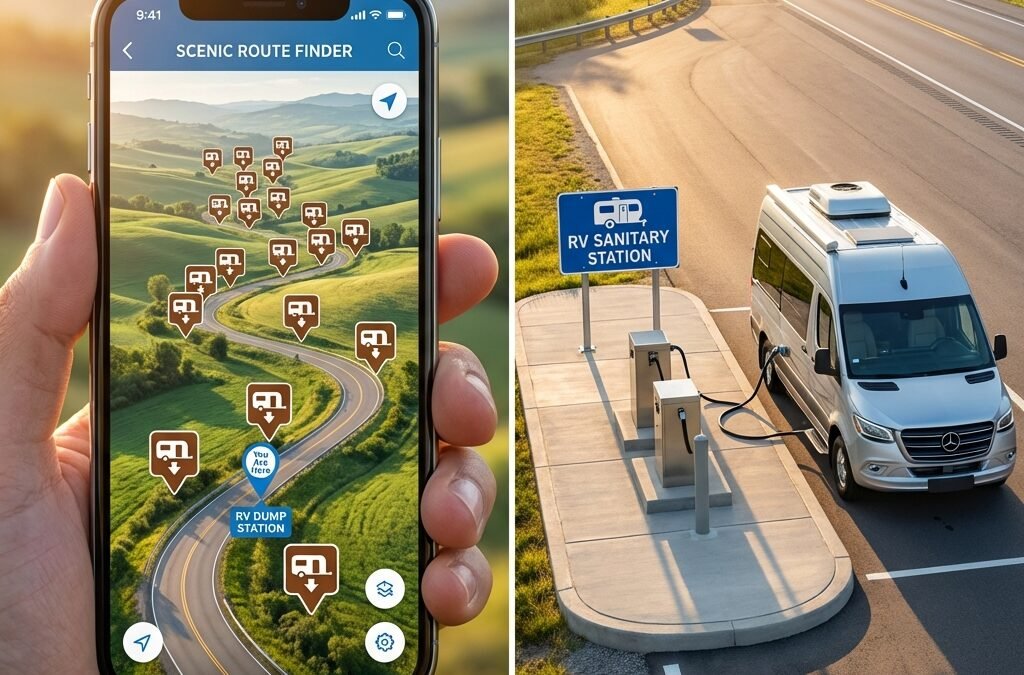
Find black tank and gray tank disposal facilities, compare finder apps, check fees, and verify local disposal rules before you detour.
By Chuck Price
Last updated: October 16, 2026. Directory fee table checked September 29, 2026. App prices and truck stop pages checked October 4, 2026.
Chuck Price has 35+ years of RV camping and road-trip experience. Boondock or Bust focuses on practical RV planning, boondocking logistics, campground alternatives, and road-tested travel systems.
Quick Reference
- Must-know: RV dump stations are the proper place to empty black tanks and gray tanks.
- Trip killers: Closed facilities, unclear fees, tight access lanes, and out-of-date app listings cause the biggest detours.
- Best for: RVers searching for dump stations near a route, campground, truck stop, public facility, or boondocking area.
- Confirm before you go: Hours, fee, payment method, RV length access, and current operating status.
Use this guide to find RV dump stations for black and gray tank disposal only. It covers finder apps, truck stop options, public dump facilities, processing fees, timing, gear, and local disposal-rule checks. For broader off-grid trip planning, pair it with our boondocking tips guide. Read our Allstays Camp & RV review before you pay for the app.
Verify before you detour: Waste facilities, processing fees, access rules, and operating status change. Confirm current details with the facility, app listing, campground office, public works department, or land management agency before you drive out of your way.
Find an RV dump station near you
To find an RV dump station near you, search a dump station app first, then check truck stop and state rest area pages, then call the site. This page does not have a live map and it cannot see where you are. Use the steps below on your own phone or computer.
- Search a dump station app. The RVing Life app says it lists more than 44,000 dump stations and searches by state, province or postal code. It is free with ads. Going ad-free costs $3.99 per month or $29.99 per year. The RV Dump Stations app costs $0.99 once, lists more than 7,100 stations and shows them offline. Its developer says the data is crowd-sourced, so one camper may call a station working while another calls it broken.
- Check truck stops. Pilot lists RV dump stations among its RV services. Love’s says its RV Stops can offer an RV dump. Good Sam lists $2.50 off dumping fees for members at Pilot and Flying J. The Pilot and Love’s pages we checked do not list a dump fee, so confirm the price at the location.
- Check state rest areas. Some states list dump stations at rest areas. The Louisiana DOTD rest area page lists an RV dump station at six rest areas. Look for your own state DOT page, then read our rest area rules by state.
- Check campgrounds. Some campgrounds let non-guests dump for a fee. The Coloma/St. Joseph KOA in Michigan lists $25 for non-registered guests. The Newberry, South Carolina KOA lists $15 during office hours. Call the office and ask.
- Call before you detour. Ask whether the dump is open today, what it costs, how to pay and whether your rig fits the lane.
Searching by zip code or on a map? Use an app that searches by postal code, such as RVing Life. Google Maps works as a last resort. A map pin does not prove a working dump station, so call first.
App prices and fees checked October 4, 2026. They change, so confirm before you go.
Compare dump station finder apps
Each finder covers a different slice of dump stations, and crowd-sourced listings go stale. Match the finder to your route, then confirm with the facility before you detour.
| Finder | Best Use Case | What to Confirm |
|---|---|---|
| RV Dump Stations app | Dedicated dump station lookup with offline map access. | Recent user notes, fee, hours, and whether the station is still operating. |
| The Dyrt PRO | Route planning when you also need campground or overnight parking options. The Dyrt help center says dump pins are a PRO feature. | Current subscription terms, route filters, and user-reported facility status. |
| Pilot and Flying J app | Interstate routes where truck stop RV services are convenient. Pilot RV Services lists RV dump stations among its RV amenities. | Dump station amenity, Good Sam discount eligibility, and access hours. |
| Love’s app or RV Stops page | Highway stops with dedicated RV service layouts at selected locations. Love’s RV Stops promotes RV dump access at participating RV stops. | Whether that location has an RV dump, current fee, and lane access. |
| iOverlander | Crowd-sourced options, municipal sites, and remote-route backup planning. | Comment recency, local restrictions, and whether the listing is still public. |
| Google Maps | Last-minute backup when dedicated RV apps miss a nearby business. | Call the facility. Map results often mix RV parking, service centers, and true dump sites. |
What Counts as an RV Dump Station?
An RV dump station is a designated waste disposal point built to receive sewage and gray tank wastewater from recreational vehicles. This page covers RV waste-disposal planning in the United States, not state-by-state legal advice, household plumbing, campground hookups, or solid trash disposal. Dump stations are commonly found at campgrounds, truck stops, RV service centers, some public facilities, and selected public recreation areas.
Black tanks hold toilet waste. Gray tanks hold sink and shower wastewater. Both need proper disposal because campground drains, roadside ditches, storm drains, and open ground are not RV dump stations. Leave No Trace disposal guidance directs travelers to dispose of waste properly and follow local rules. For non-tank trash, use our separate guide to trash disposal rules while boondocking.
How Much Do RV Dump Stations Cost?
Non-guest dump fees listed in directories run $10 to $50 at the Northeast and Mid-Atlantic sites in the table below, checked September 29, 2026. Registered campers often dump free, and truck stops and campgrounds charge others. Fees change by owner, season and membership, so confirm the price before you go. The Dyrt help center notes that dump station costs and availability can vary by season, campground status, and whether you are a paid guest. For how dump fees fit a full trip budget, see what boondocking costs per month.
| Location Type | Common Fee Pattern | Best Verification Step |
|---|---|---|
| Campgrounds and RV parks | Often included for registered guests. Non-guest access may be restricted or paid. | Call the office and ask whether non-guests may use the dump station. |
| Truck stops | Usually paid unless a discount or loyalty program applies. | Check the chain app, then confirm at the location desk. |
| National or state park campgrounds | May be included for campers and paid for visitors where public access is allowed. | Check the specific park page before arrival. |
| Municipal facilities | May be free, resident-only, donation-based, or paid by card or cash box. | Call public works or the wastewater treatment office. |
| RV dealers and service centers | Sometimes offered to customers. Walk-in access varies. | Call before detouring and confirm your RV can fit. |
Fee example: Some National Park Service dump stations publish location-specific prices and seasonal access rules. Confirm the exact park page before arrival because access and fees are site-specific. Use the National Park Service park finder to verify the specific location.
Listed dump fees in the Northeast and Mid-Atlantic
The table below shows fees as directories list them. We did not pay these fees ourselves, and directory entries can be out of date. Where a non-guest price is listed, it runs from $10 to $50. The three truck stop listings show $10, and the campground, forest and military listings limit free use to guests or campers. Call ahead to confirm the fee, payment method and hours.
| Location | State | Listed fee | Access note | Source |
|---|---|---|---|---|
| TA Travel Center, Willington | CT | $10 | Pay the cashier inside and get the key. | Campendium reviews, 2022 to 2023 |
| Pilot Flying J, Cranbury | NJ | $10 | Listed 24/7. Confirm the dump station is working. | findrvdump |
| Love’s Travel Stop, Turnersville | NJ | $10 | Listed 24/7. Confirm the dump station is working. | findrvdump |
| M&L Boston Fuel & Wash, Woburn | MA | $50 | Appointment required. Office hours Monday to Friday, weekends by appointment. | RVshare directory |
| Myles Standish State Forest, Carver | MA | Free for guests, $20 for non-campers | Water is listed as available. | RVshare directory |
| Peters Pond RV Resort, Sandwich | MA | Free for registered guests, fee for others (amount not listed) | Hours change by season. Call the resort office. | RVshare directory |
| Fort Eustis Recreation Area, Newport News | VA | $10 dump-only, free if camping | Military ID required. | RVshare directory |
Where Free RV Dump Stations Are Most Likely
Free RV dump stations exist, but they are inconsistent and often poorly advertised. The best free-disposal searches start with public rest areas, municipal wastewater sites, campground guest amenities, and public recreation facilities. Always verify access because free sites can become resident-only, seasonal, temporarily closed, or removed from public use.
- Highway rest areas: Some state rest areas list RV dump amenities. Check the state transportation department site or rest area guide before relying on one. See our rest area rules by state.
- Municipal wastewater facilities: Smaller towns sometimes allow RV waste disposal at public works sites, but rules are local.
- Campgrounds: Dump station use is often available to registered guests. Non-guest access is location-specific.
- Public recreation areas: Some park campgrounds include sewage disposal facilities with camping reservations or a separate fee.
Truck Stop Dump Stations: Pilot, Flying J, Love’s, and TA
Truck stop dump stations are useful because they sit close to major routes, but not every location has RV waste disposal. Pilot RV Services lists RV dump stations as an RV amenity, and Good Sam lists $2.50 off dumping fees for linked Pilot and Flying J rewards accounts. Love’s RV Stops promotes RV dump access at participating sites, but location-level confirmation still matters.
For lot rules at these stops, read our truck stop overnight parking rules.
Use this three-step check before you drive in:
- Open the chain app or location page and confirm the dump station amenity.
- Call the store if the app listing is old, vague, or missing fee details.
- Confirm lane access, hours, and payment method before entering with a larger RV.
Red flags: The listing says RV parking but not RV dump station. User reviews mention closure, broken equipment, locked access, or cash-only payment. The app shows the facility but gives no recent operating-status signal.
How to Dump Black and Gray Tanks Without Making a Mess
RV tank dumping works best when the process is simple, controlled, and done in the right order. Dump the black tank first so the gray tank can help rinse the sewer hose afterward. This is a common RV waste-handling practice, but always follow your rig manual and the posted rules at the dump station.
- Park close enough for the sewer hose to reach without pulling tight.
- Put on disposable gloves before handling caps, valves, or fittings.
- Connect the sewer hose securely to the RV outlet and dump station inlet.
- Open the black tank valve first and let it drain fully.
- Close the black tank valve, then open the gray tank valve.
- Close all valves, disconnect carefully, rinse approved parts only where allowed, and store sewer gear separately.
- Check the site for spills, loose caps, or dropped gear before you leave.
Gear to carry: Sewer hose, clear elbow, sewer hose support, disposable gloves, bayonet adapters, sewer cap wrench if needed, disinfecting wipes, tank treatment, and a sealed bin for sewer-only equipment.
Cassette toilets: dumping without a dump station
A cassette toilet lets you empty toilet waste without an RV dump station. Our 2018 Hymer Aktiv has a cassette toilet, so our dump fees are typically nil. We empty it at porta-potties and public restrooms. Check that the facility allows it before you do, and follow your toilet maker’s instructions.
- Scope: This applies to a removable cassette only. A fixed black tank still needs an RV dump station.
- Gray water: Sink and shower water still needs a proper dump point unless a land manager allows otherwise.
- Tank care: For treatment choices and maintenance, see our RV waste disposal best practices.
When to Plan Dump Stops
Plan dump stops before your tanks are full. A conservative route plan gives you one confirmed disposal option before your next overnight stop and one backup option along the same corridor. This matters most when you are boondocking, crossing rural areas, or traveling during shoulder seasons when some facilities close.
- Use tank sensors as a warning, not a guarantee: Sensors can read incorrectly when waste buildup sticks to the tank wall.
- Build disposal into travel days: Dumping on the way into or out of a destination avoids dedicated detours.
- Keep a backup facility: Save a second location in case the first site is locked, broken, or too tight for your RV.
- Do not wait for an emergency: Full tanks can create odor, backup, and route-planning stress.
Which Dump Station Finder Fits Your Route?
The right finder depends on how you travel. Weekend campground users need office confirmation and guest rules. Highway travelers need chain apps. Boondockers need offline maps, public facility options, and a backup plan because signal, staffing, and seasonal access can fail at the same time.
| Travel Pattern | Best Starting Point | Backup Move |
|---|---|---|
| Weekend campground trip | Ask the campground whether dumping is included for guests. | Find a nearby RV park or service center before checkout day. |
| Interstate travel day | Check Pilot, Flying J, Love’s, or TA locations along the route. | Search dedicated RV dump apps before leaving the highway corridor. |
| Boondocking route | Pre-save dump stations before you lose cell signal. | Call municipal public works offices near your exit route. |
| Seasonal migration | Plan dump stops every few travel days along major corridors. | Use campground guest dumps when route facilities are unavailable. |
RV Dump Station FAQ
How do I find RV dump stations near me right now?
Open a dedicated RV dump app first, then confirm the listing with the facility. Search by your current location, filter for dump stations, read recent comments, and check fee notes. For urgent searches, use a chain app or Google Maps as a backup, then call before detouring.
How much does it cost to dump RV tanks?
Directory listings in the Northeast and Mid-Atlantic show non-guest dump fees of $10 to $50, checked September 29, 2026. Three truck stop listings show $10. Many campgrounds include dumping for registered guests and charge everyone else. Fees change by owner and season, so confirm the price, payment method and hours before you arrive.
Can I dump RV tanks for free?
Yes, but free dump stations are inconsistent. Start with campground guest amenities, selected public rest areas, municipal facilities, and public recreation sites. Confirm access before arrival because free sites can be seasonal, resident-only, temporarily closed, or available only to registered campers.
Do Love’s, Pilot, and Flying J have RV dump stations?
Some Love’s, Pilot, and Flying J locations have RV dump stations, but the amenity is location-specific. Use the chain app or location page to confirm the dump station, then verify fees and access hours. Do not assume every truck stop on a route has waste disposal.
Should I dump black or gray tanks first?
Dump the black tank first, then dump the gray tank. The gray tank flow helps rinse the sewer hose after toilet waste drains. Follow your RV manual, keep the hose secured at both ends, wear gloves, and obey the posted instructions at the dump station.
Can I dump gray tank wastewater on the ground?
Do not dump gray tank wastewater on the ground unless a land manager explicitly allows it, and many places do not. Leave No Trace grey water guidance says local regulations and campground staff instructions should guide disposal. Use a designated dump station and verify local rules before camping off-grid.
Can I use a campground dump station without staying there?
Sometimes. Campgrounds often include dump station use for registered guests, but non-guest access depends on the owner, staffing, local rules, and site layout. Call before arrival, ask about the fee, and confirm whether your RV can enter and exit safely.
Can I empty a cassette toilet in a public restroom?
We empty our Hymer’s cassette toilet at porta-potties and public restrooms, so our dump fees are typically nil. Check posted rules or ask first, because some facilities may not allow it. This works only for a removable cassette. A fixed black tank still needs an RV dump station.
Before You Leave the Dump Station
A good dump stop ends with a clean site and a confirmed next disposal option. Check that all valves are closed, caps are secure, sewer gear is stored separately, and the dump area is clear of spills or dropped supplies. Then save the next verified location before heading back off-grid.
Need to Fill Your Fresh Water Tanks?
If you are looking for potable water, read our complete guide to RV boondocking water management.


