
🔹 Quick Answer
Boondockers shower at Pilot/Flying J truck stops ($12–$15 per shower), Planet Fitness locations ($24.99/month Black Card, multi-location access), paid campground day-use showers, state park facilities, and rec centers or YMCAs in nearby towns. If your rig has a built-in shower, a solar shower bag or RV onboard system extends your range between facility visits.
The cheapest long-term strategy for full-timers is a Planet Fitness Black Card membership. The most reliable single-use option near any major interstate is a Pilot or Flying J travel center.
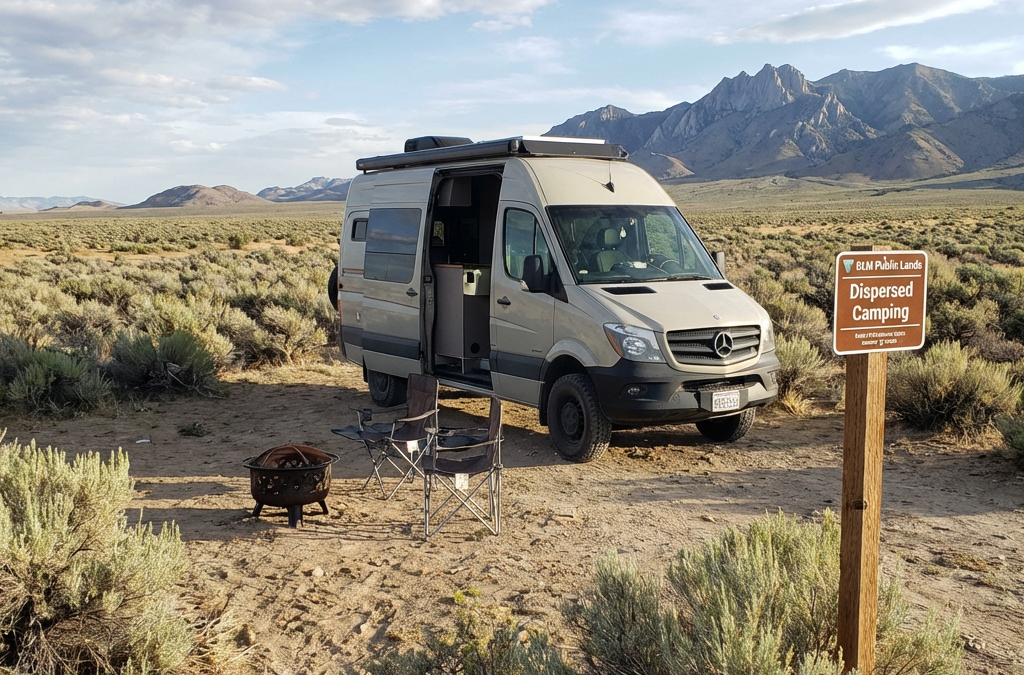
There is no shower at your dispersed campsite. There is no shower block on BLM land. If you’re 40 miles out on National Forest road, the nearest hot water is a drive away — and how far depends entirely on how well you planned before you left.
This is not a complicated problem. Boondockers have been solving it for decades with a short list of reliable options. What changes is the math: how often you actually need a full shower, what you’re willing to pay per visit, and how much water your rig carries between resupply runs. Get those three numbers right and the logistics run themselves.
Where to shower while boondocking: 7 options compared
The table covers the main options ranked by typical cost and availability. None of these requires a campsite booking or overnight stay.
| Option | Cost | Availability | Notes |
|---|---|---|---|
| Pilot / Flying J truck stops | $12–$15 per shower | 750+ locations on major interstates | Private rooms. Open to all travelers, not just truckers. myRewards Plus app: credits with diesel fill-ups. Pay at the counter. |
| Love’s Travel Stops | $12–$14 per shower | 600+ locations, 42 states | Similar setup to Pilot/Flying J. MyLove Rewards app for credits. Slightly less coverage but comparable quality. |
| Planet Fitness (Black Card) | $24.99/month + $49 annual fee | 2,795+ locations nationwide | Best value for full-timers. Multi-location access up to 10 visits/month at non-home clubs before $5/visit surcharge kicks in. No towels provided. |
| Paid campground day-use showers | $5–$10 day-use fee | State parks, Forest Service campgrounds near dispersed areas | Call ahead. Not all campgrounds allow non-guest shower use. Some charge a nominal fee; others include it in day-use parking. |
| YMCA / recreation centers | $5–$15 day pass (varies by location) | Small towns and cities along your route | Each YMCA sets its own guest pricing. Best for multi-purpose stops — shower + laundry + Wi-Fi in one town run. |
| Natural hot springs | Free (undeveloped) to $15+ (developed) | Select Western states — not nationwide | Viable supplement, not a system. Biodegradable soap required at undeveloped springs. Check land management rules before use. |
| Onboard RV shower (water-conserving) | No cost per use | Your rig | Requires water management discipline. A navy shower (wet, off, soap, rinse) uses roughly 2–3 gallons. Fresh tank capacity determines your range between resupply stops. |
Truck stop showers: what to expect and how to use them
Pilot Flying J operates more than 750 travel centers across North America and explicitly opens its shower facilities to all travelers — not just commercial drivers. (pilotflyingj.com.) Love’s Travel Stops covers 600+ locations across 42 states with comparable facilities. Travel Centers of America (TA/Petro) add further coverage on less-trafficked corridors.
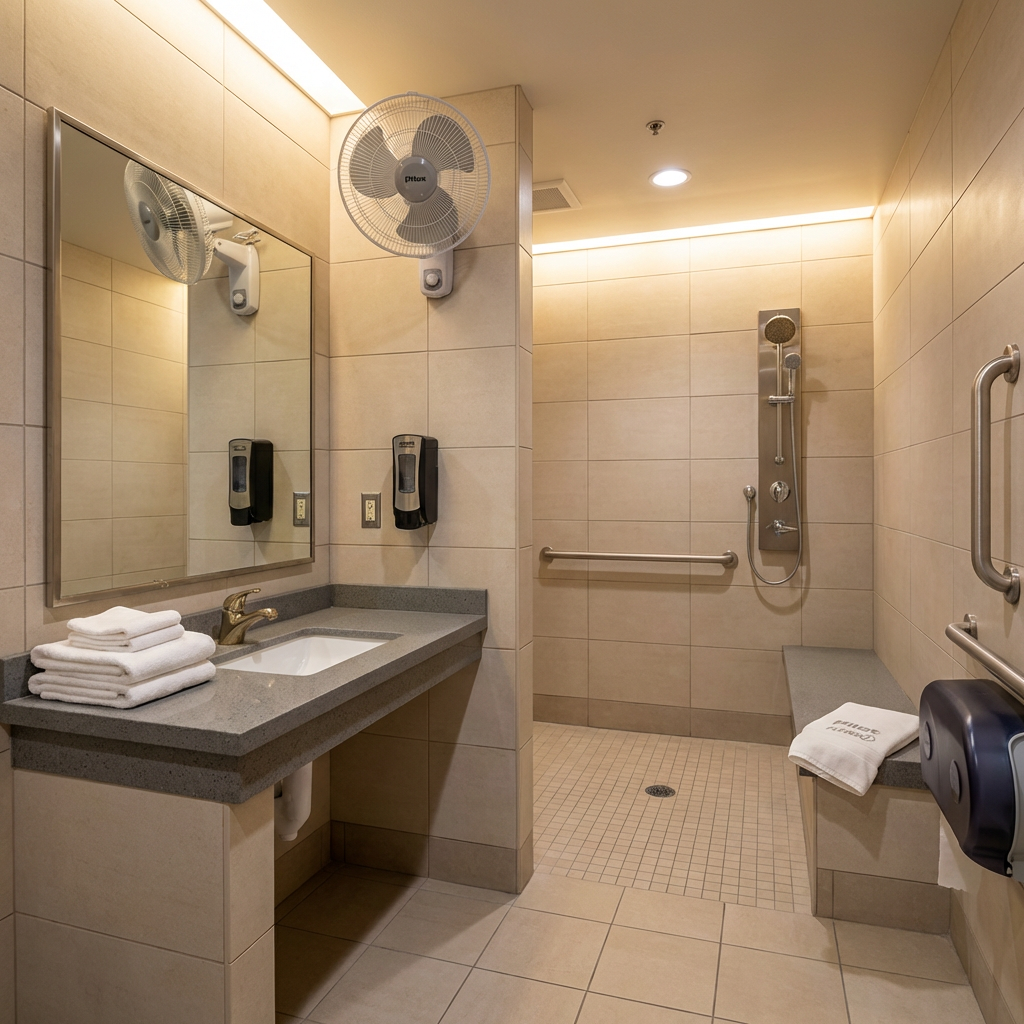
The process is straightforward. Go to the counter, ask for a shower, pay $12–$15 (current 2026 range at most locations), and you receive a room code or slip. The rooms are private — full bathroom, lockable door, bench, hook, and controlled-temperature shower. Towels are included at some locations; bring your own to be safe.
Loyalty programs cut the cost significantly over time. Both Pilot Flying J’s myRewards Plus and Love’s MyLove Rewards programs award shower credits with qualifying fuel purchases. Pilot’s myRewards app issues shower credits within minutes of fueling; credits expire after 7 days. The loyalty programs are structured for diesel commercial drivers, but RVers filling large tanks can qualify. Verify eligibility at the counter.
One practical note: if you and a travel partner arrive together, most truck stop locations allow both to use one shower purchase sequentially. Confirm at the counter before paying — policies vary by location and shift.
Planet Fitness Black Card: the full-timer’s math
Planet Fitness operates 2,795+ locations in the US as of early 2026. The Black Card membership ($24.99/month + $49 annual fee, per planetfitness.com) grants access to any location nationwide. Showers are included with all membership tiers at no per-use charge.
The access limit matters: Black Card members can visit non-home-club locations up to 10 times per month before a $5 per-visit surcharge applies. For a couple who showers every 3–4 days while boondocking, that’s 7–10 visits per month — right at or under the limit for one person. Two people require two memberships.
The annual cost math: At $24.99/month plus the $49 annual fee, a Black Card runs roughly $349/year per person. At $12–$15 per truck stop shower, that’s the equivalent of 23–29 individual visits to break even. Full-timers averaging one shower every 3 days hit that number in under 3 months.
No towels provided. Planet Fitness does not supply towels. Bring your own microfiber travel towel — this is consistent across all locations.
The core decision: Boondockers need a shower system, not a shower solution. Truck stops handle the single-use need on travel days. Planet Fitness covers the recurring need for full-timers at the lowest per-use cost. Your onboard shower extends the gap between facility visits when water management is tight. Build the system before your first extended trip.
Making your onboard shower work harder
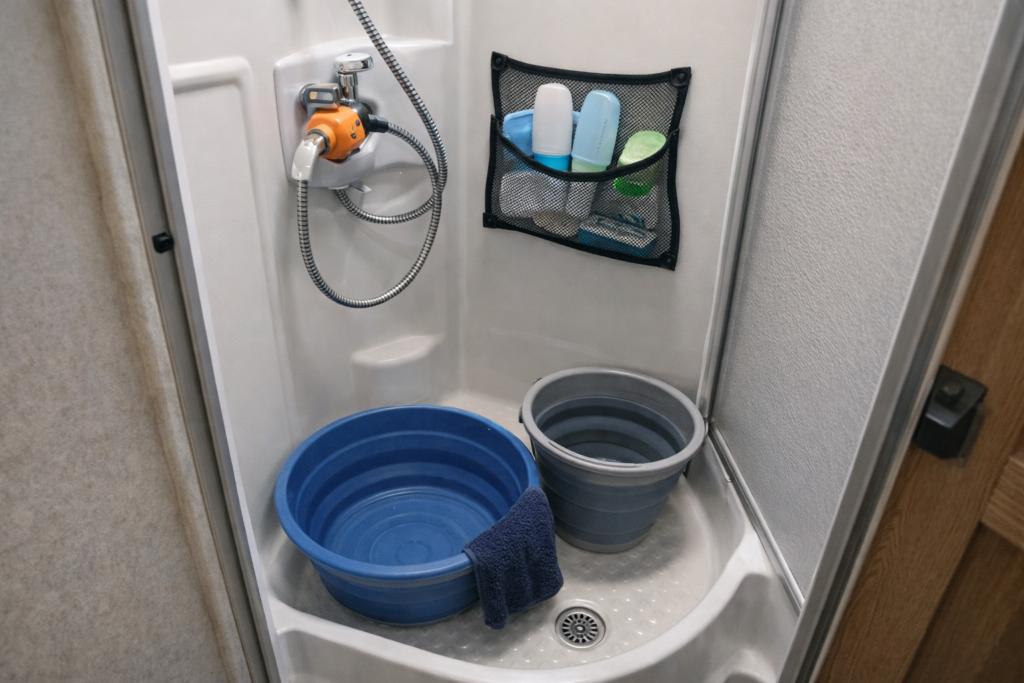
If your rig has a shower, it is your cheapest per-use option — but only if you manage water well enough to extend your stay. The two levers are technique and tank capacity.
The navy shower method: Wet down, turn the water off, soap up, turn on to rinse. A disciplined navy shower uses 2–3 gallons of fresh water per person. On a 20-gallon fresh tank, that is 6–10 on-rig showers before a water fill is needed. On a 40-gallon tank, 13–20 showers. The technique is not uncomfortable once it becomes habit — the Hymer Aktiv’s 10-gallon tank pushed us to this approach quickly, and it’s been standard practice ever since.
Low-flow showerheads: Replacing a standard RV showerhead with a 1.0–1.5 GPM low-flow model cuts water use further without reducing pressure noticeably. This is a $20–$40 one-time modification with compounding benefit on every boondocking trip.
Gray tank is the real constraint, not fresh: On a Class B or small Class C, the gray tank often fills before the fresh tank empties. A 3-gallon shower creates 3 gallons of gray water. Time your dump station stops accordingly — don’t run out of gray capacity mid-site. For dump station planning, see our RV dump station guide.
Solar shower bags: the low-cost camp option
A solar camp shower bag costs $25–$40 and heats 5 gallons of water to a comfortable temperature in 3–4 hours of direct sun. (Current prices on Amazon.) This is not a replacement for a full shower system — it is a supplement for warm-weather boondocking when full facilities are days away.
How it works: Fill the bag from your fresh tank or a water jug in the morning. Lay it flat in direct sun on your rig’s roof or hood. By early afternoon, the water is warm enough for a comfortable outdoor rinse. Hang it from a tree or awning arm; use a pop-up privacy shelter if needed.
Where it fails: Cold weather, overcast days, and desert heat waves (water overheats past comfort level) all reduce reliability. Do not count on a solar bag as your primary shower system in fall or winter camping. It is a spring/summer supplement.
Water goes where your waste management rules allow. Gray water from a camp shower must be disposed of per BLM and Forest Service rules — not scattered near streams or water sources. The same 200-foot buffer that applies to other gray water applies here. For full waste management rules, see our boondocking waste disposal guide.
Common questions
Build the system, not the workaround
The mistake most new boondockers make is treating showering as a one-off problem to solve on the fly. It isn’t. It’s a recurring logistics task that runs on the same schedule as water fills and tank dumps.
Set it up before your first extended trip: decide whether you’re a truck-stop user or a Planet Fitness member, identify three or four facility locations along your planned route, and bake the stops into your departure-day checklist. After the first trip, it becomes automatic.
If water management is still the limiting factor — you’re burning through your fresh tank faster than expected — the next thing to solve is your overall water resupply system. Our real-cost breakdown of boondocking covers water resupply costs alongside fuel, dump fees, and site logistics so you can budget the full picture.
Get the full boondocking logistics checklist
Water, power, waste, showers, and connectivity — everything in one field-tested PDF. No fluff.
References
- Planet Fitness. Gym Memberships — Pricing and Plans. planetfitness.com, 2026. https://www.planetfitness.com/gym-memberships
- Pilot Flying J. myRewards Plus Program. pilotflyingj.com. https://pilotflyingj.com/rewards
- Bureau of Land Management. Camping on Public Lands — Dispersed Camping Rules. U.S. Department of the Interior. https://www.blm.gov/programs/recreation/camping
- Money Digest. Are Planet Fitness’ Black Card Perks Worth the Price? (Confirms 10-visit non-home-club limit and $5/visit surcharge.) moneydigest.com
- Athletech News. Planet Fitness Plans Black Card Price Hike. November 2025. (Confirms $24.99/month current rate and planned increase.) athletechnews.com
Last reviewed: April 2026. Truck stop shower prices and gym membership rates are subject to change by location. Verify current pricing before your trip.
Chuck Price
RV Travel Writer & Boondocking Specialist | 35+ years RV experience | 26,000+ campsites explored
Chuck and his wife Cindy travel in a 2018 Hymer Aktiv Class B. BoondockOrBust.com is their field-tested resource for off-grid RV living, boondocking regulations, and no-cost camping strategy.


