Articles by Chuck Price — Page 31
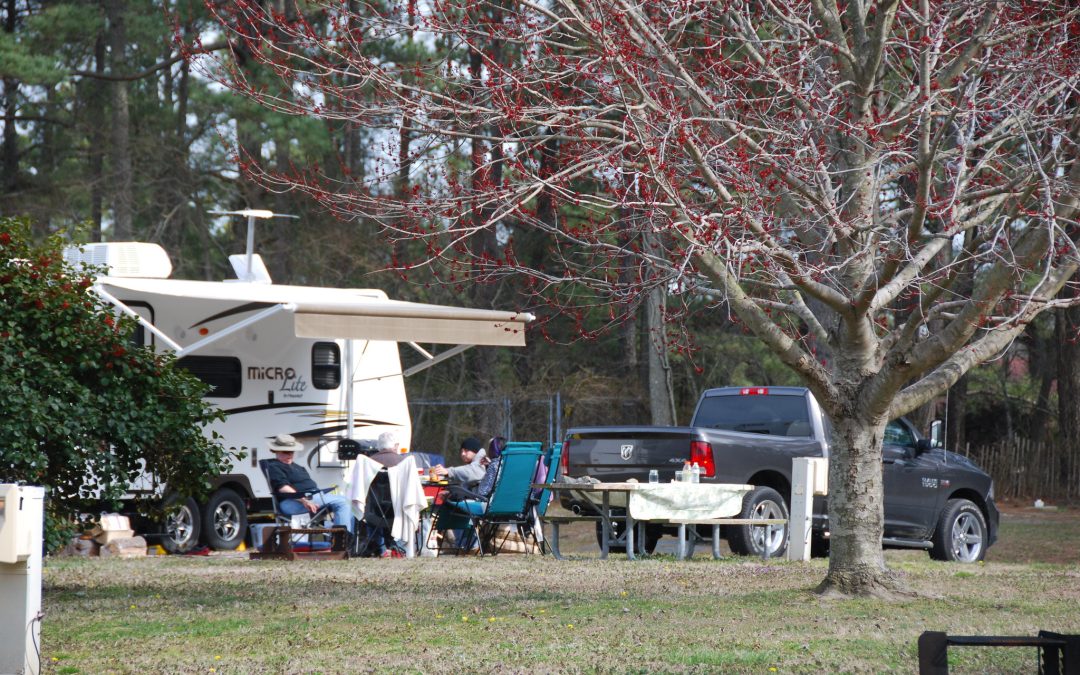
by Chuck Price | Dec 29, 2023 | Boondocking-Guide
Unveiling the Great Outdoors
Discover the secrets of America’s state parks, each a canvas of breathtaking landscapes and untold adventures. Whether you’re an adrenaline junkie, a family seeking memorable outings, or a nature lover craving tranquility, state parks offer a gateway to diverse experiences. This guide is your key to unlocking the myriad of park passes, discounts, and hidden gems that await your discovery.
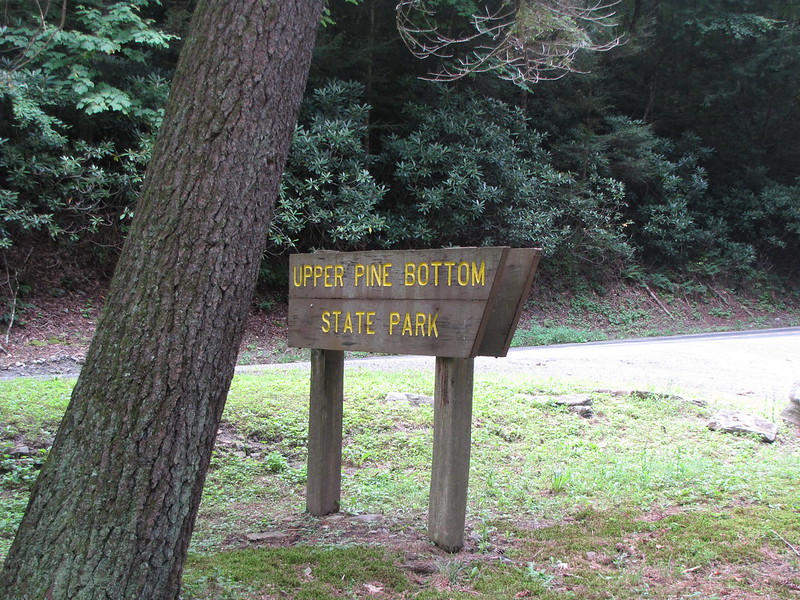 Upper Pine Bottom State Park Image by Gerry Dincher via flickr
Navigating the Park Pass Maze: Simplified
Understanding Pass Types
Annual Passes: Ideal for frequent visitors, these passes offer year-long access to a state’s parks. Each state offers unique benefits with their annual passes, from entry to all state parks to additional perks like discounted camping and equipment rentals. For specific examples, you can explore the North Carolina State Parks Annual Pass, the California State Park Passes, Georgia’s ParkPass, and Virginia State Parks Annual Passes
Day Passes: Perfect for day-trippers, these passes are designed for single visits. They’re ideal for a quick escape to nature, offering access to park facilities for a day.
Activity-Specific Passes: Tailored for enthusiasts, these passes provide access to specific activities like fishing, boating, or hiking in designated areas. States like Colorado and Minnesota offer special fishing and boating passes for anglers and water sports enthusiasts.
Special Discounts: Seniors, veterans, and individuals with disabilities can often access state parks at reduced rates or even for free. This initiative makes parks more accessible and enjoyable for everyone.
Pro Tip: Research Your Target State
Different states offer various pass options, each with unique perks and restrictions. For the most accurate and up-to-date information, visit the official state park websites.
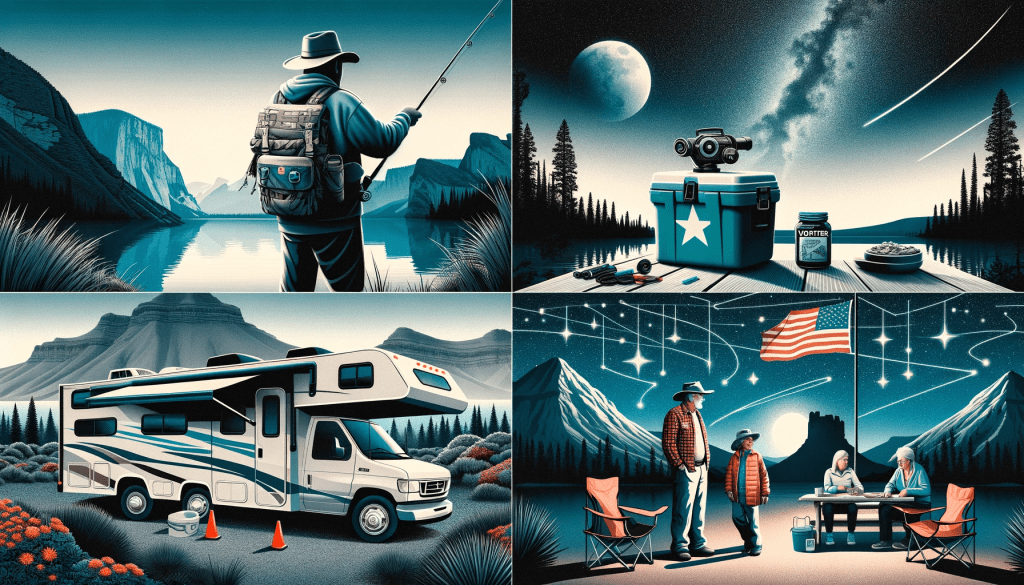
Spotlight on Unique State Pass Perks
Texas State Parks Pass
Texas does not offer a separate “Fishing Pass.” The $70 Texas State Parks Pass provides free entry to more than 80 state parks for the passholder and guests traveling in the same vehicle, plus discounts on camping, park-store purchases, and equipment rentals. Fishing from shore or a pier inside a Texas state park generally does not require a fishing license, but regular fishing regulations still apply.
Oregon’s Tribute to Veterans
Oregon’s Special Access Pass is available to U.S. veterans with a service-connected disability and waives standard camping fees for up to four nights in a calendar month at eligible Oregon state-park campgrounds. Eligibility, reservation charges, and site-specific fees should be checked before booking. Crater Lake is a national park and is not covered by this Oregon state-parks benefit.
Hidden Gems in New Mexico & Georgia
New Mexico’s Starry Nights
In New Mexico, the night sky is an unforgettable experience. With the New Mexico Annual Camping Pass, campers can enjoy stargazing and overnight stays in all 35 state parks. This pass is especially popular among RV travelers and campers who enjoy desert landscapes and clear, starry nights. Explore New Mexico Parks to learn more about the Annual Camping Pass, which costs $300 for New Mexico residents and $600 for out-of-state residents. The pass allows for unlimited camping at state parks and is ideal for those who appreciate New Mexico’s unique terrain and clear skies, perfect for stargazing.”
This pass is an excellent opportunity for camping enthusiasts, especially RV travelers, to explore the natural beauty of New Mexico’s state parks, which are known for their stunning night skies. Sites like the Cosmic Campground offer exceptional stargazing opportunities, being located far from significant sources of electric light and known as the first International Dark Sky Sanctuary in the U.S.
Georgia’s Weekday Retreats
Georgia encourages weekday exploration with special rates and volunteer opportunities in its state parks. This initiative allows visitors to enjoy the parks’ natural beauty during quieter times while also giving back to the community. Georgia State Parks Info
Practical Online Resources for Trip Planning
Effective planning can greatly enhance your state park experience. Here are some key resources:
- State Park Agencies: For accurate and detailed information on passes, fees, and park-specific amenities, the USA State Parks website is an invaluable tool.
- National Park Service: The NPS website offers comprehensive information on nationwide passes, such as the America the Beautiful Pass, which can be useful for planning multi-state trips.
- Recreation.gov: A central platform for booking campsites, tours, and exploring federal lands, Recreation.gov is a one-stop resource for reservations and information.
- Mobile Apps: Enhance your outdoor adventures with tools like AllTrails, offering detailed trail maps and reviews, and Gaia GPS, which is excellent for offline navigation.
Unlocking More Discount Opportunities
Weekday and Off-Season Savings: Many state parks offer reduced rates during weekdays and off-peak seasons. Visiting during these times not only helps avoid crowds but also makes for a more affordable and serene experience. Check with individual parks for specific discount details.
Exploring Nearby Overlooked Recreation Options: Beyond state parks, public forests and local recreation areas can provide free or low-cost access to the outdoors. They offer a variety of activities like hiking, bird watching, and picnicking, making them perfect for budget-friendly adventures.
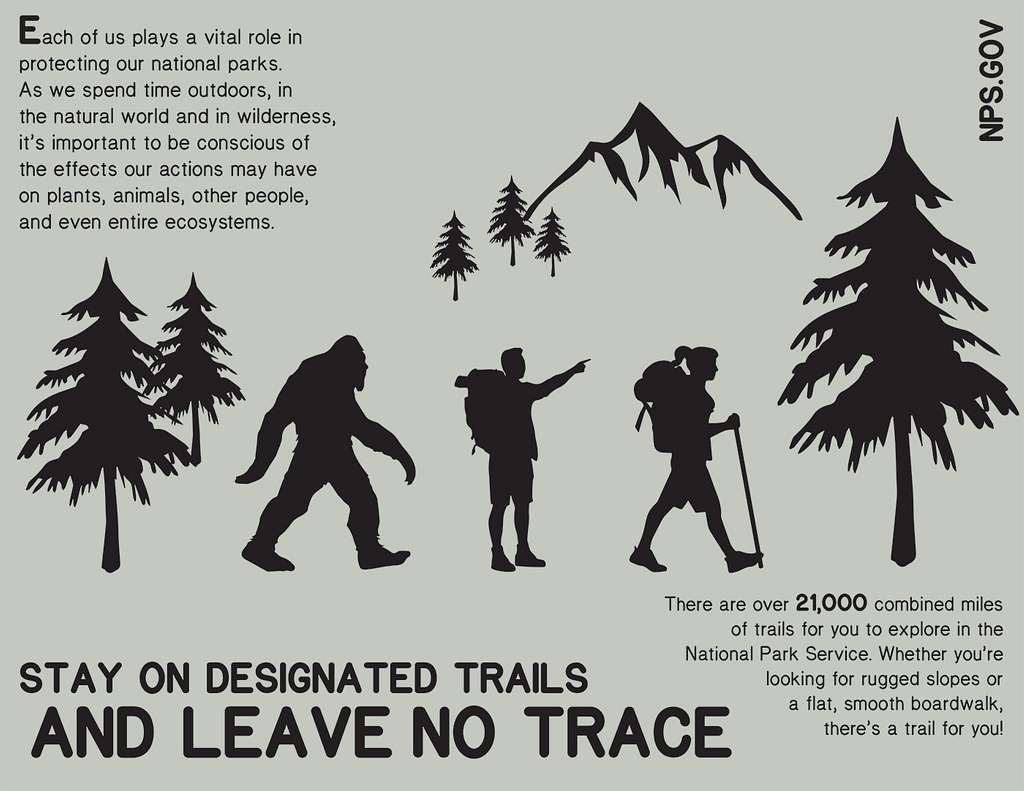
Image via National Park Service
Responsible Recreation: Licenses, Regulations, and Ethics
Responsible recreation is key to preserving the natural beauty of state parks. Be sure to stay informed about the necessary licenses for activities like fishing or boating, as these vary by state. Practicing ethical behaviors, such as following Leave No Trace principles, is crucial for the sustainability of these natural areas.
Inclusive Facilities and Accessibility Options
Accessibility is a priority in many state parks. Facilities such as wheelchair-accessible campgrounds, pathways, and restrooms are increasingly common. These features ensure that all visitors, regardless of physical ability, can enjoy the splendor of nature.
Outsmarting the Crowds: Peak Season Tips
Navigating peak seasons requires strategy:
- Book Early: Advance reservations are crucial for securing the best spots during popular times.
- Opt for Weekdays: Weekday visits typically mean fewer crowds and a more peaceful experience.
- Explore Lesser-Known Areas: Seeking out less popular areas within the park can lead to discovering hidden gems and tranquil spots.
State-Specific Resident Perks: Local Treasures
Many states offer unique benefits to their residents, adding extra value to state park visits. These perks can include reduced entry fees, access to special events, and more. It’s worth exploring what your home state has to offer at its state parks and local cultural attractions.
Volunteering: Giving Back and Gaining More
Volunteering in state parks is not only a way to contribute to the preservation of natural resources but also an opportunity to gain unique experiences. Many parks offer perks like camping discounts, educational opportunities, and behind-the-scenes access to volunteers. For those interested, volunteer.gov is a great place to start looking for opportunities.
Conclusion: The Journey Awaits
State parks are more than just scenic views; they are gateways to new adventures, opportunities for connection with nature, and sources of unforgettable memories. With the information and resources provided in this guide, you are well-equipped to explore, discover, and cherish the wonders that America’s state parks have to offer. So pack your bags, grab your map, and embark on a journey that promises to enrich your life in countless ways.
Resources
- National Park Service (NPS) – nps.gov
- Provides comprehensive information on national parks and federal recreational lands in the United States.
- Recreation.gov – recreation.gov
- Central platform for booking campsites, tours, and exploring federal lands in the U.S.
- USA State Parks – stateparks.com
- Offers detailed information about state parks across the United States, including park amenities, pass information, and activities.
- Volunteer.gov – volunteer.gov
- The go-to site for finding volunteer opportunities in U.S. federal and state parks, providing insights into how volunteering can enhance park experiences.
- Leave No Trace Center for Outdoor Ethics – lnt.org
- A resource for understanding and practicing ethical outdoor recreation to help preserve natural spaces.
Featured image by Virginia State Parks via flickr
by Chuck Price | Dec 17, 2023 | RV Camping Tips
An In-Depth Analysis
Imagine the sun setting over a vast, windswept mountain vista as you pull into your dream campsite. The air is crisp, the silence only broken by the chirping of crickets. However, this tranquility isn’t disturbed by the usual rumble of a gas engine; instead, your arrival is marked by the gentle hum of your electric RV tow vehicle. Is this sustainable, off-grid adventure a futuristic fantasy, or a tangible reality?
For RV boondocking enthusiasts and eco-conscious travelers, the concept of electric vehicle (EV) towing is becoming an increasingly practical reality. This comprehensive analysis delves deep into this burgeoning frontier. Our exploration goes beyond a mere ‘yes or no,’ examining the current capabilities of leading EVs, dissecting real-world user experiences, and peering into the exciting, innovation-driven future of electric RV travel.
Armed with data-driven insights, expert sources, and firsthand accounts, this guide is designed to equip you with the knowledge needed to navigate the evolving landscape of electric towing. Whether you’re a seasoned RV veteran weighing your next vehicle option, or a curious explorer dreaming of silent, eco-friendly journeys, this guide is your go-to resource for informed decision-making.
Prepare to demystify the myths surrounding EV towing, explore the practical challenges and triumphs of real-world pioneers, and get a glimpse into the electrifying future where sustainability seamlessly integrates with wanderlust. So, buckle up – your journey into the future of RV travel begins here!
Exploring EV Towing Capabilities
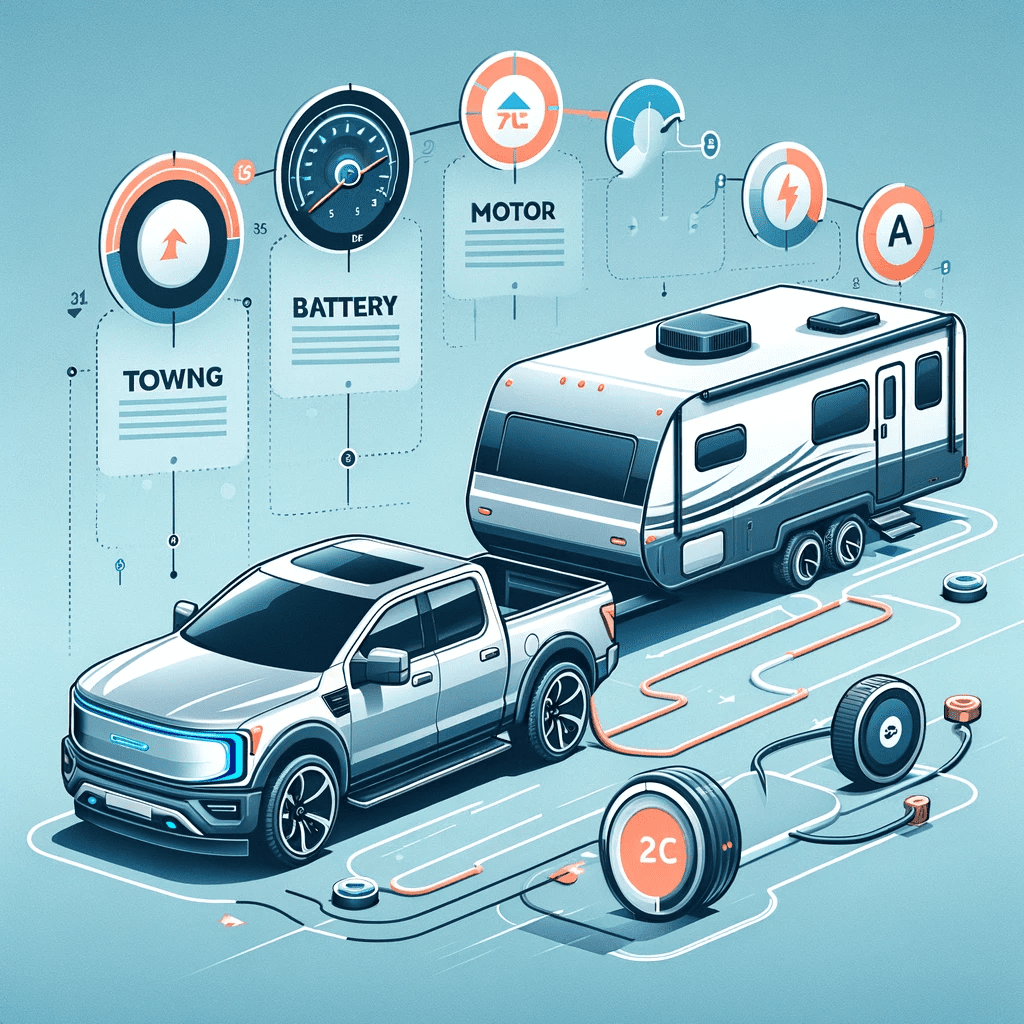
Before hitching our RVs to the electric revolution, let’s dissect the muscles beneath the sleek hoods of these modern marvels. Towing with EVs isn’t merely about swapping fossil fuels for electrons; it represents a fundamental shift in power dynamics. Forget roaring horsepower – in this new era, battery capacity and electric motor efficiency take center stage.
Imagine a high-tech tug-of-war: your RV’s weight is the opponent, and the EV’s battery and motor are your champions. The sturdier the battery, the longer the endurance, translating to greater towing capacity. Today’s leading EVs, such as Tesla, Rivian, and the GMC Hummer EV, boast impressive towing figures, with some exceeding 7,000 lbs, rivalling traditional gas vehicles. However, consider payload and tongue weight limitations, crucial in this tug-of-war, to find the ideal match between your RV and your electric tow vehicle.
Endurance, the EV’s Achilles’ heel, also demands attention. Unlike ubiquitous gas stations, charging infrastructure for hefty RVs is still in its infancy. Expect significant range dips when towing, with factors like terrain, weather, and RV size acting as invisible referees. Planning charging stops with resources like RV.net and My Grand RV Forum becomes a critical aspect of your journey.
Grasping these nuances – the interplay between capacity, endurance, and environmental variables – is key to making informed choices. It’s not just brute strength; it’s a carefully choreographed waltz between your EV’s capabilities and your RV’s demands. Equipped with the right knowledge, you can turn the electric tug-of-war into a smooth, sustainable journey to your dream campsite.
The Key Factors: Battery Life and Towing Capacity
In the quest to tow RVs with EVs, the emphasis shifts from horsepower to two paramount elements: towing capacity and battery life. These are the foundational pillars of your electric adventure, the unspoken forces dictating whether your dream campsite is a tangible destination or a distant dream.
Traditional gas-powered vehicles harness brute force, their engines roaring as they grapple with the weight of hefty RVs. EVs, on the other hand, bring a distinct elegance to this challenge, epitomized by advanced battery technology and motor efficiency. It’s not about the noise but the kilowatt-hours stored in your battery, which fuel your journey. Higher capacity means extended roaming capabilities, increased weight capacity, and your campsite within reach.
Yet, range anxiety looms larger in the world of EV towing. Here, battery life transforms into a nuanced dance, balancing distance, terrain, and the energy demands of your RV. The efficiency of your motor – how effectively it converts electrons into motion – becomes paramount. A more efficient motor means less energy consumption and a longer-lasting battery.
These two factors, battery life and towing capacity, are like twin pillars supporting the world of EV towing. Understanding their dynamics, strengths, and limitations is crucial in selecting the right electric vehicle for your needs. In our upcoming section, we’ll take a closer look at leading EV models, like Tesla, Rivian, and the Ford F-150 Lightning, comparing their capabilities to help you find the ideal companion for your adventures.
Unveiling the Champions: Decrypting Specs of Top EVs for Towing
The journey shifts from the smooth asphalt to the inviting crunch of campground gravel. Let’s spotlight the elite contenders in the electric towing arena. We delve into the specifications of top models like the Ford F-150 Lightning, Rivian R1T, Tesla Model X, and GMC Hummer EV, guided by insights from industry leaders like Electrify America and Grassroots Motorsports Forum. This comparative analysis will help you discern the best fit amidst a landscape where practical requirements meet technical sophistication.
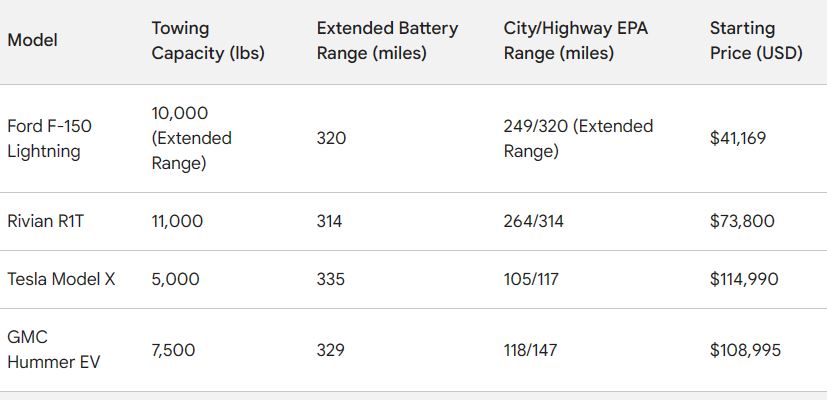
As you can see, the Rivian R1T has the highest towing capacity of the four trucks listed, while the Tesla Model X has the lowest. The Ford F-150 Lightning and GMC Hummer EV fall in the middle in terms of towing capacity.
In terms of battery range, the Tesla Model X has the longest extended battery range, followed by the Ford F-150 Lightning, the GMC Hummer EV, and the Rivian R1T. The Model X has the highest listed EPA range in this comparison. Towing can reduce real-world range substantially for every vehicle here, so plan from towing tests, route conditions, weather, and charging access rather than the untowed EPA figure alone.
Finally, the Ford F-150 Lightning has the lowest starting price of the four trucks, while the Tesla Model X has the highest. The Rivian R1T and GMC Hummer EV fall in between in terms of price.
Ultimately, the best truck for you will depend on your individual needs and priorities. If you need the most towing capacity, the Rivian R1T is the clear choice. If you’re looking for the longest range, the Tesla Model X is the best option (although keep in mind the lower real-world range estimates). And if you’re on a budget, the Ford F-150 Lightning is the most affordable truck on the list.
Battling the Drain: Demystifying Battery Life on the Road
When towing an RV, range anxiety inevitably becomes more pronounced. The Tesla Model X, with its impressive 300+ mile range, sees a significant reduction when towing. Similarly, the Ford F-150 Lightning’s range drops from 300 miles to approximately 170 miles under towing conditions. To mitigate this, strategic charging stops, planned with the aid of resources like F150 Lightning Forum and Camelot Forum, become crucial. We’ll provide you with insights and tools for effective route planning, transforming charging challenges into smooth segments of your electrified journey.
Charging Champions: Plugging into Adventure
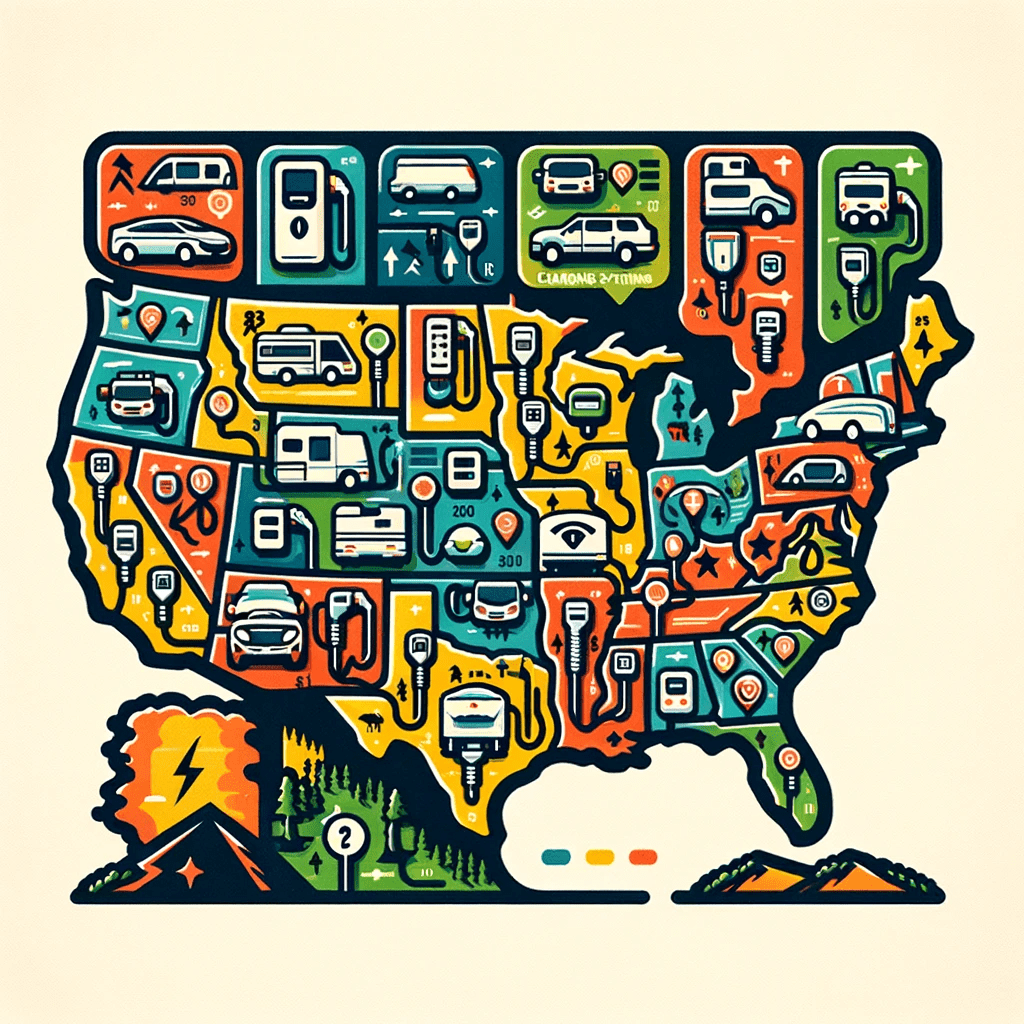
Exceptional range is complemented by robust charging infrastructure, exemplified by networks such as Electrify America, featuring chargers rated up to 350 kW. Nevertheless, navigating gaps in remote areas requires strategic planning. Resources like the Electrify America Station Locator and forums like Fiberglass RV Forums empower you to embark on worry-free journeys with accessible charging options.”
Electrify America provides a comprehensive network of EV charging stations across the USA, with a user-friendly mobile app to find stations, start charging, and track sessions. The Fiberglass RV Forums offer a community platform for discussing maintenance, modifications, towing, camping, and more, specifically for molded fiberglass trailers. These resources are invaluable for ensuring smooth and hassle-free travels.
Tech Savvy Champions: Gadgets and Gizmos for a Smoother Ride
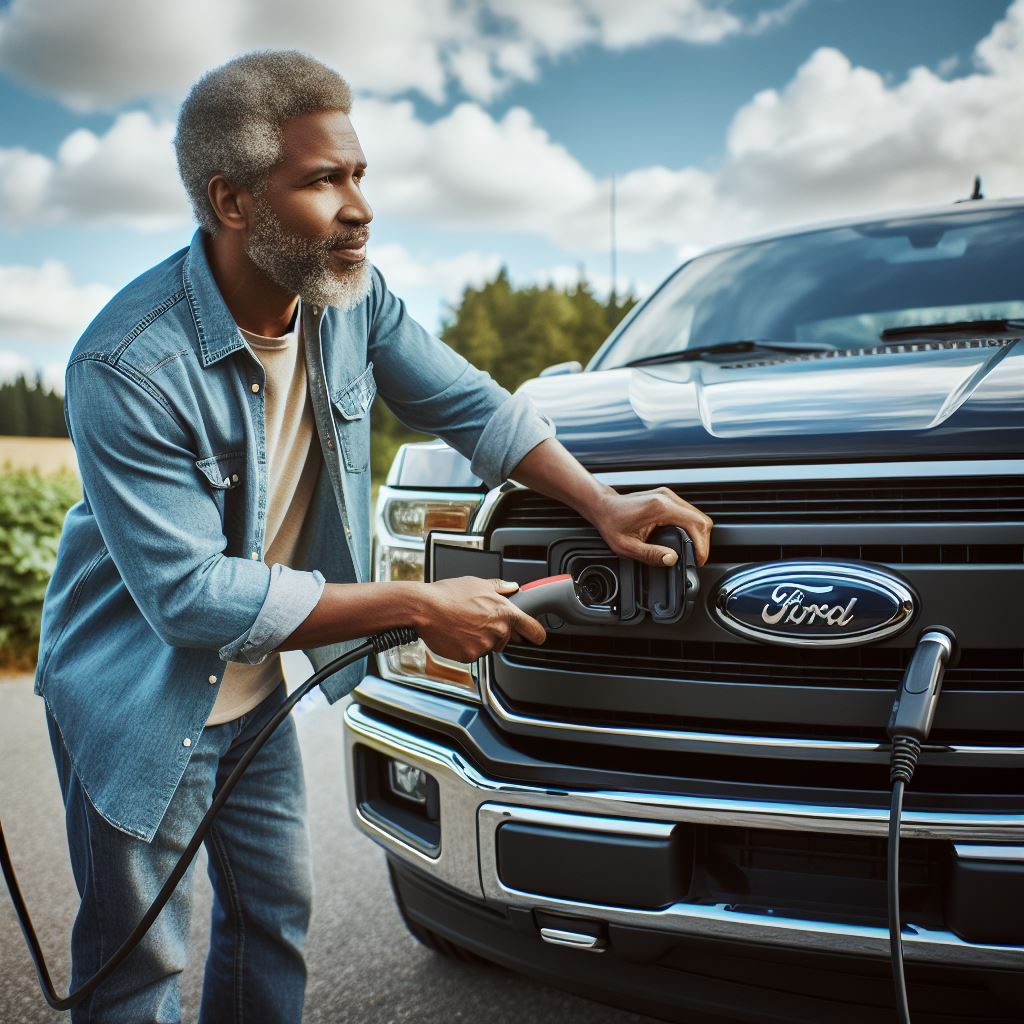
In today’s world, smart towing technology is essential. Innovations like Ford’s Pro Trailer Backup Assist and Rivian’s trailer mode simplify the art of navigating with an RV. We delve into the world of tech add-ons, from apps that keep an eye on trailer health to integrated charging systems. With insights from Ranger5G Forum and RivianForums, we’ll explore gadgets and gizmos that not only boost safety and comfort but also significantly enhance your towing experience.
Practical Insights and User Experiences in EV Towing
Drawing from a mosaic of automotive and RV forums, this segment delves into the real-world experiences and challenges encountered by electric vehicle (EV) users when towing. Insights are gathered from active discussions on various automotive and RV forums, including RivianForums, Grassroots Motorsports Forum, Ranger5G Forum, Chronofhorse Forum, F150 Lightning Forum, My Grand RV Forum, Camelot Forum, RV.net, and Fiberglass RV Forums. These forums provide valuable firsthand information to help EV owners navigate towing scenarios effectively.
Real-World Challenges of Towing with EVs
- Reduced Range: A common thread in discussions on forums like RivianForums and Ranger5G is the noticeable decrease in range when towing with an EV. Users report significant reductions, especially in challenging terrains, necessitating more frequent charging stops.
- Cost-Effectiveness: On platforms such as the Chronofhorse Forum and F150 Lightning Forum, there are active debates about the cost-effectiveness of EV towing compared to traditional gas vehicles. Many highlight the long-term savings on fuel, despite the higher initial investment in EVs.
Real-World Perspectives: Challenges and Rewards
- Planning and Range Anxiety: Forums like MyGrandRV and FiberglassRV are rife with discussions about “range anxiety” and the critical need for strategic planning for charging stops while towing with an EV.
Positive Aspects: Environmental Impact and Towing Performance
- Environmental Benefits and Performance: Many users, as seen in discussions on RV.net, appreciate the environmental benefits and the enhanced towing performance of EVs, citing their smooth and powerful towing capabilities.
User Recommendations and Best Practices
- Advice and Best Practices: Experienced EV towers on Camelot Forum offer advice on understanding your EV’s limits, efficient route planning, load balancing, and staying updated with the latest developments in EV towing technology.
A Growing Trend with Considerations
Towing with an Electric Vehicle (EV) is more than a passing fad; it’s a growing trend that blends unique challenges with distinct rewards. As the frontier of EV technology expands, this mode of travel is set to become an increasingly viable option for RV enthusiasts. The collective insights and shared experiences from users across platforms like RivianForums and Electric Vehicle Towing Forums highlight the criticality of making informed choices in this dynamic landscape.
This burgeoning trend points toward a future where sustainability and adventure converge. The evolving capabilities of EVs, as discussed in automotive forums and expert articles, indicate a shift towards a more eco-conscious approach to RVing. As technology evolves, so do the considerations for RV owners, from range management to charging infrastructure.
Embracing this trend requires staying informed about the latest developments in EV towing technology and infrastructure. Forums like Tesla Motors Club and Electrify America offer valuable insights into the latest advancements and practical tips for seamless RV adventures with EVs.
The Electrifying Horizon: Glimpsing the Future of EV Towing
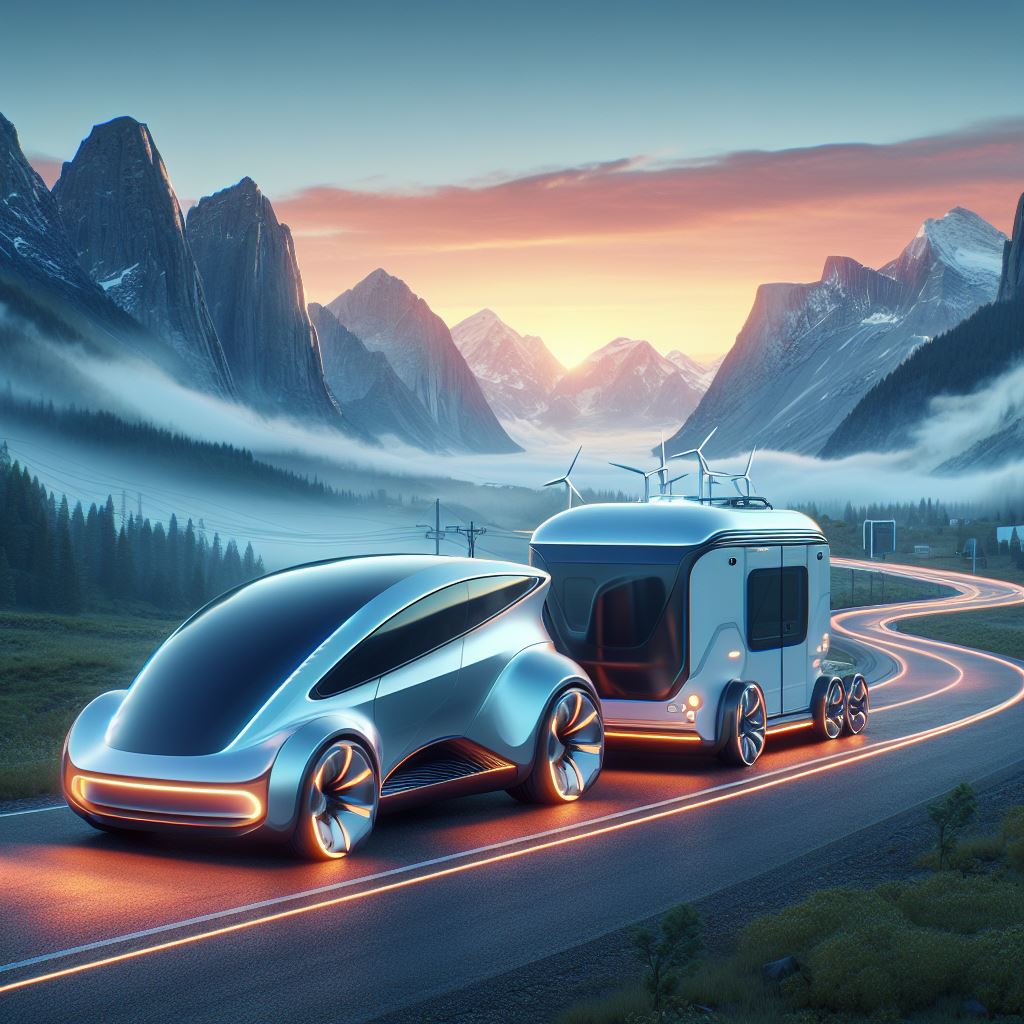
While today’s electric vehicles competently rival traditional gas-powered towing options, the horizon of tomorrow holds promises of unprecedented advancements. Emerging trends and technologies, as discussed in forums like Electric Vehicle Future Discussions, point towards transformative changes in the realm of EV towing.
- Battery Revolution: Envision batteries with groundbreaking energy density and rapid charging capabilities, as explored by researchers and reported on Advanced Battery Technology News. The advent of next-gen solid-state batteries hints at a future where range anxiety is obsolete, transforming RVs into efficient explorers of the farthest reaches.
- Motor Efficiency Supremacy: Anticipate motors that exemplify peak efficiency, a topic of enthusiastic discussion on Electric Motor Innovations Forum. Ongoing research in new materials and designs promises to revolutionize motor efficiency, extending the electric range and reducing the frequency of charging stops.
- Charging Infrastructure Evolution: The landscape of charging stations is rapidly evolving, with a focus on accommodating larger vehicles like RVs. Imagine networks like Solar Charging Solutions offering eco-friendly charging stations along scenic routes, enhancing the sustainability of your journey.
These advancements, far from speculative, are the building blocks of a future meticulously being shaped by dedicated engineers and researchers. They foreshadow an era where EV towing is not just a viable option but a preferred mode for eco-friendly exploration. Forums like RV.net and Fiberglass RV Forums are abuzz with excitement over these innovations. They herald a future where the serene hum of electric motors will accompany remarkable adventures in the world of RVing.
As we look towards this exciting future, our next section bridges the gap between these aspirations and today’s reality. We’ll provide practical tips and strategies to maximize your current EV towing experience, using resources from Current EV Towing Guides and Insights from My Grand RV Forum . Stay tuned to navigate today’s landscape confidently, making your adventures not just a leap into the future but a well-planned journey in the present.
The Open Road Unfolds: Embracing the Viability of EV Towing
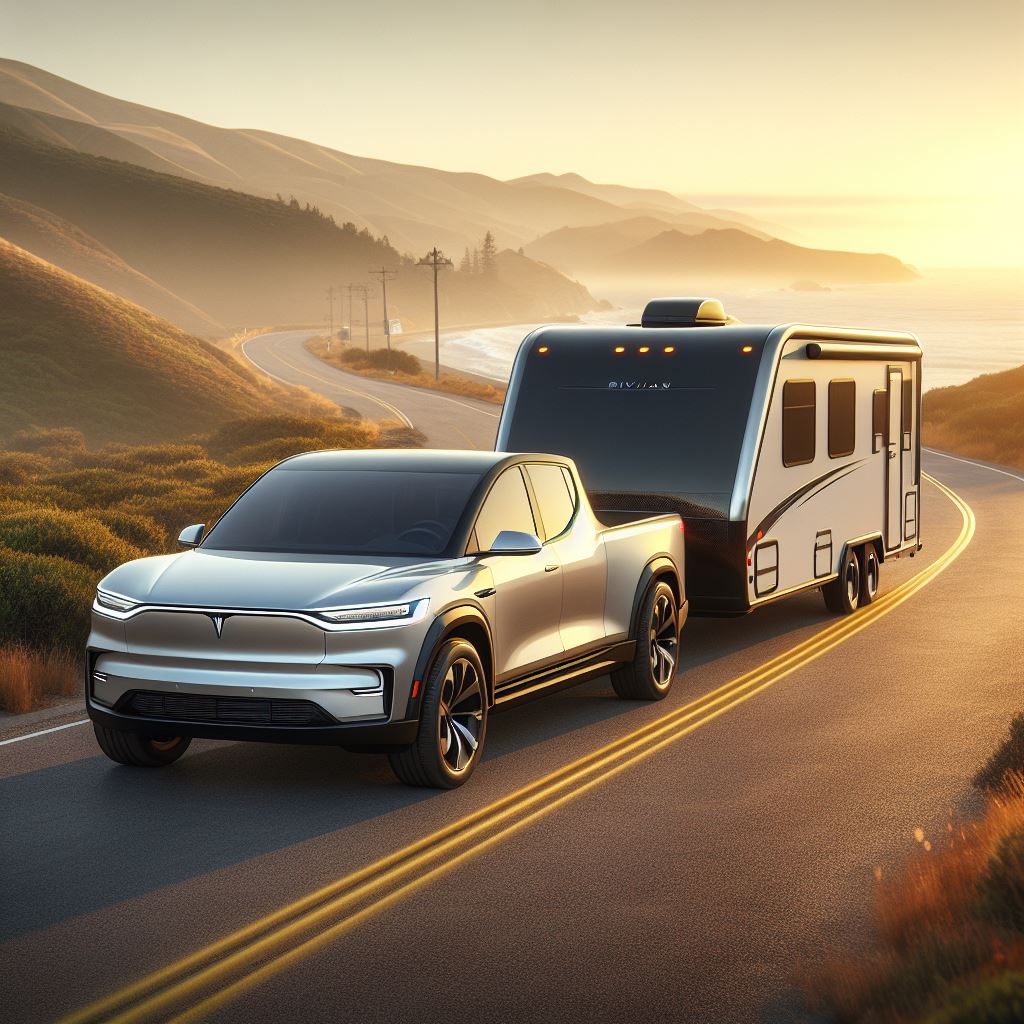
As we summit this exploration, the panorama that unfolds is nothing short of spectacular. Electric vehicles, once pegged solely for urban jaunts, are now showcasing their prowess in the RV towing arena. This evolution signals a future where sustainable travel is not just a dream but an attainable reality.
Admittedly, current EVs come with their share of challenges. Range anxiety and the need for strategic charging stops are part of the reality, as discussed in depth on EV Adventure Planning. However, these challenges are not insurmountable barriers but rather milestones on an already vibrant journey of technological progress.
Advances in battery technology, covered by Future Battery Tech Magazine, are rapidly unfolding, heralding a new era of lighter, more potent energy sources. Motor efficiency is reaching new heights of innovation, as detailed in Motor Efficiency Breakthroughs, ensuring every bit of energy is utilized optimally. Meanwhile, the expansion of charging networks, highlighted in resources like Nationwide EV Charging Maps, is steadily eroding the limitations of remote travel.
The story of EV towing viability is being penned not in boardrooms, but on the open roads by trailblazers like you. Each journey with an electric RV reinforces the immense potential of this transformative technology. Your travels are more than just trips; they’re paving the path for a future where the quiet hum of your EV is the soundtrack to sustainable exploration.
So, while acknowledging today’s limitations, let’s also look forward to a horizon rich with potential. Choosing your electric vehicle, planning your routes with tools like Electric Route Planner, and embracing the adventure are all part of this grand narrative. As you travel, remember: you’re not just traversing roads; you’re charting a course toward a future where every journey with your electric chariot reinforces the promise of sustainable, exhilarating travel.
Resources
- The RV Geeks: “Electric Vehicle Towing Capacity: Can You Tow Your RV With an EV?” – This article discusses the capabilities of electric trucks for towing RVs, including specific models like the Atlis Motor Vehicles prototype and the Ford F-150 Lightning. The RV Geeks
- Togo RV: “5 Questions We Get Asked Towing Our RV With an Electric Vehicle” – Here, real-world experiences of towing with an EV are shared, providing insights into aspects like travel range, charging, and ride quality. Togo RV
- Bug’N Out Rv’N: “Can The EV Industry Meet The Needs Of RVers?” – This article examines the practicality of using EVs for towing campers, focusing on aspects like charging infrastructure and the specific capabilities of vehicles like the Chevy Silverado EV and Ford F-150 Lightning. Bug’N Out Rv’N
- KOA Camping Blog: “Best Electric Vehicles for Towing Campers” – An informative piece that looks into the best EVs for camping and towing, addressing key factors like towing capacity, payload, and vehicle weight ratings. KOA Camping Blog
- InsideEVs: “Charging Guide for Electric Cars” – A guide to EV charging, crucial for understanding the charging needs and options while towing an RV. InsideEVsFeatured image via Ford
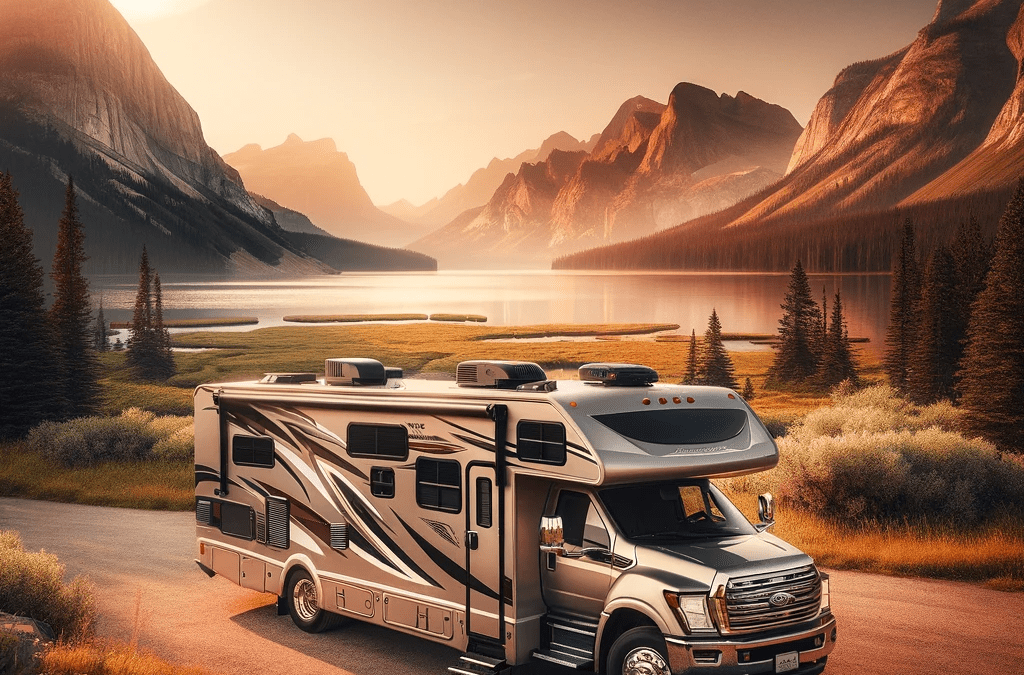
by Chuck Price | Dec 16, 2023 | RV Camping Tips
Choosing Your Perfect Home on Wheels
Imagine waking up to a breathtaking sunrise over snow-capped mountains, the gentle whisper of waves lapping against your doorstep, or the vibrant cacophony of a bustling city square – all from the comfort of your home. This isn’t the stuff of travel brochures; it’s the daily reality of full-time RV life. Explore the full-time RV lifestyle further at RV Life.
Welcome to a community of wanderers, bound by a shared passion for adventure and a love for freedom on four wheels. Forget the monotony of brick-and-mortar routine – full-time RVing is about embracing a nomadic lifestyle, a tapestry woven from ever-changing landscapes, exhilarating journeys, and the deep satisfaction of crafting a home wherever you park. Read more about the nomadic lifestyle at Escapees RV Club.
But this path isn’t just about scenic postcards and Instagram-worthy vistas. It’s a commitment to adaptation and exploration. It’s mastering new skills, from navigating winding mountain roads to maintaining your mobile dwelling. It’s learning to find comfort in the unfamiliar, forging temporary communities, and letting go of possessions in favor of experiences. A great resource for mastering RV maintenance skills can be found at RV Repair Club.
Yet, amidst the challenges, there’s an unrivaled richness waiting to be discovered. Full-time RVers are known for their resilience, resourcefulness, and an open-hearted generosity in sharing their knowledge and experiences. This supportive culture welcomes newcomers with open arms, offering guidance, practical tips, and the camaraderie of those who understand the unique joys and tribulations of life on the road. For a community of full-time RVers, visit Fulltime Families.
Is this calling your adventurous spirit? Then buckle up, because this guide will be your compass as you embark on this transformative journey. We’ll delve into the practicalities of choosing the right RV, budgeting for life on the go, finding your perfect campsites, and mastering the art of RV maintenance. We’ll explore the joys and challenges of remote work and schooling on the road, and unveil the secrets to staying connected and healthy even amidst the constant change.
But most importantly, we’ll paint a vibrant picture of the rewards that await. Imagine hiking untouched wilderness trails, savoring fresh seafood plucked straight from the ocean, and witnessing breathtaking sunsets from your mobile living room. Think late-night campfire stories under a star-studded sky, building lasting friendships with fellow wanderers, and discovering a deeper connection with nature and yourself.
The open road beckons, and this guide is your key to unlocking its endless possibilities. So, let’s embark on this adventure together, one mile marker at a time.
Are you ready to trade predictable for epic? Then turn the page and let’s explore the exciting world of full-time RVing!
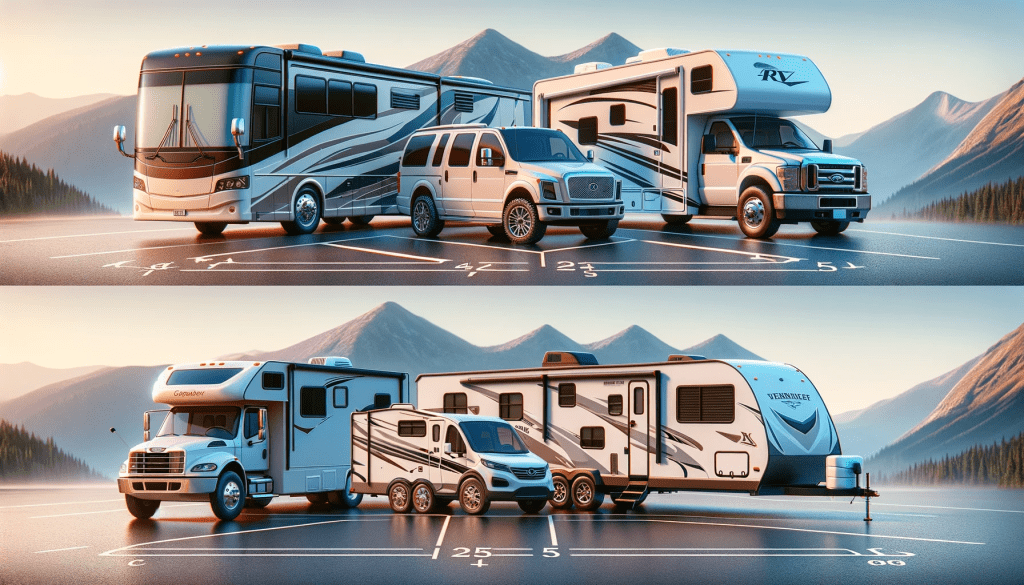
Recreational Vehicles (RVs): Choosing Your Home on Wheels
Imagine hitting the open road, your trusty RV your sanctuary against the ever-changing landscape. But before you zoom off towards the horizon, the first crucial step is finding the perfect mobile home on wheels. The world of RVs is diverse, catering to every wanderlust dream and budget. So, buckle up, adventurers, as we unveil the different types of RVs and help you pick the one that fits your journey like a glove. For an informative overview of the various RV types, check out “The Different Types of RVs Explained” on Outdoorsy.
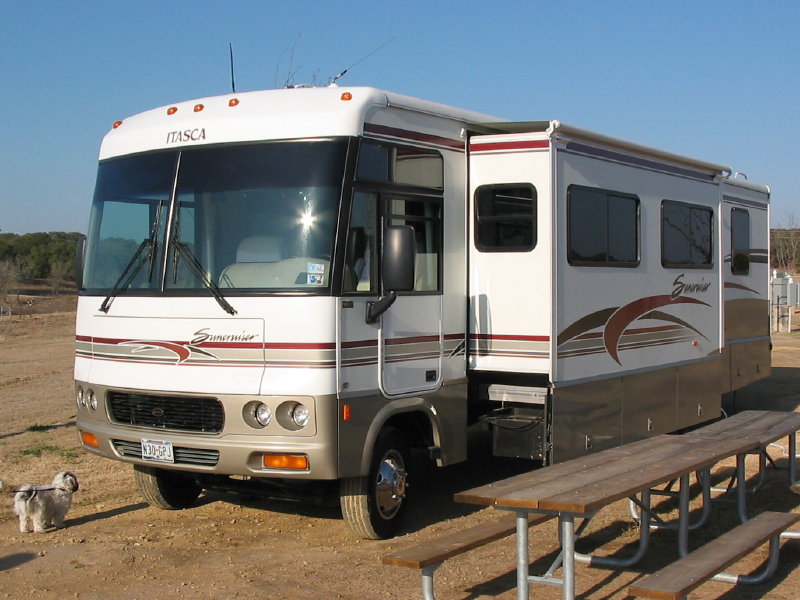
Claygate at en.wikipedia, Public domain, via Wikimedia Commons
Luxury Liners: Class A Motorhomes
Imagine cruising down the highway in your own rolling palace. Class A motorhomes are the top of the line, offering spacious living areas, plush furniture, and amenities that rival a five-star hotel. Think full-sized kitchens, retractable projector screens, rooftop decks, and more. Discover the luxury of Class A motorhomes.
But before you crown yourself emperor of the open road, consider these:
Who are Class A motorhomes for?
- Travelers who prioritize absolute comfort and convenience.
- Families or groups who need plenty of space.
- Individuals who plan on extended stays or long road trips.
Remember, while Class A motorhomes offer unparalleled luxury, they’re not for everyone. Weigh the pros and cons carefully before hitting the road in your new palace on wheels.
Tips for choosing your Class A motorhome:
Navigating the Maze: Finding Your Perfect Compact RV
Downsizing your home doesn’t mean sacrificing adventure! Class B and C motorhomes offer cozy comfort and fuel-efficient exploration, packing big thrills into smaller packages. But which of these compact giants suits your wanderlust best? Let’s navigate the maze and find your perfect match. Learn more about the benefits of compact RVs.
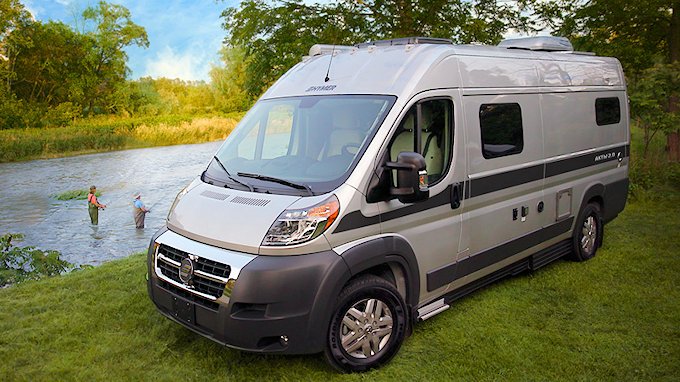
Urban Ninjas: Class B Vans
Built on familiar van chassis, these sleek speedsters are masters of maneuverability. Zip through city streets, park discreetly in urban jungles, and explore hidden gems with ease. Imagine blending seamlessly into cityscapes for stealthy camping adventures or whipping down coastal roads with the wind in your hair. Discover the versatile world of Class B vans.
Features:
Pros:
- Ultimate maneuverability: Explore hidden gems and conquer city streets.
- Stealthy camping: Blend in and discover urban camping possibilities.
- Fuel efficiency: Save money on gas and extend your adventures.
Cons:
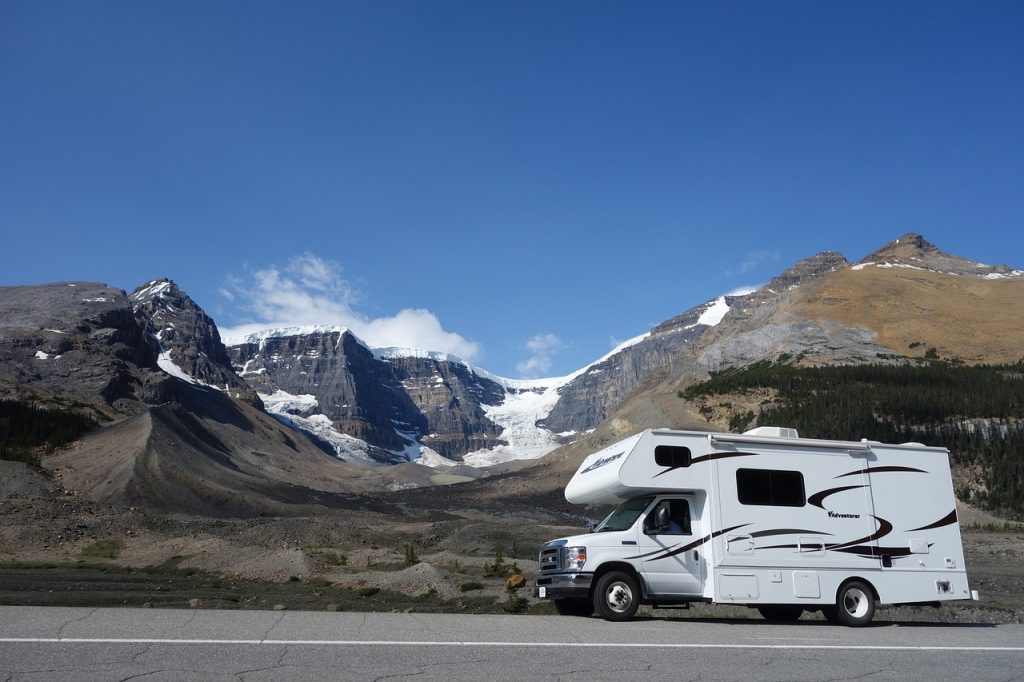
Image by 6493990 from Pixabay
Family Fortresses: Class C Motorhomes
Slightly larger than their Class B cousins, Class C motorhomes offer the perfect balance between size and convenience. Think over-cab sleeping areas for extra space and privacy, comfortable lounges for family movie nights, and enough storage for the essentials (and maybe a few extras).
Features:
- More space than Class B vans: Comfortably accommodates families or small groups.
- Over-cab sleeping area: Provides extra sleeping space and privacy.
- Decent storage capacity: Room for gear and essentials.
Pros:
- More space than Class B: Ideal for families or groups who need extra room.
- Over-cab sleeping area: Offers privacy and additional sleeping space.
- Decent storage capacity: Bring along the gear you need for adventure.
- Larger RV tanks compared to Class B: Better suited for off-grid and dry camping.
- Safer in front impact collisions: Offers a protective front cab area (RV Owner HQ).
- Family-friendly floorplans: Great for families, offering spacious bedrooms and living areas (RV Owner HQ).
Cons:
- Larger than Class B: Maneuverability can be a challenge in tight spaces.
- Higher fuel costs: Compared to Class B vans, these may use more gas, although they’re more efficient than Class A motorhomes (RV Owner HQ).
- Less compact for urban stealth camping: May not blend as seamlessly in cityscapes.
Finding Your Compact Haven:
The perfect compact RV is a personal oasis on wheels. Consider your travel style and priorities:
- Do you crave urban adventures and nimble exploration? Class B vans might be your urban ninjas.
- Need more space for family or gear? Class C motorhomes offer a comfortable family fortress.
Remember, compact comfort comes with its own set of pros and cons. Find the balance that suits your wanderlust, hit the road, and create unforgettable memories in your perfect downsized home on wheels!
Bonus Tip: Don’t forget to factor in your budget, towing capabilities (if opting for a Class C), and desired amenities when making your final decision.
Hitting the Road with Stability and Comfort
For travelers who crave a mobile home with ample space and a steady ride, fifth-wheels and travel trailers offer luxurious escapes on wheels. Imagine expansive living areas, separate bedrooms, and enough storage for every gadget imaginable. But which option should hitch your wanderlust? Let’s explore the pros and cons of each:
 Flickr: j2davis2005, CC BY 2.0, via Wikimedia Commons
Spacious Bungalows: Fifth-Wheel Hitch
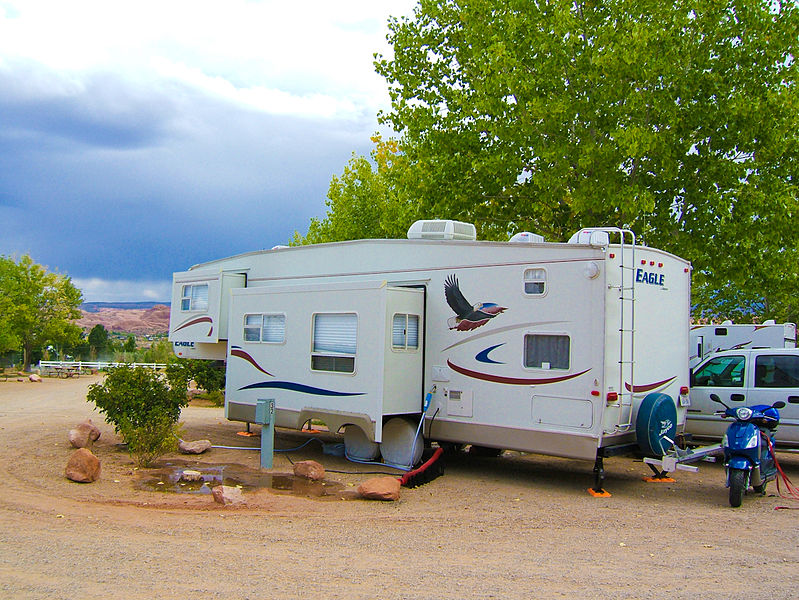
Fifth-wheels feel like spacious bungalows hitched to the back of your pickup truck. Think high ceilings, multiple slide-outs for extra room, and separate bedrooms for privacy. They offer luxurious living spaces, unmatched stability for towing, and the freedom to explore with a separate tow vehicle.
Features:
- Luxurious living space: Perfect for families, friends, and all your gear. They are known for their high-quality materials and more amenities.
- Unmatched stability: Towing feels secure, ideal for long journeys and windy roads. Fifth-wheels provide better handling and stability on the road.
- Separate tow vehicle: Explore off-the-beaten-path destinations with your truck’s freedom.
Pros:
- Home-like comfort: Enjoy spacious living areas, separate bedrooms, and ample storage.
- Unwavering stability: Feel confident and secure even on long, windy journeys.
- Off-road exploration: Hit the dirt roads with the agility of your pickup truck.
Cons:
- Requires a pickup truck: Invest in a suitable tow vehicle before hitching your dreams. Fifth wheels need a special hitch and truck.
- Maneuvering challenges: Large size can make city streets and parking tricky. They have limited accessibility to smaller roads and campsites.
- Higher costs: Expect a bigger price tag and heftier maintenance expenses. They are typically more expensive than traditional travel trailers or motorhomes.
KittensMittens2, CC BY-SA 4.0, via Wikimedia Commons
Diverse Retreats: Travel Trailers for Every Adventure
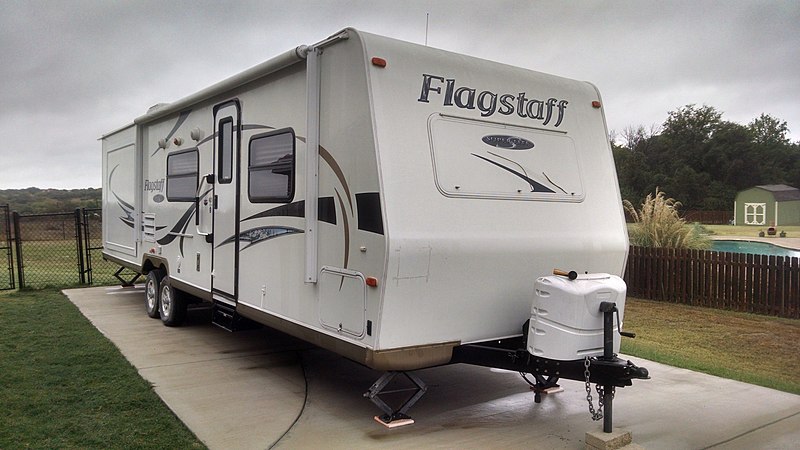
Travel trailers come in a wide range of sizes and styles, from compact teardrops for solo explorers to full-fledged family caravans. Unlike fifth-wheels, they can be towed by various vehicles, offering greater flexibility.
Features:
- Versatile options: Choose the size and layout that fits your needs and budget.
- Wider tow vehicle options: Tow with SUVs, minivans, or even some cars.
- Unhitching flexibility: Easily detach for quick day trips or urban exploration.
Pros:
- Budget-friendly options: Find compact models that fit smaller budgets.
- Tow vehicle flexibility: Choose a trailer that matches your existing vehicle.
- Unhitching freedom: Disconnect from your tow vehicle for independent adventures.
Cons:
- Towing stability varies: Smaller trailers might feel less stable at highway speeds.
- Limited space in smaller models: Not ideal for large families or extended stays.
- Towing capacity limitations: Ensure your vehicle can handle the trailer’s weight.
Choosing Your Spacious Haven:
Consider your travel style and priorities:
- Craving luxurious space and off-road adventures? A fifth-wheel might be your perfect match.
- Prioritize budget-friendly options and towing flexibility? Consider a travel trailer.
- Value stability and a home-like experience? Opt for a larger model.
- Need an unhitching option for urban exploration? Choose a smaller, towable trailer.
Remember, the ideal spacious retreat is a reflection of your unique wanderlust. Find the RV that balances size, comfort, and budget to create unforgettable memories on the open road.
Beyond the Big Four:
Don’t forget, the possibilities extend beyond fifth-wheels and trailers! From pop-up campers to truck campers, explore alternative options that cater to your specific needs and desires. Happy navigating!
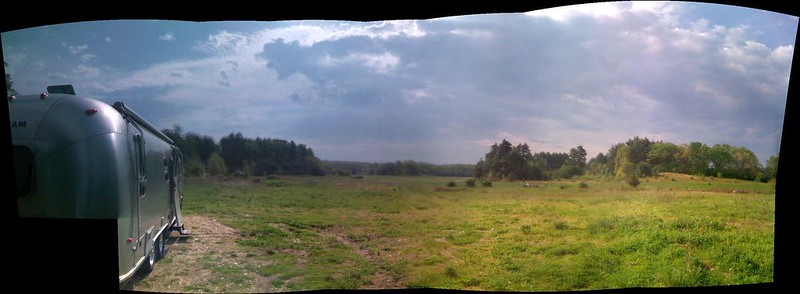
Image by Matthew Simoneau via flickr
Setting Up Camp: From Wilderness Freedom to Parkside Perks
With your perfect RV chosen, the next adventure awaits: choosing your camping haven! Whether you crave serene solitude or community vibes, your options are as diverse as the landscapes you’ll roam. Let’s explore the two main RV camping styles:
Boondocking: Off-Grid Escapes for the Natural Soul
Imagine waking up to the sunrise over mountains, with only the sound of birdsong and rustling leaves for company. Boondocking, or dispersed camping, offers a taste of wild freedom. Park your RV in remote locations, away from designated campgrounds and hookups, for a truly immersive experience.
Features:
- Untamed landscapes: Discover hidden gems and pristine natural beauty.
- Solitude and quiet: Escape the crowds and reconnect with nature.
- Self-reliance: Hone your wilderness skills and enjoy off-grid living.
Pros:
- Free or low-cost camping: Save money on campground fees.
- Unmatched peace and quiet: Enjoy undisturbed serenity under the stars.
- Adventure opportunities: Explore remote areas and connect with nature.
Cons:
- Limited amenities: No access to electricity, water, or sewage connections.
- Planning and research: Requires knowledge of local regulations and camping etiquette.
- Potential challenges: Be prepared for wildlife encounters and uncertain weather.
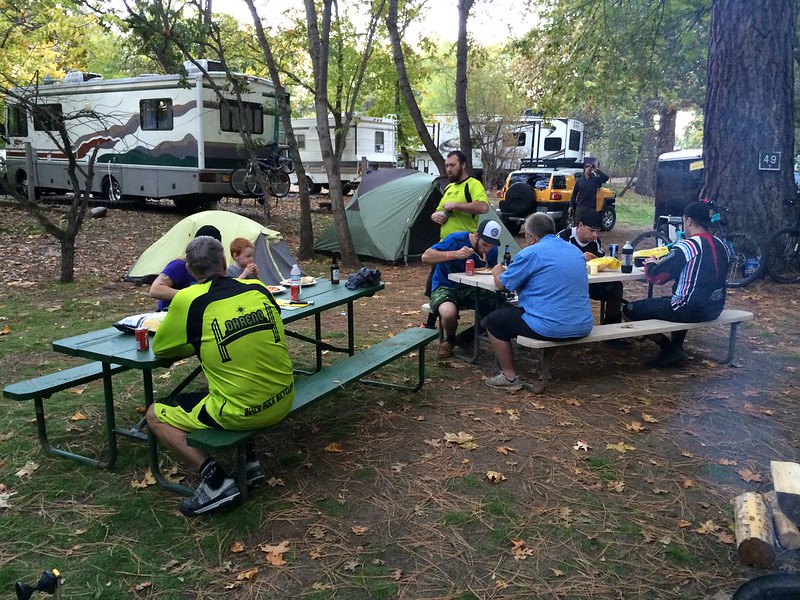
Image by dh Reno via flickr
RV Parks: Convenience and Community Await
Prefer a touch of comfort and connection on your travels? RV parks offer a curated camping experience packed with amenities and a dose of community. Think paved sites, electrical hookups, shared facilities, and even organized activities.
Features:
- Untamed landscapes: Discover hidden gems and pristine natural beauty.
- Solitude and quiet: Escape the crowds and reconnect with nature.
- Self-reliance: Hone your wilderness skills and enjoy off-grid living.
Pros:
- Free or low-cost camping: Save money on campground fees.
- Unmatched peace and quiet: Enjoy undisturbed serenity under the stars.
- Adventure opportunities: Explore remote areas and connect with nature.
Cons:
- Limited amenities: No access to electricity, water, or sewage connections.
- Planning and research: Requires knowledge of local regulations and camping etiquette.
- Potential challenges: Be prepared for wildlife encounters and uncertain weather.
Finding Your Camping Haven:
Consider your needs and preferences:
- Crave solitude and off-grid adventure? Embrace the challenge and freedom of boondocking.
- Prioritize comfort, amenities, and a social atmosphere? Opt for the convenience and community of an RV park.
- Seek a balance? Combine boondocking with occasional stays in parks for the best of both worlds.
Remember, your ideal camping style is as unique as your wanderlust. Explore both options, find the balance that suits your soul, and create unforgettable memories in your cozy home on wheels!
Bonus Tip: Research regulations and permits before attempting boondocking, and always respect the environment and leave no trace.
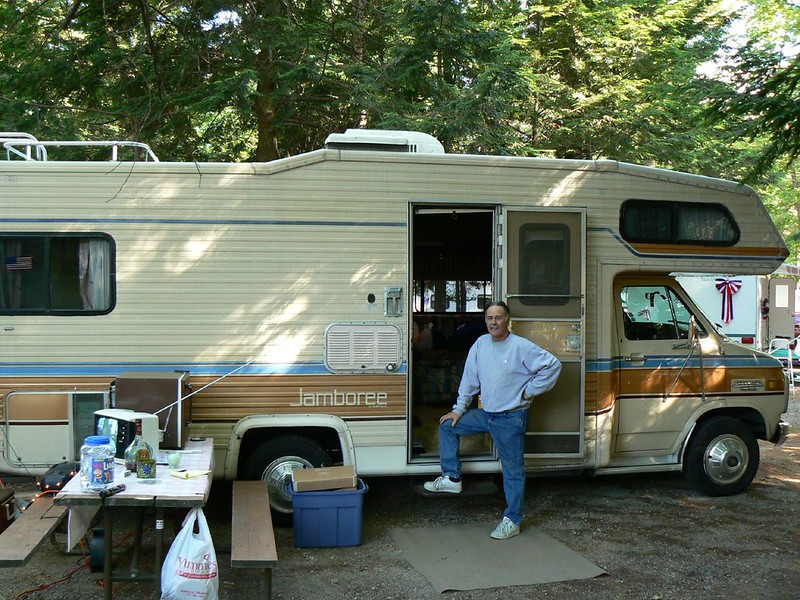
Image by Nick Ares via flickr
Cruising on a Budget: Mastering the Financial Waters of Full-Time RVing
Living your dreams on wheels might feel like endless wanderlust, but full-time RVing also demands financial savvy. Budgeting and finance become your navigational tools, ensuring you stay afloat as you explore. Let’s dive into the key financial aspects to consider:
Charting Your Course: Essential Costs
- RV Acquisition: The journey begins with your home on wheels. Consider purchase price, financing options, and potential renovations. Remember, bigger isn’t always better – choose an RV that fits your budget and travel style.
- Ongoing Maintenance: Your RV is your trusty steed, so regular maintenance is crucial. Factor in oil changes, tire rotations, appliance repairs, and potential roadside assistance costs.
- Fueling Your Adventures: Gas becomes your lifeblood on the road. Research fuel efficiency for different RV types and plan your routes strategically to minimize expenses.
- Campground Fees: From boondocking bliss to fully-equipped RV parks, your accommodation options come with varying costs. Plan your budget based on your preferred camping style and desired amenities.
- Living Expenses: Don’t forget everyday living costs like groceries, laundry, and internet access. These may differ depending on your location and camping choices.
Anchoring Your Income: Financial Management
- Remote Work Warriors: If you’re working remotely, ensure reliable internet access on the road. Research potential income fluctuations and adjust your budget accordingly.
- Savings Savvy: Building a financial cushion is essential for unexpected repairs, medical emergencies, or changes in income. Prioritize saving as much as possible before hitting the road.
- Minimizing Expenses: Consider downsizing belongings, embracing meal prepping, and utilizing free entertainment options to keep your budget afloat.
- Financial Tools: Budgeting apps, expense trackers, and fuel-saving apps can become your trusted allies. Utilize them to keep your finances organized and on track.
Finding Your Financial Flow:
Remember, there’s no one-size-fits-all budget for full-time RVing. Experiment, track your expenses, and adjust your financial plan as needed. Here are some tips:
- Start small: Consider shorter RV trips before diving into full-time living. This allows you to test your budget and refine your financial strategies.
- Embrace minimalism: Downsizing possessions reduces storage needs and opens up budget flexibility.
- Prioritize experiences over possessions: Focus on creating memories and adventures instead of accumulating unnecessary stuff.
- Seek community: Connect with other full-time RVers for support, advice, and cost-sharing opportunities.
Living your RV dream isn’t just about wanderlust – it’s about mastering the financial tides. By carefully planning, managing your income, and embracing mindful spending, you can navigate the financial aspects of full-time RVing with confidence and create a sustainable, enriching adventure on wheels.
So, chart your course, anchor your income, and let your financial savvy guide you towards endless horizons. The open road awaits!
Keeping Your Wheels Turning – Maintenance, Repairs, and Resources
Hitting the open road in your RV is all about adventure, but remember, a well-maintained machine is a happy machine. Keeping your trusty camper in tip-top shape ensures smooth journeys and avoids unexpected roadside breakdowns. Let’s explore the essential knowledge and resources for all things maintenance and repairs:
Under the Hood and Beyond: Essential RV Maintenance
Think of regular maintenance as preventative medicine for your RV. These simple tasks can extend its lifespan and save you headaches (and money) down the line:
- Oil changes and tire rotations: Keep your engine purring and wheels happy with routine maintenance.
- Appliance checks: Ensure your fridge, water heater, and other vital systems are functioning properly.
- Roof and sealant inspections: Protect your home on wheels from leaks and weather damage.
- Tire pressure monitoring: Maintain proper tire pressure for safety and fuel efficiency.
- Winterizing and de-winterizing: Prep your RV for seasonal changes to avoid costly freeze damage.
When Things Go South: Repairs and Troubleshooting
Even the most diligent maintenance can’t prevent occasional hiccups. Here’s how to handle repairs with confidence:
- DIY or outsource?: Assess the complexity of the problem. Simple fixes like replacing a blown fuse might be tackled yourself, while major repairs are best left to experienced professionals.
- Finding trustworthy mechanics: Research reputable RV repair shops in your area, or ask fellow RVers for recommendations.
- Stock a basic toolkit: Be prepared for minor fixes with essential tools like screwdrivers, pliers, and duct tape (a traveler’s best friend!).
- Learn some basic skills: Knowing how to change a tire, jumpstart your battery, or troubleshoot simple electrical issues can save you time and money.
Community is Key: Your RV Support Network
The RV community is a vibrant tapestry of experience and wisdom. Don’t hesitate to tap into these valuable resources:
- Online forums and social media groups: Connect with fellow RVers online, share advice, and learn from their experiences.
- RV rallies and gatherings: Attending rallies and events is a fantastic way to connect with others, exchange tips, and discover hidden gems.
- Books and manuals: Invest in RV maintenance guides and manuals for detailed instructions and troubleshooting tips.
Remember: Proactive maintenance, a toolbox of knowledge, and a supportive community are your secret weapons for keeping your RV adventures rolling smoothly. Don’t be afraid to get your hands dirty, learn new skills, and connect with other travelers – it’s all part of the rewarding journey of life on wheels!
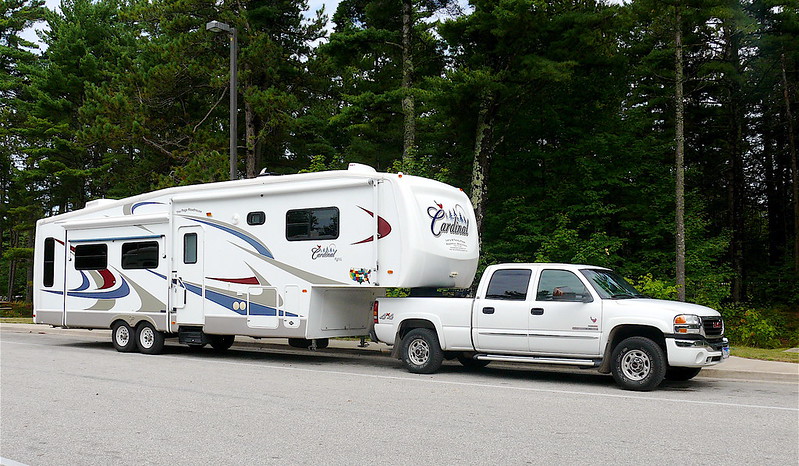
Image by Larry & Teddy Page via flickr
Exploring Open Horizons – Legalities and Off-Grid Living
Hitting the open road in your RV isn’t just about the destination; it’s also about navigating the legal landscape and exploring the possibilities of off-grid living. So, buckle up as we delve into the nitty-gritty of legalities and embrace the self-sufficiency of off-grid adventures.
Charting Your Legal Course:
Before you launch into full-time vanlife, understanding the legal framework is key. Consider these crucial aspects:
- Domicile: Establish your legal residence state for matters like voting, taxes, and driver’s licenses. Some states offer friendly policies for RVers, so research your options.
- Vehicle Registration: Keep your RV properly registered based on your domicile state and ensure all necessary permits are obtained for traveling across different states.
- Insurance: Secure comprehensive insurance coverage for your RV, including liability, collision, and personal belongings. Remember, off-grid adventures might require specialized coverage.
Living Beyond the Grid:
For some RVers, the siren song of off-grid living beckons. This self-sufficient lifestyle requires resourcefulness and a deep connection with nature. Here are some key considerations:
- Solar Power: Harness the sun’s energy with a high-quality solar power system to generate electricity for your RV. Research battery storage options and learn how to manage your energy consumption.
- Water Conservation: Water becomes precious off-grid. Invest in efficient appliances, collect rainwater, and utilize greywater systems for responsible water management.
- Waste Management: Disposing of waste responsibly is crucial. Learn proper composting techniques, pack out what you bring in, and research local waste disposal options for longer stays.
Embrace the Freedom, Be Responsible:
Off-grid living offers unmatched freedom and connection with nature, but it comes with shared responsibility for the environment. Always follow “Leave No Trace” principles, respect local regulations, and minimize your impact on natural ecosystems.
Remember: Understanding legal requirements and embracing responsible off-grid practices pave the way for fulfilling and sustainable RV adventures. Be a conscious traveler, respect the laws and natural world, and let your adventurous spirit guide you towards breathtaking discoveries beyond the grid.
Charting Your Compass – Travel Experiences and Destinations
With your RV prepped and legal boundaries navigated, the true map-unfurling adventure begins! Planning your routes and destinations becomes a tapestry woven with anticipation, research, and the thrill of the unknown. Let’s explore the secrets of creating unforgettable journeys, from seasonal whispers to epic routes and hidden gems.
Dancing with the Seasons:
Nature dictates the rhythm of the road. Consider these seasonal whispers as you plan your adventures:
- Springtime Awakening: Bask in blooming landscapes, explore bustling national parks before peak season, and chase wildflowers across scenic highways.
- Summer Sojourns: Embrace the warmth of beaches, camp alongside mountain lakes, and participate in lively summer festivals across the country.
- Autumnal Adventures: Witness landscapes ablaze with color, enjoy harvest festivals and cozy campfires, and seek serene escapes as crowds dwindle.
- Winter Wanderings: Embrace the magic of snow-covered mountains, soak in natural hot springs, and discover the unique charm of winter festivals in warmer regions.
Popular Routes, Untamed Trails:
From iconic routes etched in RV lore to hidden paths waiting to be discovered, the possibilities are endless. Here are some inspiration-sparking ideas:
- The Great American Road Trip: From the East Coast’s historical landmarks to the Pacific Coast’s rugged beauty, this classic journey offers a taste of everything America has to offer.
- National Park Hopping: Immerse yourself in the majesty of America’s natural wonders, from Yellowstone’s geysers to Yosemite’s towering sequoias.
- The Southwest Desert Escape: Explore the otherworldly landscapes of Death Valley, Joshua Tree National Park, and the Grand Canyon, soaking in the unique charm of the desert.
- Off-the-Beaten-Path Gems: Seek hidden waterfalls in the Pacific Northwest, discover charming coastal towns in Maine, or venture into the rugged wilderness of Alaska.
Exploration Tips for the Curious Soul:
Let your inner explorer flourish with these practical tips:
- Research local regulations: Be aware of camping limitations, permit requirements, and seasonal restrictions in your chosen destinations.
- Utilize travel apps and resources: Maps, campground directories, and online forums can be your digital compass, offering up-to-date information and recommendations.
- Seek insider knowledge: Connect with local communities, fellow RVers, and park rangers for hidden gems, unique experiences, and valuable insights.
- Embrace spontaneity: Leave room for detours, unexpected discoveries, and moments of serendipity – sometimes the most memorable journeys are the ones unplanned.
Remember: The adventure isn’t just about the destination; it’s the journey itself. Be flexible, embrace the unexpected, and let your curiosity guide you towards experiences that will forever ignite your wanderlust. With a bit of planning, a dash of adventurous spirit, and your trusty RV as your chariot, the open road awaits, ready to unveil its infinite possibilities.
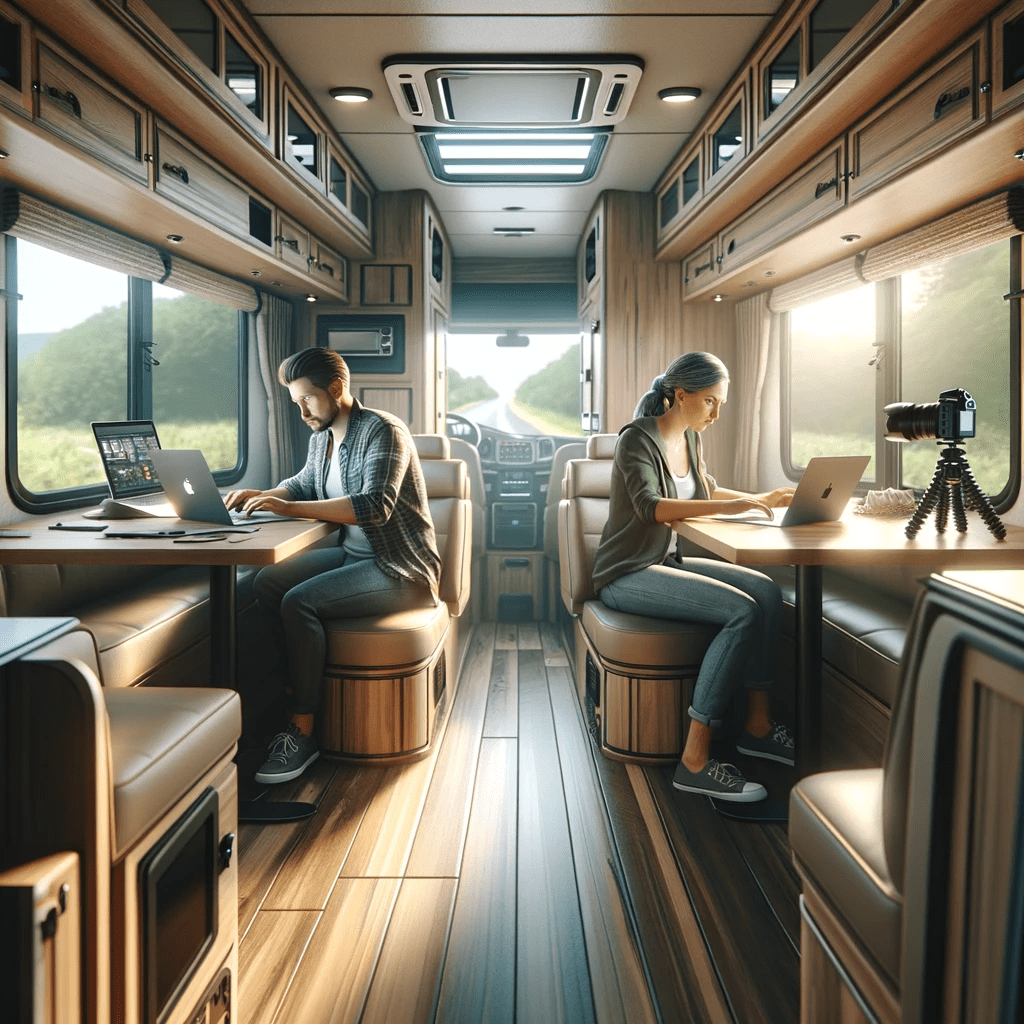
Finding Your Rhythm – Work and Lifestyle Balance
Life on the road isn’t just about postcard-perfect sunsets and winding mountain roads. It’s also about weaving work into the tapestry of your adventures, finding that harmonious balance between productivity and wanderlust. So, whether you’re a remote warrior or a freelance trailblazer, let’s explore the secrets of crafting a sustainable work-life rhythm on wheels.
Hitting the Job Trail with Wheels:
The good news? The nomadic lifestyle is no longer a career death sentence. Remote work opportunities are booming, and many employers are embracing the flexibility of a mobile workforce. Here are some pointers for your job hunt:
- Cast your net wide: Explore online job boards like Remote.co and FlexJobs, leverage LinkedIn connections, and network with fellow RVers for potential leads.
- Highlight your unique skills: Focus on your remote work experience, adaptability, and time management skills. Pitch yourself as a reliable asset who can thrive in a dynamic environment.
- Consider RV-friendly careers: Freelance writing, virtual assisting, social media management, and online teaching are just a few options that offer location independence.
Mastering the Art of Mobile Productivity:
Turning your RV into a productive haven comes down to creating a dedicated workspace and building healthy routines. Here are some tips:
- Carve out your work zone: Dedicate a specific area in your RV for work, whether it’s a corner of the dinette or a converted bunk. Maintain its organization and cleanliness to foster focus.
- Establish boundaries: Set clear working hours and stick to them as much as possible. Inform clients and colleagues about your schedule and communicate effectively to avoid disruptions.
- Embrace the tech tools: Invest in reliable internet access, cloud storage solutions, and productivity apps to stay organized and connected on the go.
- Step away and recharge: Don’t let work consume your nomadic experience. Schedule regular breaks, explore your surroundings during lunch, and disconnect completely during evenings and weekends.
Striking the Chord of Harmony:
Finding the perfect balance between work and play requires constant adjustment and experimentation. Here are some mantras to keep in mind:
- Embrace flexibility: Your ideal work-life blend might change from location to location. Be open to adapting your schedule and routines to suit your changing environment.
- Prioritize your well-being: Burnout happens anywhere, on the road or at home. Listen to your body, take breaks when needed, and make time for activities that bring you joy.
- Connect with fellow nomads: Online communities and in-person gatherings can offer invaluable support, advice, and shared experiences. Surround yourself with people who understand your unique lifestyle.
Remember: The nomad’s work-life balance is a beautiful melody woven with productivity, exploration, and personal fulfillment. Listen to your inner rhythms, adjust your tune as needed, and revel in the freedom of finding your perfect harmony on the open road.
Weaving the Tapestry of Your Home on Wheels: Additional Considerations
As you craft your nomadic masterpiece, remember that the details matter. These final touches will add comfort, connection, and harmony to your life on wheels:
Four-Legged Adventurers:
If your furry companions share your wanderlust, remember their needs:
- Space and Exercise: Ensure your RV offers enough space for comfortable movement and playtime. Plan regular stops for walks and adventures in dog-friendly areas.
- Temperature Control: Keep your RV cool in summer and warm in winter for their comfort. Consider pet-friendly cooling or heating solutions.
- Safety and Security: Never leave your pets unattended in the RV, especially in extreme temperatures. Secure leashes and harnesses while traveling to ensure their safety.
Staying Connected in the Canvas of Nature:
Embrace technology’s helping hand on your journey:
- Mobile Internet Solutions: Research data plans and hotspot options to stay connected for work, entertainment, and campsite navigation.
- Satellite TV: Enjoy your favorite shows and movies even in remote areas with a reliable satellite TV setup.
- Navigation and Campsite Apps: Utilize navigation apps to plot your route and camping apps to discover hidden gems and book convenient campsites.
Living Light for a Lighter Heart:
Less is truly more in your mobile home:
- Minimalism Matters: Embrace a minimalist approach to packing and living. Invest in versatile clothing and multi-purpose gear to reduce clutter.
- Decluttering Rituals: Regularly declutter your RV to avoid feeling overwhelmed and maintain a sense of organization. Remember, less stuff means more freedom.
Nurturing Body and Soul in the Grand Expanse:
Staying healthy on the road is key to sustaining your adventures:
- Exercise Routines: Find creative ways to stay active, from morning yoga routines to hikes and bike rides. Embrace the outdoors and move your body.
- Healthcare Access: Research access to healthcare options in your planned destinations, especially if traveling long distances.
- Mental Well-being: Prioritize stress-reducing activities like meditation, journaling, and connecting with nature to maintain mental equilibrium.
Sustainable Nomads, Happy Planet:
Travel with environmental consciousness:
Remember: These are just threads in the tapestry of your nomadic life. Experiment, adapt, and personalize your RV adventure to weave a vibrant masterpiece of exploration, connection, and fulfillment. Let your wanderlust guide you, embrace the unexpected, and revel in the joy of crafting your perfect home on wheels.
Image by 12019 from Pixabay
Unfurl Your Compass, Embrace the Horizon: A Conclusion to Ignite the Nomad Within
Full-time RVing isn’t just a change of address; it’s a revolution of the soul. It’s trading predictable horizons for sun-drenched mountain passes, swapping monotonous routines for the symphony of crickets in the moonlight. It’s a kaleidoscope of landscapes unfolding outside your window, a never-ending quest for experiences etched in laughter and wind-whipped hair.
This guide isn’t just a map; it’s a whispered promise of sun-kissed freedom. It empowers you to navigate the winding roads, both physical and personal, that lie ahead. With every page, you’ve gathered tools to tame the unknowns, from choosing your chariot to finding balance between wanderlust and well-being.
Remember, the heart of the nomadic adventure isn’t in the perfect RV or the meticulously planned itinerary. It’s in the quiet moments watching stars paint the midnight sky, the exhilaration of conquering a treacherous mountain pass, the shared laughter around a crackling campfire with fellow adventurers. It’s about embracing the unexpected detours, the detours that become the most cherished memories.
So, cast off the mooring lines of convention, unfurl your compass, and let the open road serenade your spirit. You’ve learned the practicalities, now dance with the possibilities. Embrace the sun-baked dust on your boots, the whisper of pine needles underfoot, the thrill of leaving every sunset a little further behind. Because the greatest reward of full-time RVing isn’t a destination, but the journey itself – a journey that stretches beyond asphalt and into the boundless landscape of your own boundless spirit.
Go forth, nomad. The road awaits.
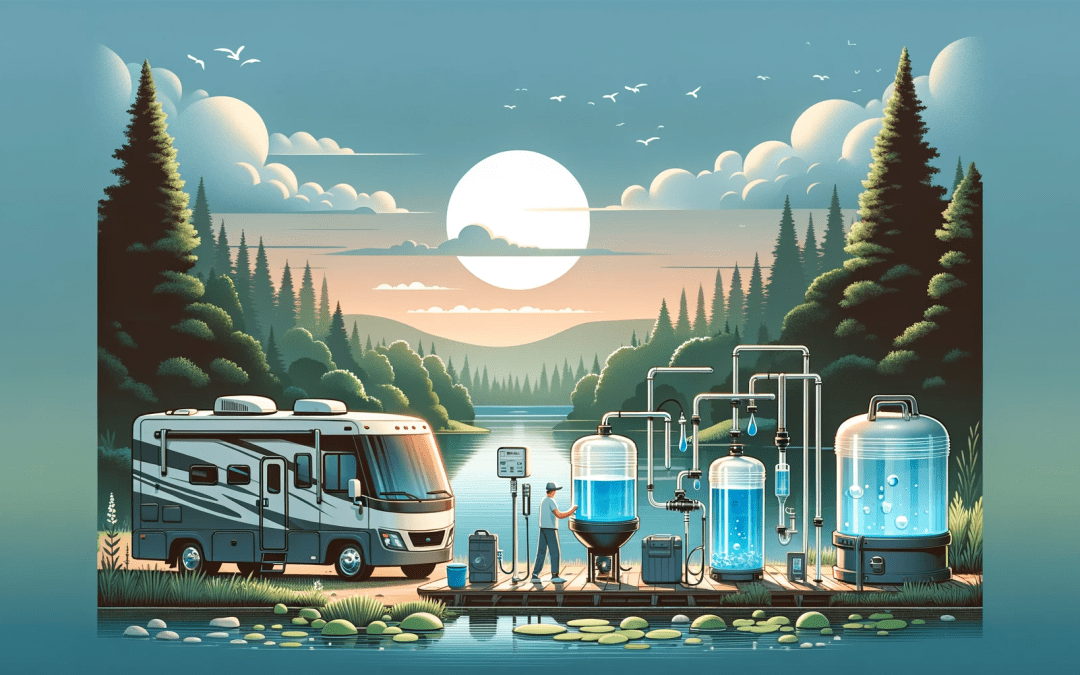
by Chuck Price | Dec 9, 2023 | Boondocking-Guide
The open road beckons, whispering tales of adventure and freedom. RV boondocking, with its promise of untamed landscapes and self-sufficiency, holds a particular allure for many travelers. Yet, beneath the romantic notion of off-grid living lies a crucial aspect: resource management, especially freshwater.
Unlike the familiar amenities of traditional campgrounds, boondocking requires a mindful approach to water usage. Gone are the days of endless showers and overflowing sinks; boondockers must become stewards of their resources, ensuring a sustainable and enjoyable adventure.
This guide serves as your roadmap to freshwater management in the world of RV boondocking. We will delve into the intricacies of understanding your needs, sourcing water, maximizing storage, and implementing water-saving techniques. We’ll also explore methods for maintaining water quality and navigating common challenges, equipping you with the knowledge and skills to navigate the wonders of boondocking without compromising on comfort or sustainability.
So, whether you’re a seasoned adventurer or a curious newcomer, prepare to embark on a journey towards responsible water management and unlock the full potential of your RV boondocking experience.
Image by TitusStaunton from Pixabay
Understanding Your Freshwater Needs
Estimating Daily Water Usage:
Before embarking on your boondocking adventure, accurately estimating your daily water usage is crucial. This ensures you bring enough water and plan your resupply stops accordingly. Here are some factors to consider:
Number of people: This is the most significant factor. A general rule of thumb is to allocate 2 gallons of water per person per day for basic hygiene and cooking. However, individual needs can vary based on age, activity level, and showering habits. Factor in additional water for children who may require more frequent bathing or infants who need formula preparation. We compared seven shower options while boondocking.
Duration of your trip: The longer your boondocking stay, the more water you’ll need. Plan your water usage based on the number of days you’ll be off-grid.
Activities: Certain activities demand more water than others. Consider how much water you’ll use for:
- Cooking: Simple meals require less water than elaborate dishes.
- Dishwashing: Opt for water-saving techniques like using a dishwashing pan and minimizing rinsing.
- Cleaning: Utilize cleaning cloths and sprays instead of running water whenever possible.
- Laundry: Hand washing clothes instead of using a washing machine saves significant water.
- Showering: Short showers with low-flow showerheads are essential for water conservation.
- Personal hygiene: Brushing teeth and shaving can be done efficiently with minimal water.
Factors Affecting Water Consumption:
Several factors can influence your actual water usage beyond the initial estimations:
Weather conditions: Hot weather typically leads to increased water usage for hydration and showering. Colder weather may require less water for hygiene but might necessitate using more water for hot showers or heating dishes.
Personal habits: Water-conscious individuals naturally use less water than those with less awareness. Implement water-saving practices like turning off the tap while brushing teeth or taking shorter showers.
Types of appliances: Low-flow faucets, showerheads, and washing machines significantly reduce water consumption compared to standard models. Consider investing in these water-saving appliances for your RV.
By carefully considering these factors and implementing water-saving strategies, you can accurately estimate your freshwater needs for a comfortable and sustainable boondocking experience.
Image by Lori Lo from Pixabay
Sourcing Freshwater While Boondocking
Tips for Locating Water Sources:
Finding reliable freshwater sources is key to a successful boondocking adventure. Researching ahead of time is crucial, as remote areas might not always offer readily accessible water. Here are some helpful tips:
- RV Parks and Campgrounds: These typically offer water fill stations for a fee. Consider joining RV memberships for discounted rates.
- Public Lands: National forests, state parks, and recreation areas often have designated water sources, sometimes free of charge. Check online maps and park websites for specific locations.
- Local Businesses: Restaurants, gas stations, and convenience stores might allow you to refill your water containers for a small fee, especially in rural areas.
- Private Land: With permission from landowners, you might be able to access wells or springs on their property. Always be respectful and inquire about water quality before filling up.
Water Treatment for Specific Sources:
Not all water sources are safe for consumption without treatment. Understanding the potential contaminants in different sources allows you to choose the appropriate treatment method.
- Rivers and Lakes: These sources can contain bacteria, parasites, and other contaminants. Boiling water for at least 1 minute is the simplest and most effective treatment method. Alternatively, consider using a portable water filter designed for backcountry use.
- Wells: Well water can be contaminated with bacteria, nitrates, or heavy metals. Testing your water source for specific contaminants is crucial before consumption. Depending on the results, you might need to use a filtration system, reverse osmosis, or other purification methods.
- Municipal Water Sources: Water from towns and cities is typically treated and safe to drink. However, carrying a water filter for additional peace of mind is always a good idea.
Safety Considerations in Water Refilling:
Always prioritize safety when sourcing water. Here are some essential precautions:
- Inspect the source for potential contaminants. Look for signs of pollution, such as algae blooms, animal waste, or industrial runoff.
- Use dedicated water containers. Avoid using containers that previously held chemicals or other substances.
- Clean and disinfect your water containers regularly.
- Follow proper water treatment procedures based on the source.
- Consider using a water quality testing kit to confirm the safety of your water.
Greywater Reuse:
Conserving freshwater is vital in boondocking. Greywater, the wastewater from sinks, showers, and washing machines, can be reused for non-potable purposes, such as:
- Flushing toilets. Many RV toilets can be flushed with greywater, reducing your reliance on freshwater for this function.
- Watering plants. Greywater is a natural fertilizer for your RV garden or potted plants.
- Washing your RV. Use greywater to wash the exterior of your RV, saving freshwater for cleaning dishes and other essential needs.
- Cleaning tools and equipment. Greywater is suitable for rinsing tools and equipment after outdoor activities.
Remember to check local regulations regarding greywater usage before implementing this practice. Be mindful of the potential for odors and use proper sanitation methods to prevent the spread of bacteria.
By understanding your water needs, researching available sources, and implementing safe water treatment and conservation strategies, you can ensure a sustainable and enjoyable boondocking experience.
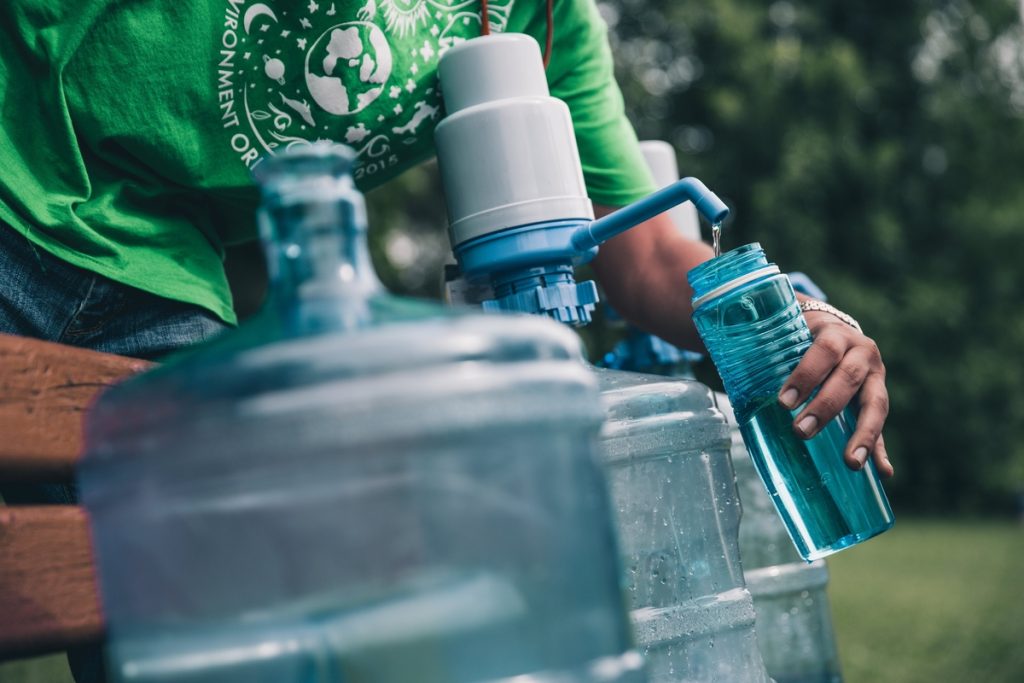 Image by rawpixel
Innovative Freshwater Storage Solutions
Review of Storage Tanks and Containers:
Choosing the right storage solution for your freshwater needs is crucial for boondocking. Here are the key types and their pros and cons:
Built-in RV Tanks:
- Pros: Convenient, integrated into your RV, and often offer multiple tanks for fresh and greywater.
- Cons: Limited capacity, may not be easily accessible for cleaning or maintenance, and prone to freezing in cold weather.
Portable Containers:
- Pros: Offer flexibility and additional storage capacity, easy to clean and maintain, and can be winterized more readily.
- Cons: Take up valuable space inside or outside the RV, require additional handling for refilling and emptying, and may not be compatible with all RV water systems.
Collapsible Containers:
- Pros: Lightweight, compact when empty, ideal for maximizing space, and easy to transport and store.
- Cons: May not be as durable as rigid containers, susceptible to punctures, and may not be suitable for long-term storage.
Choosing the right solution depends on factors like:
- Your RV’s available space and weight capacity.
- Your desired water storage capacity.
- Your budget and personal preferences.
Maximizing Storage Space in an RV:
Limited space is often a challenge in RVs. Here are some strategies to maximize your freshwater storage:
- Utilize unused spaces: Look for hidden nooks or compartments under beds, seats, or dinettes where you can fit water containers.
- Invest in space-saving solutions: Consider multi-purpose furniture with built-in water storage or collapsible containers that can be tucked away when not in use.
- Organize your storage: Implement a system to keep your water containers and accessories neatly organized and easily accessible.
- Utilize external storage: If permitted by your RV model, consider mounting additional water tanks or containers on the exterior for extra storage.
Water Storage Considerations for Winter Boondocking:
Water freezes at 32°F, so winter boondocking requires special attention to your freshwater storage. Here are some tips:
- Insulate your water tanks and lines: This helps prevent freezing and ensures a consistent water supply.
- Use heated water hoses: These hoses prevent freezing during the filling process.
- Drain and winterize your water system: This involves removing all water from your tanks and lines to prevent damage from freezing.
- Consider using a portable heated water tank: This can provide a backup water source if your RV’s built-in system freezes.
By carefully planning your storage solutions and implementing these winterization techniques, you can ensure your freshwater supply stays safe and accessible throughout your boondocking adventures.
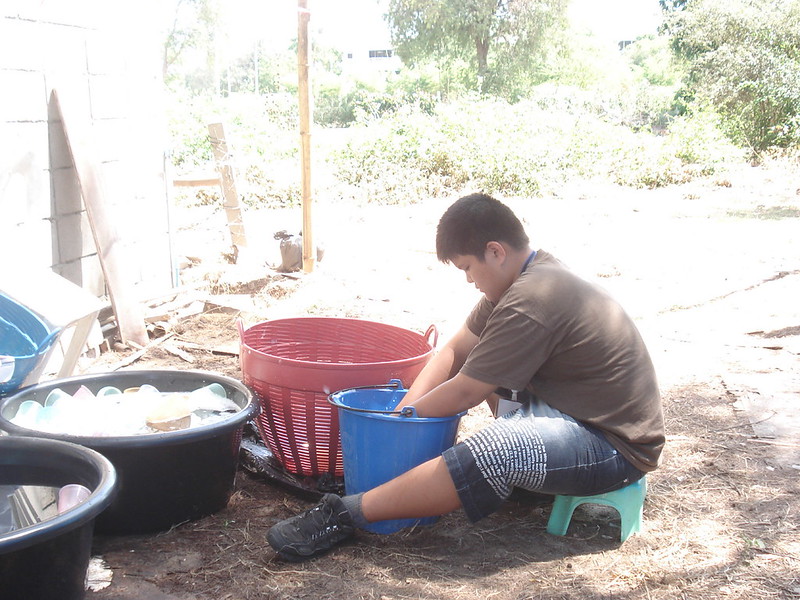
Image by Neale Bryan via flickr
Water Conservation Techniques
Practical Tips for Reducing Water Usage:
Simple changes in your daily habits can significantly reduce your water consumption while boondocking. Here are some practical tips:
In the kitchen:
- Wash dishes in a basin: Fill a basin with soapy water instead of using running water for washing and rinsing.
- Use disposable plates and utensils: This eliminates the need for dishwashing and saves water.
- Cook one-pot meals: This minimizes the number of dishes and utensils requiring cleaning.
- Defrost frozen food in the refrigerator: Avoid using running water to thaw food.
- Scrape food scraps into the trash instead of rinsing them down the drain.
In the bathroom:
- Take shorter showers: Every minute saved translates to water conservation.
- Turn off the faucet while brushing your teeth or shaving.
- Use a water-saving showerhead: This reduces water flow without impacting your showering experience.
- Install a low-flow faucet aerator: This reduces water flow for handwashing and other tasks.
- Consider using a composting toilet: This significantly reduces water usage compared to traditional toilets.
General practices:
- Fix leaky faucets and hoses promptly. Even a small leak can waste gallons of water.
- Turn off the water when not in use: This applies to brushing your teeth, shaving, washing dishes, etc.
- Use a water dispenser instead of running the tap for drinking water.
- Hang clothes to dry instead of using a washing machine.
- Collect rainwater for non-potable uses.
Water-Saving Devices and Gadgets:
Investing in water-saving devices can further reduce your water usage:
- Low-flow showerheads: These can reduce water flow by up to 50% without compromising shower pressure.
- Faucet aerators: These reduce water flow by mixing air into the water stream.
- Water-saving spray nozzles for hoses: These are perfect for washing dishes, rinsing vegetables, and cleaning your RV.
- Water flow timers: These help you monitor and manage your water usage, preventing overconsumption.
- Greywater recycling systems: These systems filter and treat greywater for reuse in flushing toilets or watering plants.
By adopting these practical tips and utilizing water-saving devices, you can make a significant impact on your water consumption while boondocking. Remember, every drop counts towards a sustainable and responsible RV experience.
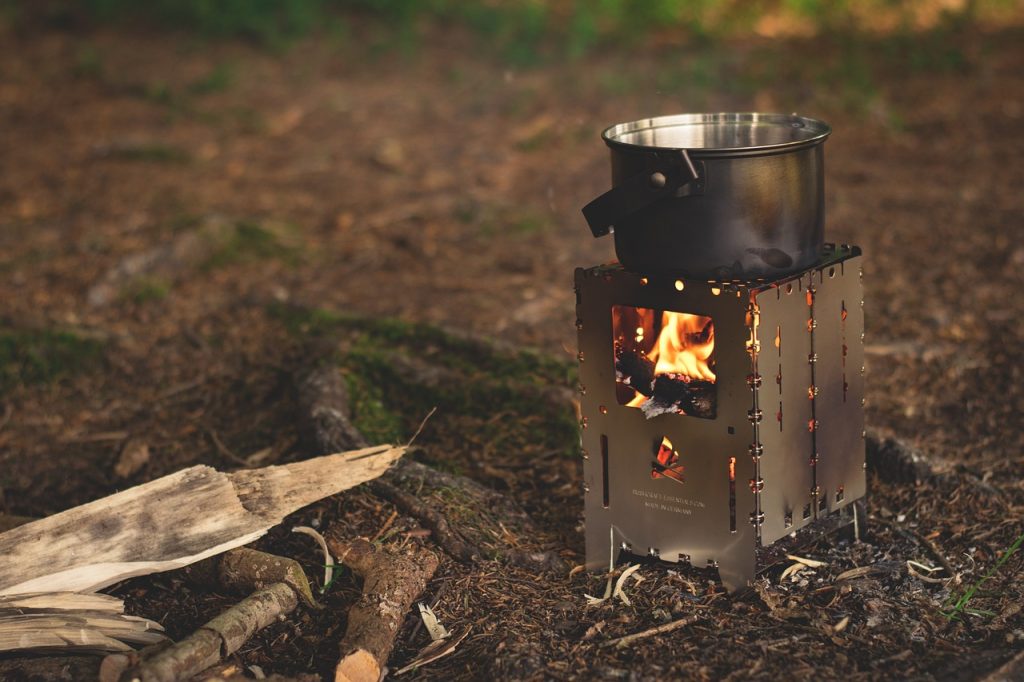
Image by LUM3N from Pixabay
Maintaining Water Quality
Ensuring the quality of your freshwater is paramount for your health and safety while boondocking. Implementing proper purification, filtration, and maintenance practices safeguards you from harmful contaminants and keeps your water systems functioning optimally.
Purification and Filtration Methods:
Depending on your water source and desired level of protection, various purification and filtration methods are available:
Boiling: This simple method destroys bacteria and parasites but does not remove other contaminants.
Chemical Treatment: Tablets or drops containing chlorine or iodine disinfect water for safe consumption.
Portable Filtration Systems: Portable filtration systems can reduce sediment and, depending on their tested pore size and certification, may reduce some bacteria and parasites. Most portable filters do not remove viruses, so unknown water should be filtered and then disinfected or boiled according to CDC guidance.
Reverse Osmosis: This advanced technology removes virtually all contaminants, including dissolved minerals and chemicals, providing the highest level of water purity.
Choosing the right method depends on factors like:
- The quality of your water source.
- Your desired level of protection.
- Your budget and personal preferences.
Regular Maintenance of Water Systems:
Proper maintenance of your RV’s water systems is essential for preventing contamination and ensuring their longevity. Here are some key tasks:
- Clean and disinfect your freshwater tanks and lines regularly. This removes biofilm and sediment buildup that can harbor bacteria.
- Inspect and replace filters as recommended by the manufacturer.
- Check for leaks and repair them promptly.
- Flush your water heater periodically to remove sediment and prevent corrosion.
- Clean your water pump and strainer to ensure optimal performance.
Winterization of Water Systems:
Preparing your water systems for freezing temperatures is crucial to prevent damage from bursting pipes. Winterization involves:
- Draining all water from your tanks and lines.
- Pumping antifreeze through the system.
- Bypassing the water heater.
- Disconnecting and storing external hoses.
Following these maintenance and winterization procedures ensures your water systems function efficiently and provide you with safe, clean water throughout your boondocking adventures.
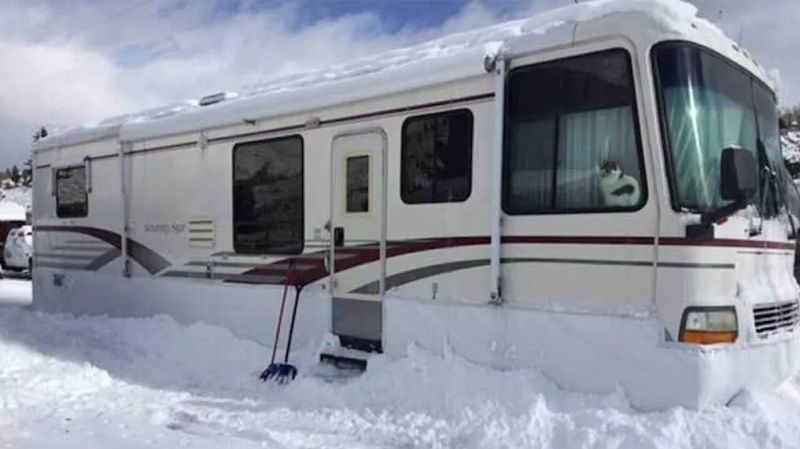
Image Credit: EZSnapDirect.com
Addressing Common Freshwater Management Challenges
Troubleshooting Common Issues:
Even with careful planning and preparation, freshwater management challenges can arise during your boondocking adventures. Here are some common issues and tips for troubleshooting them:
Leaks:
- Identify the source of the leak: Check for visible signs of water damage or listen for dripping sounds.
- Tighten loose connections: Use wrenches or screwdrivers to tighten any loose fittings or hose connections.
- Replace damaged components: If the leak persists, replace the faulty O-rings, seals, or hoses.
Pump Failures:
- Check for airlocks: Air trapped in the system can prevent the pump from functioning properly. Consult your RV manual for bleed procedures.
- Clean the pump filter: A clogged filter can restrict water flow and impede pump operation. Clean or replace the filter as needed.
- Check the fuse: A blown fuse can also cause pump failure. Replace the fuse with the correct amperage.
Freezing Pipes:
- Identify frozen areas: Look for visible frost or ice formation on pipes and lines.
- Apply heat: Use a hairdryer or warm compress to thaw frozen sections.
- Increase water flow: Once thawed, slowly open faucets to allow water to flow and prevent refreezing.
Winter Boondocking Challenges and Solutions:
Winter boondocking presents unique water management challenges. Here are some tips for overcoming them:
- Invest in additional insulation: Wrap exposed pipes and tanks with insulation materials to prevent freezing.
- Use heated water hoses and cables: These prevent water from freezing in the hose and connection points.
- Skirt your RV: This helps maintain warmer temperatures underneath the RV, protecting your water systems from freezing.
- Monitor water levels closely: Regularly check your water tanks to ensure they do not run low and freeze.
- Consider alternative water sources: If your built-in systems freeze, utilize portable water containers stored inside the RV where they are less susceptible to freezing.

Image by melancholiaphotography from Pixabay
Case Studies: Real-Life Experiences and Insights
Learning from the experiences of seasoned boondockers can offer invaluable insights and practical solutions to freshwater management challenges. Here are some real-life examples from the Good Sam community showcasing successful water conservation strategies, overcoming freshwater management challenges, and unique water sourcing methods:
Successful Water Conservation Strategies:
- Minimizing shaving water: One boondocker shares how they use a large plastic cup for hot water instead of filling the entire sink, significantly reducing water usage for shaving.
- Reusing dishes: Another individual mentions using shallow trays for dishwashing and reusing slightly dirty dishes for subsequent meals, especially when water levels are low.
- Dishwashing tip: A boondocker suggests using a spray bottle filled with soapy water instead of running water when washing dishes, further reducing water waste.
- Utilizing graywater: An experienced boondocker installs a graywater system that filters and reuses graywater for toilet flushing and plant watering, minimizing freshwater consumption.
Overcoming Freshwater Management Challenges:
- Maximizing water usage: A clever boondocker suggests knowing the location of the water pick-up tube in their freshwater tank. Tilting the RV slightly towards the side where the tube is located allows for maximum water utilization before needing a refill.
- Energy conservation and water usage: Another boondocker highlights the connection between energy and water conservation. By using LED lights and minimizing high-energy appliances, they indirectly reduce water usage by lowering overall energy consumption.
- Winterizing water systems: A seasoned winter boondocker recommends using a heated water hose and cable to prevent freezing during cold weather and ensure water availability.
- Troubleshooting pump failures: One boondocker shares their experience with resolving pump failures by checking for airlocks in the system and following proper bleed procedures as outlined in the RV manual.
Unique Water Sourcing Methods:
- Repurposing boiled water: One creative boondocker uses water from boiling pasta or potatoes to pre-rinse dishes, effectively reusing water that would otherwise be discarded.
- Extended water supply for showers: Another boondocker sets up an additional 34-gallon water tank under their trailer, connected to an external water pump. This provides them with an extended water supply for showers, offering a camp-style solution to off-grid showering needs.
- Collecting rainwater: A resourceful boondocker utilizes a tarp and container to collect rainwater, supplementing their freshwater supply and reducing reliance on other sources.
These case studies not only provide valuable inspiration but also offer practical advice for boondockers at all levels to effectively manage freshwater and enjoy their off-grid adventures. The shared experiences emphasize the importance of innovative thinking and adaptability in the face of limited resources, demonstrating how small changes in daily habits can lead to significant water conservation and a more sustainable and enjoyable boondocking experience.
Conclusion
This comprehensive guide has delved into the intricacies of freshwater management for RV boondockers. From understanding your needs and sourcing water to implementing innovative storage solutions and practicing water conservation techniques, we’ve equipped you with the knowledge and skills necessary to navigate the challenges and enjoy the rewards of off-grid living.
Remember, responsible water management is not just about securing your own comfort; it’s about preserving the natural resources we cherish for future generations. By embracing sustainable practices and following the guidance presented in this guide, you can contribute to a responsible boondocking community and ensure the timeless pleasures of off-grid adventure remain accessible for years to come.
So, embark on your next boondocking adventure with confidence, knowing you are equipped to manage your freshwater resources efficiently and enjoy a sustainable and unforgettable journey.
Resources for further information:
Websites:
- Heartland RVs – Boondocking 101: Water and Waste Management: This Heartland RVs page provides practical tips for water conservation and management during boondocking, including where to refill water and how to efficiently use water resources.
- RV With Tito – How To Refill Fresh Water Tank While Boondocking: On this RV With Tito page, you’ll find detailed advice on freshwater management, including the use of collapsible water containers and tips for finding water while boondocking. It also discusses water transfer methods and equipment.
- Boondock or Bust – Water Management and Conservation Techniques for RV Boondocking: This Boondock or Bust guide covers various aspects of water management in RV boondocking, including storage capacity, filtration systems, and minimizing environmental impact. It also links to resources like the EPA’s WaterSense program and other informative RV blogs.
- U.S. Environmental Protection Agency (EPA) – WaterSense: The U.S. Environmental Protection Agency’s WaterSense program offers information and tips on water conservation for various purposes, including RV use. It’s a valuable resource for understanding the environmental impact of water usage and finding strategies to minimize it.
Online Forums:
Recommended water treatment products:
Water-saving gadgets and accessories:
by Chuck Price | Nov 28, 2023 | Boondocking-Guide
The great outdoors has always held a special allure for many individuals, offering a respite from the hustle and bustle of everyday life and a chance to reconnect with nature’s tranquility. However, for LGBTQIA+ individuals, the camping experience has not always been one of inclusivity and safety. To appreciate progress, it’s essential to reflect on the history of LGBTQIA+ individuals in outdoor recreation. This journey, marked by challenges and triumphs, demonstrates the evolving landscape of inclusivity in the great outdoors.
A Legacy of Exclusion and a Journey Towards Inclusivity: LGBTQIA+ Experiences in Outdoor Recreation
 For decades, LGBTQIA+ individuals have faced significant barriers to participation in outdoor recreation due to widespread discrimination and exclusion. These barriers have ranged from overt forms of prejudice, such as being denied service at campgrounds or being subjected to harassment on trails, to more subtle forms of exclusion, such as a lack of representation in outdoor media and a scarcity of LGBTQIA+-friendly outdoor organizations.
The exclusion of LGBTQIA+ individuals from outdoor recreation has had a profound impact on their ability to connect with nature, build community, and experience the joys of outdoor pursuits. It has also contributed to a sense of isolation and marginalization, further compounding the challenges faced by LGBTQIA+ individuals.
However, the past few decades have seen a growing movement towards inclusivity in outdoor recreation, with the rise of LGBTQIA+-specific organizations, like the Trevor Project, the increasing visibility of LGBTQIA+ outdoor enthusiasts, and the growing commitment of outdoor recreation providers to creating more welcoming spaces.
This progress has been driven by the collective efforts of LGBTQIA+ individuals, allies, and organizations who have tirelessly advocated for change. Their efforts have resulted in a more inclusive outdoor recreation landscape, with more opportunities for LGBTQIA+ individuals to connect with nature, build community, and experience the joys of outdoor pursuits.
Despite the progress that has been made, the journey towards full inclusivity in outdoor recreation is ongoing. There continues to be a need for more inclusive policies, practices, and representation in the outdoor recreation industry. Additionally, ongoing education and awareness-raising are crucial to combating prejudice and fostering a truly welcoming outdoor environment for all, as highlighted by initiatives like Outdoors for All.
By understanding the historical context of LGBTQIA+ experiences with outdoor recreation, we can better appreciate the significance of inclusive camping initiatives and recognize the ongoing need for creating more welcoming outdoor spaces for all individuals.
Celebrating LGBTQIA+ Inclusive Campgrounds
 Image by Ted Eytan via flickr
Cultivating Inclusive Campgrounds: A Haven for All
At the core of an inclusive camping experience lies an unwavering commitment to creating welcoming and affirming environments where every camper feels embraced and respected. LGBTQIA+ inclusive campgrounds transcend mere tolerance; they actively cultivate spaces that celebrate diversity, cherish individuality, and foster a profound sense of belonging for all.
The hallmarks of inclusive campgrounds extend far beyond physical amenities; they encompass a comprehensive approach to inclusivity, prioritizing the creation of welcoming spaces that embrace diversity, celebrate individuality, and foster a profound sense of belonging for all campers. These campgrounds recognize that inclusivity is not a one-time effort but an ongoing journey that requires continuous commitment and action.
A crucial element of fostering inclusive campgrounds is prioritizing comprehensive staff training. This training should equip staff with the knowledge and skills to create a welcoming and respectful atmosphere for all campers, regardless of their gender identity, sexual orientation, or any other personal characteristic. Staff training should cover topics such as LGBTQIA+ terminology, cultural sensitivity, creating gender-neutral facilities, and addressing unconscious bias.
Beyond staff training, LGBTQIA+ inclusive campgrounds implement inclusive policies that cater to the needs of diverse campers, including those with disabilities. These policies may include:
- Gender-neutral restrooms: Gender-neutral facilities are not just a matter of convenience; they are a vital aspect of ensuring comfort and safety for all campers, regardless of gender identity. More about gender-neutral facilities can be found on the National Center for Transgender Equality website.
- Flexible camping options for families and solo travelers: Inclusive campgrounds recognize the diverse needs of different camper groups. They offer flexible camping options that accommodate families of all structures, as well as solo travelers seeking a welcoming and supportive environment.
- Inclusive recreational activities: Recognizing that individuals have diverse interests and abilities, inclusive campgrounds offer a range of recreational activities that cater to a variety of preferences and physical limitations. This ensures that all campers have the opportunity to participate in enjoyable and accessible outdoor activities.
By prioritizing staff training, implementing inclusive policies, and cultivating a welcoming atmosphere, LGBTQIA+ inclusive campgrounds not only provide a safe and enjoyable outdoor experience for LGBTQIA+ individuals but also set an example for the broader camping community, fostering a more inclusive and equitable outdoor world for all.
Image by Mike via flickr
Profiles of LGBTQIA+ Friendly Campgrounds
To showcase the diverse landscape of LGBTQIA+ inclusive campgrounds, here are a few examples that embody the spirit of inclusivity:
- Oz Campground, located in Unadilla, Georgia, exemplifies the spirit of inclusivity by providing a vibrant and welcoming atmosphere for all campers.
- Rainbow Ranch, nestled in Groesbeck, Texas, offers a tranquil retreat for LGBTQIA+ campers seeking a peaceful escape into nature, with amenities like a swimming pool, a sauna, and a meditation garden.
- Campit Outdoor Resort in Saugatuck, Michigan, is known for its friendly environment and diverse range of lodging options, catering to all preferences within the LGBTQIA+ community.
- The Woods Campground in Lehighton, Pennsylvania, provides a unique blend of natural beauty and inclusive community activities, making it a popular destination for LGBTQIA+ campers.
- Circle JJ Ranch Campground in Scio, Ohio, offers a rustic and scenic camping experience with a strong sense of community and inclusivity, perfect for those looking to connect with nature and fellow campers.
- Roseland Resort & Campground in Proctor, West Virginia, features a variety of amenities and outdoor activities, set in a picturesque landscape that welcomes LGBTQIA+ individuals and their allies.
These campgrounds aren’t just about amenities; they’re about experiences.
Exploring Inclusive Camping Opportunities
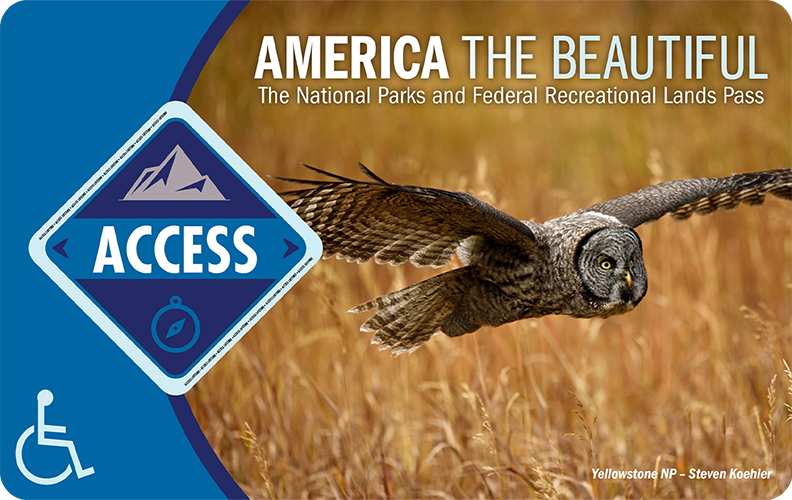
Finding Your Perfect Campsite
Navigating the vast array of campgrounds can be daunting, particularly for first-time campers or those seeking specific amenities and tailored experiences that align with their preferences and needs. Fortunately, the digital age has provided a plethora of tools and resources to streamline the campground search process, making it easier than ever to find inclusive and welcoming campsites. To further assist in your search, consider LGBTQIA+-friendly camping guides like Hipcamp, which often list inclusive sites and provide user reviews.
An integral aspect of inclusivity is ensuring accessibility for campers with disabilities. When embarking on your campground search, consider these tips for locating campsites that cater to a range of mobility and accessibility needs:
- Seek out detailed campsite information: Before making a reservation, thoroughly research the campground’s website or contact them directly to gather detailed information about the accessibility of facilities, activities, and terrain. Inquire about accessible campsites, restrooms, showers, and recreational areas.
- Utilize online accessibility resources: Leverage online resources like the National Park Service’s Accessibility Guide and the Recreation.gov website to identify campgrounds that meet your specific accessibility needs. These resources provide comprehensive accessibility information, including details on accessible trails, picnic areas, and visitor centers.
- Connect with the campground community: Engage with local LGBTQIA+ camping groups or online forums to gain insights from fellow campers with disabilities. These communities can provide valuable recommendations for accessible campgrounds and share their experiences navigating different campsites.
- Consider the terrain: Assess the terrain of the campground to ensure it aligns with your mobility needs. If you have limited mobility or use mobility aids, opt for campgrounds with paved pathways, gentle slopes, and accessible campsites.
- Inquire about adaptive equipment rentals: Check if the campground offers adaptive equipment rentals, such as all-terrain wheelchairs, beach wheelchairs, or shower chairs. This can significantly enhance your camping experience and allow you to fully participate in various activities.
- Communicate your needs clearly: When making a reservation, clearly communicate your accessibility needs to the campground staff. This allows them to provide any necessary accommodations and ensure a comfortable and enjoyable camping experience for you.
Remember, finding an inclusive campground extends beyond physical amenities; it’s about creating a welcoming and supportive environment where everyone feels valued and respected. By carefully considering accessibility factors and utilizing available resources, you can navigate the vast expanse of campgrounds and discover your ideal inclusive retreat. For those looking to delve deeper into LGBTQIA+ inclusive camping, numerous organizations and resources are available. Groups like CampOut and GayOutdoors provide information on LGBTQIA+-friendly campgrounds, organize events, and foster a community of like-minded outdoor enthusiasts.
Leveraging Community Insights
The LGBTQIA+ community is a rich source of knowledge and support, and tapping into local LGBTQIA+ groups and exploring online forums can offer valuable insights into identifying inclusive campsites. These communities often maintain lists of recommended campgrounds that have been vetted for their welcoming atmosphere and inclusive policies.
Tailoring Your Camping Adventure
Inclusive Packing List
Whether embarking on a maiden camping adventure or refining your existing gear, crafting a comprehensive packing list is essential for a successful and enjoyable experience, ensuring you have the necessary equipment and supplies tailored to your specific camping trip and preferences. For a detailed guide on what to include, see the REI Camping Checklist. Consider different camping styles when packing. For instance, backpacking requires compact, lightweight gear, while family camping may focus on comfort and convenience. Tailoring your packing list to the type of camping trip can enhance your overall experience. Remember, inclusive camping also means being mindful of others’ needs. Pack items like pronoun pins for yourself and others, or consider bringing games and activities that are inclusive of all genders and orientations.
Navigating Your Safe Space
Fostering a respectful and inclusive camping environment is paramount for ensuring a safe and enjoyable experience for all campers. Learn more about creating safe and inclusive outdoor spaces at Leave No Trace.

Image by Wolfgang Eckert from Pixabay
Building Inclusive Outdoor Communities Building LGBTQIA+ Outdoor Networks
The great outdoors offers a unique opportunity for LGBTQIA+ individuals to connect with others, share experiences, and celebrate their identities in an inclusive and supportive environment. LGBTQIA+ outdoor networks play a crucial role in fostering this sense of community and providing a platform for individuals to explore their passions for nature, adventure, and camaraderie. Additionally, LGBTQIA+-led outdoor adventure companies, such as HeTravel, play a significant role in creating tailored outdoor experiences that cater to the LGBTQIA+ community.
One such organization is the Venture Out Project, which offers guided backpacking trips specifically for the LGBTQ+ community. These trips provide opportunities for individuals of all experience levels to explore new destinations, build connections with fellow LGBTQ+ outdoor enthusiasts, and develop outdoor skills in a supportive environment.
Another notable example is Queer Nature, a non-profit organization that organizes retreats, workshops, and other immersive experiences focused on connecting LGBTQ+ individuals with nature and empowering them to become environmental stewards. Their programs emphasize personal growth, community building, and environmental awareness, fostering a deeper connection to the natural world.
In addition to these national organizations, there are numerous local LGBTQ+ outdoor groups that offer a variety of activities and events. These groups often provide opportunities for hiking, camping, kayaking, biking, and other outdoor pursuits, catering to diverse interests and skill levels.
Here are some additional examples of successful LGBTQIA+ outdoor groups/events:
- Wild Diversity: This organization focuses on creating inclusive outdoor experiences for BIPOC and LGBTQ2S+ communities, offering a range of activities and programs that promote diversity and inclusion in the outdoors. More information can be found on Wild Diversity’s website.
- OUT for Sustainability: This group organizes outdoor adventures that combine recreation with environmental education, promoting sustainable practices and stewardship of the natural world among LGBTQ+ individuals. Learn more about their initiatives at OUT for Sustainability.
- Benny’s Club: This organization hosts social events and outdoor activities for LGBTQ+ men, providing a space for camaraderie, connection, and personal growth. Discover more about Benny’s Club and their events on Benny’s Club website.
- Queer Surf: This group offers surf lessons and events for LGBTQ+ individuals, promoting inclusivity and access to the sport of surfing. Check out Queer Surf for more details.
- QPOC Hikers: This organization specifically caters to queer and trans people of color, providing a safe and supportive space for them to enjoy hiking and other outdoor activities. Follow their adventures and join their hikes through QPOC Hikers.
These examples demonstrate the vibrant and diverse landscape of LGBTQIA+ outdoor communities, offering a multitude of opportunities for individuals to connect, explore, and celebrate their identities in the natural world.
Whether through national organizations, local groups, or self-organized gatherings, the pursuit of outdoor experiences provides a powerful platform for LGBTQIA+ individuals to build connections, foster a sense of belonging, and celebrate their identities in an inclusive and supportive environment.
Allyship in Action
Allyship plays a pivotal role in cultivating a genuinely inclusive and welcoming outdoor experience for LGBTQIA+ individuals. Being an effective ally involves not only supporting LGBTQIA+ individuals but also actively challenging prejudice, discrimination, and exclusionary practices in outdoor spaces. The Human Rights Campaign’s guide to being an LGBTQ ally provides valuable insights into this important role.
Provincetown Image by Ted Eytan via flickr
Embracing Our Natural World with Open Arms
The Wonders Beyond the Campsite
Venturing beyond the campsite can further enrich the camping experience, offering opportunities to explore local communities, patronize queer-friendly businesses, and discover hidden gems that embody diversity and inclusivity, fostering a sense of belonging and connection with the local community. For discovering such places, consider using resources like Purple Roofs, which lists LGBTQ-friendly accommodations and travel options. Additionally, supporting local LGBTQIA+ businesses during your travels not only enriches your camping experience but also strengthens community ties. Look for queer-owned establishments, from cafes to outdoor gear shops, to immerse yourself in the local culture and contribute to the community.
Upholding Your Rights and Celebrating Protections
Understanding and exercising your rights as an LGBTQIA+ individual is paramount for a safe and enjoyable outdoor experience. Legal protections vary across different regions, so it’s essential to be aware of your rights in your chosen camping destination. A useful guide for this can be found on the ACLU’s LGBT Rights page.
Global Perspectives on Legal Rights and Protections
The legal landscape for LGBTQIA+ rights in outdoor recreation is diverse. In some countries, comprehensive anti-discrimination laws offer strong protections, while in others, such protections may be limited. Familiarize yourself with the local legal framework to understand your rights and prepare to assert them if necessary.
Resource List for Understanding and Asserting Rights
Tailored Resources for Different Camper Types
Each camper’s needs can vary, so here are some tailored resources:
- For Families: QueerFamily and Family Equality provide support and resources for LGBTQIA+ families, helping them find inclusive camping options and community support.
- For Solo Travelers: Online communities like Queer Nature and Gay Travel forums are great for finding inclusive campgrounds and solo-friendly activities, offering a wealth of information and advice.
- For Experienced Adventurers: Organizations like Outward Bound offer tailored outdoor education and leadership opportunities, catering to those seeking more challenging and skill-building experiences.
Celebrating Protections and Advocating for Progress
While celebrating the strides made in LGBTQIA+ rights in outdoor recreation, remember that the journey towards full equality continues. Here’s how you can contribute:
- Support LGBTQIA+ organizations: Engage with and support groups like GLAAD and The Trevor Project.
- Educate others: Share resources from PFLAG to help educate those around you about LGBTQIA+ issues.
- Challenge discrimination: Learn about and advocate against discrimination with resources from the ACLU.
- Advocate for inclusive policies: Stay informed on policy changes and advocacy through Human Rights Campaign.
By understanding their rights and advocating for progress, LGBTQIA+ individuals and allies can ensure that outdoor spaces remain welcoming and inclusive for everyone to explore and enjoy.
Helpful Resources for LGBTQIA+ Inclusive Camping
- ILGA World – International Advocacy for LGBTQIA+ Rights
- Description: Offers detailed information on LGBTQIA+ rights globally, serving as an essential resource for understanding diverse legal landscapes in outdoor recreation.
- Human Rights Campaign – Advocacy and Resources for LGBTQIA+ Travelers
- Description: Provides resources and guidance for LGBTQIA+ individuals, particularly useful for those traveling and seeking safe outdoor experiences.
- Queer Life Space – Empowering LGBTQIA+ Youth Outdoors
- Description: Focuses on outdoor experiences for LGBTQIA+ youth, encouraging exploration and personal growth in a supportive environment.
- Family Equality – Support for LGBTQIA+ Families
- Description: Advocates for LGBTQIA+ families, offering invaluable support and resources, ideal for families seeking inclusive camping experiences.
- Outward Bound – Tailored Outdoor Education and Leadership
- Description: Provides outdoor education and leadership opportunities, including programs designed for the LGBTQIA+ community, suitable for experienced adventurers.
Country-Specific Resources:
- United States: ACLU LGBT Rights: ACLU – LGBT Rights
- Description: Offers legal resources and advocacy support for LGBTQIA+ rights in the United States.
- Canada: Egale Canada
- Description: Advocates for LGBTQIA+ people’s human rights in Canada, providing resources and support for inclusive policies and practices.
- Australia: ACON Health – LGBTQ Health in Outdoor Recreation
- Description: Focuses on health and wellbeing advocacy for LGBTQIA+ communities in Australia, including safe practices in outdoor activities.
- United Kingdom: Stonewall UK
- Description: A leading organization in the UK advocating for the equality of lesbian, gay, bi, and trans people across Britain.
These resources have been carefully selected to enhance your camping experience, ensuring that you have access to safe, inclusive, and welcoming outdoor environments. Whether you’re a first-time camper or an experienced adventurer, these links provide valuable insights and support for a memorable and inclusive camping journey. We hope you find this comprehensive list of LGBTQIA+ camping resources, including online forums, equipment guides, and community networks helpful.