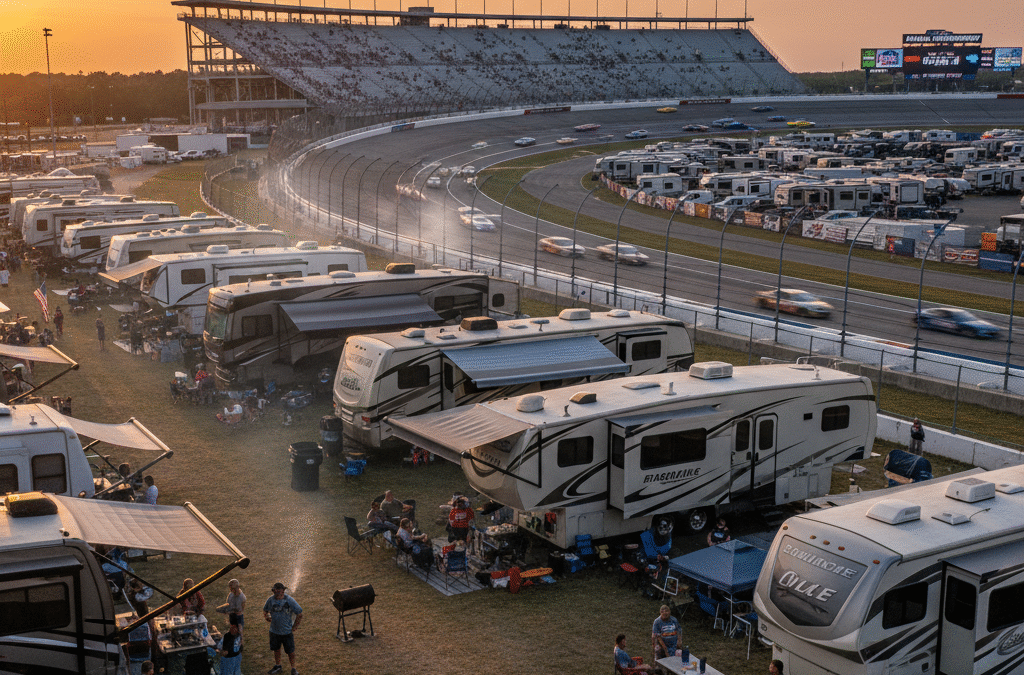
Planning your first trip to the Nashville Superspeedway is an exciting experience, but it can be overwhelming. This track, located in Lebanon, Tennessee, is a major hub for American motorsports. For RVers, camping at the track isn’t just an accommodation choice—it’s the only way to get the full, immersive race weekend experience.
This guide is built specifically for RV owners and first-time campers. We’ll skip the fluff and focus on the critical logistics you need to know, from choosing the right campground and understanding the rules to navigating tailgating, tickets, and what you can bring inside.
What’s Happening at Nashville Superspeedway?
Nashville Superspeedway hosts several major racing events throughout the year, with its calendar anchored by the NASCAR Cup Series. The track is a 1.33-mile D-shaped oval known for its concrete surface, which provides a unique challenge for drivers and teams. The 2026 NASCAR Cup Series event is the Cracker Barrel 400, scheduled for Sunday, May 31, 2026.
In addition to its NASCAR triple-header (Cup, Xfinity, and Truck Series), the speedway also hosts other events, including the Borchetta Bourbon Music City Grand Prix for the NTT IndyCar Series, scheduled for Sunday, July 19, 2026, which brings a different style of open-wheel racing to the venue. Always check the official speedway schedule for the most up-to-date event calendar, as concert series and other festivals are also held here.
The Ultimate RVer’s Guide to Camping at the Speedway
This is the heart of the Nashville Superspeedway experience. Camping at the track puts you in the center of the action for the entire weekend. The speedway offers several distinct camping areas, each with different amenities, rules, and atmospheres. Choosing the right spot is key to your trip.
Unlike many tracks, Nashville offers a wide range of options, from full-service hookup sites to massive, traditional dry-camping lots where the party goes all weekend. Booking is essential and typically done directly through the speedway’s website or ticket office.
Nashville Superspeedway Campground Comparison
Here is a breakdown of the primary camping areas. Availability and specific rules may change, so always verify with the official camping guide for your event.
Campground
Hookups (Amenities)
Typical Vibe & Location
Generator Rules (General)
Geico Glade
Electric & Water Hookups
Premium, reserved. Located in the infield, offering a prime view of the track. Quieter than other lots.
Use is discouraged as sites have power. Restrictions apply.
Music Row
Dry Camping (No hookups)
The largest and most social lot. This is the classic, lively “boondocking” experience.
A smaller, reserved dry camping lot, offering a more controlled environment than the larger open lots.
Permitted except during quiet hours.
Key Camping Rules & Logistics
While the official guide is your final source, here are the core rules every RVer must know:
Generator Hours: In all dry camping lots (like Music Row and Fiddler’s Flats), generators are a necessity. However, you must observe quiet hours. As a general rule, generators are prohibited from approximately 11 PM to 7 AM. This is strictly enforced for the comfort of all campers.
Pet Policy: Pets are allowed in the campgrounds but must be kept on a leash at all times when outside your RV. You are responsible for cleaning up after your pet immediately. Pets are not permitted in the grandstand or admission gate areas.
Fires: All campfires must be in an approved, self-contained, off-ground fire pit or container. Open ground fires are not permitted.
Quiet Hours: Beyond generator use, general quiet hours are enforced from 11 PM to 7 AM. This helps ensure a good experience for families and those needing to rest.
Water & Pumping: For dry campers, mobile water-fill and sewer-pumping services are typically available for a fee. You can schedule these services by calling the number provided in your welcome packet.
How to Buy Tickets & Find Your Seat
The only way to guarantee legitimate tickets is to purchase them directly from the Nashville Superspeedway website or its official partners, like Ticketmaster. For major NASCAR weekends, tickets can sell out, so it’s best to buy well in advance.
Your ticket options typically include:
Weekend Packages: This is the best value, bundling all races (e.g., Truck, Xfinity, and Cup) into one price.
Single-Day Tickets: You can purchase tickets for just Friday, Saturday, or Sunday.
Premium Seating: The track offers various suite packages and premium club-level seating for an upgraded experience with food and beverage inclusions.
The main grandstand stretches along the front straightaway, providing a view of the pits and the start/finish line. Higher seats generally offer a better, more comprehensive view of the entire 1.33-mile track.
Your Guide to Parking & Tailgating
This is one of the most important parts of your race-day logistics, and it’s where a lot of first-timers get confused. Parking and tailgating are two distinct activities, but they happen in the same place.
Parking Logistics: Costs & Lots
Parking at Nashville Superspeedway varies significantly by event and day. The previous common knowledge of a flat $20 fee is incorrect and will lead to issues on race day.
For major race weekends, parking passes must often be purchased in advance. Expect prices to be event-specific: a Sunday-only pass for the Cup race might be $60, while a full weekend pass could be $100. Conversely, some smaller events or practice/qualifying days may offer free general parking in designated lots. Your best and only source of truth is to check the official event page for your specific race to see the costs and purchase your pass.
The Official Tailgating Guide: It’s Allowed!
Let’s be perfectly clear: Tailgating is absolutely permitted and encouraged at Nashville Superspeedway. It is a massive part of the fan culture and a central part of the race weekend experience.
The general rule for tailgating is straightforward: if it fits in your designated parking space, it’s allowed. You are welcome to bring and use:
Pop-up canopies or tents (typically 10’x10′ or smaller)
Grills (both gas and charcoal are usually allowed, but be safe)
Coolers with food and beverages
Chairs and other comfort items
You must be respectful of your neighbors, not block drive aisles, and safely extinguish all grills or fires before leaving your vehicle. This festive atmosphere is what makes race day special, so plan to arrive early and take part.
What to Bring: Track Policies & Fan Amenities
Knowing what you can and cannot bring into the grandstand area is essential for a smooth entry. While campground rules are relaxed, the admission gates for the seating area are strict.
Allowed & Prohibited Items
Gate policies vary by event. For the 2026 Music City Grand Prix, the official Fan Guide allows one clear bag or backpack no larger than 18″x18″x14″ and one clutch no larger than 4.5″x6.5″; coolers are not listed as permitted. NASCAR-event rules may differ. Check the current event’s official Fan Guide immediately before packing, because an older speedway policy or another event’s policy may not apply.
On-Site Amenities
Once inside the gates, the speedway operates a “Fan Zone” area. This is where you’ll find team merchandise haulers, sponsor displays, interactive exhibits, and a wide variety of food and beverage concession stands. Restrooms and first-aid stations are also located throughout the concourse.
Key Resources for Race Weekend
This article is a guide, but the official track resources are your source of truth for last-minute changes.
The Official Fan Guide: This is the most critical document. It has maps, schedules, and the full A-to-Z policy list.
The RV Camping Map & Guide: This PDF shows the layout of all campgrounds, check-in procedures, and detailed rules.
The Official Track Policies/Allowed Items Page: Review this page the day before you leave.
Frequently Asked Questions
Is tailgating allowed at Nashville Superspeedway?
Yes, tailgating is not only allowed but encouraged at Nashville Superspeedway. It is a major part of the fan experience. You are welcome to bring grills, coolers, and pop-up tents as long as they fit within your designated parking space.
How much does parking cost at Nashville Superspeedway?
Parking costs are event-specific and are not a flat rate. For major NASCAR weekends, a Sunday-only pass might be $60, while a full weekend pass could be $100. Some smaller events may offer free general parking. It is essential to check the official event page for the most current pricing and to purchase parking in advance.
Are pets allowed in the Nashville Superspeedway campgrounds?
Yes, pets are generally allowed in the campgrounds, but they must be leashed at all times when outside your RV. Owners are responsible for cleaning up after their pets. Always check the specific rules for your campground, as policies can differ.
What are the generator hours for RV camping?
Generator hours vary by campground. In most dry camping lots like Music Row, generators are permitted except during designated quiet hours (typically from 11 PM to 7 AM). In lots with hookups, like Geico Glade, generator use may be more restricted. Always refer to the official camping guide for your specific event.
Conclusion
We hope this guide has provided you with all the information you need to have an amazing time at Nashville Superspeedway. From the thrilling racing action on the track to the delicious food and beverage options, there is something for everyone to enjoy. If you have any questions or need further assistance, please don’t hesitate to reach out to the friendly staff.
Resources
Nashville Superspeedway Official Website: https://www.nashvillesuperspeedway.com/ This is the official website for the Nashville Superspeedway and will provide the most accurate and up-to-date information on events, tickets, and other important details.
NASCAR Official Website: https://www.nascar.com/ NASCAR is the most prominent racing series hosted at Nashville Superspeedway. Linking to the official NASCAR website will provide your readers with more information about the races and events taking place at the track.
Tennessee Department of Transportation (TDOT) SmartWay: https://smartway.tn.gov/traffic This website provides real-time traffic updates and road conditions for Tennessee. This can help your readers plan their travel to and from the Nashville Superspeedway more efficiently.
Visit Music City (Nashville’s Official Tourism Website): https://www.visitmusiccity.com/ Since the Nashville Superspeedway is located near Nashville, linking to the official tourism website will provide your readers with additional information about local attractions, accommodations, and other activities to enjoy during their visit.
Lebanon Chamber of Commerce: http://www.lebanonwilsonchamber.com/ As Nashville Superspeedway is located in Lebanon, TN, linking to the local Chamber of Commerce website will give your readers more information about the surrounding community, as well as local businesses and services that might be of interest during their visit.
Ah, primitive camping. The very phrase conjures images of crackling fires under star-dusted skies, far from the madding crowds and the tyranny of…flush toilets. It’s a siren song for those of us yearning to disconnect from the relentless digital hum and reconnect with something older, something wilder. We’re not talking about glamping here, no sir. Forget the heated yurts and artisanal s’mores kits. This is about stripping away the artifice, embracing self-sufficiency, and pitching your tent in the quiet embrace of state parks, national forests, and the often-overlooked expanses of BLM land.
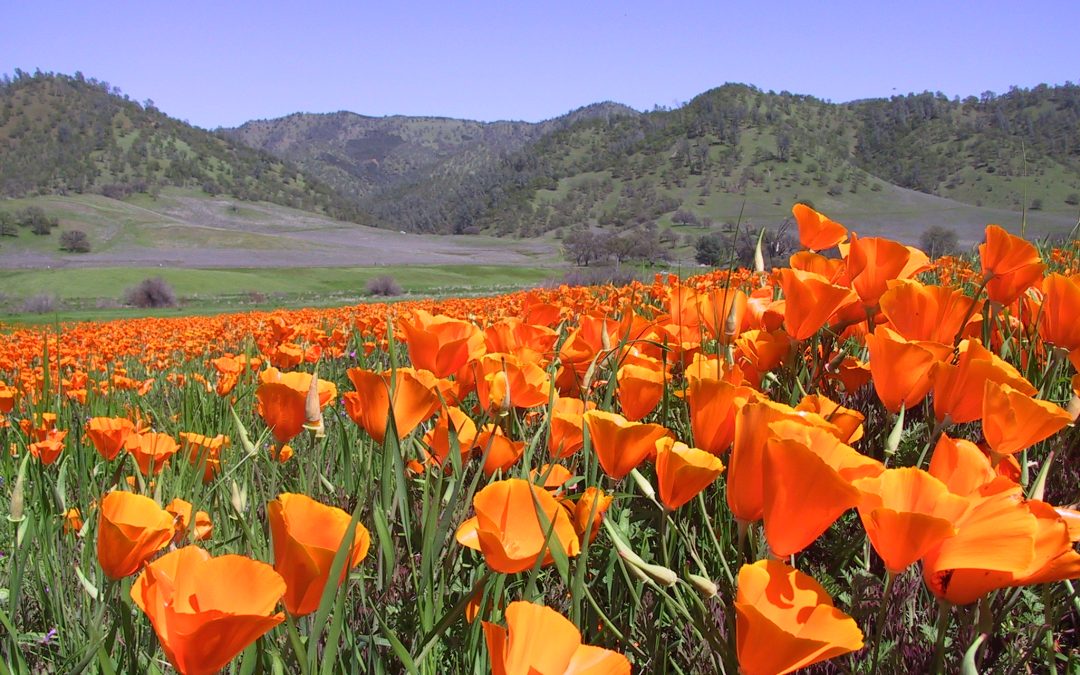
California, bless its sprawling heart, holds a secret that few other states can boast: a wealth of free, dispersed camping opportunities. We’re talking about the vast holdings of the USDA Forest Service and the Bureau of Land Management, landscapes practically begging to be explored by the intrepid adventurer on a budget. But why bother, you ask? Why forsake the creature comforts for a patch of dirt and a chorus of crickets? Perhaps the answer lies in the profound sense of liberation that comes from self-reliance, the quiet joy of navigating the natural world on its own terms.
From Ancient Fires to Digital Maps: A Brief History of Roughing It
The urge to immerse oneself in nature, to sleep beneath the open sky, is hardly a modern invention. Primitive camping, in its essence, is as old as humanity itself. Long before REI and freeze-dried meals, California’s Indigenous peoples were the original masters of this art. They were not merely “camping,” of course; they were living in intimate reciprocity with the land, employing sophisticated techniques like cultural burning to shape and sustain healthy ecosystems. This wasn’t a weekend getaway; it was a way of life, a deep and abiding connection to place.
The romantic notion of “the great outdoors” as a recreational pursuit began to take root in the late 19th and early 20th centuries, fueled by the rapid growth of cities and a corresponding yearning for respite in nature’s embrace. The Yosemite Grant of 1864 and the establishment of Big Basin Redwoods State Park in 1902 marked pivotal moments, enshrining the idea of protected spaces dedicated to public enjoyment.
However, with increased access came increased responsibility. The mid-20th century witnessed the rise of the “minimum impact” movement, a growing awareness of the need to tread lightly upon the land. This culminated in the formalization of the Leave No Trace principles in 1994 – a simple yet profound ethos: pack it in, pack it out, respect the delicate balance of the natural world.
The Current Vibe: Solitude, Rules, and a Bit of a Squeeze
Today, the allure of primitive camping remains potent. Campers are drawn to the promise of solitude, the freedom to chart their own course, and the symphony of silence broken only by the rustling of leaves and the hooting of owls. And let’s not forget the undeniable appeal of “free.”
Of course, this freedom comes with a price: self-sufficiency. There are no toilets, no potable water, no conveniently placed trash cans. You are your own concierge, responsible for bringing everything you need and packing everything out.
Where does one find these idyllic, unserviced havens? The classics include Steiner Flat, Glass Creek, Pinnacle Rock, and stretches of the Sonoma Coast. Then there are the hidden gems: the elusive yellow-post campsites scattered throughout Southern California (particularly around Big Bear), remote trailheads, and those tantalizing mountain back roads, often accessible only with a trusty 4×4. And for the RV aficionados, there’s the freedom of boondocking on BLM or National Forest land – simply find a level spot and settle in (responsibly, of course).
But before you pack your gear and head for the hills, heed this warning: the rulebook is your bible.
Permits, Permits, Permits: Wilderness permits (to manage overcrowding), campfire permits where required by the land manager, especially for open flame outside developed campgrounds on U.S. Forest Service land, and, in some cases, parking passes. Always, always check with the local ranger station.
Stay Limits: Don’t overstay your welcome! Most BLM lands impose a 14-day limit within a 28-day period. After that, move as required by the local BLM field office; relocation distances vary by area.
Leave No Trace, Seriously: This isn’t merely a suggestion; it’s practically enshrined in law. Protect water sources by camping at least 100-200 feet away, bury human waste responsibly, and leave absolutely nothing behind but your footprints (and even those should be carefully placed).
The unfortunate truth is that primitive camping is experiencing a surge in popularity. Really popular. This leads to:
Overcrowding: The solitude you crave may prove elusive, particularly on weekends and in well-known areas.
Environmental Strain: More people inevitably translate to more trash, more waste, greater potential for wildfires, and increased damage to fragile ecosystems, a particularly grave concern in drought-stricken California.
“Sketchy” Encounters: Some campers have reported unsettling incidents, such as vehicles slowing down or observing illicit activities in remote locations, which can detract from the overall tranquility.
Hot Debates & Headaches: When Wild Gets Wilder
California’s untamed landscapes are not without their share of controversies and challenges.
The Wildfire Crisis: This is arguably the most pressing concern. Strict fire bans are commonplace, and illegal campfires pose a catastrophic threat, leading to devastating closures and ecological damage. Diligently checking local regulations is absolutely non-negotiable.
Accessibility vs. Preservation: How do we ensure that primitive camping remains accessible to all while safeguarding its inherent “primitiveness”? Remote areas can present significant challenges for individuals with mobility impairments, but the introduction of developed facilities would undermine the very essence of the experience.
The “Too Many Rules” Blues: Some campers express the sentiment that California’s regulations are overly restrictive compared to other states, making it increasingly difficult to discover truly dispersed camping opportunities.
The Homelessness Factor: In certain regions, illegal camping by homeless populations is a significant and growing issue, raising concerns about public health and environmental pollution and placing a considerable burden on local resources.
What’s Next for the Wild West of Camping?
The future of primitive camping in California is a complex tapestry woven with threads of increasing demand, environmental pressures, and evolving policies.
More People, Less Space: The demand for primitive camping is projected to continue its upward trajectory, but the land base remains finite. This will inevitably intensify the pressure on existing campsites and resources.
Climate Change on the Loose:
Wildfire Woes: Expect more frequent and intense wildfires, resulting in extended and more stringent fire bans and closures.
Water Woes: Prolonged droughts will lead to reduced water availability, algal blooms, and adverse effects on fishing opportunities.
Heat Waves: Extended recreation seasons may be tempered by an increase in dangerously hot days.
Sea Level Rise: Coastal primitive camping spots are increasingly vulnerable to the encroaching sea.
Policy Power-Ups:
Stricter Enforcement: Rangers are intensifying their efforts to enforce stay limits and waste disposal regulations.
Portable Toilets: Increased requirements for portable toilets in designated areas are being implemented.
AB 518 (Low-Impact Camping Areas Act): Enacted October 1, 2025, this law allows counties to opt into permitting low-impact camping areas with up to nine accommodations, no more than four of which may be RV spaces.
AB 618 (Discouraging No-Shows): For developed campgrounds, new rules are designed to penalize no-shows and last-minute cancellations, promoting more efficient resource allocation.
Rising Fees: The BLM’s long-term permit for participating Long-Term Visitor Areas remains $180 for the season; verify the current fee and dates with the responsible field office before arrival.
Tech Takes Over the Trail:
Smart Planning: AI-powered platforms like CampChimp are streamlining the process of finding and booking campsites, while onX Offroad, launched in 2019, maps many off-road routes and public-land boundaries, but users must still confirm legal access and current closures with the land manager.
Gear Upgrades: Tents and sleeping bags equipped with built-in sensors, portable solar power solutions, and advanced waste management systems are contributing to smarter, safer, and more environmentally responsible camping experiences.
Connectivity: Improvements in satellite and cellular networks are enhancing communication and emergency response capabilities in remote areas.
Ready to Roam? Plan Your Primitive Escape!
The allure of the wild calls, but responsible planning is paramount.
Be Prepared, Not Surprised: Thorough research, obtaining necessary permits, and ensuring self-sufficiency are your indispensable allies.
Respect the Rules: Regulations are in place to safeguard the very wilderness you seek to enjoy.
Embrace the Future: Leverage technology wisely, support innovative camping initiatives, and commit to being a conscientious steward of California’s precious wild lands. The future of primitive camping depends on it.
FAQs:
What are the best times to go primitive camping in California?
The best time to go camping in California is from May to October, especially for those who prefer warm weather. However, you should also be prepared for cold nights, especially in higher elevations. During winter, some primitive campsites are closed due to snow.
Is it safe to go primitive camping in California?
Primitive camping in California is generally safe, but it’s important to take precautions to ensure your safety. Keep an eye on the weather forecast and check for fire restrictions before starting a campfire. Also, be aware of wildlife in the area and keep your food stored safely.
Do I need a permit to go primitive camping in California?
Not all primitive camping sites in California require permits, but some do. It’s important to research the specific area you plan to camp in to find out if you need a permit. Wilderness permits are required for some areas and can be obtained from the appropriate government agency.
Can I bring my RV for primitive camping in California?
Yes, you can go RV camping in some primitive camping areas in California. However, not all campsites are suitable for RVs, so it’s important to research the specific area you plan to camp in.
Are there any amenities at primitive campsites in California?
Primitive campsites in California do not have amenities such as electricity or running water. Some campsites may have fire pits, but it’s important to check the specific area you plan to camp in to find out what amenities are available.
Resources
Inyo National Forest Official website of the Inyo National Forest, where the Glass Creek Campground is located. The website provides information about the national forest, including recreational opportunities, campgrounds, permits, and regulations.
Bureau of Land Management (BLM) – Recreation Official website for the Bureau of Land Management (BLM) recreation programs. This site offers information on BLM-managed lands, including camping opportunities, permits, and regulations.
USDA Forest Service – San Bernardino National Forest Official website for the San Bernardino National Forest, where many of the yellow-post campsites mentioned are located. This site provides information on campgrounds, permits, regulations, and recreational activities in the area.
US Forest Service – Camping & Cabins The official website of the U.S. Forest Service’s Camping & Cabins section. This site offers information on camping opportunities in national forests, wilderness permits, and Leave No Trace principles.
California State Parks – Camping & Lodging Official website for California State Parks’ camping and lodging information. The site provides details on camping opportunities in state parks, including primitive campgrounds, reservations, and regulations.
Conclusion:
Primitive camping in California offers a unique opportunity to experience the beauty of the state’s wilderness areas without the crowds and amenities of traditional campgrounds. From yellow post campsites to remote backcountry locations, there are plenty of options for those who want to rough it in California’s great outdoors.
When planning your primitive camping trip, be sure to research the specific area you plan to camp in to ensure that you are prepared for the conditions and requirements of the area. With proper planning and preparation, you can enjoy a safe and unforgettable primitive camping experience in California.
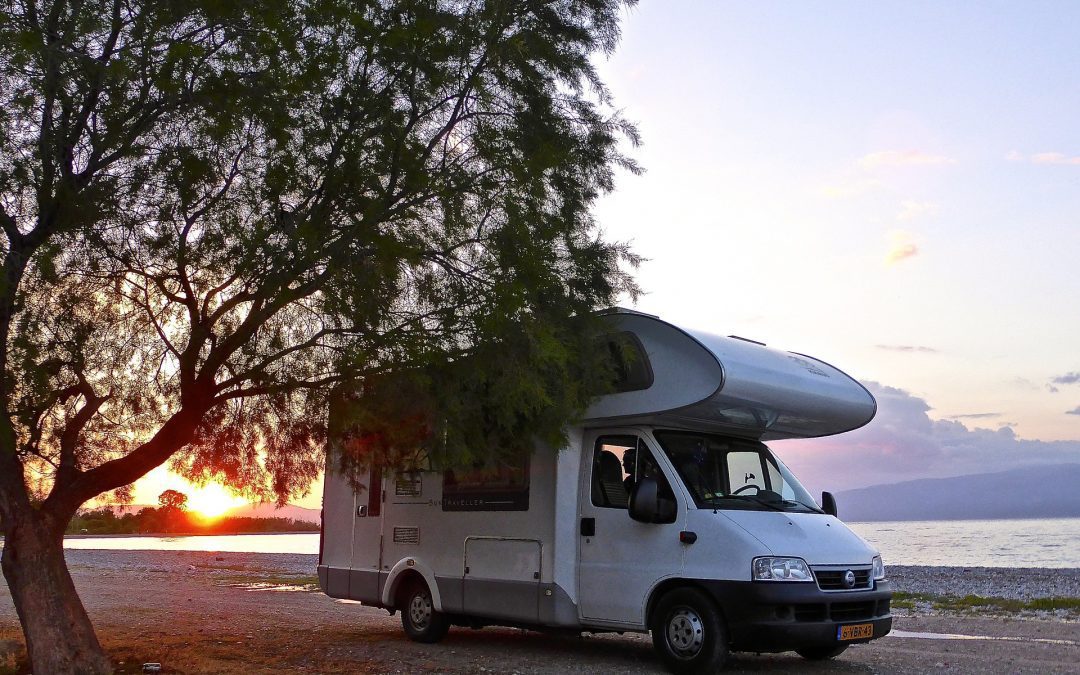
Waterfront RV parks are curated destinations offering dedicated spots for RVs with direct access to water bodies like oceans or lakes. They provide a blend of freedom, comfort, and immersion in nature, allowing RVers to wake up to beautiful views and enjoy the amenities of their own mobile homes.
Essential Elements of a Quality Waterfront RV Park
Full Hookups: Water, sewer, and power are considered non-negotiable.
Reliable Wi-Fi: Essential for digital nomads and general connectivity.
Clean and Well-Maintained Facilities: A fundamental requirement for any respectable establishment.
Location: A prime draw, offering stunning views of sunrises, sunsets, oceans, or lakes.
Recreational Access: Immediate proximity to activities like swimming, fishing, kayaking, or beach strolling.
Resort-Style Perks: Desired amenities include pools, hot tubs, playgrounds, dog parks, and clubhouses. Some parks offer on-site restaurants.
Sense of Community: Opportunities for fellow travelers to connect and share experiences.
Pet-Friendliness: Welcoming environments for pets are highly valued.
Unreliable Wi-Fi: Spotty internet connectivity is a frequent complaint.
Cramped and Uneven Sites: Poorly maintained or tight parking spaces.
Neglected Facilities: A lack of upkeep in common areas.
Exorbitant Prices: High costs for premium waterfront locations.
Erosion of Rustic Charm: Concerns that an overemphasis on luxury is diminishing the traditional RVing appeal.
Historical Evolution of RV Camping
Early 1900s: “Auto camps” were rudimentary areas for tent camping beside vehicles, lacking basic amenities. Seaside stops were similarly informal.
Post-WWII (1950s-1960s): The rise of the American road trip and more sophisticated RVs led to an explosion in demand for dedicated RV parks. Pioneers like KOA emerged, offering essential amenities.
Increasingly Luxurious RVs: As RVs became more advanced, the desire for direct waterfront parking grew, leading to the development of coastal RV parks.
Focus on Wellness and Family: Growth in mental wellness trips, multi-generational adventures, and nostalgic road trips.
Digital Nomad Support: Dedicated co-working spaces and incentives for longer, work-friendly stays.
Conclusion
Waterfront RV parks have evolved from basic camping spots to sophisticated resorts, offering enriching experiences by America’s waterways. The industry is continuously adapting to new trends, technologies, and challenges, with a perfect spot available for various preferences, from breathtaking views to peaceful retreats.
Comprehensive Support, Discounts, and Resources for Over 40 Years
Ever dream of hitting the open road in your RV, the sun kissing your face, the wind whispering tales of freedom? But then the practicalities rear their head – mail, maintenance, the gnawing loneliness of a solitary journey. Or perhaps you’re a seasoned RVer, a veteran of countless campgrounds, but feel a yearning for something more, an edge, a deeper connection?
Enter Escapees RV Club, a name synonymous with worry-free, affordable, and – dare I say – fun RV adventures. More than just a club, it’s a meticulously crafted ecosystem designed to smooth out the bumps and amplify the joys of the nomadic life.
What’s truly in it for you, the intrepid traveler? Imagine a community forged in shared experiences, savings that stretch your travel budget further, and a treasure trove of resources that transform you from a wanderer into a confident explorer. Let’s unpack this intriguing organization and see if it holds the key to unlocking your ultimate RV dreams.
A Trip Down Memory Lane: How Escapees Paved the Way
The story of Escapees is, at its heart, a deeply human one. In 1978, Joe and Kay Peterson, kindred spirits united by their love for the open road, recognized a void in the RV community. Their “Sharing and Caring” vision was born from necessity – solving real-world problems like reliable mail services and fostering a sense of belonging amidst the transient lifestyle. They sought to build a supportive network, a family on wheels, for those who chose to embrace the unconventional.
From this humble beginning, a vibrant network blossomed. The first Escapade rally in 1979 marked the beginning of in-person connections, solidifying the community. The SKP Co-Op parks, established in 1982, offered affordable and welcoming havens for members. Birds of a Feather groups, emerging in 1984, allowed RVers to connect based on shared interests, hobbies, and life stages. And in 1985, the legendary mail forwarding service was launched, providing a stable lifeline for full-time travelers.
The narrative took an exciting turn in 2015 with the birth of Xscapers. This signaled a crucial evolution, shattering the misconception that Escapees was solely for retirees. Xscapers embraced the burgeoning community of working nomads, proving that the RV lifestyle could be a viable option for those still climbing the career ladder, thus injecting fresh energy and perspectives into the established framework.
Today’s Roadmap: What Escapees Offers Now
Escapees proudly boasts a “Total Support Network,” a holistic approach to addressing the multifaceted needs of RVers. Let’s delve into some key components:
Mail Call, Anywhere: The mail forwarding service remains a cornerstone, a reliable home base address that transcends geographical limitations. It’s more than just convenience; it’s a vital link to the stationary world, often accepted by banks and other institutions, allowing full-timers to maintain essential services.
Roadside Heroes: We all know that things break. That’s where 24/7 roadside assistance comes in, offering peace of mind knowing that help is just a phone call away when those inevitable hiccups occur on the road.
Brains & RVs: Education is empowerment. Escapees provides a plethora of educational programs, ranging from immersive Boot Camps to the accessible Online University. SmartWeigh ensures your rig is safe and compliant, while the classic Escapees Magazine keeps you informed and entertained.
Your Tribe Awaits: Community is the lifeblood of Escapees. Dive into a rich tapestry of gatherings – Escapades (the large rallies), Xscapers Convergences (aimed at the working nomad), Hangouts, HOPs (Hosted Overnight Parking), and the ever-popular Birds of a Feather groups. These connections foster friendships, mentorship, and a sense of belonging that combats the isolation often associated with long-term travel.
Beyond these core offerings, Escapees sweetens the deal with a treasure trove of discounts. Imagine saving 15-50% on campground fees, plus deals on RV products, insurance, tires, and even memberships to other valuable services like Harvest Hosts!
But Escapees goes beyond personal benefit. They actively engage in RVer advocacy, protecting the rights of RVers and fighting for access to public lands.
Bumps in the Road? Unpacking the Controversies
No organization is without its critics. It’s crucial to acknowledge and examine the occasional controversies that arise within the Escapees community.
Park Potholes & Perfection: Some members voice concerns about the maintenance levels in certain SKP Co-Op parks, a stark contrast to the rising costs of private campgrounds. Balancing affordability with upkeep is a perennial challenge.
The “Mistreatment” Myth? Reports of negative experiences at parks do surface from time to time, highlighting the importance of managing expectations and fostering respectful interactions within the community.
Speaking Your Mind (or Not): The Code of Conduct, designed to promote harmony, prohibits discussions about religion and politics at Escapees events. While intended to create a safe space for all, this policy has drawn criticism from those who believe it stifles free expression.
The Mail Forwarding Conundrum: While widely praised, the mail forwarding service isn’t without its complexities. The Patriot Act implications raise concerns about privacy, and the ongoing debate regarding financial institutions accepting forwarding addresses as physical residences continues to simmer.
The Future’s Horizon: What’s Next for Your RV Journey
The landscape shifted dramatically in July 2024 with the acquisition of Escapees RV Club by Harvest Hosts. This is not merely a merger, but a strategic alignment of forces, promising to reshape the future of RVing. Harvest Hosts is now at the helm of membership, events, and education, while the Carr family maintains control over mail forwarding and SKP parks.
So, what does this mean for the average RVer?
What Stays the Same: The beloved events, the distinct focus of Xscapers, and the pledge of no immediate fee hikes should reassure existing members. The two entities retain their separate identities, at least for now.
What Might Change: The acquisition opens doors to potentially enhanced educational offerings and expanded event experiences, leveraging the strengths of both organizations.
Furthermore, several broader industry trends are driving the RV wave and influencing the future of Escapees:
Community is King: The intrinsic human desire for connection is amplified on the road, making Escapees’ community-building efforts more vital than ever.
Digital Nomads Roam: Remote work fuels longer stays and a demand for specific amenities, prompting Escapees to adapt to the needs of this growing demographic.
Younger Wheels on the Road: Gen Z and Millennials are embracing the RV lifestyle in droves, bringing fresh perspectives and technological savvy to the community.
Green Machines: The shift towards sustainable and electric RVs necessitates education and infrastructure development, areas where Escapees can play a crucial role.
Tech-Enabled Travels: Smart RVs and advanced safety systems are transforming the RV experience, requiring RVers to stay abreast of the latest technological advancements.
Looking ahead, exciting adventures await! Keep an eye out for future events like the DND Odyssey and the Xscapers Annual Bash, offering opportunities to connect, learn, and explore.
FAQs
Q1: What is the Escapees RV Club, and how long has it been in operation?
A1: The Escapees RV Club is one of the oldest, largest, and most popular RV membership organizations in the world, and it has been serving RVers for over 40 years.
Q2: What benefits does the Escapees RV Club offer to its members?
A2: The Escapees RV Club offers a variety of benefits to its members, including a mail forwarding service, 24/7 roadside assistance, educational resources, and a tight-knit community of like-minded RVers.
Q3: What is the mail forwarding service offered by the Escapees RV Club?
A3: The mail forwarding service offered by the Escapees RV Club allows members to have their mail and packages securely delivered to a permanent address, even while they’re on the move.
Q4: What kind of educational resources does the Escapees RV Club offer?
A4: The Escapees RV Club offers a range of educational resources, including RVers Boot Camp, RVers Online University, SmartWeigh, and Escapees magazine, to help members enhance their RVing knowledge and skills.
Q5: Why should I join the Escapees RV Club?
A5: Joining the Escapees RV Club offers a comprehensive support network for all RVers, making your travels worry-free, affordable, safe, and enjoyable. With over 40 years of experience and a mission to provide valuable resources and services, it’s a valuable resource for anyone looking to make the most of their RVing journey.
Overall, whether you’re a seasoned RVer or just starting, the Escapees RV Club can help you make the most of your RVing adventures. With a range of benefits, including support services, educational resources, and a tight-knit community, you can ensure that your RV travels are worry-free, affordable, safe, and enjoyable.
Conclusion:
Escapees RV Club, now interwoven with the expansive network of Harvest Hosts, stands as a testament to the enduring power of community, education, and support in the world of RVing. It’s not just about finding a place to park your rig; it’s about finding your place within a vibrant and welcoming community.
The mission that began with Joe and Kay Peterson’s simple act of “Sharing and Caring” continues to resonate today. As the RV lifestyle evolves, Escapees remains a constant, adapting to the changing needs of its members while staying true to its core values.
So, I ask you, are you ready to embark on an extraordinary RV adventure? Explore how Escapees can transform your RV dreams from mere possibilities into breathtaking realities. The open road awaits, and with Escapees as your guide, the journey promises to be richer, more rewarding, and undeniably unforgettable.
Resources
Escapees RV Club Official Website (https://www.escapees.com/): The official website of the Escapees RV Club, where you can find comprehensive information about the club, its benefits, resources, and events, as well as instructions on how to become a member.
RVers Online University (https://www.rversonlineuniversity.com/): An online educational platform provided by the Escapees RV Club, offering various courses and resources designed to enhance your RVing knowledge and skills, ranging from RV maintenance to trip planning.
Escapees Magazine (https://www.escapees.com/escapees-magazine/): The official magazine of the Escapees RV Club, featuring articles on RV lifestyle, travel destinations, technical advice, and personal stories from fellow RVers. Access to the digital edition of the magazine is included in the club membership.
RVers Boot Camp (https://www.escapees.com/education/rvers-boot-camp): An in-person training event offered by the Escapees RV Club, focusing on essential RV knowledge and safety practices, with experienced instructors sharing their expertise in a classroom setting.
SmartWeigh Program (https://www.escapees.com/education/smartweigh/): A service provided by the Escapees RV Club that offers an accurate and thorough weighing of your RV, helping to ensure safe and optimal tire inflation, weight distribution, and overall vehicle handling while on the road.
What exactly constitutes an RV? Is it merely a vehicle, or does it transcend that definition? It’s undoubtedly more than just a mode of transportation; it’s your mobile haven, a personal sanctuary that accompanies you wherever the asphalt ribbon unfurls. From compact camper vans, embodying minimalist charm, to sprawling, luxurious motorhomes replete with amenities, RVs offer an unmatched travel experience, a sense of freedom that’s hard to replicate.
But here’s the rub: this rolling sanctuary demands attention. Why, you ask, should one be so concerned with maintenance? Because neglect transforms the dream into a logistical nightmare. Imagine a meticulously planned cross-country trip derailed by a preventable mechanical failure. The price of apathy isn’t just monetary; it’s measured in lost experiences and shattered expectations. This guide isn’t just a manual; it’s your co-pilot, charting a course towards stress-free RV ownership.
A Trip Down Memory Lane: How RV Maintenance Hit the Road
Let’s embark on a nostalgic journey, tracing the evolution of RV maintenance through the decades.
The “Tin Can Tourists” Era (Early 1900s – 1960s): Picture this: the open road, rudimentary campsites, and RVs that were often more “makeshift” than “manufactured.” These early RVs were often ingeniously modified automobiles, with beds cleverly integrated. Maintenance during this epoch was a decidedly DIY affair. Owners, armed with basic tools and fueled by sheer ingenuity, tackled repairs themselves. Think roadside interventions for the ubiquitous tire blowouts, grappling with cantankerous engine woes, and battling leaky wooden roofs that seemed determined to let the elements in.
The Rise of Amenities (1970s – 1990s): As RVs evolved, so did their complexity. The introduction of air conditioning, refrigerators, and intricate plumbing systems marked a turning point. Suddenly, maintenance demanded a level of expertise that extended beyond basic tinkering. Dedicated RV repair shops began to emerge, catering to the growing demand for specialized service. Yet, despite the rise of professional assistance, DIY remained a prevalent ethos among RV owners. Leaks remained a persistent annoyance, tire issues continued to plague travelers, and finicky appliances often tested the patience of even the most seasoned RVers.
The Smart RV Revolution (2000s – Present): Fast forward to the present, and we find ourselves in an era of technological marvels. Modern RVs are, in essence, smart homes on wheels. Sophisticated technology, solar panels, and intricate electrical systems have become commonplace. Maintenance has transformed into a hybrid discipline, blending proactive inspections with specialized diagnostics. Technology now plays a crucial role, enabling us to anticipate potential problems before they escalate into trip-ruining disasters.
The Good, The Bad, and The Leaky: Current RV Maintenance Landscape
The current landscape of RV maintenance presents a multifaceted picture, a blend of best practices, potential pitfalls, and ongoing challenges.
The Essential Checklist: Your RV’s Annual Physical: Regular maintenance is the cornerstone of RV longevity, the undisputed champion in preventing costly breakdowns. Consider it your RV’s annual physical, a comprehensive assessment to ensure optimal health. This entails a range of proactive measures, from meticulously checking tire pressure before each journey to scheduling annual professional brake services. Don’t overlook the importance of monthly sealant inspections, quarterly battery checks, and the often-dreaded but essential yearly roof resealing. And lest we forget, remember to run that generator periodically to keep it in prime condition, preventing it from seizing up during a crucial moment.
The DIY Dilemma: When to Grab the Wrench, When to Call a Pro: A perennial question plagues RV owners: when is it appropriate to tackle repairs oneself, and when is it prudent to seek professional assistance?
DIY Wins: The allure of DIY is undeniable. It offers the opportunity to save money, gain an intimate understanding of your RV’s inner workings, and experience the satisfaction of a job well done. Simple tasks, such as replacing fuses, cleaning filters, or repairing a minor faucet leak, are well within the capabilities of most RV owners.
Pro Power: However, there are situations where the expertise of a professional is indispensable. Complex electrical issues, major engine work, extensive water damage, or any repair that impacts safety should be entrusted to qualified technicians. They possess the specialized tools, diagnostic equipment, and in-depth knowledge necessary to address these challenges effectively.
The Hard Truth: A sobering statistic underscores the importance of proper maintenance: approximately 70% of RV failures stem from inadequate upkeep. While the initial appeal of a “cheap” DIY fix may be tempting, it can often lead to significantly more expensive and complex problems down the line.
Common RV Catastrophes (and How to Dodge Them): RV ownership, while rewarding, comes with its own set of potential pitfalls. Let’s examine some common RV catastrophes and explore strategies to mitigate their impact:
The Dreaded Leak: Leaks are the bane of RV owners, capable of causing extensive water damage and fostering mold growth. Roofs, windows, and plumbing connections are particularly vulnerable. Regular inspections, coupled with prompt resealing, are your most effective defenses against these insidious invaders.
Tire Terror: Tire blowouts can be catastrophic, jeopardizing safety and disrupting travel plans. Underinflation, overloading, and the use of aged tires are major contributing factors. Always check tire pressure before each trip, meticulously inspect tires for signs of wear and tear, and replace them every 5-7 years, regardless of tread depth. Investing in a Tire Pressure Monitoring System (TPMS) can be a game-changer, providing real-time alerts of pressure fluctuations.
Battery Blahs: A dead battery can leave you stranded, disrupting your travel plans. Parasitic drains, old age, and charging system malfunctions are common culprits. Keep battery terminals clean, replenish water levels (for lead-acid batteries), and ensure batteries are adequately charged.
Electrical Gremlins: Electrical problems can range from minor inconveniences to serious safety hazards. Faulty wiring, blown fuses, and power surges are common occurrences. Regularly inspect wiring, use surge protectors to safeguard against voltage spikes, and avoid overloading circuits.
Plumbing Pains: Plumbing issues, such as leaks, clogs, and foul-smelling tanks, can quickly transform your RV experience from pleasant to unpleasant. Use RV-safe toilet paper, avoid pouring grease down drains, and diligently drain and flush holding tanks. And, crucially, winterize your plumbing system if you reside in a region prone to freezing temperatures.
Slide-Out Snafus: Slide-outs enhance living space but are susceptible to mechanical problems and water damage. Lubricate and inspect seals regularly to prevent costly repairs.
RV Rumble: Controversies & Debates in the Community
The RV community, while united by a shared passion for travel, is not without its share of controversies and ongoing debates. These discussions, often spirited, reflect the diverse perspectives and priorities within the RVing world.
The “10-Year Rule”: Ageism in RV Parks? A contentious issue revolves around the “10-year rule,” a policy adopted by many private campgrounds that prohibits RVs older than ten years, regardless of their condition. Proponents argue that this rule maintains park aesthetics and safety standards. Conversely, critics contend that it unfairly discriminates against owners of well-maintained vintage RVs. This debate often ignites passionate exchanges.
Toilet Paper Wars & Tank Talk: Seemingly trivial questions, such as whether to flush regular toilet paper or use specialized RV toilet paper, and whether to keep gray tanks open or closed at full hookup sites, spark surprisingly passionate debates in RV forums and online communities.
Quality Control Crisis: A growing chorus of RVers laments a perceived decline in the manufacturing quality of new RVs. Frequent breakdowns, coupled with “serial recalls,” fuel frustration with warranty service delays and prompt ongoing discussions about the merits of DIY repairs versus seeking professional assistance.
Tank vs. Tankless Water Heaters: Which provides the superior hot shower experience on the road? The debate over the relative merits of traditional tank water heaters versus modern tankless systems continues to rage, with proponents on both sides touting the benefits of their preferred technology.
Propane vs. Lithium Batteries: The Power Struggle: The debate over the optimal power source for RVs continues, pitting traditional propane systems against newer lithium battery technologies. Propane is a well-established, reliable option, but it is heavy and requires regular maintenance. Lithium batteries offer faster charging and longer lifespan, but come with higher upfront costs and necessitate careful consideration of installation safety.
The “Illegal” DIY Fixes: The RV community is replete with anecdotes (and cautionary tales!) about unconventional DIY solutions, such as employing garden hose clamps to repair propane leaks or relying on Flex Seal as a universal sealant. While these temporary fixes may seem appealing, they can lead to significant, and potentially dangerous, problems.
Regulatory Roadblocks: The regulatory landscape surrounding RVs is often complex and inconsistent. Driver licensing requirements for large RVs vary significantly from state to state, and overnight parking bans in numerous areas force drivers to continue driving while exhausted, raising safety concerns. Furthermore, increasing environmental regulations are pushing for cleaner, greener RVs, impacting both manufacturers and consumers.
The Road Ahead: Future Tech & Trends in RV Maintenance
The future of RV maintenance is poised for significant transformation, driven by technological innovation and evolving consumer expectations.
Smarter RVs, Smarter Maintenance:
AI & IoT to the Rescue: Imagine a future where sensors predict engine trouble before it manifests, or your RV autonomously alerts you when it’s time for a tire check. Predictive maintenance, powered by artificial intelligence (AI) and the Internet of Things (IoT), is rapidly transforming RVs into self-aware entities.
App-Controlled Everything: Soon, your smartphone will serve as the ultimate RV remote control, managing everything from lighting and temperature to tank levels and security cameras. Systems like Lippert OneControl are already paving the way for this level of seamless integration.
Electrifying Adventures:
Electric RVs are Here (and Coming Soon!): All-electric and hybrid RV models are no longer a distant dream; they are a tangible reality. Manufacturers like Winnebago (with the eRV2) and THOR are pushing the boundaries of innovation, promising quiet, emission-free travel experiences.
Battery Breakthroughs: Advancements in battery technology, particularly lithium-ion and solid-state batteries, are yielding longer ranges (up to 500 miles!) and faster charging capabilities.
Solar Power Dominance: Integrated solar panels are poised to become standard features on RVs, offering true off-grid freedom and potentially rendering generators obsolete.
Regenerative Braking for Trailers: Envision a scenario where your towable RV recharges its own batteries while you drive, harnessing kinetic energy to extend your range.
Enhanced Comfort & Convenience:
Self-Parking & Auto-Leveling: The prospect of RVs that can autonomously park themselves and automatically level at campsites is rapidly approaching reality.
Customizable & Luxurious Interiors: Expect modular designs, space-saving furniture, heated floors, and even massage chairs to become increasingly common in RV interiors.
Advanced Water & Waste Management: Tankless water heaters, greywater recycling systems, and even self-cleaning waste tanks are on the horizon, promising greater convenience and environmental responsibility.
Safety First, Always:
Advanced Driver-Assistance Systems (ADAS): Advanced Driver-Assistance Systems (ADAS) such as blind spot monitoring, lane departure warnings, and autonomous braking will significantly enhance the safety of RV travel.
Comprehensive Camera Systems: Multi-angle camera systems with night vision and motion-sensing recording capabilities will provide enhanced security and situational awareness.
ABS for Towables: The adoption of anti-lock braking systems (ABS) on towable RVs will improve braking performance and enhance overall safety.
New Tools of the Trade: The tools and products used to maintain RVs are constantly evolving, from bleach-free sanitizers to specialized rust prevention products and high-tech tire pressure monitoring systems, maintaining your RV is becoming both easier and more effective.
Conclusion: Embrace the Journey, Maintain the Rig
Your RV is more than just a vehicle; it’s a passport to unforgettable experiences, a key that unlocks a world of adventure. By understanding its unique needs, diligently staying on top of maintenance requirements, and embracing emerging technologies, you can ensure countless happy trails and create lasting memories.
Whether you are a seasoned DIY enthusiast or prefer the expertise of professional technicians, consistent care is paramount to preventing costly breakdowns, saving money in the long run, and keeping your rolling sanctuary in optimal condition, ready for its next adventure.
Happy travels, and may your RV always be in tip-top shape, ready to embark on new journeys!
RV Maintenance FAQs
A. How often should I change my RV’s oil?
The oil in an RV should be changed every 3,000 to 5,000 miles or every six months, whichever comes first.
B. How do I winterize my RV?
To winterize an RV, drain and flush the water system, add antifreeze, remove batteries and propane tanks, and cover the RV.
C. How do I maintain my RV’s tires?
To maintain RV tires, check the tire pressure regularly, inspect the tires for wear and damage, and rotate the tires every 5,000 to 7,000 miles.
D. What should I do if my RV’s battery dies?
If your RV’s battery dies, jump-start the battery or replace it with a new one.
E. What is the best way to clean my RV’s roof?
To clean an RV’s roof, use a gentle cleaner and a soft-bristled brush or sponge, and rinse thoroughly with water.
F. Can I do my RV’s maintenance myself or should I hire a professional?
You can do some of your RV’s maintenance yourself, but it’s recommended to hire a professional for complex or dangerous repairs.
G. How often should I have my RV’s brakes inspected?
RV brakes should be inspected every 12 months or 12,000 miles, whichever comes first.
H. What are some common causes of water leaks in an RV?
Common causes of water leaks in an RV include damaged roof seals, cracked or damaged plumbing, and worn or damaged window seals.
I. How do I troubleshoot electrical issues in my RV?
To troubleshoot electrical issues in your RV, check the circuit breakers, fuses, and wiring, and inspect and repair or replace any damaged components.
Conclusion
In conclusion, regular maintenance and care are essential for the longevity and safety of your RV. By addressing common issues and performing routine and seasonal maintenance tasks, you can prevent expensive repairs and ensure a comfortable and enjoyable travel experience. Remember to take safety precautions when doing DIY repairs and keep track of maintenance schedules to stay on top of RV maintenance.
Thank you for reading this comprehensive guide on RV maintenance and repairs. We hope that you found it informative and helpful in maintaining your RV. If you have any further questions or concerns, feel free to reach out to us.


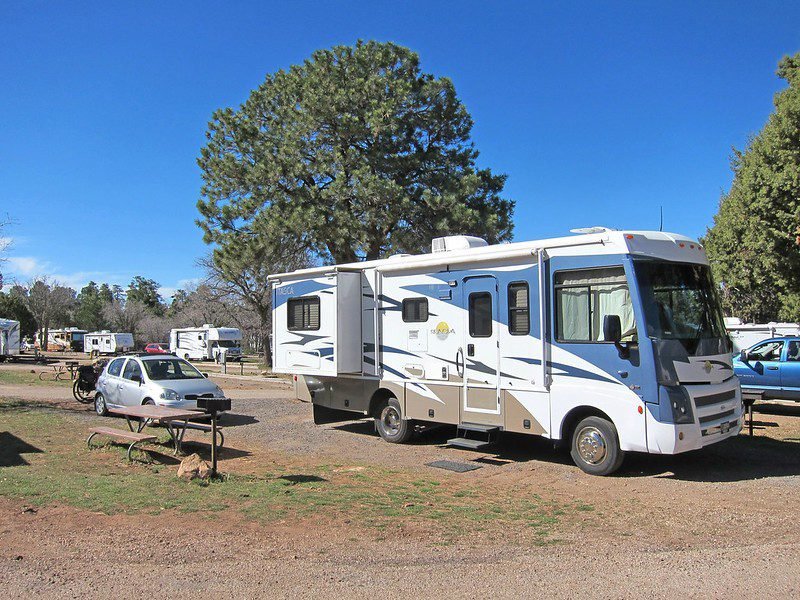
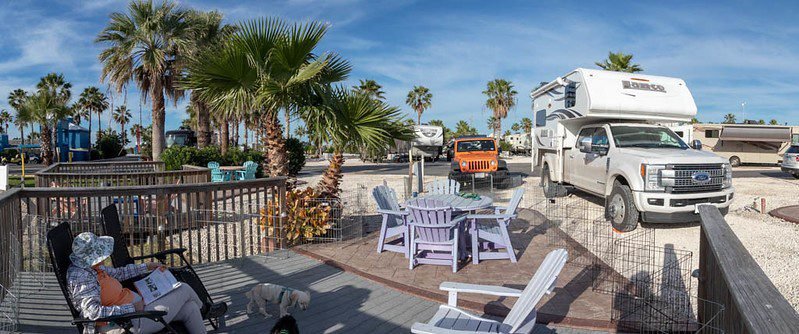
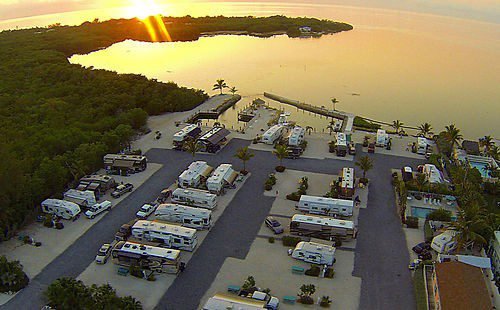
 Patagonia Lake State Park via ALAN SCHMIERER, CC0, via Wikimedia Commons