Disclosure: Viking Bags provided the Axwell tail bag featured in this review at no cost for testing purposes. My opinions remain my own, based on field use during a recent boondocking trip.
If you ride to your boondocking sites — or know someone who does — luggage choice is one of the most consequential decisions you make before the trip starts. Get it wrong, and you are either dragging a rig that handles like a loaded grocery cart on loose gravel or watching your gear get soaked through a rain squall at 5,000 feet.
This is not an article for track-day riders. It is for the moto-camper or van-lifer who rolls into a BLM dispersed site after 200 miles of paved road and a sketchy last ten miles of two-track. You need luggage that works on the bike and off it — at camp, on a day hike, and on the ride back.
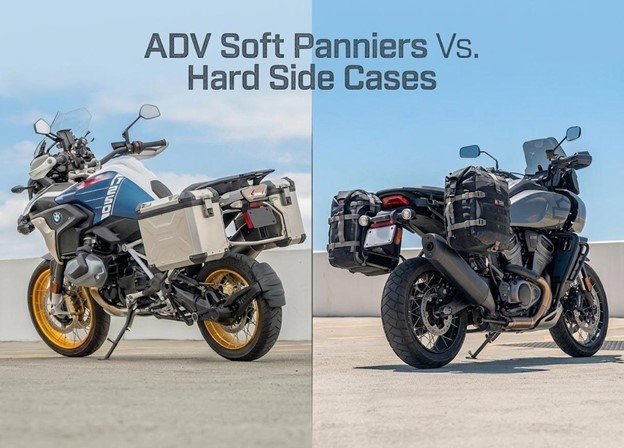
We recently tested the Viking Bags Axwell small motorcycle tail bag on a dispersed camping run into state forest land in the northeast. Notes from that trip are woven throughout. We also want to give you a usable breakdown of the hard case vs. soft pannier debate, because that choice shapes every packing decision you make downstream.
What Boondocking Does to Motorcycle Luggage
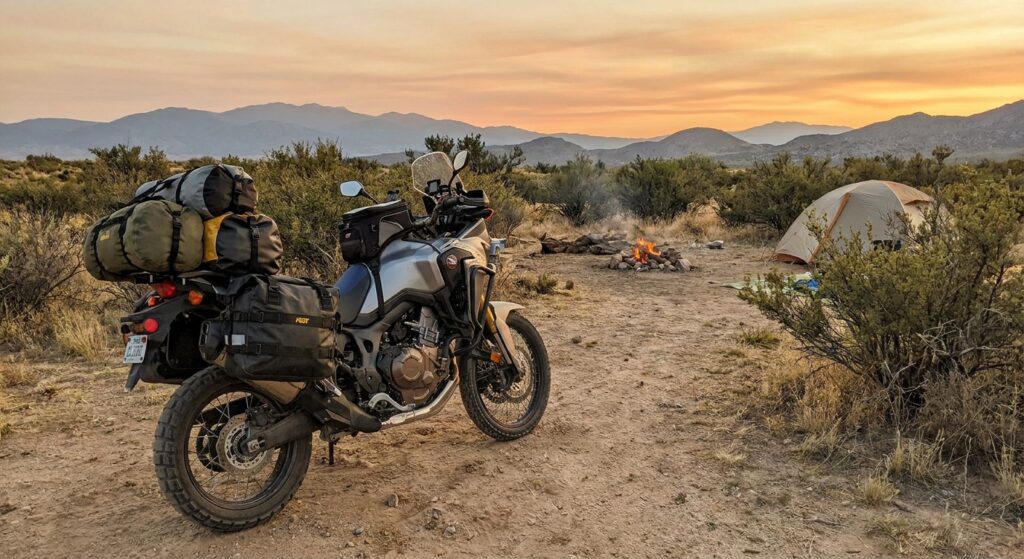
Boondocking on a bike is a different threat model than sport touring or a track ride. The stresses worth planning for:
- Extended miles on an unpaved surface. BLM two-tracks, National Forest access roads, and dispersed camping areas regularly involve five to fifteen miles of rough gravel or dirt before you reach your spot. Every bolt, zipper, and mounting bracket takes that vibration.
- Tip-overs at low speed. Loose gravel, ruts, and soft soil mean low-speed drops happen. Not to skilled riders on smooth terrain, to everyone on technical terrain.
- Weather exposure. Remote sites do not have a covered parking bay. Your gear sits on the bike overnight in whatever the sky decides to do.
- The “carry it to camp” requirement. At a dispersed site, you are often parking 100 to 200 yards from where you sleep. Your luggage doubles as pack-in gear. Weight and ergonomics matter off the bike, not just on it.
- 14-day move rule logistics. If you are doing proper BLM rotation — moving camp every 14 days — you are loading and unloading repeatedly in field conditions. Quick-release and easy access earn their keep fast.
Hard Aluminum Cases: What They Do Well for the Boondocker
Hard aluminum cases have a real place in the boondocking toolkit — specifically for riders who mix long pavement stretches with moderate off-road access. Here is where they earn their weight:
- Gear protection on tip-overs. When a loaded bike goes down on rocks, aluminum takes the hit. Your laptop, camera body, and hard drives survive. Soft bags compress and transfer force.
- Weather sealing. Precision-welded aluminum with rubber gaskets keeps water out reliably. No dry bag liner required, no guessing about seam tape integrity after a year of use.
- Overnight security. Key-lockable hard cases are meaningfully harder to enter than soft bags. If you are parking a loaded bike at a trailhead overnight or in a remote town, that matters.
- Extra carry surface. Many hard case lids are flat and include tie-down points — useful for strapping rolled gear, a solar panel, or recovery equipment on top of the case.
Where Hard Cases Work Against You in the Field
- Weight penalty is real on dirt. Aluminum cases add significant mass. On loose or technical terrain, that weight is felt in every low-speed correction. Recovery after a tip-over is harder — and less fun — with a heavy rig.
- Width on tight access roads. Hard cases stick out. Narrow forest service roads and overgrown two-tracks clip wide loads. If your access road is genuinely tight, you will feel the width.
- Crash damage costs more. A hard case can crack, warp, or lose its seal integrity in a hard fall. Replacement or repair cost is higher than fixing a soft bag.
- They do not double as camp bags. You are not walking into camp with a hard aluminum pannier on your shoulder. At the site, you are unpacking into something else anyway.
Soft Panniers: The Boondocker’s Default Choice
For riders whose primary mission is reaching a dispersed site and living off the bike for several days, soft panniers solve more problems than they create. Modern ADV soft panniers — built with ballistic nylon, waterproof TPU inner liners, and proper quick-mount systems — are not the floppy throw-overs of twenty years ago.
- Lower weight, better handling on rough terrain. Less weight means better suspension response, easier recovery from a tip-over, and less fatigue over long days on gravel.
- Impact absorption on falls. A soft bag flexes and distributes force when the bike goes down. Contents are cushioned rather than jarred hard against a rigid shell.
- Narrower profile on technical terrain. Soft panniers sit closer to the frame and compress slightly when pushed. They clear the same gaps a wider hard case cannot.
- Quick removal at camp. Quality soft panniers with quick-mount systems come off the bike in seconds. Carry them into camp, unpack at the site, and rehang in the morning. This is the workflow boondocking demands.
- MOLLE-compatible options add utility. MOLLE panels on the front face let you attach tool pouches, a first aid kit, or recovery gear directly to the bag — useful on extended remote trips.
Where Soft Panniers Fall Short
- Security is lower. A blade defeats a soft bag faster than a locked hard case. For overnight trailhead parking in accessible areas, this is a real trade-off.
- Long-term abrasion on rocky trails. Even ballistic nylon wears down over years of rocky terrain contact. Hard cases handle abrasion better across a long equipment life.
- Organization requires more thought. Hard cases hold their shape and stack items neatly. Soft bags need deliberate packing to avoid the jumbled mess that makes finding your headlamp at 10 p.m. an event.
Quick Comparison: What Matters for Boondocking
| Factor | Hard Cases | Soft Panniers |
|---|---|---|
| Weight on rough terrain | Heavier | Lighter |
| Trail clearance | Wider profile | Narrower, compresses |
| Tip-over protection | Protects contents | Absorbs impact better |
| Weather sealing | Excellent | Good with dry liner |
| Security at Trailhead | High (key lock) | Moderate |
| Use as a camp bag | No | Yes (quick-release) |
| Crash repair cost | Higher | Lower |
Where the Tail Bag Fits In
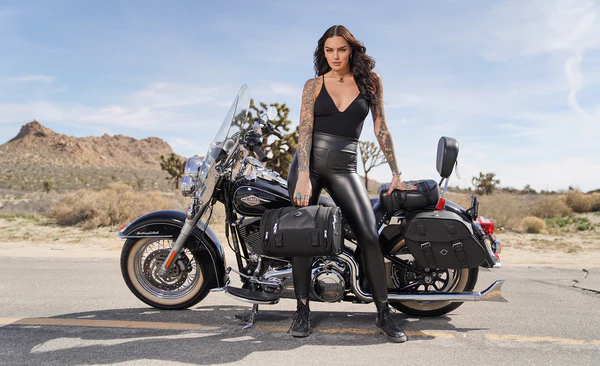
Panniers — hard or soft — handle volume. But volume is not always what you need quick access to. That is the tail bag’s job: the items you reach for without digging through a main load.
The Viking Bags Axwell sits on the passenger seat or rear rack and targets exactly this use case. At a compact size, it handles the items you need without adding the bulk or width of a full pannier system. On a solo boondocking run, it makes sense as a standalone bag for short trips or as the “quick-grab” layer on top of a full pannier setup.
On our forest run, the Axwell carried: a rain jacket, snacks for the access road, a first aid kit, a phone, small tool roll. Everything we wanted within five seconds of stopping — no unfastening a pannier, no digging. Fit was secure on the seat. No bounce or shift on gravel. The reflective accents are a legitimate safety feature on dark forest service roads, not just a styling choice.
For boondockers who ride in from a base camp — day rides from a dispersed site — a tail bag also works as a standalone loadout. Leave the panniers at camp, take what you need for the day, and ride light.
What to Put in Your Tail Bag for a Boondocking Run
Packing priority for a tail bag on a remote access ride:
- Rain gear. Weather changes fast at elevation. Having it in the tail bag — not buried in a pannier — means you actually put it on before you are already soaked.
- First aid kit. A compact IFAK (Individual First Aid Kit) belongs in the most accessible compartment on the bike. Not in the bottom of a pannier.
- Tire plug kit and CO2 cartridges. A flat 12 miles from pavement on a remote two-track is a different problem than a flat in town. Carry the solution on your person, not in camp.
- Navigation backup. A downloaded offline map or a paper topo. Starlink and 5G are great until you are in a canyon with no signal, and GPS is drifting. The analog backup lives in the tail bag, not the RV.
- Snacks and a water bottle. You are stopping at the trailhead, the overlook, or the dispersed site entrance. Quick access matters.
- Headlamp and fire starter. Rides run long. These are the items that turn a late return into a manageable situation versus a bad one.
The Bottom Line
For boondocking-focused riders, soft panniers win the primary luggage decision in most scenarios: lower weight, better handling on rough access roads, and they double as camp bags when you quick-release them off the mount. Hard cases make sense when you are doing longer mixed pavement-and-dirt routes where content protection and overnight security are the priority.
The tail bag is not a replacement for either — it is the access layer. High-priority, quick-grab items live there. Everything else goes in the panniers.
If you are building out a moto-camping rig for dispersed camping and want to start with the tail bag layer, the Viking Bags Axwell is a solid, no-nonsense starting point. Viking also builds model-specific ADV panniers for most major bikes if you want to build out the full system.
Pack smart. Leave the site cleaner than you found it. And pre-load your offline maps before you lose signal.


