TL;DR
- Must-Know: Free dispersed camping on national forest (USFS) and Bureau of Land Management (BLM) land is confirmed in 37 of 50 states. Only 372 of 5,686 federal campgrounds carry a no-fee record as of September 2026.
- Trip Killers: Stay limits of 14 days, fee records that lag real fees, and walk-in sites you cannot drive to.
- Best For: Flexible travelers. 347 of the 372 no-fee federal campgrounds are first-come, first-served.
- Confirm Before You Go: Current fees, the stay limit for your forest or field office, fire permits, and vehicle length limits.
Last updated: September 24, 2026 · Verified against agency sources September 24, 2026
Free dispersed vehicle camping on USFS and BLM land is confirmed in 37 of 50 states as of September 2026. Developed options are scarce. Only 372 of 5,686 federal campgrounds list no fee. Stay limits, fee changes and access rules decide which free sites fit your trip.
Chuck Price has 35+ years of RV camping experience and travels in a 2018 Hymer Aktiv Class B. He is affiliated with the Family RVing Association and has been featured on CBC Radio’s “Cost of Living.”
Land access, permits, road conditions, and site availability change. Verify all information with the relevant land management agency before your trip.
What Counts as a Free Campground (and What Doesn’t)
A free campground is a legal overnight site with no nightly camping fee. The label covers three different things, and each carries its own rules. The land agency sets the terms, whether that is the USFS, the BLM, the National Park Service (NPS) or the U.S. Army Corps of Engineers (USACE). Rules shown are as of September 2026. For example, Lake Whitney in Texas has free Corps parks while other Whitney parks charge $16 to $30 per night, per USACE Fort Worth District. Verify current rates with USACE before you book.
| Type | What you get | Use it when |
|---|---|---|
| No-fee developed federal campground | A named campground whose federal record says there is no charge. Most are first-come, first-served. | You want a defined site and can arrive without a reservation. |
| Dispersed camping on USFS or BLM land | A spot outside developed campgrounds. Stay limits apply, often 14 days. | Your rig is self-contained and you want flexibility. |
| Free with a catch | Camping costs little or nothing, but a permit or entrance fee applies. Death Valley roadside camping is free, yet the park entrance fee is $30 per private vehicle for 7 days, as of September 2026. Verify the current fee with NPS before you go. | You plan a long winter stay or a park visit and can budget for the permit. |
New to camping off the grid? Start with our boondocking guide. For the real costs and legal risks behind “free,” read our guide to public lands for boondocking.
How Many Free Federal Campgrounds Exist: 2026 Data
Only 372 of 5,686 federal campgrounds carry an explicit no-fee record. That figure comes from the Recreation Information Database (RIDB) snapshot of September 21, 2026. The count uses a strict test. As the Campsite Atlas method puts it, “absence of a fee listing doesn’t count, because that usually just means the record is incomplete.” The data covers developed campgrounds only. Browse the full list on the Campsite Atlas free campgrounds page.
No-fee campgrounds by agency:
- USFS: 295
- BLM: 39
- NPS: 37
- USACE: 1
States with the most no-fee records: Idaho 58, California 55, Oregon 49, Montana 27, Maryland 21, Washington 20, New Mexico 20, Arizona 18, Minnesota 16, Wyoming 11, West Virginia 11, Colorado 10.
Twenty-two jurisdictions show zero no-fee federal campgrounds: AL, CT, DE, FL, HI, IA, IL, KS, KY, LA, MA, ME, ND, NE, NH, NJ, NY, PA, RI, VI (U.S. Virgin Islands), VT and WI. Delaware and Rhode Island have no federal campground records in the dataset at all. Zero does not mean no free camping. RIDB excludes dispersed camping. Florida, New York, Vermont, New Hampshire and Pennsylvania (via Allegheny National Forest) still allow free dispersed camping on national forest land.
Correction 1: Maryland’s 21 free sites. Raw counts put Maryland fifth for no-fee federal campgrounds. Those counts hide site type. The records show all 21 are hiker-biker campsites on the Chesapeake & Ohio Canal National Historical Park. You cannot drive to them. Takeaway: 53 of the 372 are named hiker, boat, group or horse sites, so check access before you count a site.
Correction 2: Temple Mountain in Utah. The dataset still lists Temple Mountain Campground as no-fee. BLM now lists “Individual sites $15/night” on the Temple Mountain Townsite page as of September 2026. BLM Utah also announced fees at 12 Price Field Office and 3 Richfield Field Office campgrounds “all of which are currently free camping areas,” per its press release. Takeaway: fee records lag real fees, so confirm with the agency page.
Data source: Recreation.gov RIDB, via the Campsite Atlas CC0 export, snapshot September 21, 2026.
Stay Limits and Rules by Land Agency
Most federal stay limits cap one location at 14 days, but the reset window varies. The agency, state, forest and field office each set their own rule. A forest may count 30, 45 or 60 days before your clock resets. Rules below are as of September 2026. The BLM says specific limits “vary by state and field office” on its camping page. Verify the posted rule for your exact site before you go.
| Agency | Stay limit rule | Source | Use it when |
|---|---|---|---|
| BLM | Generally 14 days within any 28-day period. Bishop Field Office in California allows 14 days per year, per BLM California. | BLM camping | You camp on open BLM land. |
| USFS | Varies by forest. Siuslaw (OR): 14 days in any 60. Green Mountain and Finger Lakes (VT, NY): 14 days in any 30. Carson (NM): 14 days in any 45, consecutive or not. Black Hills (SD): 14 days in any 60. Florida forests: 14 days in 30, designated sites only during general gun season. | Siuslaw, GMFL, Carson, Black Hills, Florida | You camp in a national forest. Read that forest’s own order. |
| NPS | Prohibits “Camping outside of designated sites or areas.” | 36 CFR 2.10(b)(10) | You plan to sleep inside a national park. |
| USACE | Set by lake and park. Lake Whitney (TX): Cedar Creek, Steele Creek and Soldiers Bluff camping is free. Other Whitney parks charge $16 to $30 per night as of September 2026. | USACE Lake Whitney | You want a free developed site at a lake. |
| Long-Term Visitor Area (LTVA) | La Posa (Quartzsite, AZ): $180 long-term permit from September 15 to April 15, or $40 for 14 consecutive days. Prices as of September 2026. Verify with BLM before you buy. | BLM La Posa LTVA | You want to stay all winter in one place. |
- Bridger-Teton National Forest (WY) bars staying more than 14 days within the same five-mile radius in any 30 days, per its forest-wide order.
- Apache-Sitgreaves National Forests (AZ) allow 14 days in a 30-day period, then you must leave the forest for 16 days, per its dispersed camping guidelines.
- BLM California requires a campfire permit for “All campfires and gas stove fires on public lands in California,” per BLM California.
- Florida national forests apply the 14-day rule “unless otherwise posted,” so posted signs govern.
Read our breakdown of the new BLM camping rules before a long stay. Planning a winter in the desert? See our LTVA guide to extended stays on public lands. Check with the local ranger district or field office before you go.
Free Camping by State: 50-State Matrix
Free dispersed vehicle camping is confirmed on federal land in 37 of 50 states as of September 24, 2026. The U.S. Forest Service (USFS) and the Bureau of Land Management (BLM) set these rules, and stay limits change from one national forest (NF) to the next. This matrix covers federal dispersed rules only. State land is excluded unless a row notes it. The BLM baseline is generally 14 days within any 28-day period, and each row links to the agency page we checked.
Find your state, check its status, then open the agency link before you plan a stay.
- Yes: free dispersed vehicle camping confirmed on federal land.
- Limited: allowed with major restrictions or a permit.
- No: no free dispersed option confirmed.
- Pending: not confirmed from an official source.
- No-fee count: developed federal campgrounds with a no-charge fee record in the Recreation Information Database (RIDB). RIDB does not cover dispersed camping.
| State | Rule | Authority | Effective Date | Last Verified |
|---|---|---|---|---|
| Alabama Status: Yes No-fee federal campgrounds (RIDB): 0 |
Alabama allows free dispersed camping in its national forests, 21 consecutive days at hunt camps. Wait 10 days before returning. |
USFS, National Forests in Alabama | Updated Feb 20, 2026 | Sep 24, 2026 |
| Alaska Status: Yes No-fee federal campgrounds (RIDB): 9 |
Alaska allows free dispersed camping on most BLM land, up to 14 days at a time. Expect no water, showers or dump stations. |
BLM Alaska | Not posted by agency | Sep 24, 2026 |
| Arizona Status: Yes No-fee federal campgrounds (RIDB): 18 |
Arizona allows free dispersed camping in the Apache-Sitgreaves NF, 14 days in 30. After 14 days, leave the forest for 16 days. BLM Arizona land: 14 days in 28. |
USFS, Apache-Sitgreaves NF BLM Arizona |
Updated Sep 22, 2025 | Sep 24, 2026 |
| Arkansas Status: Yes No-fee federal campgrounds (RIDB): 2 |
Arkansas allows free dispersed camping in the Ouachita NF, stay limits set by the forest. Gear cannot sit unattended over 24 hours without ranger permission. |
USFS, Ouachita NF | Updated Apr 9, 2025 | Sep 24, 2026 |
| California Status: Yes No-fee federal campgrounds (RIDB): 55 |
California allows free dispersed camping in national forests such as Inyo, stay limits set by each forest. Campfires and gas stoves on public lands need a campfire permit. Bishop Field Office BLM allows 14 days per year. See our California primitive camping guide. |
USFS, Inyo NF BLM California, campfire permits |
Not posted by agency | Sep 24, 2026 |
| Colorado Status: Limited No-fee federal campgrounds (RIDB): 10 |
Colorado allows free dispersed camping in the Pike NF, 14 days in 30 within 20 miles. Pikes Peak, South Platte and South Park ranger districts ban it outside designated sites. |
USFS, Pike-San Isabel NF | Updated Aug 20, 2026 | Sep 24, 2026 |
| Connecticut Status: No No-fee federal campgrounds (RIDB): 0 |
Connecticut has no free dispersed camping, only permitted one-night backpack sites in state forests. Designated Blue-Blazed Trail sites only. Reserve at least two weeks ahead. |
CT DEEP, State Parks and Forests | April 2025 | Sep 24, 2026 |
| Delaware Status: No No-fee federal campgrounds (RIDB): 0 |
Delaware has no free dispersed camping, only paid $25 state forest tent sites by reservation. Three-night maximum per reservation. |
Delaware Forest Service, state forests | Updated Aug 26, 2026 | Sep 24, 2026 |
| Florida Status: Yes No-fee federal campgrounds (RIDB): 0 |
Florida allows free dispersed camping in its national forests, 14 days in 30. Designated sites only during general gun season. |
USFS, National Forests in Florida | Updated Apr 7, 2025 | Sep 24, 2026 |
| Georgia Status: Yes No-fee federal campgrounds (RIDB): 1 |
Georgia allows free dispersed camping in the Chattahoochee-Oconee NF, 14 days maximum. No new campsite on the forest for 30 days afterward. |
USFS, Chattahoochee-Oconee NF | Updated Feb 25, 2026 | Sep 24, 2026 |
| Hawaii Status: Limited No-fee federal campgrounds (RIDB): 0 |
Hawaii has no federal dispersed land, only permitted state campsites, 5 nights maximum. Carry a printed copy of your permit while camping. |
Hawaii DLNR, state camping permits | Updated Jun 24, 2026 | Sep 24, 2026 |
| Idaho Status: Yes No-fee federal campgrounds (RIDB): 58 |
Idaho allows free dispersed camping in the Caribou-Targhee NF, 14 days per site. Then move at least 5 road miles. |
USFS, Caribou-Targhee NF | Updated May 19, 2026 | Sep 24, 2026 |
| Illinois Status: Yes No-fee federal campgrounds (RIDB): 0 |
Illinois allows free dispersed camping in the Shawnee NF, two weeks at a time. Drive no more than 150 feet off forest roads. |
USFS, Shawnee NF | Updated Jan 18, 2024 | Sep 24, 2026 |
| Indiana Status: Yes No-fee federal campgrounds (RIDB): 5 |
Indiana allows free dispersed camping in the Hoosier NF, 14 days in 28. Cap of 28 days per calendar year. |
USFS, Hoosier NF | Updated Jul 6, 2026 | Sep 24, 2026 |
| Iowa Status: Limited No-fee federal campgrounds (RIDB): 0 |
Iowa has no federal dispersed land, only five free backpack areas in Yellow River State Forest. Designated sites only. Sign in at forest headquarters first. |
Iowa DNR, Yellow River State Forest | Updated Jan 29, 2026 | Sep 24, 2026 |
| Kansas Status: Yes No-fee federal campgrounds (RIDB): 0 |
Kansas allows free dispersed camping on the Cimarron National Grassland, 14 days in 30. | USFS, Cimarron National Grassland | Updated Aug 20, 2026 | Sep 24, 2026 |
| Kentucky Status: Yes No-fee federal campgrounds (RIDB): 0 |
Kentucky allows free dispersed camping in the Daniel Boone NF, 14 consecutive days. Then leave the forest for at least 10 days. |
USFS, Daniel Boone NF | Updated Mar 17, 2025 | Sep 24, 2026 |
| Louisiana Status: Yes No-fee federal campgrounds (RIDB): 0 |
Louisiana allows free dispersed camping in the Kisatchie NF, stay limits set by each forest. Vehicle camping within 100 feet of the road centerline. See our Louisiana public land guide. |
USFS, Kisatchie NF | Not posted by agency | Sep 24, 2026 |
| Maine Status: Yes No-fee federal campgrounds (RIDB): 0 |
Maine allows free dispersed camping in the White Mountain NF, stay limits set by each forest. Roadside camping only outside Forest Protection Areas. See our New England guide. |
USFS, White Mountain NF | Not posted by agency | Sep 24, 2026 |
| Maryland Status: Limited No-fee federal campgrounds (RIDB): 21 |
Maryland has no confirmed federal dispersed land, only permitted backcountry camping in Green Ridge State Forest. Get a permit at headquarters or a self registration kiosk. |
Maryland DNR, Green Ridge State Forest | Not posted by agency | Sep 24, 2026 |
| Massachusetts Status: Limited No-fee federal campgrounds (RIDB): 0 |
Massachusetts has no federal dispersed land, only free hike-in shelters at Mount Greylock. No fee and no reservations. Register your itinerary with the Visitors Center. See our New England guide. |
MA DCR, Mount Greylock State Reservation | Not posted by agency | Sep 24, 2026 |
| Michigan Status: Yes No-fee federal campgrounds (RIDB): 8 |
Michigan allows free dispersed camping in the Huron-Manistee NF, stay limits set by the forest. Camp at least 200 feet from any river, lake or stream. |
USFS, Huron-Manistee NF | Not posted by agency | Sep 24, 2026 |
| Minnesota Status: Yes No-fee federal campgrounds (RIDB): 16 |
Minnesota allows free dispersed camping in the Superior and Chippewa NFs, 14 days per site. Superior NF caps total forest stays at 30 consecutive days. |
USFS, Superior NF | Not posted by agency | Sep 24, 2026 |
| Mississippi Status: Yes No-fee federal campgrounds (RIDB): 2 |
Mississippi allows free dispersed camping in all its national forests, stay limits set by each forest. | USFS, National Forests in Mississippi | Not posted by agency | Sep 24, 2026 |
| Missouri Status: Limited No-fee federal campgrounds (RIDB): 4 |
Missouri allows dispersed camping in the Mark Twain NF, stay limits set by each forest. Rules are not detailed online. Call the Supervisor’s Office at (573) 364-4621. |
USFS, Mark Twain NF | Not posted by agency | Sep 24, 2026 |
| Montana Status: Yes No-fee federal campgrounds (RIDB): 27 |
Montana allows free dispersed camping on national forest and BLM land, stay limits set by each forest. Custer Gallatin NF: vehicle camping within 300 feet of mapped routes. |
USFS, Custer Gallatin NF | Updated May 6, 2026 | Sep 24, 2026 |
| Nebraska Status: Yes No-fee federal campgrounds (RIDB): 0 |
Nebraska allows free dispersed camping in its national forests and grasslands, 14 days in 30. Vehicles may go no more than 300 feet from roads. |
USFS, Nebraska National Forests and Grasslands | Updated May 17, 2025 | Sep 24, 2026 |
| Nevada Status: Yes No-fee federal campgrounds (RIDB): 7 |
Nevada allows free dispersed camping on BLM land, generally 14 days in 28. BLM stay limits vary by field office. Humboldt-Toiyabe NF offers primitive dispersed areas. |
BLM, national camping rules USFS, Humboldt-Toiyabe NF |
Not posted by agency | Sep 24, 2026 |
| New Hampshire Status: Yes No-fee federal campgrounds (RIDB): 0 |
New Hampshire allows free dispersed camping in the White Mountain NF, stay limits set by each forest. Roadside camping only outside Forest Protection Areas. See our New England guide. |
USFS, White Mountain NF | Not posted by agency | Sep 24, 2026 |
| New Jersey Status: No No-fee federal campgrounds (RIDB): 0 |
New Jersey has no free dispersed camping, only paid primitive sites in Wharton State Forest. $3 per person per night for residents, $5 for nonresidents, as of September 2026. Verify fees before you book. |
NJ DEP, State Park Service fees | Not posted by agency | Sep 24, 2026 |
| New Mexico Status: Yes No-fee federal campgrounds (RIDB): 20 |
New Mexico allows free dispersed camping in the Carson NF, 14 days in any 45. Campfires are banned during all fire restriction stages. |
USFS, Carson NF | Updated Jul 22, 2025 | Sep 24, 2026 |
| New York Status: Yes No-fee federal campgrounds (RIDB): 0 |
New York allows free dispersed camping in the Finger Lakes NF, 14 days in 30. | USFS, Green Mountain and Finger Lakes NFs | Not posted by agency | Sep 24, 2026 |
| North Carolina Status: Limited No-fee federal campgrounds (RIDB): 1 |
North Carolina allows free dispersed camping in the Pisgah and Nantahala NFs, 14 days in 30. The Pisgah Ranger District allows camping only at campsites shown on its map. |
USFS, National Forests in North Carolina | Not posted by agency | Sep 24, 2026 |
| North Dakota Status: Yes No-fee federal campgrounds (RIDB): 0 |
North Dakota allows free dispersed camping on the Little Missouri National Grassland, 14 days in 30. Avoid well sites because of hydrogen sulfide gas. |
USFS, Dakota Prairie Grasslands | Updated Jul 10, 2026 | Sep 24, 2026 |
| Ohio Status: Limited No-fee federal campgrounds (RIDB): 2 |
Ohio allows dispersed backpack camping in the Wayne NF, stay limits set by each forest. No stay limit or zone details are posted online. |
USFS, Wayne NF | Not posted by agency | Sep 24, 2026 |
| Oklahoma Status: Yes No-fee federal campgrounds (RIDB): 1 |
Oklahoma allows free dispersed camping in the Ouachita NF, 30 consecutive days maximum. Cap of 90 days per calendar year. |
USFS, Ouachita NF | Updated Jul 2, 2026 | Sep 24, 2026 |
| Oregon Status: Yes No-fee federal campgrounds (RIDB): 49 |
Oregon allows free dispersed camping on national forest and BLM land, 14 consecutive days per site. Deschutes NF: gear may stay 28 days total per year. |
USFS, Deschutes NF | Updated Apr 14, 2026 | Sep 24, 2026 |
| Pennsylvania Status: Yes No-fee federal campgrounds (RIDB): 0 |
Pennsylvania allows free dispersed camping in the Allegheny NF, 14 days in 30. | USFS, Allegheny NF | Updated Jun 23, 2025 | Sep 24, 2026 |
| Rhode Island Status: No No-fee federal campgrounds (RIDB): 0 |
Rhode Island has no free dispersed camping, only fee-based state campgrounds by reservation. All five state campgrounds require reservations and fees. |
RI DEM, State Parks camping areas | Not posted by agency | Sep 24, 2026 |
| South Carolina Status: Limited No-fee federal campgrounds (RIDB): 3 |
South Carolina allows free dispersed tent camping in its national forests, stay limits set by each forest. No RV or car camping. Permits required on three of four districts. |
USFS, Francis Marion and Sumter NFs | Not posted by agency | Sep 24, 2026 |
| South Dakota Status: Yes No-fee federal campgrounds (RIDB): 1 |
South Dakota allows free dispersed camping in the Black Hills NF, 14 days in 60. No open campfires in the South Dakota portion. |
USFS, Black Hills NF | Updated Jan 26, 2026 | Sep 24, 2026 |
| Tennessee Status: Yes No-fee federal campgrounds (RIDB): 2 |
Tennessee allows free dispersed camping in the Cherokee NF, 14 consecutive days. Then move at least 10 miles for 7 days. |
USFS, Cherokee NF | Updated Apr 30, 2026 | Sep 24, 2026 |
| Texas Status: Yes No-fee federal campgrounds (RIDB): 2 |
Texas allows free dispersed camping in its national forests and grasslands, 14 days in 30. | USFS, National Forests and Grasslands in Texas | Updated Sep 30, 2025 | Sep 24, 2026 |
| Utah Status: Yes No-fee federal campgrounds (RIDB): 4 |
Utah allows free dispersed camping in the Uinta-Wasatch-Cache NF, 14 days in 30. BLM land: generally 14 days in 28, and limits vary by field office. |
USFS, Uinta-Wasatch-Cache NF BLM, national camping rules |
Updated Jul 29, 2025 | Sep 24, 2026 |
| Vermont Status: Yes No-fee federal campgrounds (RIDB): 0 |
Vermont allows free dispersed camping in the Green Mountain NF, 14 days in 30. See our New England guide. |
USFS, Green Mountain and Finger Lakes NFs | Not posted by agency | Sep 24, 2026 |
| Virginia Status: Yes No-fee federal campgrounds (RIDB): 2 |
Virginia allows free dispersed camping in the George Washington and Jefferson NFs, 14 days in 30. No camping within 300 feet of developed parking areas or boat ramps. |
USFS, George Washington and Jefferson NFs | Updated Mar 5, 2025 | Sep 24, 2026 |
| Washington Status: Yes No-fee federal campgrounds (RIDB): 20 |
Washington allows free dispersed camping in the Mount Baker-Snoqualmie NF, 14 consecutive days. Cap of 28 days per calendar year. |
USFS, Mount Baker-Snoqualmie NF | Updated Aug 12, 2026 | Sep 24, 2026 |
| West Virginia Status: Yes No-fee federal campgrounds (RIDB): 11 |
West Virginia allows free dispersed camping in the Monongahela NF, 14 days unless posted. | USFS, Monongahela NF | Updated May 11, 2026 | Sep 24, 2026 |
| Wisconsin Status: Yes No-fee federal campgrounds (RIDB): 0 |
Wisconsin allows free dispersed camping in the Chequamegon-Nicolet NF, 21 days in 28. No dispersed camping within a quarter mile of developed sites. |
USFS, Chequamegon-Nicolet NF | Updated Sep 4, 2025 | Sep 24, 2026 |
| Wyoming Status: Yes No-fee federal campgrounds (RIDB): 11 |
Wyoming allows free dispersed camping in the Bridger-Teton NF, 14 days in 30. The limit applies within a five mile radius. |
USFS, Bridger-Teton NF | Updated Jun 12, 2026 | Sep 24, 2026 |
Sources: agency pages linked in each row, verified September 24, 2026. No-fee counts from Recreation.gov RIDB via the Campsite Atlas CC0 export (snapshot September 21, 2026).
Verify before you go: Call the ranger district or field office for your state row and confirm the stay limit and any closure.
Verified Free Camping by Region
Every place below had an official agency rule allowing free or primitive camping as of September 2026. We checked each rule on the agency’s own page, and each entry links to it. Rules differ by agency and forest, and a spot that fits a tent may not fit a trailer. Read the linked source, then call the ranger district or park office before you go.
West
Siuslaw National Forest, Oregon
The U.S. Forest Service (USFS) allows dispersed camping on the Siuslaw. You can stay “no more than 14 days in any 60 day consecutive period,” according to the Siuslaw camping page.
Umpqua National Forest, Oregon
The Umpqua lists its dispersed camping sites on the Umpqua camping page. Mt. Bailey and Mt. Thielsen rise nearby.
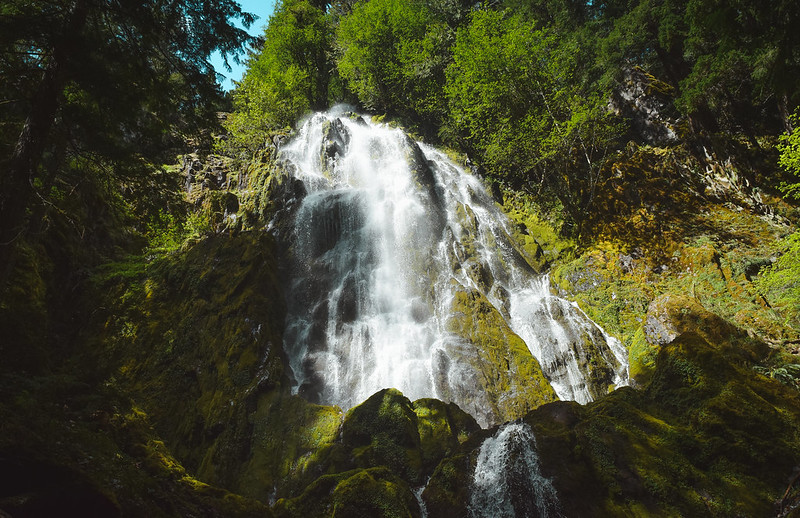
Moon Falls, Umpqua National Forest, Oregon. Photo: US Forest Service / Flickr
Gifford Pinchot National Forest, Washington
Dispersed camping is allowed on the Gifford Pinchot. The forest posts its rules in the Gifford Pinchot visitor guidelines.
Southwest
Death Valley National Park, California
Death Valley allows free roadside camping “along dirt roads at least one mile down the road from the junction with any paved road or ‘day use only’ dirt road,” per the park’s backcountry camping page. Echo Canyon, Hole in the Wall, Cottonwood/Marble Canyons and Greenwater Valley require a $10 per night reservation. The park entrance fee is $30 per private vehicle for 7 days, according to the Death Valley fees page. Both fees are current as of September 2026, so confirm them with the park before you go. See our Death Valley camping guide.
Anza-Borrego Desert State Park, California
Anza-Borrego offers primitive open camping, according to California State Parks. “Vehicles must be parked no more than one (1) car length off a given road.” Ground fires are not allowed, so fires go in a metal container only. Developed areas charge a $10 day-use parking fee. Confirm any camping fees with the park before you go.
Arizona BLM Land and Apache-Sitgreaves National Forests
The Bureau of Land Management (BLM) allows dispersed camping in Arizona for 14 days in 28, per BLM Arizona. On the Apache-Sitgreaves, you may stay “no more than 14 days in a 30-day period.” Then you must leave the forest for 16 days, according to the Apache-Sitgreaves dispersed camping guidelines.
South and Southeast
Lake Whitney, Texas
The U.S. Army Corps of Engineers (USACE) runs free parks at Lake Whitney. At Cedar Creek Park and Steele Creek Park, “Camping, picnicking, and boat launching facilities are free,” per the Lake Whitney Corps parks page. Camping at Soldiers Bluff is also free. Other Whitney parks charge $16 to $30 per night. Confirm current rates with the Corps before you go.
Oconee National Forest, Georgia
Dispersed camping is “allowed in most places” on the Oconee, according to the Chattahoochee-Oconee camping page.
Apalachicola, Ocala and Osceola National Forests, Florida
Florida’s national forests allow dispersed camping. Stays over 14 days in a 30-day period are prohibited “unless otherwise posted,” per the Florida stay-limit alert. During general gun season, you must camp in designated sites only, according to the Florida camping page.
Midwest
Shawnee National Forest, Illinois
The Shawnee allows dispersed camping for “a maximum of two weeks at a time,” per the Shawnee dispersed camping guide. Illinois shows zero no-fee federal campgrounds in the Recreation Information Database (RIDB).
Chippewa and Superior National Forests, Minnesota
Neither forest charges a fee for dispersed camping. You can stay 14 consecutive days at one location, according to the Superior National Forest camping page.
Where We’ve Camped in the Northeast
We have camped at each of these places in our 2018 Hymer Aktiv Class B, and each row pairs our notes with the official rule.
| Area | Type of camping | What to expect | Rule and source |
|---|---|---|---|
| Moose River Plains Complex, NY | Free designated primitive roadside sites | Our clearest drive-in choice. 116 numbered roadside sites, most with a picnic table, fireplace and privy. | DEC lists “116 primitive roadside campsites.” The access road is seasonal. Campsites 1 to 20 are closed. NYS DEC |
| Adirondack Forest Preserve, NY | Free primitive sites, lean-tos and dispersed tent camping | Huge network of first-come sites for a more remote trip. | No camping within 150 feet of roads, trails or water unless at a “Camp Here” disk. Stays over three nights, or groups of 10 or more, need a Forest Ranger permit. NYS DEC |
| Finger Lakes National Forest, NY | Free dispersed camping | Convenient from Syracuse. Rolling forest, ravines and pasture country. | 14 days in any 30-day period. USFS |
| Green Mountain National Forest, VT | Free dispersed and backcountry camping | Our broadest Vermont option. Forest roads plus walk-in backcountry. | 14 days in any 30-day period. USFS |
| Pennsylvania State Forests, PA | Free primitive camping, permit sometimes required | Good for hike-in or bike-in. Roadside camping is now regulated and paid. | “There is no fee for a state forest primitive camping permit.” Needed for more than one night. PA DCNR. Roadside camping needs a reservation-system permit, seven consecutive nights maximum. PA DCNR |
| White Mountain National Forest, NH | Free dispersed and backcountry camping | Mountain scenery. Observe the Forest Protection Area rules. | “Roadside camping is permitted on White Mountain National Forest roads that are NOT in Forest Protection Areas (FPAs).” USFS |
Why Most National Parks Aren’t Free (and the Park-Adjacent Fix)
Most national parks do not allow free dispersed camping. The National Park Service (NPS) prohibits “Camping outside of designated sites or areas” under 36 CFR 2.10(b)(10). Death Valley is an exception. For most visitors, free camping near a park sits on national forest or BLM land next to it. Rules were current as of September 2026, so check the park and the neighboring agency before you go.
The claim: National parks are good places for free boondocking.
The correction: Most parks limit camping to campgrounds or permit sites. Olympic National Park says “Vehicle camping is only allowed in authorized campgrounds,” per its camping page. Acadia allows no backcountry camping, out-of-bounds camping or overnight parking, according to Acadia’s camping page. Arches has one campground, Devils Garden, per the Arches camping page. At Big Thicket, “Camping in any kind of vehicle is prohibited,” according to its backcountry camping page.
The exception: Death Valley allows free roadside camping on remote dirt roads. You still pay the entrance fee.
The fix: Look just outside the boundary. Needles Overlook is a BLM site on Canyon Rims, outside Canyonlands National Park, per the BLM Needles Overlook page. Nearby BLM Windwhistle and Hatch Point campgrounds charge $20 per site per night, according to the Windwhistle Campground page. That fee is current as of September 2026. Confirm it with the BLM field office before you go. Our guide on whether you can boondock in national parks covers more parks.
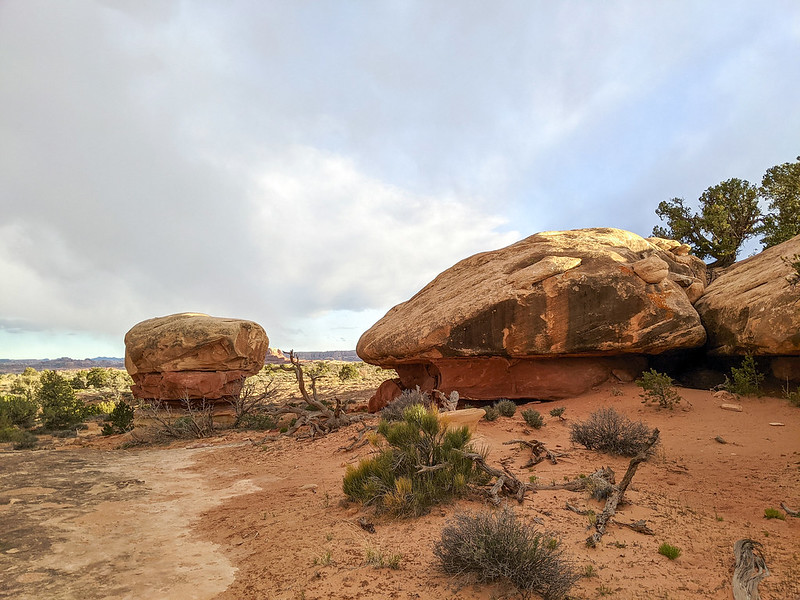
Canyonlands National Park, Utah. Photo: Matthew Dillon / Flickr
Free Campgrounds for RVs: Length, Roads and Fire Rules
Free campground records rarely tell you whether your RV will fit. Only 2 of the 372 no-fee federal campground records list a maximum vehicle length, based on the Campsite Atlas RIDB export. Road, parking and fire rules also vary by agency and by forest. Treat each fact below as current as of September 2026 and confirm it before you tow in.
Check fit yourself
Call the ranger district and ask about the road and the largest rig the site takes. Ask whether the road needs a high-clearance vehicle. Only 2 no-fee records list a maximum length, so ask before you tow in.
Know the motor vehicle rules
- Custer Gallatin National Forest, Montana: Motor vehicle dispersed camping is limited to within 300 feet of routes shown on Gallatin National Forest Motor Vehicle Use Maps, per the forest’s dispersed camping and parking order.
- Anza-Borrego Desert State Park, California: Park no more than one car length off a given road, according to California State Parks.
Know the fire rules
BLM California requires a campfire permit for “all campfires and gas stove fires on public lands in California,” per BLM California. Get the permit before you light a campfire or camp stove.
If a free campground will not fit your rig, see our guide to where you can still find free RV parking in 2026.
How to Find a Free Site When You Arrive
Plan your free site before you lose cell signal. 347 of the 372 no-fee federal campgrounds are first-come, first-served, so timing and a backup plan decide whether you get a spot tonight. The steps below work on USFS and BLM land. State land follows its own rules. For more depth, read our 35-year RVer’s guide to finding free and cheap campsites.
- Check agency map layers. Open the BLM recreation map or a forest map to confirm the land is public. Our guide to free map layers for campers shows how to set them up.
- Check the Motor Vehicle Use Map. Some forests tie vehicle camping to its routes. Custer Gallatin NF limits it to 300 feet from mapped routes.
- Call the ranger district. Ask about closures, fire restrictions and road conditions.
- Arrive early. First-come sites give no guarantee of an open spot, so leave time to move on.
- Have a backup. Pick a second site before you leave cell coverage. Our list of apps for finding free campsites helps you choose one.
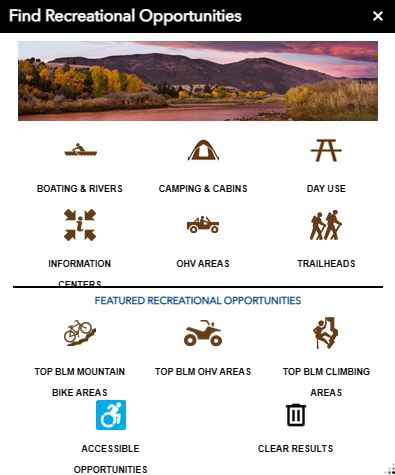
Open the BLM National Recreation Opportunities map to check land status.
Free Campground FAQ
These answers cover common questions about free camping on federal land in the US. Each answer stands alone and reflects agency rules as of September 2026. Rules differ by agency, forest and field office, so an answer for BLM land may not apply to a national park or a state forest. For example, the BLM generally limits dispersed stays to 14 days in any 28, while the NPS bans camping outside designated sites. Verify with the agency before you go.
Are there any free campsites in the US?
Yes. As of September 2026, 372 federal campgrounds carry a fee record stating there is no charge, per RIDB data from Campsite Atlas. The USFS runs 295 of them. Many national forests and BLM field offices also allow free dispersed camping. Records can lag real fees, so verify with the agency before you go.
Where can I park my RV for free overnight?
Dispersed camping on USFS and BLM land is free in many places. USACE also runs free parks, including Cedar Creek and Steele Creek at Lake Whitney, Texas. Store parking policies vary. See our Walmart overnight RV parking policy by state. Rules were current as of September 2026, so verify before you go.
Is dispersed camping legal everywhere?
No. The NPS bans camping outside designated sites under 36 CFR 2.10. White Mountain National Forest bans roadside camping in Forest Protection Areas. Pike National Forest prohibits dispersed camping in the Pikes Peak, South Platte and South Park Ranger Districts except at developed or designated sites, per a forest order. Check closures as of your trip date.
How long can you camp on BLM land?
BLM dispersed camping is “generally limited to 14 days within any 28-day period,” per BLM. Limits vary by state and field office. A Long-Term Visitor Area (LTVA) is the exception. At La Posa LTVA in Arizona, a $180 permit covers September 15 to April 15. Fees were current as of September 2026. Confirm them with the field office.
Do national parks have free camping?
Rarely. Most parks limit camping to campgrounds or permit sites. Death Valley is an exception. It allows free roadside camping on dirt roads at least one mile past the junction with any paved road, per the park. You still pay the $30 vehicle entrance fee. Rules were current as of September 2026. Verify with the park before you go.
Can you camp for free in national forests?
Yes, on many national forests. Dispersed camping is free, but stay limits vary by forest. The Siuslaw allows 14 days in any 60. Green Mountain and Finger Lakes allow 14 days in any 30. Some forests limit where vehicles can go. Rules were current as of September 2026, so call the ranger district before you go.
Your Next Step
Pick one place and confirm it today. Free camping rules change by agency, forest and field office, and a quick check prevents a wasted drive. Start with the state row in our matrix above. Open the linked agency page and read the stay limit and any closure notice. Then call the ranger district or field office and ask about roads, fire rules and rig size. Once they confirm, book your fallback site or head out.
Land access, permits, road conditions, and site availability change. Verify all information with the relevant land management agency before your trip. Conditions in remote areas can be hazardous. Assess your skill level and equipment before you go. In an emergency, call 911, and share your planned location with someone before you leave.
References
- Bureau of Land Management. (n.d.). Arizona recreation activities. Retrieved September 24, 2026, from https://www.blm.gov/programs/recreation/recreation-activities/arizona
- Bureau of Land Management. (n.d.). California recreation activities. Retrieved September 24, 2026, from https://www.blm.gov/programs/recreation/recreation-activities/california
- Bureau of Land Management. (n.d.). Camping. Retrieved September 24, 2026, from https://www.blm.gov/programs/recreation/camping
- Bureau of Land Management. (n.d.). La Posa Long-Term Visitor Area. Retrieved September 24, 2026, from https://www.blm.gov/visit/la-posa-long-term-visitor-area
- Bureau of Land Management. (n.d.). National recreation opportunities map. Retrieved September 24, 2026, from https://webmaps.blm.gov/program_apps/BLM_Natl_Recreation_Opportunities/
- Bureau of Land Management. (n.d.). Needles Overlook Interpretive Site. Retrieved September 24, 2026, from https://www.blm.gov/visit/needles-overlook-interpretive-site
- Bureau of Land Management. (n.d.). New Bureau of Land Management Utah fees will enhance recreational experience. Retrieved September 24, 2026, from https://www.blm.gov/press-release/new-bureau-land-management-utah-fees-will-enhance-recreational-experience
- Bureau of Land Management. (n.d.). Temple Mountain Townsite Campground. Retrieved September 24, 2026, from https://www.blm.gov/visit/temple-mountain-townsite-campground
- Bureau of Land Management. (n.d.). Windwhistle Campground. Retrieved September 24, 2026, from https://www.blm.gov/visit/windwhistle-campground
- California Department of Parks and Recreation. (n.d.). Anza-Borrego Desert State Park. Retrieved September 24, 2026, from https://www.parks.ca.gov/?page_id=638
- Campsite Atlas. (n.d.). Campsite Atlas data [Data set]. GitHub. Retrieved September 24, 2026, from https://github.com/kirkwood-justin/campsite-atlas-data
- Campsite Atlas. (n.d.). Free campgrounds. Retrieved September 24, 2026, from https://campsiteatlas.com/free/
- Dillon, M. (n.d.). Canyonlands National Park [Photograph]. Flickr. Retrieved September 24, 2026, from https://www.flickr.com/photos/ruggybear/52291874076/
- National Park Service. (n.d.). Acadia National Park: Camping. Retrieved September 24, 2026, from https://www.nps.gov/acad/planyourvisit/camping.htm
- National Park Service. (n.d.). Arches National Park: Camping. Retrieved September 24, 2026, from https://www.nps.gov/arch/planyourvisit/camping.htm
- National Park Service. (n.d.). Big Thicket National Preserve: Backcountry camping. Retrieved September 24, 2026, from https://www.nps.gov/bith/planyourvisit/backcountry-camping.htm
- National Park Service. (n.d.). Death Valley National Park: Backcountry camping. Retrieved September 24, 2026, from https://www.nps.gov/deva/planyourvisit/backcamp.htm
- National Park Service. (n.d.). Death Valley National Park: Fees and passes. Retrieved September 24, 2026, from https://www.nps.gov/deva/planyourvisit/fees.htm
- National Park Service. (n.d.). Olympic National Park: Camping. Retrieved September 24, 2026, from https://www.nps.gov/olym/planyourvisit/camping.htm
- New York State Department of Environmental Conservation. (n.d.). Moose River Plains Complex. Retrieved September 24, 2026, from https://dec.ny.gov/places/moose-river-plains-complex
- New York State Department of Environmental Conservation. (n.d.). State land camping rules. Retrieved September 24, 2026, from https://dec.ny.gov/things-to-do/camping/state-land-rules
- Office of the Federal Register. (n.d.). 36 CFR 2.10 Camping and food storage. Electronic Code of Federal Regulations. Retrieved September 24, 2026, from https://www.ecfr.gov/current/title-36/chapter-I/part-2/section-2.10
- Pennsylvania Department of Conservation and Natural Resources. (n.d.). Backpacking and primitive camping. Retrieved September 24, 2026, from https://www.pa.gov/agencies/dcnr/recreation/what-to-do/stay-overnight/backpacking-and-primitive-camping
- Pennsylvania Department of Conservation and Natural Resources. (n.d.). Motorized roadside camping. Retrieved September 24, 2026, from https://www.pa.gov/agencies/dcnr/recreation/what-to-do/stay-overnight/motorized-roadside-camping
- Recreation.gov. (n.d.). Recreation Information Database (RIDB). Retrieved September 24, 2026, from https://ridb.recreation.gov/
- U.S. Army Corps of Engineers, Fort Worth District. (n.d.). Lake Whitney Corps parks. Retrieved September 24, 2026, from https://www.swf-wc.usace.army.mil/whitney/Recreation/Parks/Corpsparks.shtml
- U.S. Forest Service. (n.d.). Apache-Sitgreaves National Forests: Dispersed camping guidelines. Retrieved September 24, 2026, from https://www.fs.usda.gov/r03/apache-sitgreaves/recreation/dispersed-camping-guidelines
- U.S. Forest Service. (n.d.). Black Hills National Forest: Dispersed camping. Retrieved September 24, 2026, from https://www.fs.usda.gov/r02/blackhills/recreation/dispersed-camping
- U.S. Forest Service. (n.d.). Bridger-Teton National Forest: Occupancy and use stay limit, forest-wide. Retrieved September 24, 2026, from https://www.fs.usda.gov/r04/bridger-teton/alerts/occupancy-use-stay-limit-forest-wide
- U.S. Forest Service. (n.d.). Carson National Forest: Dispersed camping. Retrieved September 24, 2026, from https://www.fs.usda.gov/r03/carson/recreation/dispersed-camping
- U.S. Forest Service. (n.d.). Chattahoochee-Oconee National Forests: Camping and cabins. Retrieved September 24, 2026, from https://www.fs.usda.gov/r08/chattahoochee-oconee/recreation/camping-cabins
- U.S. Forest Service. (n.d.). Custer Gallatin National Forest: Dispersed camping and parking order. Retrieved September 24, 2026, from https://www.fs.usda.gov/r01/custergallatin/alerts/dispersed-camping-parking-order
- U.S. Forest Service. (n.d.). Gifford Pinchot National Forest: Forest visitor guidelines and safety. Retrieved September 24, 2026, from https://www.fs.usda.gov/r06/giffordpinchot/safety-ethics/forest-visitor-guidelines-safety
- U.S. Forest Service. (n.d.). Green Mountain and Finger Lakes National Forests: Camping and cabins. Retrieved September 24, 2026, from https://www.fs.usda.gov/r09/gmfl/recreation/camping-cabins
- U.S. Forest Service. (n.d.). Moon Falls, Umpqua National Forest [Photograph]. Flickr. Retrieved September 24, 2026, from https://www.flickr.com/photos/forestservicenw/39602978811/
- U.S. Forest Service. (n.d.). National Forests in Florida: Camping and cabins. Retrieved September 24, 2026, from https://www.fs.usda.gov/r08/florida/recreation/camping-cabins
- U.S. Forest Service. (n.d.). National Forests in Florida: Camping in excess of 14 days. Retrieved September 24, 2026, from https://www.fs.usda.gov/r08/florida/alerts/camping-excess-14-days
- U.S. Forest Service. (n.d.). Pike National Forest occupancy and use restrictions. Retrieved September 24, 2026, from https://www.fs.usda.gov/r02/psicc/alerts/pike-national-forest-occupancy-and-use-restrictions
- U.S. Forest Service. (n.d.). Shawnee National Forest: A guide to dispersed camping. Retrieved September 24, 2026, from https://www.fs.usda.gov/r09/shawnee/newsroom/releases/memories-last-lifetime-guide-dispersed-camping-shawnee-national
- U.S. Forest Service. (n.d.). Siuslaw National Forest: Camping and cabins. Retrieved September 24, 2026, from https://www.fs.usda.gov/r06/siuslaw/recreation/camping-cabins
- U.S. Forest Service. (n.d.). Superior National Forest: Camping and cabins. Retrieved September 24, 2026, from https://www.fs.usda.gov/r09/superior/recreation/camping-cabins
- U.S. Forest Service. (n.d.). Umpqua National Forest: Camping and cabins. Retrieved September 24, 2026, from https://www.fs.usda.gov/r06/umpqua/recreation/camping-cabins
- U.S. Forest Service. (n.d.). White Mountain National Forest: Camping and cabins. Retrieved September 24, 2026, from https://www.fs.usda.gov/r09/whitemountain/recreation/camping-cabins
State-level sources are linked in each matrix row.


