
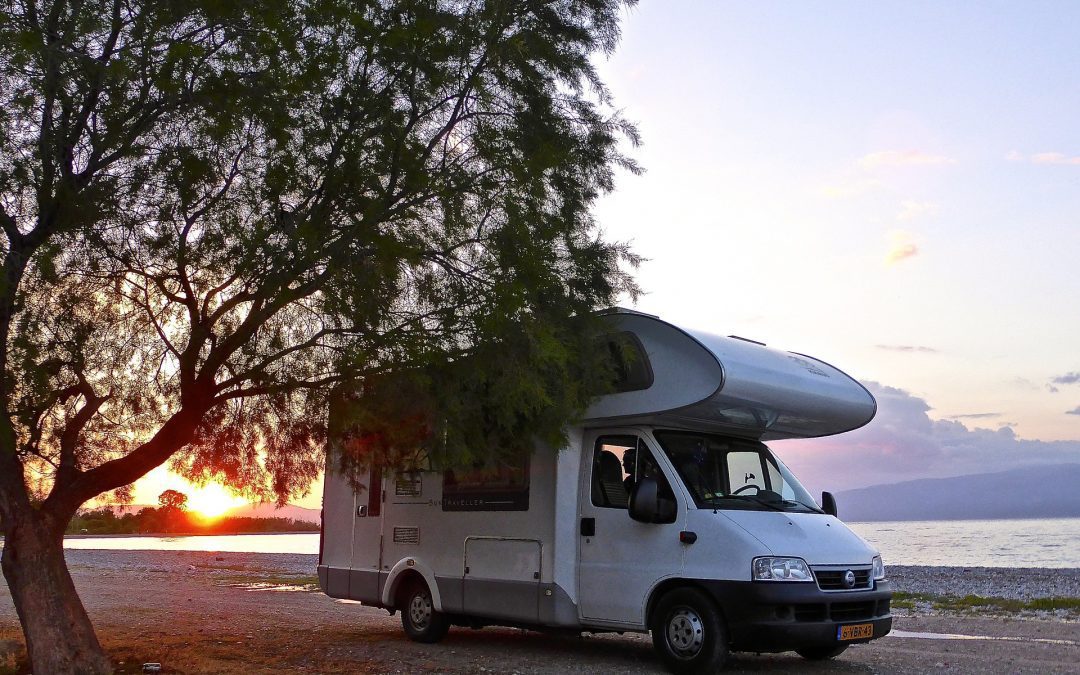
Definition and Appeal of Waterfront RV Parks
Waterfront RV parks are curated destinations offering dedicated spots for RVs with direct access to water bodies like oceans or lakes. They provide a blend of freedom, comfort, and immersion in nature, allowing RVers to wake up to beautiful views and enjoy the amenities of their own mobile homes.
Essential Elements of a Quality Waterfront RV Park
- Full Hookups: Water, sewer, and power are considered non-negotiable.
- Reliable Wi-Fi: Essential for digital nomads and general connectivity.
- Clean and Well-Maintained Facilities: A fundamental requirement for any respectable establishment.
- Location: A prime draw, offering stunning views of sunrises, sunsets, oceans, or lakes.
- Recreational Access: Immediate proximity to activities like swimming, fishing, kayaking, or beach strolling.
- Resort-Style Perks: Desired amenities include pools, hot tubs, playgrounds, dog parks, and clubhouses. Some parks offer on-site restaurants.
- Sense of Community: Opportunities for fellow travelers to connect and share experiences.
- Pet-Friendliness: Welcoming environments for pets are highly valued.
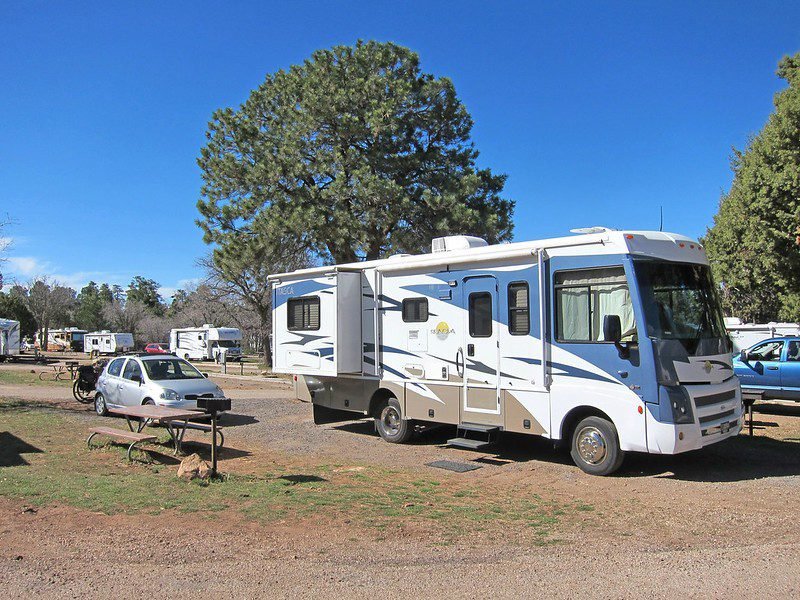
Image Credit: Grand Canyon National Park Trailer Village / flickr
Common Frustrations with Waterfront RV Parks
- Unreliable Wi-Fi: Spotty internet connectivity is a frequent complaint.
- Cramped and Uneven Sites: Poorly maintained or tight parking spaces.
- Neglected Facilities: A lack of upkeep in common areas.
- Exorbitant Prices: High costs for premium waterfront locations.
- Erosion of Rustic Charm: Concerns that an overemphasis on luxury is diminishing the traditional RVing appeal.
Historical Evolution of RV Camping
- Early 1900s: “Auto camps” were rudimentary areas for tent camping beside vehicles, lacking basic amenities. Seaside stops were similarly informal.
- Post-WWII (1950s-1960s): The rise of the American road trip and more sophisticated RVs led to an explosion in demand for dedicated RV parks. Pioneers like KOA emerged, offering essential amenities.
- Increasingly Luxurious RVs: As RVs became more advanced, the desire for direct waterfront parking grew, leading to the development of coastal RV parks.
Spotlight on Top Waterfront RV Parks
Texas Gulf Coast
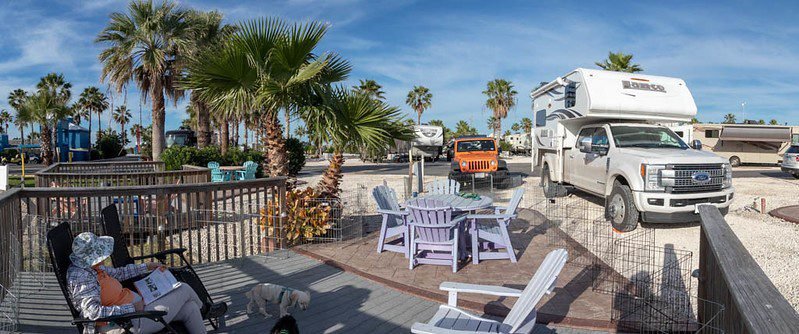
South Padre Island KOA Image Credit: Larry Pearson / flickr
- Loyd Park (Grand Prairie): Family-friendly with pools and playgrounds; potential extra parking fees.
- Dellanera RV Park (Galveston): Offers full hookups, Wi-Fi, and ocean views; sites can be snug for larger rigs.
- Galveston Island RV Resort: Features fishing, horseshoes, a pool, and an on-site store.
- South Padre Island KOA: Year-round pool, dog park, workout facilities; some past visitors noted cleanliness issues.
Florida’s Sunny Sanctuaries
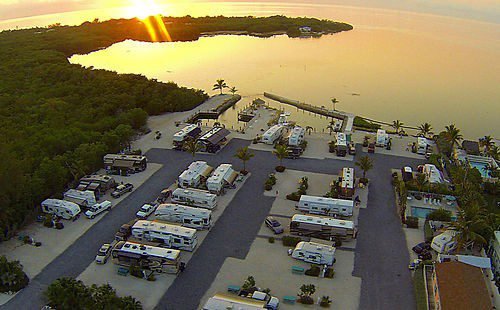
Grassy Key RV Park & Resort Image Credit: Grassy Key RV Park & Resort
- Bahia Honda State Park: Excellent for snorkeling and fishing; requires booking well in advance; maximum RV length of 50 feet.
- Anastasia State Park (St. Augustine): Ideal for nature lovers (hiking, kayaking, bird watching); communal dump station; 40ft RV length restriction.
- Henderson Beach State Park: Over a mile of shoreline; pet-friendly; central dump station; accommodates RVs up to 60 feet.
- Red Coconut RV Park (Fort Myers Beach): Beachfront views, full hookups, social events; popular choice.
- Grassy Key RV Park & Resort (Marathon): Beach access, pool, free Wi-Fi, boat dock.
Arizona’s Aquatic Adventures (Lakes and Rivers)
 Patagonia Lake State Park via ALAN SCHMIERER, CC0, via Wikimedia Commons
- Lake Pleasant RV Park (Peoria): Developed sites, boat rentals for exploring Lake Pleasant.
- Patagonia Lake State Park: Lakeside camping for fishing and relaxation in picturesque scenery.
- Dead Horse Ranch State Park (Cottonwood): Features lagoons and Verde River access; popular for hiking and horseback riding.
- Antelope Point RV Park (Lake Powell): Full hookups, views of Tower Butte, direct access to Lake Powell for watersports.
Controversies and Challenges
- Environmental Concerns: Erosion, habitat loss, strain on water resources, waste management (plastics), noise, and light pollution.
- Land-Use Conflicts: Disputes over public access vs. private development, obstruction of scenic views, and NIMBYism from local communities.
- Overcrowding: Difficulty securing desirable spots due to increased RV popularity, straining infrastructure (water, electricity, sewer).
- Long-Term Residents: Can alter park dynamics and limit availability for short-term visitors.
- RV Age Limits: Some parks impose restrictions, raising debates about fairness and sustainability.
The Future of Waterfront RVing
- Upscale Resorts: Expect more luxury accommodations like cabins and yurts, potentially with robotic concierges.
- Technology Integration: Seamless app-based check-ins, high-speed Wi-Fi, smart energy management, and EV charging stations.
- Sustainability: Increased adoption of renewable energy, advanced water conservation, and zero-waste programs.
- Climate Change Adaptation: Resilient infrastructure (elevated sites, flood-resistant buildings), smart shoreline protection, dune restoration, wetland preservation, and potentially “managed retreat” (relocation inland).
- Focus on Wellness and Family: Growth in mental wellness trips, multi-generational adventures, and nostalgic road trips.
- Digital Nomad Support: Dedicated co-working spaces and incentives for longer, work-friendly stays.
Conclusion
Waterfront RV parks have evolved from basic camping spots to sophisticated resorts, offering enriching experiences by America’s waterways. The industry is continuously adapting to new trends, technologies, and challenges, with a perfect spot available for various preferences, from breathtaking views to peaceful retreats.


