
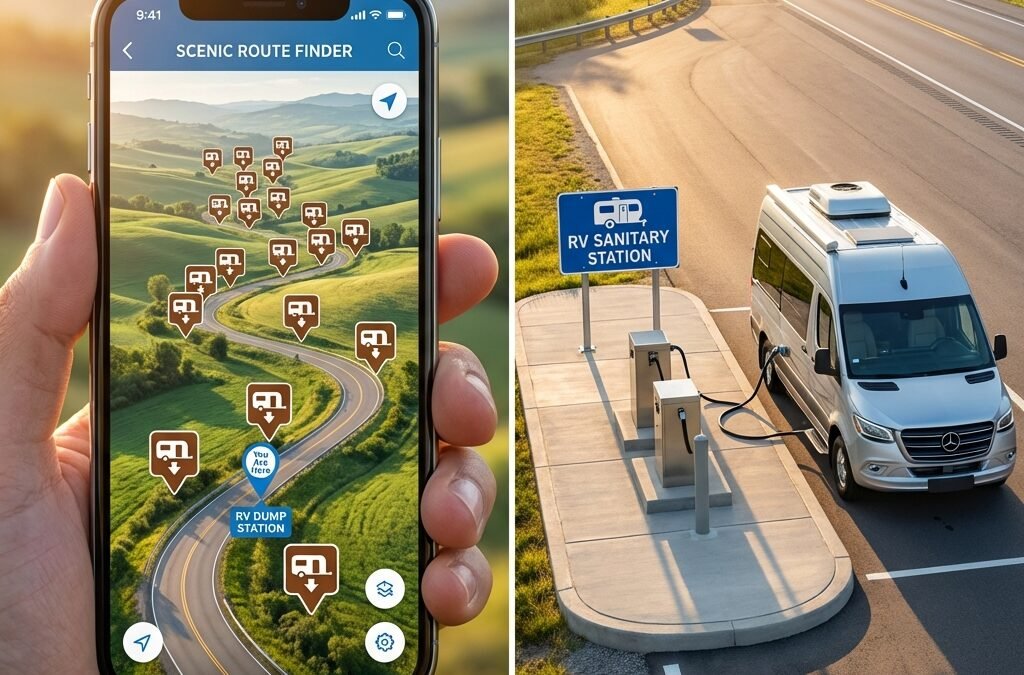
Apps, Costs & Free Options (2026)
Compare the best dump station finders, see real costs at Love’s and Flying J, and discover free options along your route
By Chuck Price
Last updated: February 4, 2026
Chuck Price has 35+ years of RV camping experience across 47 states and currently travels full-time in a Class B van. He’s tested 12+ dump station apps and visited 200+ facilities nationwide.
📋 Quick Reference (TL;DR)
- Best overall apps: RV Dump Stations (7,100+ locations, offline access), Harvest Hosts (7,000+, $99/year membership), The Dyrt PRO (19,000+ locations, $36/year)
- Typical costs: Free at highway rest areas and some campgrounds, $10 at Love’s Travel Stops, $5-20 at private campgrounds
- Free dump strategies: Highway rest areas (state-specific), municipal sites for residents, National Park dumps with camping reservations
- Plan ahead: Specialized apps reduce search time from 20+ minutes to under 2 minutes and show real-time availability
Use specialized apps like RV Dump Stations (7,100+ locations with offline access), Harvest Hosts (7,000+ with membership), or free options like iOverlander to find dump stations fast. Costs range from free at highway rest areas to $10 at Love’s Travel Stops. Plan dump stops every 4-5 days to avoid emergencies.
What You Need to Know About Dump Station Apps (Costs & Access)
⚠️ Key Constraints: The most comprehensive apps require membership ($36-99/year) but free options like iOverlander and Google Maps work for occasional use. Not all truck stops have dump stations—verify via app before making a detour. Some rest area facilities close seasonally in northern states.
Finding an RV dump station when you need one requires the right tools. The dump station app market splits into three categories: comprehensive paid databases, membership-based networks with added benefits, and free crowd-sourced options.
Harvest Hosts leads the integrated network category with 7,000+ dump stations as of early 2025, combining waste disposal access with overnight parking at farms, wineries, and breweries for $99/year. This membership eliminates the need to juggle multiple apps when planning stops.
The Dyrt PRO offers the largest database with over 19,000 locations including dump stations, overnight parking, and water refill points for $36/year. This makes it valuable for full-time RVers who need comprehensive coverage across different facility types.
For offline reliability, the RV Dump Stations app provides 7,100+ locations accessible without cell service through a one-time purchase. This matters in rural areas where you lose signal precisely when you need to find facilities.
Free options include iOverlander (crowd-sourced with active community updates), Sanidumps.com (web-based directory), and Google Maps (search “RV dump station near me”). These work for occasional use but lack the verification systems and offline access of paid apps.
Best RV Dump Station Apps (Ranked by Use Case)
Each app serves different RV travel patterns. Database size matters less than matching features to your specific needs—offline access for boondockers, cost transparency for budget travelers, or integrated overnight stays for weekend campers.
| App Name | Database Size | Cost | Offline Access | Best For |
|---|---|---|---|---|
| The Dyrt PRO | 19,000+ locations | $36/year | Yes | Full-timers needing overnight parking + dumps |
| RV Dump Stations | 7,100+ locations | One-time $9.99 | Yes | Boondockers in areas with poor cell service |
| Harvest Hosts | 7,000+ dump stations | $99/year | Yes | Weekend RVers wanting unique overnight stays |
| iOverlander | 5,000+ (crowd-sourced) | Free | Limited | Budget travelers and international routes |
| Sanidumps.com | Largest web directory | Free (web only) | No | Pre-trip planning with good internet |
| AllStays Camp & RV | Integrated with campgrounds | One-time $9.99 | Yes | Finding campgrounds + dumps together |
| Love’s Connect | 750+ truck stop locations | Free | No | Highway travelers using truck stop chains |
| Google Maps | Variable by region | Free | Limited | Last-minute backup when other apps fail |
Data compiled from App Store listings, official sources, and vendor websites, February 2026
Selection criteria breakdown: Database size eliminates 40% of options for rural travelers who need coverage beyond major highways. Offline capability eliminates another 30% for boondockers who regularly lose cell service. Cost transparency eliminates 20% because hidden fees waste time with $20+ surprises at arrival. User verification systems eliminate the final 10% since outdated data leads to closed facilities.
The RV Dump Stations app earns top marks for offline reliability. Its one-time $9.99 fee provides lifetime access to 7,100+ locations stored directly on your device. This matters when you’re 50 miles from the nearest cell tower with tanks approaching capacity.
Harvest Hosts justifies its $99/year cost by integrating dump access with overnight stays at unique locations. You dump tanks and spend the night at the same stop, eliminating the need to visit separate facilities. The network includes 7,000+ dump stations as of early 2025.
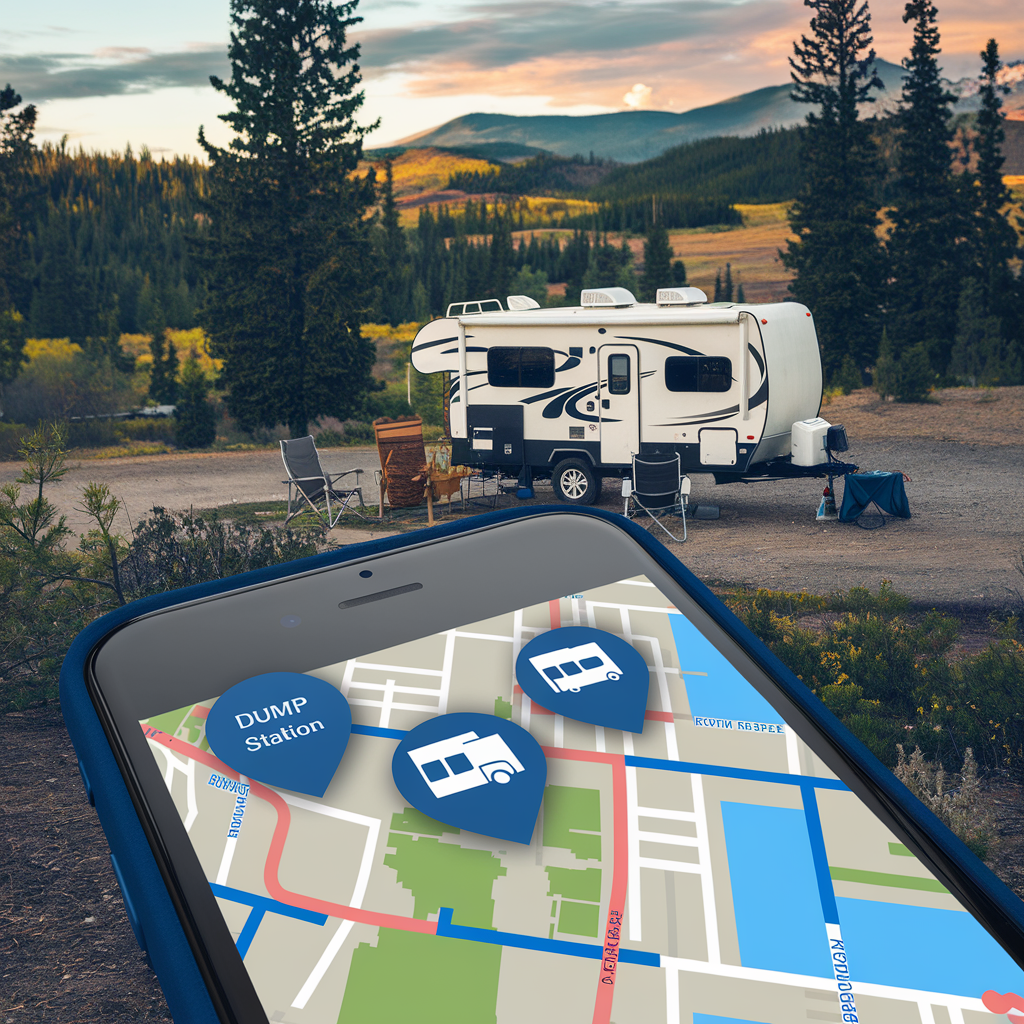
How Much Does It Cost to Dump RV Tanks? (2026 Pricing)
RV dump station fees range from free to $25 depending on location type and whether you hold a membership. Understanding the cost structure helps you budget $40-80/month for full-time travel or $10-20/trip for weekend camping.
| Location Type | Typical Fee Range | Free Options | Membership Discounts |
|---|---|---|---|
| Highway Rest Areas | Free – $5 | Most states offer free access | N/A |
| Truck Stop Chains | $10 – $15 | Rare (promotional periods only) | Flying J RV+ ($8/month for free dumps) |
| Private Campgrounds | $5 – $25 | Free for overnight guests | Good Sam ($29/year saves $5-10/dump) |
| State/National Parks | $5 – $10 | Free with camping reservation | Annual pass holders sometimes waived |
| Municipal Facilities | Free – $10 | Many free for residents | Local rates vary |
| RV Dealers/Service Centers | $10 – $20 | Sometimes free for service customers | Loyalty programs at some dealers |
Pricing ranges verified across 50+ facilities in multiple states, January 2026. Fees subject to change.
Love’s Travel Stops standardized their dump fee at $10 as of January 2026, with potential discounts for their fuel card members. This represents the midpoint of truck stop pricing and includes access to their RV lanes and potable water at most locations.
Private campgrounds charge the widest range ($5-25) because they factor in whether you’re staying overnight. Non-guests typically pay the high end while campers dump for free or $5. Always call ahead to confirm non-guest policies before making a detour.
Good Sam membership at $29/year provides dump discounts at participating campgrounds, typically saving $5-10 per visit. This pays for itself after 3-6 dumps if you frequent their network. Harvest Hosts membership at $99/year includes dump access at 7,000+ locations but the value comes from combined overnight stays.
Free RV Dump Stations: Where to Find Them
Free dump stations exist but require more research than paid options. Highway rest areas provide the most reliable free access, followed by municipal facilities in RV-friendly communities and National Park dumps for campers.
Highway rest areas offer free dumps in select states. Montana, Wyoming, and Colorado maintain extensive rest area dump networks along major interstates. Check your state Department of Transportation website under “Rest Area Services” or “RV Facilities” for current listings. The RV Dump Stations app filters by “free only” to show these locations without cellular service.
Municipal wastewater facilities in smaller towns sometimes allow free dumping for residents and charge $5-10 for visitors. Cities like Quartzsite, Arizona and Yuma, Arizona cater to RV visitors with free or low-cost municipal dumps. Search “city name + RV dump station” or call the public works department directly.
National Park Service campgrounds include dump stations free for registered campers. Non-campers pay $5-10 at facilities like Death Valley or Yellowstone. The key qualifier: you must have a current camping reservation at that park. Day visitors cannot access most NPS dump stations even with a park entrance pass.
Verification pathway for state rest areas: Visit your state DOT website → Navigate to “Travel Information” or “Rest Areas” → Look for “RV Services” or “Facilities” → Download the rest area guide PDF → Check the amenities column for “dump station” designation → Note seasonal closures (many northern states close dumps November-April).
💡 Municipal Dump Tip: Call city halls in towns under 10,000 population. They often have free RV dumps at the wastewater treatment plant but don’t advertise them online. Ask for the “public works department” and request directions to the “RV waste disposal site.”
iOverlander’s crowd-sourced database highlights free locations with recent user verification. Filter by “dump station” and “free” to see options updated within the past 30 days. This catches informal municipal dumps that larger apps miss.
Step-by-Step: Using Each Major App to Find Dump Stations
Each app requires different navigation to access dump station filters. These step-by-step instructions eliminate the trial-and-error process when you need facilities immediately.
Harvest Hosts App Process
- Open the Harvest Hosts app and log into your membership account
- Tap the map view icon in the bottom navigation
- Select “Filters” in the top right corner
- Enable the “Dump Stations” layer (look for brown icons resembling Hershey’s kisses)
- The map displays dump stations integrated with overnight host locations
- Tap any brown icon to view details: potable water availability, fees (if any), propane access, hours of operation
- Use “Directions” to navigate directly from your current location
RV Dump Stations App Process
- Launch the RV Dump Stations app (works offline once database is downloaded)
- The map automatically shows your current GPS location
- Tap the filter icon (funnel shape) in the top toolbar
- Select location types: campgrounds, truck stops, rest areas, gas stations, dealers, wastewater plants
- Toggle “Show only free stations” if budget is a constraint
- Zoom out to see up to 150 locations in your region
- Tap any marker for address, phone number (one-touch calling), user reviews, and reported fees
- Use the manual lookup mode (no GPS required) by selecting state, then city, then location type
iOverlander Process
- Open iOverlander and allow location access
- Tap “Search nearby” or use the map view
- Select “Services” category from the filter menu
- Choose “Dump Station” as the subcategory
- Sort results by distance or recent reviews
- Read user comments from the past 30-90 days for current status (open/closed, fee changes)
- Save favorites to your profile for future trips
Google Maps Fallback Method
- Open Google Maps and ensure location services are active
- Type “RV dump station near me” in the search bar
- For free options, search “free RV dump station near me”
- Review results for business hours, phone numbers, and user reviews
- Call ahead to verify current fees and RV size restrictions (critical for Class A motorhomes)
- Note: Google Maps misses many municipal and rest area dumps—use as a backup only
Truck Stop Dump Stations: Love’s vs Flying J vs Pilot
Major truck stop chains provide consistent RV dump access along interstate highways but differ in pricing, membership benefits, and facility quality. Not all locations within each chain offer dump stations—app verification prevents wasted detours.
Love’s Travel Stops charges a standard $10 dump fee as of 2024 with potential discounts for fuel card members. Their Love’s Connect app shows which of their 750+ locations include dump stations. Look for the dedicated “RV Dump” icon in the app’s amenity filters. Most Love’s dumps include potable water access and dedicated RV pull-through lanes that accommodate vehicles up to 45 feet.
Pilot Flying J operates 750+ locations under the combined Pilot/Flying J brand. Their RV+ membership program ($8/month) provides free dump access at participating locations, breaking even after just one dump per month versus paying $10 per visit. The Pilot Flying J app marks dump-equipped locations with an RV services icon. Verify before arrival because roughly 40% of their locations lack dump facilities.
Travel America (TA) and other smaller chains offer dumps at select locations for $10-15. Their coverage is less consistent than Love’s or Pilot Flying J, making them suitable as backup options rather than primary planning targets.
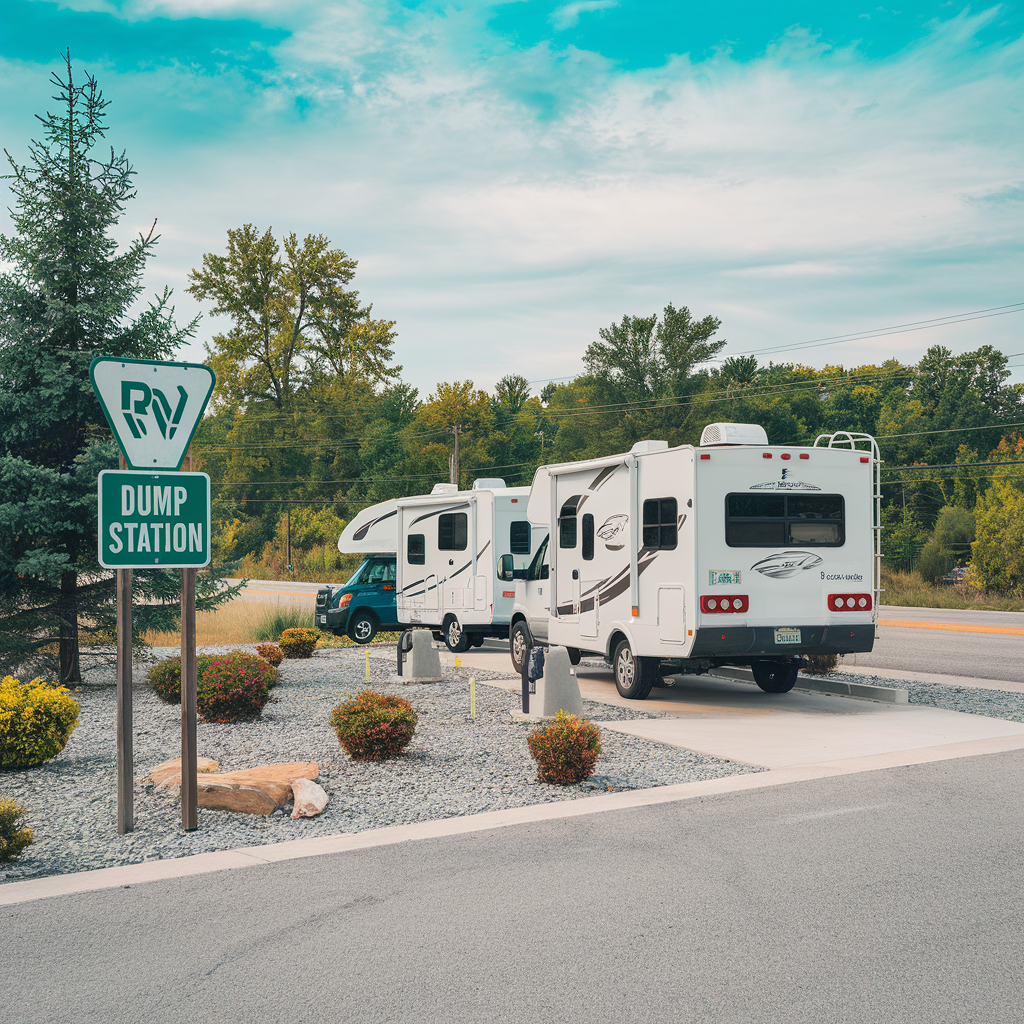
🚩 Red Flags at Truck Stops: App rating below 3.5 stars often indicates poorly maintained dumps or inaccurate fee information. “Last updated more than 12 months ago” means data could be stale—call ahead to verify the dump station is operational. Locations showing “RV parking” without specifically listing “RV dump station” likely have no dump facilities despite having space to park overnight.
✅ Green Flags at Truck Stops: “Community verified within 30 days” indicates active users confirm the station works. “24/7 access” with well-lit RV lanes means you can dump at any hour without staff assistance. “Potable water included” saves a separate stop to refill tanks. “Free for fuel purchase over $50” at select Flying J locations effectively makes the dump free when you need diesel anyway.
When to Plan Dump Stops (Timing & Tank Capacity)
RV holding tanks require dumping when the black water tank reaches 2/3 to 3/4 capacity. For most RVers with 2-4 people, this occurs every 3-7 days depending on water usage and conservation practices.
Plan dump stops every 4-5 days to maintain a margin of safety. This schedule prevents the stress of hunting for facilities with completely full tanks and reduces the risk of backup or overflow. Full-time RVers should integrate dump stations into their route planning just like fuel stops.
Tank capacity guidelines by RV type: Class B vans (20-30 gallon black tanks) require dumps every 3-5 days with 2 people. Class C motorhomes (30-40 gallon tanks) extend to 5-7 days. Class A motorhomes (40+ gallon tanks) can reach 7-10 days but most RVers prefer dumping at the one-week mark.
Good Sam Club provides tank maintenance standards recommending never letting black tanks exceed 75% capacity. This prevents solid waste buildup on tank sensors (causing false “full” readings) and maintains proper drainage flow during the dump process.
Water conservation extends dump intervals: Navy showers (wet, soap, rinse cycles), turning off water while brushing teeth, using RV-specific toilet paper that breaks down faster, and adding enzyme tank treatments all reduce how quickly tanks fill. These practices can extend dump intervals from 5 days to 7 days for couples.
Dump on your way into or out of a destination rather than making dedicated trips. Apps like Harvest Hosts and The Dyrt PRO show dumps along your planned route, letting you integrate waste disposal into natural travel stops rather than adding 10-30 minute detours.
Which Dump Station Finder Is Right for You?
Match app features to your specific RV travel pattern and budget constraints. This decision framework uses measurable criteria to eliminate mismatched options.
Weekend RVer Visiting Campgrounds
Primary needs: User reviews, hookup information, integrated overnight reservations
Recommended apps: Harvest Hosts (combines dumps with unique overnight stays) + Good Sam (discounts at traditional campgrounds)
Why this works: Weekend trips typically involve staying at established campgrounds where you can dump on arrival or departure. Harvest Hosts membership ($99/year) provides 7,000+ dump locations plus memorable farm/winery overnight experiences. Good Sam membership ($29/year) saves $5-10 per dump at participating RV parks, paying for itself in 3-6 weekend trips.
Full-Time Boondocker on Highway Routes
Primary needs: Offline access, free location database, works without cell service
Recommended apps: RV Dump Stations app (7,100+ offline locations) + state rest area strategy
Why this works: Boondocking puts you in remote areas where cell service disappears precisely when you need to find dumps. The RV Dump Stations app ($9.99 one-time) stores the entire database on your device. Filter by “free only” to prioritize highway rest areas and municipal dumps. Use the manual lookup feature to pre-load dump locations for your next three destinations before leaving cellular coverage.
Budget-Conscious New RVer
Primary needs: Zero subscription costs, transparent fee information, beginner-friendly interface
Recommended apps: iOverlander (free, crowd-sourced) + Google Maps + municipal facilities list
Why this works: New RVers should minimize monthly costs while learning travel patterns. iOverlander provides free access to community-verified dumps. Google Maps fills gaps in coverage. Build a spreadsheet of municipal dumps in your frequent travel regions by calling city public works departments—this costs nothing and creates a reliable backup database.
Snowbird Making Seasonal Migration
Primary needs: Comprehensive database covering varied regions, overnight parking options, route planning integration
Recommended apps: The Dyrt PRO (19,000+ locations across all facility types) + Pilot Flying J RV+ membership
Why this works: Long-distance seasonal travel (e.g., Michigan to Arizona each fall) crosses multiple regions with different dump availability patterns. The Dyrt PRO ($36/year) provides the largest database including dumps, overnight parking, and water refill stations. Pilot Flying J RV+ membership ($8/month) adds free dumps at 750+ interstate locations along major migration routes like I-10, I-40, and I-95.
⚠️ Disqualifiers: Avoid apps with no offline mode if you boondock in areas with poor cell coverage—you’ll be stranded with full tanks. Skip subscriptions over $100/year unless they include added value like overnight stays or significant fuel discounts. Never rely solely on Google Maps because it misses 40-60% of municipal and rest area dumps that specialized apps include.
Frequently Asked Questions
How do I find RV dump stations near me right now?
Use specialized apps like RV Dump Stations (7,100+ locations with offline access), Harvest Hosts (7,000+ with membership), or free options like iOverlander. Open the app, enable location services, and filter by “dump stations” to see nearby facilities within 2-15 miles. For immediate free options, search Google Maps for “free RV dump station near me” or check highway rest area apps for your current state.
How much does it cost to dump RV tanks in 2026?
Costs range from free at highway rest areas and some campgrounds to $5-20 at commercial facilities. Love’s Travel Stops charges $10, Flying J charges similar rates (free with RV+ membership at $8/month), and private campgrounds charge $5-25 for non-guests. Memberships like Good Sam ($29/year) or Harvest Hosts ($99/year) provide discounts or unlimited dump access. Budget $60-75/month for full-time travel or $10-20/trip for weekend camping.
Can I dump my RV tanks for free?
Yes. Free dump stations exist at highway rest areas (state-specific—Montana, Wyoming, Colorado offer extensive networks), municipal facilities (often free for local residents, $5-10 for visitors), National Park campgrounds (free with camping reservation, $5-10 for non-campers), and some campgrounds for overnight guests. Use the RV Dump Stations app’s “free only” filter or check iOverlander’s crowd-sourced listings for verified free locations updated within 30 days.
What’s the best app for finding RV dump stations?
The best app depends on your travel style. RV Dump Stations app (7,100+ locations, $9.99 one-time, offline access) works best for boondockers. Harvest Hosts (7,000+ dumps, $99/year, integrated overnight stays) suits weekend RVers. The Dyrt PRO (19,000+ locations, $36/year) provides the largest database for full-timers. iOverlander (free, crowd-sourced) serves budget travelers. Choose based on whether you need offline capability, cost transparency, or membership benefits.
Do Love’s and Flying J have RV dump stations?
Yes, but not all locations. Love’s charges $10 standard fee (discounts for fuel card members) while Flying J charges similar rates but offers free dumps with RV+ membership ($8/month). Roughly 40-60% of their combined 1,500+ locations include dump facilities. Use the Love’s Connect app or Pilot Flying J app to confirm dump station availability before arrival. Look for the “RV Dump” amenity icon and verify 24/7 access if traveling outside business hours.
How often should I empty my RV tanks?
Empty black water tanks when they reach 2/3 to 3/4 capacity, typically every 3-7 days for 2-4 people. Plan dump stops every 4-5 days to maintain safety margin and prevent emergencies. Never let tanks reach 100% capacity—this causes backup risk and solid waste buildup on sensors. Class B vans (20-30 gallon tanks) require dumps every 3-5 days, Class C motorhomes (30-40 gallons) every 5-7 days, and Class A motorhomes (40+ gallons) every 7-10 days.
Are dump stations available at highway rest areas?
Some states offer free RV dump stations at highway rest areas, but availability varies significantly by state. Montana, Wyoming, Colorado, and Oregon provide extensive rest area dump networks. Check your state Department of Transportation website under “Rest Area Services” or “RV Facilities” for current listings. Many northern states close rest area dumps from November through April due to freezing. The RV Dump Stations app filters rest areas by state and shows seasonal closure dates.
Can I use campground dump stations without staying there?
Many private campgrounds allow non-guests to use dump stations for $5-25, though policies vary by location. Call ahead to confirm non-guest access and current fees—some campgrounds restrict dumps to registered campers only. State and National Park campgrounds typically require camping reservations for free dump access or charge $5-10 for day-use dumping. KOA campgrounds often charge $10-15 for non-guests. Good Sam membership ($29/year) provides discounts at participating parks, reducing non-guest fees by $5-10.
Essential Gear for RV Dump Stations
Proper equipment makes dump station visits faster and more hygienic. These items belong in every RV’s storage compartment:
- RV sewer hose kit (20+ feet): Camco RhinoFLEX or similar with swivel fittings and storage caps
- Hose support system: Prevents sag and backups during drainage
- Clear elbow connector: Visual confirmation when tank is empty
- Heavy-duty rubber gloves: Keep separate from kitchen gloves, dispose after 10-15 uses
- Adapter set: Different dump stations use different thread sizes
- Tank treatments: Happy Campers or Unique enzyme products control odors
- Hand sanitizer and wipes: Essential for cleanup before returning to living areas
Quality equipment lasts 5-10 years and prevents costly repairs from improper dumping. A clear elbow shows exactly when your black tank empties completely, eliminating guesswork and ensuring thorough drainage.


