

Traveling during a federal shutdown?
Use our updated Shutdown Camping Guide (2025) for what’s open and legal alternatives.
Last updated: October 2, 2025 • Maintainer: Chuck Price (chuck@chuckprice.org) • Non-partisan resource
Quickly explains what’s open/closed and legal alternatives (BLM/USFS dispersed, state parks).
What stays open, what closes, and how to prepare
TL;DR – Key takeaways
- Many National Parks will remain accessible with basic services – Parks collecting recreation fees will use those funds to maintain restrooms, trash collection, and campground operations while funds last
- BLM dispersed areas and most National Forest backcountry stay open – But zero services at non-fee areas (no trash, water, or restrooms)
- Army Corps of Engineers (COE) is the wild card – Funded through Defense, not Interior. May stay open in partial shutdowns; closes like NPS in full shutdowns. Check local district websites or call district offices for the current status.
- You must be 100% self-sufficient – 14+ days of supplies, backup camping locations, and emergency communication
A government shutdown looming means federal agencies are scrambling to finalize contingency plans, but many details remain unclear just days before potential funding lapses. For campers already on the road or planning trips to federal lands, this uncertainty creates real problems. Will your reserved campsite be accessible? Can you renew your Long-Term Visitor Area permit? What happens if you need emergency services in remote areas?
The reality is that “shutdown” doesn’t mean the same thing across different land management agencies. While some National Parks may close completely, many will remain accessible and maintain basic services using recreation fee funds. Most Bureau of Land Management dispersed camping areas remain physically accessible. National Forests fall somewhere in between. Understanding these differences and preparing for reduced services can mean the difference between a minor inconvenience and a trip-ending crisis.
This guide breaks down exactly what each agency does during shutdowns, addresses the specific challenges facing long-term campers, and provides a complete preparation checklist. By the end, you’ll know which backup plans to activate and how to maintain self-sufficiency when government services disappear.
Agency-by-agency breakdown: What closes and what stays accessible
The confusion around shutdown impacts stems from the fact that each federal land management agency operates under different funding structures and priorities. Here’s what actually happens to your camping options when Congress fails to pass spending bills.
Official contingency plans:
- National Park Service Contingency Plan (September 2025)
- Bureau of Land Management Contingency Plan (September 2025)
National Parks: Varied access depending on fee collection and park design
The National Park Service approach during shutdowns varies significantly based on whether parks collect recreation fees and whether they have physically accessible areas. According to the official NPS contingency plan, the situation is more nuanced than simple closures.
Parks with accessible areas that collect recreation fees:
Parks collecting fees under the Federal Lands Recreation Enhancement Act (FLREA) will utilize available retained recreation fee balances to provide basic visitor services. This includes:
- Restrooms and sanitation maintenance
- Trash collection
- Road maintenance
- Campground operations
- Law enforcement and emergency operations
- Staffing entrance gates as necessary to provide critical safety information
Park roads, lookouts, trails, and open-air memorials will generally remain accessible to visitors at these locations. Each park must develop daily cost estimates for all employees and services to be supported by recreation fees for review and approval by the Assistant Secretary for Fish and Wildlife and Parks.
Parks without sufficient recreation fee funds:
Parks with accessible areas that do not collect recreation fees or have insufficient balances must develop daily cost estimates for all employees and services to be supported by regional or national recreation fees. At parks without accessible areas, the NPS will not operate during the lapse. Excepted staffing will be held to the minimum amount needed for law enforcement and emergency response. No visitor services will be provided.
What closes everywhere:
Even at parks maintaining basic operations, the following services will not be available:
- Permits for new activities (no new permits issued)
- Interpretive or educational programs
- Visitor information services beyond critical safety information
- Road and walkway maintenance including plowing and ice melting (except at fee-funded parks)
- Park websites and social media (except for emergency communications)
- Regular road or trail condition updates
As a general rule, if a facility or area is locked or secured during non-business hours (buildings, gated parking lots, etc.) it will be locked or secured for the duration of the shutdown.
Resource protection closures:
At the Assistant Secretary for Fish and Wildlife and Parks’ discretion, parks may close grounds/areas with sensitive natural, cultural, historic, or archaeological resources vulnerable to destruction, looting, or other damage that cannot be adequately protected by the limited law enforcement staff that remain on duty. If visitor access becomes a safety, health, or resource protection issue (weather, road conditions, resource damage, garbage build-up to the extent that it endangers human health or wildlife, etc.), the area must be closed.
If you have existing reservations through Recreation.gov, the NPS recommends contacting the local facility to determine if the facility is open or closed. Reservations may not be honored if locations are not fully staffed. Refunds will be considered and processed after the lapse in funding resolves.
BLM lands: Dispersed areas open, developed sites closed
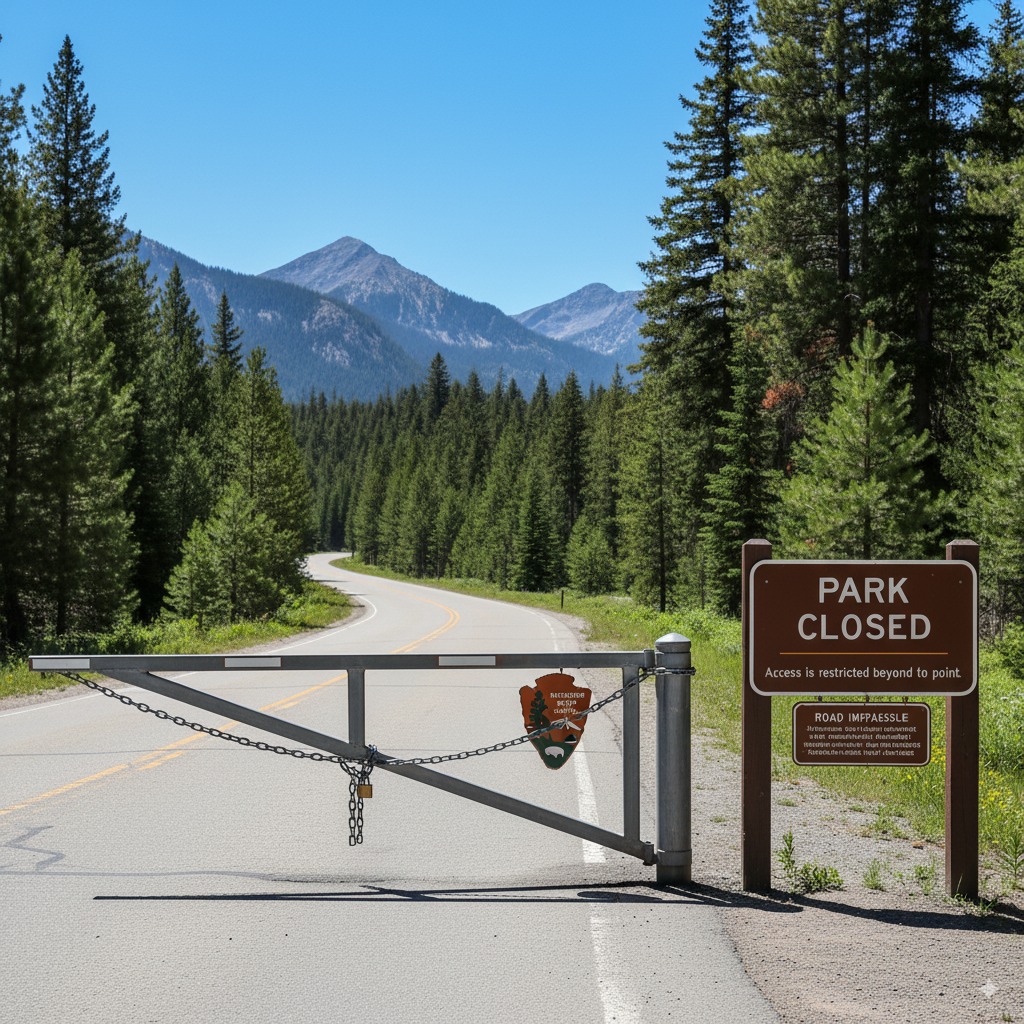
Bureau of Land Management areas present the most camper-friendly shutdown scenario. The vast majority of BLM’s 245 million acres consists of undeveloped public land that remains accessible during shutdowns (Bureau of Land Management, 2023). This includes popular boondocking destinations across Arizona, California, Nevada, and Utah.
However, all developed recreation sites close, including campgrounds with amenities, visitor centers, and vault toilet facilities. More critically for long-term campers, services like trash collection and dump stations become unavailable. BLM ranger patrols continue at reduced levels for emergency response, but routine enforcement of camping limits and permit checks essentially stops.
According to the official BLM contingency plan, visitor services including trash collection and toilet cleaning will generally continue at recreation fee sites authorized under the Federal Land Recreation Enhancement Act while funds are available, but may not be available at all locations. BLM land will remain accessible to the public and efforts will be made to post signs, as appropriate, to indicate where services are or are not available.
The agency’s dispersed camping rules remain in effect, but verification and education typically handled by camp hosts disappears. This creates a gray area for permit renewals and compliance monitoring that campers must navigate carefully.
Campgrounds, boat ramps, and other recreation sites will be open, however, at some facilities the full range of services may not be available including restrooms and water systems. In cases where funds are not available to maintain such services, signs will be posted but visitors may remain at these sites at their own risk.
National Forests: Mixed approach based on local conditions
The U.S. Forest Service typically adopts a middle-ground approach. Backcountry areas and most forest roads remain open for dispersed camping, but developed campgrounds, day-use areas, and visitor centers close (U.S. Forest Service, 2019).
Unlike BLM lands, some National Forests may restrict access to specific areas due to fire danger or resource protection concerns when firefighting and maintenance crews are reduced. Local forest supervisors have discretion to implement broader closures if they determine public safety risks are too high with minimal staffing.
Developed sites that charge fees always close, while free dispersed areas generally stay accessible. However, services like restroom maintenance and trash pickup cease entirely.
U.S. Army Corps of Engineers (COE): The shutdown wild card
The U.S. Army Corps of Engineers operates differently during federal government shutdowns because it is funded through the Department of Defense (DoD), unlike National Parks or Forest Service sites funded by the Departments of the Interior and Agriculture. This unique funding structure means COE recreation areas may remain open if Defense funding continues while other agencies shut down.
Partial shutdown scenario (most common): If Congress approves Defense spending but not Interior or Agriculture funding, COE campgrounds, boat ramps, and day-use areas generally remain fully open with normal services, making them valuable alternatives when other federal sites close.
Full shutdown scenario: If Defense funding also lapses, COE facilities close fully similar to National Parks. This includes gate-locking all federal-operated campgrounds, canceling reservations through Recreation.gov with refunds, and ceasing all services, including visitor centers, restrooms, water, dump stations, trash collection, and most boat ramps (though some ungated ramps may remain physically accessible without services).
Partner facility exception: Not all COE recreation areas are federally operated. Some campgrounds, marinas, and day-use areas are managed by county governments, municipalities, or private concessionaires under leases. These partner-operated sites may stay open during federal shutdowns if they do not rely on federal staff and access roads remain open, but this varies by location and should be verified locally.
Operations continuing during shutdown: Dam operations, flood control, and emergency response for life and property protection continue regardless of shutdown status.
Uniform closure policy: During the 2025 government shutdown, all USACE-operated campgrounds and day-use parks closed nationwide on October 1, 2025. Unlike earlier assumptions about district-level discretion, the actual shutdown policy was uniform—all federally-operated COE recreation facilities closed, with no exceptions based on location or the number of campgrounds on a waterway (U.S. Army Corps of Engineers, 2025).
The partner facility exception remains: The only sites that may stay open are those operated by counties, municipalities, or private concessionaires on leased land, and only if they don’t rely on federal staff. These exceptions are rare. Campers scheduled to arrive during a shutdown should contact the local park or district office directly, as reservations through Recreation.gov will be automatically canceled with refunds processed.
Real-time status website update: The COE launched a Recreation Operational Status website in May 2025 to provide real-time, district-by-district updates. However, as of late 2025, this website is no longer available. Visitors now need to check local district websites or contact district offices directly for current operational information before planning visits.
| Agency | Access Level | Services Available | Enforcement |
|---|---|---|---|
| National Parks (fee-funded) | Generally accessible | Basic services while FLREA funds last: restrooms, trash, campgrounds, road maintenance | Law enforcement continues |
| National Parks (non-fee or closed areas) | Closed | Emergency only | Minimal presence |
| BLM Dispersed | Fully open | None at non-fee areas; basic services at fee sites while funds last | Emergency response only |
| BLM Developed | Varies – fee sites may remain open | Basic services at fee sites while funds last | Reduced patrols |
| National Forests | Dispersed open, developed closed | Emergency only | Reduced patrols |
| U.S. Army Corps of Engineers (COE) | All federal sites close in full shutdown; rare partner/concessionaire sites may stay open | Normal (partial shutdown) or None (full shutdown) | Normal patrols (partial) or reduced to dam security (full) |
Long-term camper considerations: LTVAs and extended stays
Long-term campers face unique challenges during government shutdowns that go beyond simple access issues. The infrastructure and services that support extended stays on federal lands operate differently when agencies reduce to skeleton crews.
LTVA permit renewals and host services
Long-Term Visitor Areas like those around Quartzsite, Arizona, present complex scenarios during shutdowns. While the BLM lands themselves remain accessible, the permit system that legitimizes extended stays becomes problematic. Current LTVA permits remain valid through their expiration dates, but renewals become impossible when fee collection and administrative services stop (Bureau of Land Management, 2018).
This creates a legal gray area for campers whose permits expire during a shutdown. The BLM’s official guidance states that campers should not be penalized for administrative delays beyond their control, but enforcement becomes inconsistent with reduced staffing. Camp hosts, who typically assist with permit renewals and provide local information, are either furloughed or work without official support.
Water and dump station access, critical services for long-term stays, disappear when maintenance crews are furloughed. Private vendors in areas like Quartzsite typically continue operating, but government facilities close indefinitely.
Duration planning: First week versus extended closures
The impact of shutdowns on camping escalates significantly after the first week. Initially, most campers can maintain their routines using stored supplies and existing infrastructure. However, extended shutdowns create compounding problems that require different strategies.
Trash accumulation becomes the most visible issue. Without regular collection services, popular camping areas quickly develop sanitation problems. During the 2018-2019 shutdown, several BLM areas near major cities experienced illegal dumping and overflowing waste containers that took months to fully address (Government Accountability Office, 2019).
Emergency response capabilities also degrade over time. While initial emergency services continue with essential personnel, response times increase and specialized rescue capabilities may become unavailable. This particularly affects remote camping areas where cell coverage is limited and self-rescue becomes the primary option.
Ethical camping: Protecting lands when no one is watching
Reduced government presence during shutdowns places extra responsibility on the camping community to protect the resources we all depend on. This goes beyond basic Leave No Trace principles to active stewardship when official oversight disappears.
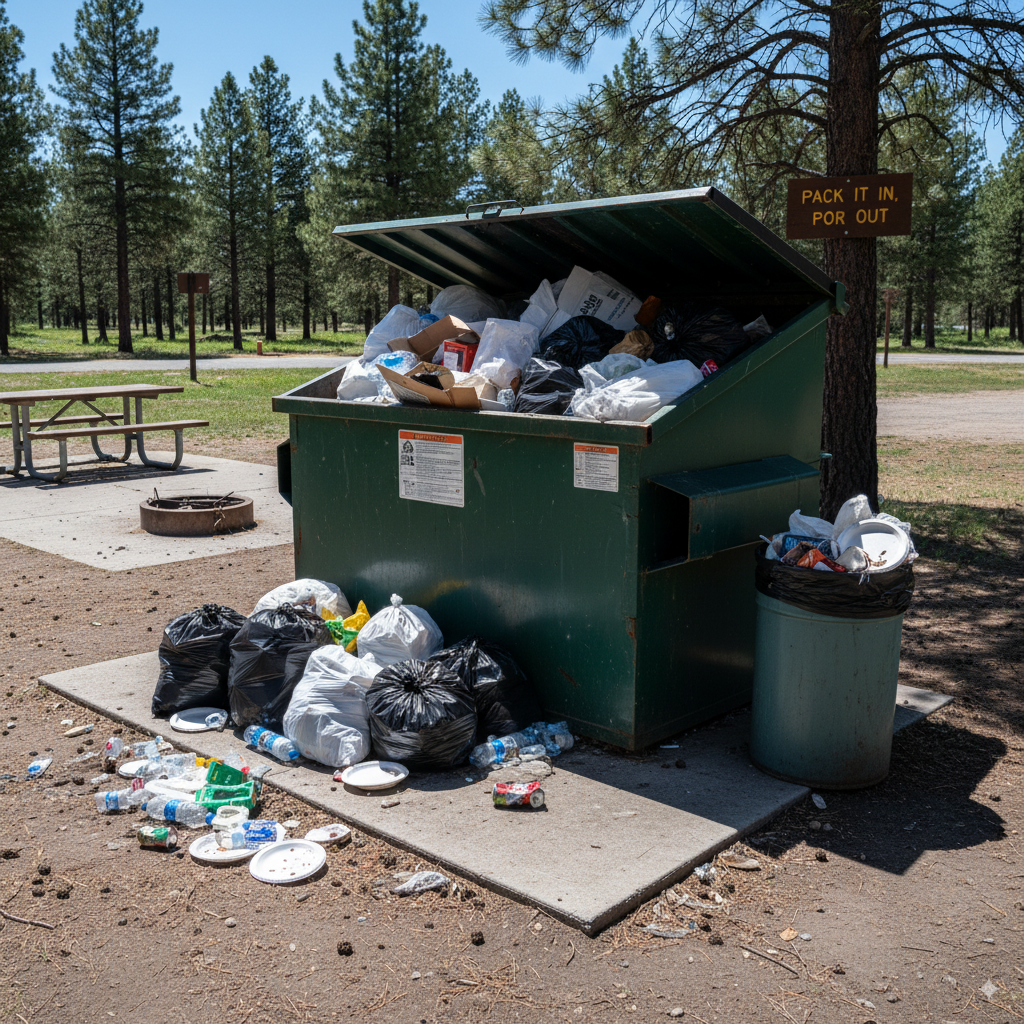
Pack out all trash, even when dumpsters are available but not being emptied. Overflowing containers attract wildlife and create long-term environmental problems. Store waste securely and plan for extended periods without disposal options.
Respect all closure signs and physical barriers, even when circumvention appears easy. Agencies post restrictions for resource protection and safety reasons that remain valid regardless of enforcement presence. Being caught in closed areas during a shutdown can result in enhanced penalties when normal operations resume.
Report serious violations or emergencies through official channels when possible. While response may be delayed, documentation helps agencies prioritize limited resources and address problems systematically.
Self-sufficiency preparation: Essential supplies and strategies
When government services disappear, successful camping depends entirely on your ability to handle problems independently. The key difference between inconvenience and crisis lies in preparation that goes beyond normal boondocking supplies.
Extended waste management without services
Trash storage becomes your biggest logistical challenge during extended shutdowns. Plan for double your normal waste generation when you can’t access dumpsters or recycling facilities. Compact everything aggressively and separate food waste that attracts animals.
Invest in bear-proof containers or metal storage boxes if you don’t already have them. Plastic bags and soft containers won’t protect against wildlife that becomes bolder around campsites when ranger presence decreases. During the 2018-2019 shutdown, several popular camping areas reported increased wildlife conflicts due to improper food and waste storage (National Park Service, 2019).
Grey water disposal requires more careful planning without dump stations. Identify multiple backup locations for legal grey water disposal, including private RV parks and truck stops along your planned routes. Reduce grey water production by using paper plates and minimizing dishwashing when disposal options are limited.
Black water management becomes critical after 5-7 days for most RV systems. Map private dump stations within reasonable driving distance of your camping area before you need them. Some truck stops and gas stations offer dump services for a fee, but availability varies significantly by region.
Water security and conservation strategies
Water access becomes unreliable when government facilities close. Fill all tanks and containers before entering areas that depend on federal water sources. This includes many BLM areas where the only reliable water comes from visitor centers or developed campgrounds that close during shutdowns.
Identify private water sources along your route, including grocery stores, truck stops, and RV supply stores that sell potable water. Some areas popular with long-term campers have private water delivery services, but expect higher demand and prices during shutdowns.
Implement strict water conservation immediately when services become uncertain. Reduce shower frequency, use disposable plates to minimize dishwashing, and collect rainwater where legal and practical. A 20% reduction in water usage can extend your independence by several days.
Communication and emergency preparedness
Emergency response times increase significantly during shutdowns as agencies operate with minimal staffing. Your ability to handle medical emergencies, vehicle breakdowns, and equipment failures becomes more critical when help is hours away instead of minutes.
Upgrade your communication capabilities if you regularly camp in remote areas. Satellite communicators like Garmin inReach devices provide two-way messaging and emergency beacon functions that work regardless of cell coverage. These devices proved essential for several campers during previous shutdowns when normal emergency services were delayed (Garmin, 2023).
Carry comprehensive first aid supplies and know how to use them. Include prescription medications with extra supplies, since pharmacy access may be limited if you need to relocate quickly. Document medical conditions and emergency contacts in writing, since electronic devices can fail when you need them most.
Legal compliance without oversight
Staying within camping regulations becomes more complex when enforcement and education services are reduced. The 14-day dispersed camping limit remains in effect, but verification systems that rely on host check-ins or ranger visits essentially stop functioning.
Document your camping locations and dates meticulously. Take GPS coordinates and photos that prove compliance with regulations if questions arise later. Some campers have faced retroactive penalties when agencies resume normal operations and discover extended stays during shutdown periods.
Move between camping areas proactively rather than waiting for enforcement contact that may never come. The spirit of dispersed camping regulations is to prevent long-term settlement and resource damage, which becomes more important when monitoring disappears.
Alternative strategies: Backup plans and exit routes
Smart shutdown preparation includes realistic backup plans that don’t depend on federal land access. When your primary camping strategy fails, these alternatives can save your trip without breaking your budget.
State park systems as reliable alternatives
State parks operate independently of federal funding and maintain normal services during federal shutdowns. Many western states offer excellent camping options that rival federal alternatives, often with better amenities and more predictable availability.
California state parks provide particularly good alternatives to federal desert camping, with locations like Anza-Borrego Desert State Park offering dispersed-style camping with basic services maintained. Arizona state parks near popular BLM areas include Lost Dutchman and McFarland, both within driving distance of traditional Quartzsite-area camping.
Reservation systems for state parks continue operating normally during federal shutdowns, but expect increased demand from displaced federal land campers. Book alternative sites before shutdowns begin rather than waiting for displacement to occur. This is particularly critical for campers displaced from U.S. Army Corps of Engineers lakeside campgrounds, as many states operate parks on or near the same reservoirs, providing similar waterfront experiences with uninterrupted services during federal shutdowns.
Private campground cost-benefit analysis
Private campgrounds become more attractive during shutdowns when their reliability outweighs cost concerns. For long-term campers, monthly rates at private parks may cost less than constantly relocating and dealing with service interruptions.
Thousand Trails and other membership programs offer emergency alternatives for members, though availability varies by region and season. Some private campgrounds near popular federal areas offer special rates during government shutdowns, recognizing the displaced camper market.
Budget for higher costs but factor in savings from reduced fuel consumption when you’re not constantly seeking services and supplies. A stable base camp with reliable utilities may cost more per day but reduce overall trip expenses when federal services are unavailable.
Urban boondocking and city resources
Cities near popular camping areas often allow overnight parking in specific zones, providing access to urban services when federal facilities close. Many western cities accommodate RVers with designated overnight areas, especially during peak season when campgrounds fill up.
Walmart, Cracker Barrel, and truck stops provide legal overnight parking with varying amenities. While not suitable for extended stays, these options work well for resupply runs and service access when federal land camping becomes impractical.
Research local ordinances before relying on urban options. Some cities restrict RV parking during peak tourist seasons, while others welcome the economic impact of visiting campers. Apps like Campendium and iOverlander provide real-time information about urban camping legality and camper experiences.
Community resources and mutual aid
The camping community typically becomes more cooperative during challenging situations like government shutdowns. Online forums, Facebook groups, and apps like Campendium provide real-time information about conditions, alternatives, and resource sharing opportunities.
Consider joining or organizing informal camping groups that can share costs and responsibilities. Group camping reduces individual resource consumption and provides backup assistance for emergencies or equipment failures when official services are unavailable.
Local businesses in popular camping areas often step up with services during federal shutdowns. Private dump stations, water sales, and supply deliveries may become available in areas that normally depend on government facilities. Support these businesses that help the camping community during difficult periods.
Your shutdown survival checklist: Be ready before it happens
Government shutdowns often develop quickly, leaving little time for preparation once funding lapses become imminent. The difference between a manageable situation and a trip-ending crisis comes down to preparation that happens before uncertainty strikes.
Pre-shutdown preparation timeline
Start monitoring shutdown risks two weeks before potential deadlines. Congressional funding battles typically provide advance warning, but agencies release specific closure information only days before actual shutdowns occur. Follow the Federal News Network and Government Executive for reliable updates on appropriations status and agency planning.
Check agency websites three days before potential shutdowns for updated contingency plans. While the Trump administration hasn’t restored public access to detailed shutdown plans, individual agencies often post basic closure information on their homepages when shutdowns become likely.
Complete all supply runs and tank fills 48 hours before potential closure dates. Popular camping areas near cities experience increased demand as campers stock up, making last-minute shopping more difficult and expensive.
Essential monitoring and communication
Bookmark the emergency contact numbers for local sheriff’s departments and emergency services in areas where you plan to camp. Federal emergency response continues during shutdowns, but local agencies may provide faster assistance for non-life-threatening situations.
Download offline maps for your camping areas and alternative routes to services. Cell coverage often remains limited in remote camping areas, and GPS apps may not work when you need them most. Paper maps provide backup navigation when electronic systems fail.
Join local camping Facebook groups and forums for real-time condition reports from other campers. The community network often provides more current information than official sources, especially regarding road conditions, water availability, and service alternatives.
Final verification questions
Before heading to federal lands during shutdown uncertainty, confirm you can answer “yes” to these critical questions:
- Do you have at least 10 days of water and 14 days of food?
- Can you store two weeks of trash securely?
- Do you have reliable communication for emergencies?
- Have you identified at least two alternative camping locations with confirmed access?
- If your trip includes Corps lakes, have you checked the local COE district website or contacted the district office for the current operational status?
- If relying on COE sites, do you know which appropriations bills are at risk (Defense vs. Interior)?
- If planning National Park visits, have you verified whether your target park collects recreation fees and will maintain basic services?
Your camping success during government disruptions ultimately depends on preparation that makes you truly independent of government services. The most successful shutdown campers are those who barely notice the difference because they’re already equipped for extended self-sufficiency.
For ongoing updates and community support during government shutdowns, visit BoondockOrBust.com and follow our social media channels. We’ll continue monitoring conditions and sharing real-time information to help you navigate these challenging situations safely and successfully.
References
Bureau of Land Management. (2018). Long-Term Visitor Area contingency procedures during appropriations lapses. U.S. Department of the Interior. https://www.blm.gov
Bureau of Land Management. (2023). Public land statistics 2023. U.S. Department of the Interior. https://www.blm.gov/about/data/public-land-statistics
Bureau of Land Management. (2025). Contingency Plan for a Potential Lapse in Appropriations – September 2025. U.S. Department of the Interior. https://www.doi.gov/sites/default/files/documents/2025-10/doi-blm-contingency-plan20250930508.pdf
Garmin. (2023). Emergency communication in remote areas: Case studies from 2018-2023. Garmin International. https://www.garmin.com/en-US/c/outdoor-recreation/satellite-communicators/
Government Accountability Office. (2019). 2018-2019 government shutdown: Federal agencies’ use of funding during the lapse in appropriations (GAO-19-385). https://www.gao.gov/products/gao-19-385
National Park Service. (2025). Contingency Plan for a Potential Lapse in Appropriations – September 2025. U.S. Department of the Interior. https://www.doi.gov/sites/default/files/documents/2025-09/doi-nps-lapse-plan2025930508.pdf
U.S. Army Corps of Engineers. (2025). Operations in Lapse of Appropriation Guidance (EC 37-1-141). U.S. Department of Defense. https://www.usace.army.mil/Portals/2/docs/TEMP/EC%2037-1-141_2025%2009%2026%20-%20Final.pdf
U.S. Army Corps of Engineers. (2025). USACE launches nationwide Recreation Operational Status website. U.S. Department of Defense. https://www.usace.army.mil/Media/News-Releases/News-Release-Article-View/Article/4194977/
U.S. Forest Service. (2019). Shutdown operations and public access procedures. U.S. Department of Agriculture. https://www.fs.usda.gov
U.S. Army Corps of Engineers. (2025). Government shutdown campground closures. U.S. Department of Defense. https://www.usace.army.mil/Media/News/Tag/4094/campgrounds/


