
By Montana Trail Expert · Updated for 2026 travel (verify current reservation rules below)
In This Guide:
- TL;DR: Your Perfect Glacier Plan in 90 Seconds
- Reservation System Decoded (How to Check the Current Season Rules)
- Why You Still Shouldn’t “Wing It” in Glacier
- The 3 Core Rules for a Great Glacier Trip
- The Ultimate Glacier Itineraries (Step-by-Step)
- Your Reservation Strategy (If Timed Entry Is Active This Season)
- Pro Tips for Wildlife Photos and Backup Plans
- What to Do When Things Go Sideways
- FAQ: Your Top Glacier Questions Answered
- Your Adventure Starts Now (Free Official Downloads)
TL;DR: Your Perfect Glacier Plan in 90 Seconds
If you want a Glacier trip that doesn’t get wrecked by timed-entry rules, do this:
Start on the east side, build your day around Going-to-the-Sun Road access, and keep a fallback district ready.
In recent seasons, Glacier has used timed-entry vehicle reservations for select areas during peak demand (most notably the Going-to-the-Sun Road corridor, the North Fork, and Many Glacier). Those rules can change season to season, so don’t trust a random blog (including mine) without checking the official page first. Use the NPS Vehicle Reservations page as your source of truth, then run this itinerary off whatever the current rules say.
Official starting point:
Glacier basic info (includes reservation area callout) and the
NPS Vehicle Reservations page.
You’ll get:
- A simple decision tree so you pick the right entrance fast
- Split-day routing that keeps your best hiking in the coolest hours
- Backup options when reservations are sold out (or not active at all)
Recreation.gov currently notes the 2025 pilot ended and directs travelers to the park website for 2026 summer updates. That’s your signal to verify the current season rules before you build your trip. (Recreation.gov listing: Glacier Vehicle Reservations)
Reservation System Decoded (How to Check the Current Season Rules)
Start here every time:
Go to the official Vehicle Reservations page,
then confirm which areas (and which hours) are controlled this season.
Your Quick Decision Tree:
- Step 1: Check the current season rules on the NPS Vehicle Reservations page.
- Step 2: Identify your target district for today:
- Going-to-the-Sun Road corridor
- Many Glacier
- North Fork
- Two Medicine
- Step 3: If your target district is controlled during certain hours:
- If you have the reservation, enter during the controlled hours.
- If you do not, enter outside the controlled hours or switch to a reservation-free district.
- Step 4: Build your hike plan around weather and parking realities, not wishful thinking.
One key detail that trips people up:
in the most recently published system, the park has treated different districts differently. “Reservation required” isn’t always “the whole park is locked.” It’s usually specific corridors, specific entry points, and specific hours. Confirm the current rules, then pick the entrance that matches your plan.
The official Glacier basic info page explicitly calls out reservations for the Going-to-the-Sun Road corridor, North Fork, and Many Glacier during peak season. Use that as your baseline, then validate the current year’s details on the Vehicle Reservations page. (NPS basic info: Basic Information)
Why You Still Shouldn’t “Wing It” in Glacier
Even if timed entry is reduced, paused, or changed this year, Glacier still punishes sloppy planning:
Going-to-the-Sun Road openings vary by snowpack, parking fills early, and cell service can disappear right when you need it.
NPS is blunt about Going-to-the-Sun Road: there is no set date for Logan Pass to open, and the alpine portion typically isn’t fully open until early July. Plan around that, not a calendar guess. (NPS Going-to-the-Sun Road general info: GTSR General Info)
The “drive it whenever” version of Glacier only exists on Instagram.
In the real park, your day is constrained by road status, parking capacity, and whatever the current visitor management rules say.
The 3 Core Rules for Glacier
- Build your day around Going-to-the-Sun Road reality.
The alpine portion has no set opening date, and it’s typically fully open by early July.
Check road status before you lock your itinerary. (NPS: GTSR General Info) - Assume Logan Pass parking will be ugly.
NPS notes the Logan Pass lot often fills by sunrise and stays busy through the day.
If Logan Pass is on your must-do list, treat it like a sunrise mission. (NPS: GTSR General Info) - Carry bear spray and act like you mean it.
NPS says bear spray is the most effective deterrent, and bear bells are not adequate or effective.
Carry it where you can reach it fast, not buried in a pack. (NPS bear safety: Bear Safety)
The Ultimate Glacier Itineraries (Step-by-Step)
The 1-Day East-Side Express
Perfect if you’re short on time or you want the most reliable plan when visitor-management rules are in flux.
- Early Morning (before crowds):
Start on the east side (St. Mary area) and drive Going-to-the-Sun Road east-to-west as far as conditions allow.
Prioritize stops like Sun Point and Wild Goose Island Overlook if Logan Pass access is limited early season.
(Road timing and openings vary; use: GTSR General Info) - Late Morning:
If Logan Pass is open, do the Hidden Lake Overlook hike, then get out of that parking lot before it turns into a war zone.
(NPS notes the lot often fills by sunrise: GTSR General Info) - Afternoon (pick your district based on the current rules):
If Many Glacier is reservation-controlled this season and you don’t have access, pivot to Two Medicine or stick to east-side roadside viewpoints and shorter hikes.
Use the official reservation page to decide. (NPS: Vehicle Reservations)
Pro Tip:
The “best” itinerary is the one that matches the road status and reservation rules that actually exist today.
Check first, then execute.
The 2-Day Cross-Continental Divide
Day 1: Run the East-Side Express above.
Day 2: Add the west side.
Option A: You have valid access for the west-side corridor (if controlled this season)
- Morning: Enter from West Glacier (when allowed under current rules) and do Trail of the Cedars + Avalanche Lake.
- Afternoon: Lake McDonald area for shoreline time, boat rentals, or short hikes.
Option B: You do not have west-side timed-entry access (if controlled this season)
- Play the edges: Enter outside the controlled hours (if the current rules allow it), then focus on Lake McDonald Lodge area and golden-hour shoreline photos.
Confirm the current “controlled hours” on the NPS reservations page before you try this. (NPS: Vehicle Reservations)
The 3-Day Crown of the Continent
Days 1 and 2: Follow the 2-Day plan above.
Day 3: Go where most people don’t.
Morning: Two Medicine Valley
- Running Eagle Falls: Easy walk, big payoff.
- Two Medicine Lake: Boat tours or longer hikes if you’ve got the legs.
Afternoon: North Fork (only if conditions and rules make sense)
- North Fork is often managed differently than the main corridor.
If it’s reservation-controlled this season, treat it like the west side: go with valid access or go outside the controlled window (if allowed).
Verify the current North Fork rules before you commit to the drive. (NPS: Vehicle Reservations)
Your Reservation Strategy (If Timed Entry Is Active This Season)
Don’t guess. Don’t trust screenshots. Check the current system, then set your reminders based on what the official pages say.
NPS: Vehicle Reservations
Recreation.gov listing: Glacier Vehicle Reservations
When reservations fail (or aren’t active):
- Go east. Build your day around St. Mary and Two Medicine, plus whatever portion of Going-to-the-Sun Road is open.
- Start early. Logan Pass parking is the constraint, not your motivation.
- Bring offline maps. Cell service can drop right when you need it.
Pro Tips for Wildlife Photos and Backup Plans
Golden-hour wildlife strategy
Wildlife is most active early and late. That’s also when your photos don’t look like harsh midday postcards.
Weather backup plans
- When Logan Pass isn’t open:
Stick to lower-elevation trails and east-side viewpoints until the alpine portion opens.
(NPS: no set date; typically fully open by early July: GTSR General Info) - Rain day:
Visitor centers, short waterfall walks, and scenic driving when conditions permit.
What to Do When Things Go Sideways
- Road suddenly closes?
Check official road status before you drive and be ready to pivot districts. (NPS road info hub: GTSR General Info) - Bear encounter?
NPS guidance: don’t run, back away slowly, and be prepared to deploy bear spray if needed. (NPS: Bear Safety) - Altitude hits you at Logan Pass?
Descend and hydrate. Logan Pass sits at 6,646 feet. (NPS: GTSR General Info)
Ranger wisdom (paraphrase):
Glacier weather changes fast. Pack layers even in mid-summer.
FAQ: Your Top Glacier Questions Answered
When does Going-to-the-Sun Road fully open?
There is no set date. NPS says the road has typically been fully open by early July, depending on snowfall and plowing progress.
(NPS: GTSR General Info)
Do I need a vehicle reservation?
It depends on the current season rules and which district you’re trying to enter during controlled hours.
Check the official Vehicle Reservations page, then plan your entrance accordingly.
(NPS: Vehicle Reservations)
What’s the best month to visit?
If you want the highest odds that Going-to-the-Sun Road is fully open, aim for mid-summer. If you want fewer crowds, shoulder season is better, but weather becomes more volatile.
(Road timing context: GTSR General Info)
Is Glacier family-friendly?
Yes. Stick to shorter, high-reward trails and keep kids close around steep overlooks.
How much water should I carry?
For short hikes, bring at least a full bottle per person. For anything longer or more exposed, bring more than you think you need. Glacier air can be dry, and sun exposure adds up.
Ready to Conquer the Crown? — Download Official NPS Resources
Skip the guesswork and download the official PDFs before you lose service:
- Trip Planning Guide (PDF)
- Official Park Map and Services (PDF)
- Check Current Vehicle Reservation Rules
Next step:
Check the current rules, build your plan around road status, and start early enough to actually enjoy Logan Pass.
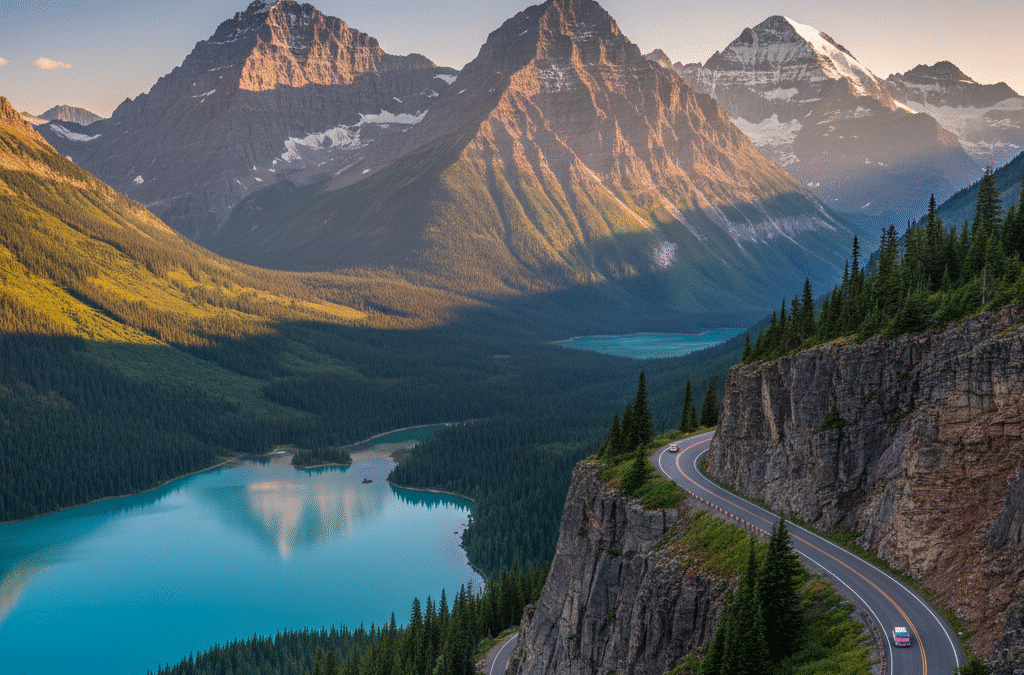
Featured image: Going-to-the-Sun Road from Logan Pass via
National Park Service


