
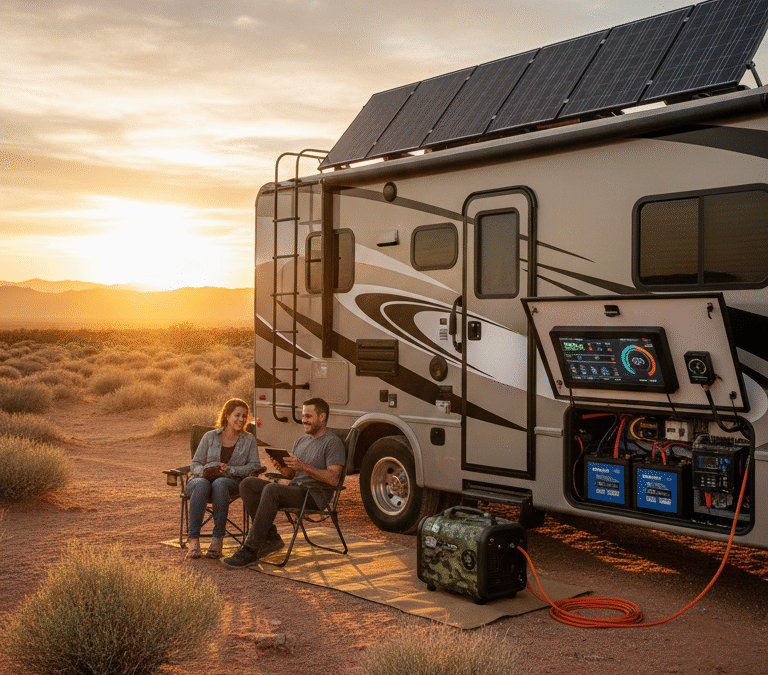
RV Boondocking Electrical Systems: A Comprehensive Guide to Off-Grid Power
Boondocking gives you maximum freedom – and maximum responsibility for your own power. This guide walks you step-by-step through designing, building, and managing an RV electrical system that actually works off-grid: from power audits and battery banks to solar, generators, smart monitoring, and real-world setups.
This guide provides a comprehensive overview of RV boondocking electrical systems, essential for comfortable and safe off-grid exploration. It covers power audits, battery selection and sizing, charging sources, power conversion, management, conservation, and troubleshooting.
RV Boondocking Electrical Systems: A Comprehensive Guide to Off-Grid Power
This guide provides a comprehensive overview of RV boondocking electrical systems, essential for comfortable and safe off-grid exploration. It covers power audits, battery selection and sizing, charging sources, power conversion, management, conservation, and troubleshooting.
RV Boondocking Electrical System Diagram
Phase 1: Conducting Your RV Power Audit – Understanding Your Needs
A power audit is crucial to understand daily energy consumption and peak load requirements, ensuring the electrical system is correctly sized.
Calculating Daily Watt-Hour Consumption: This involves listing all appliances, estimating their run time, and multiplying wattage by hours of use to get total watt-hours. A detailed spreadsheet or template is recommended.
Identifying Peak Load Requirements: This determines the maximum power needed at any given time, essential for sizing the inverter. It involves summing the wattage of appliances that might run simultaneously, noting any surge requirements (which can be 2–3 times running wattage).
Essential Appliances and Their Power Draw: Power draw varies significantly. LED lights are more efficient than incandescent. 12V refrigerators are more efficient than residential fridges run through an inverter. Water pumps have intermittent use. Propane can be used for water heaters and refrigerators to conserve electricity.
Worksheet/Template for Power Audit: A worksheet should list devices, wattage, and daily usage hours. Wattage × hours = daily watt-hours per device. Summing these gives total daily consumption. A 20% safety margin for unexpected usage and system losses is advised.
Phase 2: The Heart of Your System – Choosing and Sizing Your Battery Bank
The battery bank stores energy and is central to the RV’s electrical system.
Battery Chemistry Deep Dive: Pros and Cons:
- Lead-Acid (Flooded, AGM, Gel): Affordable but have shorter lifespans and lower usable capacity (around 50%). Flooded require maintenance; AGM and Gel are sealed. They are heavier than lithium options.
- Lithium Iron Phosphate (LiFePO4): Offer longer lifespans (3000+ cycles), higher usable capacity (80–100%), lighter weight (up to 60% less), and faster charging. Higher initial cost but better long-term value. More resistant to temperature extremes.
Understanding Battery Ratings:
- Amp-hours (Ah): Total energy storage capacity.
- Depth of Discharge (DoD): Percentage of capacity safely discharged (e.g., 50% for lead-acid, 80–100% for LiFePO4).
- C-Rating: Rate of charge/discharge relative to capacity (e.g., 1C for a 100Ah battery means 100 amps).
Sizing Your Battery Bank: Calculate total amp-hours needed for daily consumption × desired days of autonomy. Divide by the usable DoD of the chosen battery type. Example: 50Ah/day × 3 days autonomy ÷ 0.80 DoD (LiFePO4) = 187.5Ah minimum capacity.
Battery Management Systems (BMS): Essential for LiFePO4 batteries, protecting against overcharging, over-discharging, and extreme temperatures by monitoring cell voltages, current, and temperature.
Series vs. Parallel Wiring:
- Series: Increases voltage, maintains Ah capacity.
- Parallel: Increases Ah capacity, maintains voltage. RV systems typically use 12V, so batteries are wired in parallel for capacity. Use identical batteries.
Phase 3: Charging Your Batteries – Comprehensive Energy Sources
Recharging the battery bank is achieved through various sources.
Solar Power Systems
Components: Solar panels, charge controller, wiring.
Panel Types:
- Monocrystalline: Higher efficiency, sleek, more expensive.
- Polycrystalline: More affordable, slightly less efficient.
- Flexible: Lightweight, conform to surfaces, shorter lifespan.
Charge Controllers:
- PWM (Pulse Width Modulation): Less expensive, less efficient, especially in cooler temps.
- MPPT (Maximum Power Point Tracking): More efficient, maximizes power transfer, recommended for larger arrays and off-grid systems.
Sizing Solar Array and Wire Gauges: Based on daily amp-hour consumption and peak sun hours. Use online calculators. Proper wire gauge selection is crucial to minimize voltage drop and prevent overheating.
Mounting and Positioning: Fixed or adjustable mounts. Aim for south-facing (northern hemisphere) at an angle equal to latitude for optimal year-round performance. Avoid shading.
Generator Power
Generator power provides backup charging, especially when solar is limited.
Inverter Generators vs. Conventional: Inverter generators produce cleaner, more stable power (safer for electronics), are quieter, and more fuel-efficient. Conventional generators are less expensive but have higher total harmonic distortion (THD).
Fuel Types: Propane (cleaner, taps RV supply, lower energy density), gasoline (readily available, volatile), diesel (fuel-efficient, durable, heavier, expensive).
Sizing Generator: Calculate total wattage of simultaneous devices + 20% safety margin for surges.
Noise, Emissions, and Regulations: Consider low decibel ratings and mufflers. Ensure compliance with emissions standards and campground quiet hours.
Alternator Charging (DC-DC Chargers)
Alternator charging tops up house batteries while driving. DC-DC chargers regulate voltage/current from the vehicle’s alternator. This is crucial for hybrid systems, preventing starting battery drain and ensuring the correct charge profile for AGM or LiFePO4 batteries.
Shore Power and Converters/Chargers
Shore power connects the RV to an external power source. Converters/chargers convert 120V AC to 12V DC for battery charging and powering DC appliances.
Alternative/Hybrid Charging Sources
Wind and hydro power can be viable in specific locations but are highly dependent on environmental conditions. Hybrid systems combining multiple sources (solar, alternator, generator, shore) offer the most reliability.
Phase 4: Converting Power – Inverters and Their Role
Inverters convert 12V DC battery power to 120V AC for household appliances.
Pure Sine Wave vs. Modified Sine Wave:
- Pure Sine Wave: Produces clean, stable power identical to shore power; ideal for sensitive electronics (laptops, TVs, medical devices).
- Modified Sine Wave: Less expensive, higher THD; can damage some sensitive devices. Pure sine wave is recommended for most RV applications.
Sizing Your Inverter: Calculate total continuous wattage of simultaneous AC appliances + 20% safety margin. Check surge rating for appliances like air conditioners.
Installation Best Practices and Safety: Mount in a well-ventilated area, away from moisture and extreme temperatures. Use appropriately sized cables and fuses. Ensure proper grounding. Follow manufacturer instructions.
Phase 5: Management, Monitoring, and Conservation for Extended Boondocking
Effective management, monitoring, and conservation maximize battery life and extend off-grid time.
Battery Monitors and System Gauges: Provide real-time data on battery voltage, current, state of charge, and remaining capacity for informed usage decisions. Advanced monitors offer data logging and alerts.
Smart RV Technology: Offers remote monitoring and control. Smart power strips turn off unused devices; smart thermostats optimize heating/cooling. Some systems integrate with smartphone apps.
Advanced Conservation Strategies: Use LED lighting, minimize water usage (reduces pump use), cook outdoors, unplug unused chargers to eliminate phantom loads.
Building in Redundancy and Reliability: Have backup charging sources (generator, extra solar), spare fuses, cables, and connectors. Regularly inspect and maintain the system.
Real-World Case Studies: RVers’ Off-Grid Power Setups
Examining successful systems provides inspiration and practical insights.
Case Study 1: Solar-Dominant System: An RV setup primarily using solar power, including panel wattage, battery capacity, charge controller type, and powered appliances. This highlights strengths, weaknesses, and key takeaways such as quiet operation and low ongoing costs, with weather dependence as the main limitation.
Case Study 2: Hybrid Solar–Generator System: An RV setup combining solar and generator power, including panel wattage, battery capacity, generator size, and integration methods. This highlights strengths, weaknesses, and key takeaways such as resilience in poor weather and the trade-off of fuel use and noise.
Key Takeaways from Successful Systems: Proper planning, component selection, installation, and maintenance are crucial principles in every reliable off-grid electrical system.
Common Pitfalls and Troubleshooting Your RV Electrical System
Addressing common issues helps maintain system functionality.
Overcoming Under-Sizing and Compatibility Issues: Ensure all components are adequately sized with a safety margin and verify compatibility between them (voltage, charge profiles, wire gauge, and fuse ratings).
Diagnosing Charging Problems: Check for faulty panels, controllers, alternators, or corroded connections. Use a multimeter to test voltage/current, check fuses and breakers, and inspect wiring for damage or loose connections.
Safety Considerations and Best Practices: Always disconnect power before maintenance. Use appropriate fuses and breakers. Wear safety glasses and gloves. Ensure proper ventilation for generators to prevent carbon monoxide poisoning.
Conclusion: Powering Your Ultimate Boondocking Adventures
A well-designed and managed electrical system is key to successful boondocking.
Recap of Key Principles: Power audit, battery selection and sizing, charging sources, inverter choice, and management/conservation are fundamental. Prioritize safety and regular inspection.
Future Trends in RV Off-Grid Power: Expect continued advancements in battery technology (LiFePO4 and beyond), solar panel efficiency, and integrated smart power management systems that tie everything together in a single dashboard.
Comparison Table: RV Battery Types
| Feature / Type | Lead-Acid (Flooded) | AGM | LiFePO4 (Lithium) |
|---|---|---|---|
| Cost | Low | Medium | High |
| Lifespan | 2–5 years | 5–7 years | 10–15 years |
| Usable Capacity | 50% | 50% | 80–100% |
| Weight | High | Medium | Low |
| Charging Speed | Slow | Medium | Fast |
| Maintenance | High | Low | None |
| Cold Weather Performance | Poor | Fair | Good |
| Safety | Fair | Good | Excellent |
Frequently Asked Questions
How do I calculate my RV’s daily power consumption for boondocking?
List every device, find its wattage, and estimate hours of use per day. Multiply watts by hours to get daily watt-hours for each device, then total everything. Divide total watt-hours by system voltage (typically 12V) to get daily amp-hours. Add around 20% extra for system losses and unplanned usage.
What are the key differences between AGM and Lithium (LiFePO4) batteries for RVs?
AGM batteries are sealed lead-acid units with medium cost, about 50% usable capacity, and moderate lifespan. LiFePO4 batteries have higher upfront cost but offer 80–100% usable capacity, much longer cycle life, lower weight, and faster charging. For frequent boondocking, lithium typically provides better long-term value.
Can I mix different types of charging sources in my RV boondocking electrical system?
Yes. Many systems combine solar, alternator (via DC-DC charger), shore power, and a generator. The important part is that each charging source is correctly sized, properly fused, and set to the appropriate charge profile for your battery chemistry.
What is the importance of a pure sine wave inverter for an RV?
Pure sine wave inverters produce clean AC power that closely matches grid/shore power. This is safer for sensitive electronics like laptops, TVs, CPAP machines, and many battery chargers. Modified sine wave inverters are cheaper but can cause noise, overheating, or long-term damage in some devices.
How can I maximize my RV’s power conservation while boondocking?
Switch all lighting to LEDs, run water heaters and fridges on propane when possible, minimize electric resistance heating, unplug chargers and electronics when not in use, cook outside to reduce cooling loads, and monitor your battery state of charge so you can adjust habits before you run low.


