
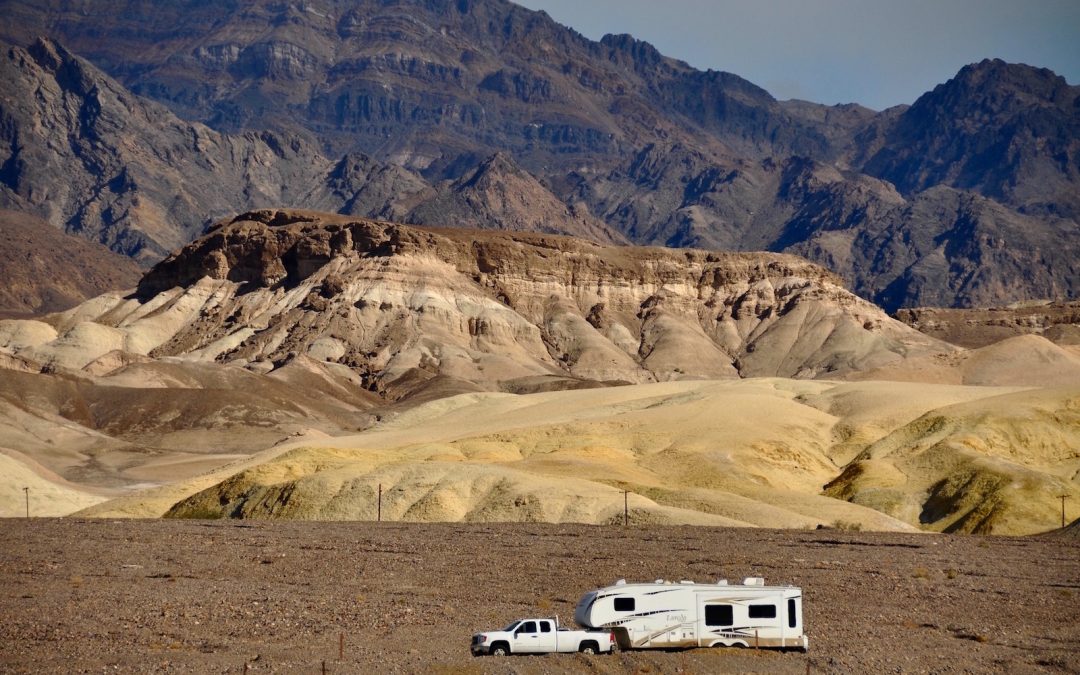
This guide outlines three primary camping options in and around Death Valley National Park: National Park Service (NPS) campgrounds, private RV parks, and dispersed camping on Bureau of Land Management (BLM) land.

Path 1: Developed Camping (NPS Campgrounds)
Death Valley National Park features nine developed campgrounds with varying amenities.
Campground Details:
| Texas Spring Campground | |
| Type: | Developed |
| Season: | Fall-Spring |
| Sites: | 106 |
| Reservations: | FCFS |
| Max RV Length: | 35 ft |
| Amenities: | Water, flush toilets, tables, fire rings |
| Cost: | Approx. $16 |
| Notes: | Near Furnace Creek, seasonal. Generators not allowed. |
| Sunset Campground | |
| Type: | Developed |
| Season: | Fall-Spring |
| Sites: | 230 |
| Reservations: | FCFS |
| Max RV Length: | Any |
| Amenities: | Water, flush toilets, dump station |
| Cost: | Approx. $18 |
| Notes: | Paved lot, open area, overflow for Furnace Creek. |
| Stovepipe Wells Campground | |
| Type: | Developed |
| Season: | Year-round |
| Sites: | 190 |
| Reservations: | FCFS |
| Max RV Length: | 25 ft (RV) |
| Amenities: | Water, flush toilets, dump station (paid nearby) |
| Cost: | Approx. $18 |
| Notes: | Near Stovepipe Wells Village. |
| Mesquite Spring Campground Free | |
| Type: | Developed |
| Season: | Year-round |
| Sites: | 40 |
| Reservations: | FCFS |
| Max RV Length: | 35 ft |
| Amenities: | Water, flush toilets, tables, fire rings |
| Cost: | Free |
| Notes: | Northern part of park, quieter. |
| Emigrant Campground Closed | |
| Type: | Developed |
| Season: | Year-round |
| Sites: | 10 |
| Reservations: | FCFS |
| Max RV Length: | No RVs |
| Amenities: | Water, pit toilets |
| Cost: | Free |
| Notes: | Tent only, small, no fires. *Campground, water, and restrooms are closed due to flood damage as of late August 2025.* |
| Wildrose Campground Free | |
| Type: | Developed |
| Season: | Year-round |
| Sites: | 23 |
| Reservations: | FCFS |
| Max RV Length: | 25 ft |
| Amenities: | Pit toilets, water (seasonal) |
| Cost: | Free |
| Notes: | High elevation, cooler, rough road access. Prone to high winds. |
| Thorndike Campground Free | |
| Type: | Developed |
| Season: | Seasonal |
| Sites: | 6 |
| Reservations: | FCFS |
| Max RV Length: | No RVs |
| Amenities: | Pit toilets, no water |
| Cost: | Free |
| Notes: | High elevation, cooler, tent/small rig. |
| Mahogany Flat Campground Free | |
| Type: | Developed |
| Season: | Seasonal |
| Sites: | 9 |
| Reservations: | FCFS |
| Max RV Length: | No RVs |
| Amenities: | Pit toilets, no water |
| Cost: | Free |
| Notes: | Highest elevation, 4WD recommended. |
Key Regulations:
- Campfires permitted only in designated fire rings.
- Quiet hours enforced.
- Pets must be leashed and restricted to developed areas.
- Generator operating hours may be limited.
Getting a Campsite:
Furnace Creek Campground accepts reservations (highly recommended) during its peak season (Oct 15 – Apr 15). All other NPS campgrounds are FCFS, requiring early arrival, especially during peak season. Visitor center or ranger station updates can aid in finding spots. These campgrounds are less busy during the hottest months.
Path 2: Private Campgrounds (RV & Hookup Guide)
Private RV parks offer enhanced amenities like full hookups (water, electricity, sewer), restrooms with showers, laundry, and recreational facilities.
| The Ranch at Death Valley RV Park | |
|
Formerly Furnace Creek Ranch. Offers RV camping with access to resort amenities. Oasis RV Resort is slated to open in 2026. Currently, RVs can use Fiddler’s Campground adjacent to the Furnace Creek Golf Course. |
|
| Services: | Sites without hookups, but guests access resort amenities (water, restrooms, nearby dump stations). |
| Seasonality: | Year-round, but summer is extremely hot. |
| Reservations: | Accepted year-round, booking in advance is advisable. |
| Stovepipe Wells Village RV Park | |
|
Offers 14 full-hookup sites for RVs up to 40 feet. |
|
| Services: | Electrical (30/50 amps), sewer, and water hookups. |
| Seasonality: | Year-round. |
| Reservations: | Recommended due to limited sites. |
| Amenities: | Access to Stovepipe Wells Village amenities (swimming pool, showers, Wi-Fi in hotel lobby, Toll Road Restaurant, general store). |
| Cost: | One of the pricier options. |
Nearby Private Options Outside the Park:
- Panamint Springs Resort: Located west of the park, offering tent cabins, tent sites, RV dry sites, and full hookup RV sites.
Path 3: Dispersed Camping (Boondocker’s Guide)
Dispersed camping (boondocking) allows free camping outside established campgrounds, typically without amenities, requiring self-sufficiency and Leave No Trace principles.
Dispersed Camping Inside Death Valley National Park:
Permitted in specific areas along designated backcountry roads.
Regulations:
- Allowed only on designated backcountry roads.
- Parking often required within a certain distance of the road.
- Prohibited within one mile of any developed area or water source.
- Campfires may be restricted or prohibited; use existing fire rings where allowed.
Designated Backcountry Road Camping:
Popular roads include Titus Canyon Road, Echo Canyon Road, and Cottonwood Canyon Road, often requiring high-clearance or 4WD vehicles. Always check road conditions.
Dispersed Camping Outside the Park on BLM Land:
Vast BLM land surrounds Death Valley NP, offering more extensive and flexible dispersed camping.
Generally fewer restrictions than within the park.
Popular BLM Areas:
- Alabama Hills Recreation Area (near Lone Pine)
- Ballarat Ghost Town (western boundary)
- Areas along Minnietta Road
Facilities are typically non-existent.
Essential Boondocking Tips:
- Leave No Trace Principles: Pack out everything, dispose of waste properly, avoid disturbing vegetation/wildlife.
- Self-Sufficiency: Carry ample water (at least 1 gallon/person/day, more is better), consider portable power (solar, generator), plan for waste disposal.
- Research: Thoroughly research road conditions and access; many roads require high-clearance/4WD. Check with NPS or BLM for advisories.
- Safety: Be aware of extreme heat, carry a reliable communication device (satellite phone, PLB), let someone know your itinerary.
When to Visit: Death Valley’s Camping Seasons
- Best Times for Camping: Late October through April, offering moderate temperatures for outdoor activities and comfortable sleeping.
- Summer Camping: Extreme heat (often exceeding 120°F / 49°C), posing risks of heatstroke, dehydration, and vehicle breakdowns. Higher-elevation campgrounds (Wildrose, Thorndike, Mahogany Flat) offer slightly cooler temperatures.
- Winter & Shoulder Seasons: Offer the most pleasant camping conditions with mild daytime and cool nighttime temperatures.
Important General Tips for All Death Valley Campers
- Water: Carry at least one gallon per person per day; more is recommended. Water sources are limited.
- Waste Management: Pack out everything you pack in, including trash and food scraps. Use designated toilets; if none available, bury human waste 6 inches deep and 200 feet from water sources.
- Wildlife Awareness: Store food properly in airtight containers to avoid attracting animals. Never feed wildlife.
- Cell Service: Limited and unreliable. Do not rely on cell phones for navigation or communication. Consider a satellite device. Inform someone of your itinerary.
- Emergency Preparedness: Carry a first-aid kit, map, compass, flashlight. Know how to treat heatstroke and dehydration. In case of vehicle breakdown, stay with your vehicle.
Death Valley National Park provides a remarkable camping experience for those who prepare adequately, plan carefully, and respect the environment.
Resources
- National Park Service – Death Valley National Park
https://www.nps.gov/deva/index.htm
Official website for Death Valley National Park with direct access to accurate, reliable information about the park, its rules, and its amenities. - Recreation.gov – Furnace Creek Campground
https://www.recreation.gov/camping/campgrounds/232496
Official site for making campground reservations in the United States, including for Furnace Creek Campground in Death Valley. - Leave No Trace Center for Outdoor Ethics
https://lnt.org/
The most trusted source for information on practicing “Leave No Trace” principles while camping or enjoying other outdoor activities. - Bureau of Land Management – Camping on Public Lands near Death Valley
https://www.blm.gov/programs/recreation/camping
Authoritative information about camping on BLM lands near Death Valley. - National Weather Service – Death Valley Weather Forecast
https://forecast.weather.gov/MapClick.php?lat=36.5054&lon=-117.0794#.YP4i49NKjOQ
Official weather forecast for Death Valley from the U.S. National Weather Service with reliable, up-to-date weather information.


